A hole in the hills
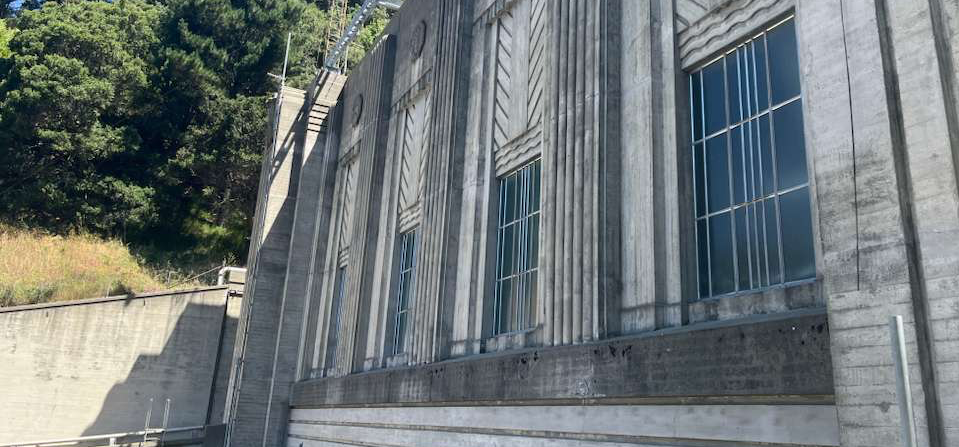
Only about twenty people were allowed in for the last public tour of the Caldecott Tunnel, before a long construction project would, as they put it, inflict an “irreversible impact” on the 90-year old public works project. Few if any of us who arrived in the late morning at the invitation of the Oakland Heritage Alliance came because we wanted to know what was going to happen. Few people seemed to know anything was even planned. Most of us just wanted to know more about what was already built, and how it had lasted this long.
We met at a cul-de-sac well past where Broadway ceases to be a thoroughfare and very nearly becomes a country road, before it dead ends into one of the Berkeley Hills. The Tunnel opened up below and to the left, though from above it, your eyes drifted over to the concrete art deco edifice above it.
Growing up in Oakland, whenever I passed through it—on the way to Pleasant Hill or Walnut Creek, I suppose, though for reasons I can’t remember—I’d always looked up at the building, wondering why it was there. Looking at it again, I was reminded that someone (a lot of people, in fact) had strived to make it look stately, expecting that people would look up at it. Today, some people would. For an hour or so, we would appreciate the tunnel and all the concrete and steel that surrounded it, perhaps, as its workers did, as something more than a hole, carved through the earth so we could get to Broadway Plaza or some other such place faster.
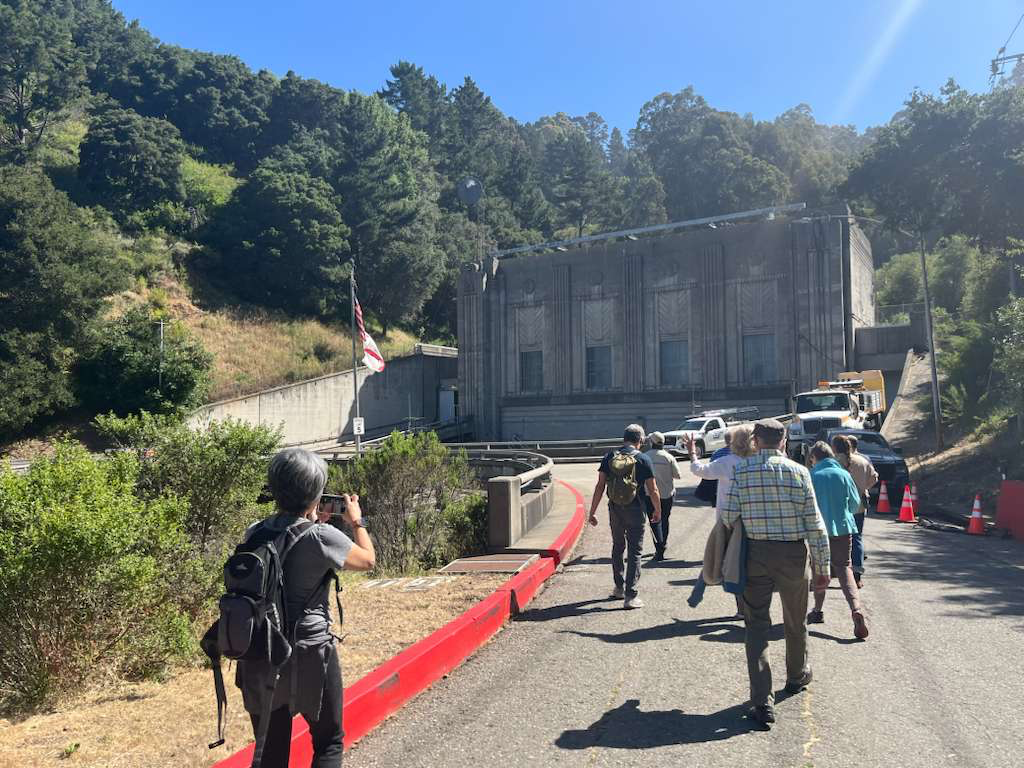
We passed the edifice, went inside the two-story building from which Caltrans staff manage the tunnel’s moving parts, and we walked through a hall lined with historic photos into a conference room where we learned about the tunnel’s history.
Before it had been built, the only way from one side of the hills to the other was a winding dirt road that, while scenic, required a bit of daring. A crossing must have taken hours in the cars then available, and would have been bumpy every bit of the way. The weather would have to be good, and even then, to venture across in the open-air cars of the day was to commit to a baptism in dust. One couldn’t undertake the trip without serious planning. Crossing between two counties that were and are so different—one adjacent the Bay and the other fitted along the Delta, with different vegetation and climate—had once required a person to be deliberate.
Beginning in 1903, motorists could cut the trip down a little if they dared to pass through a timber-lined portal called the “Kennedy Tunnel,” but that convenience came with risk. The tunnel not only looked like an abandoned mine, but was dark and prone to cave-ins. The passage has since been sealed off, though a few attendees said they had been to the old site, off what’s now Skyline Boulevard.
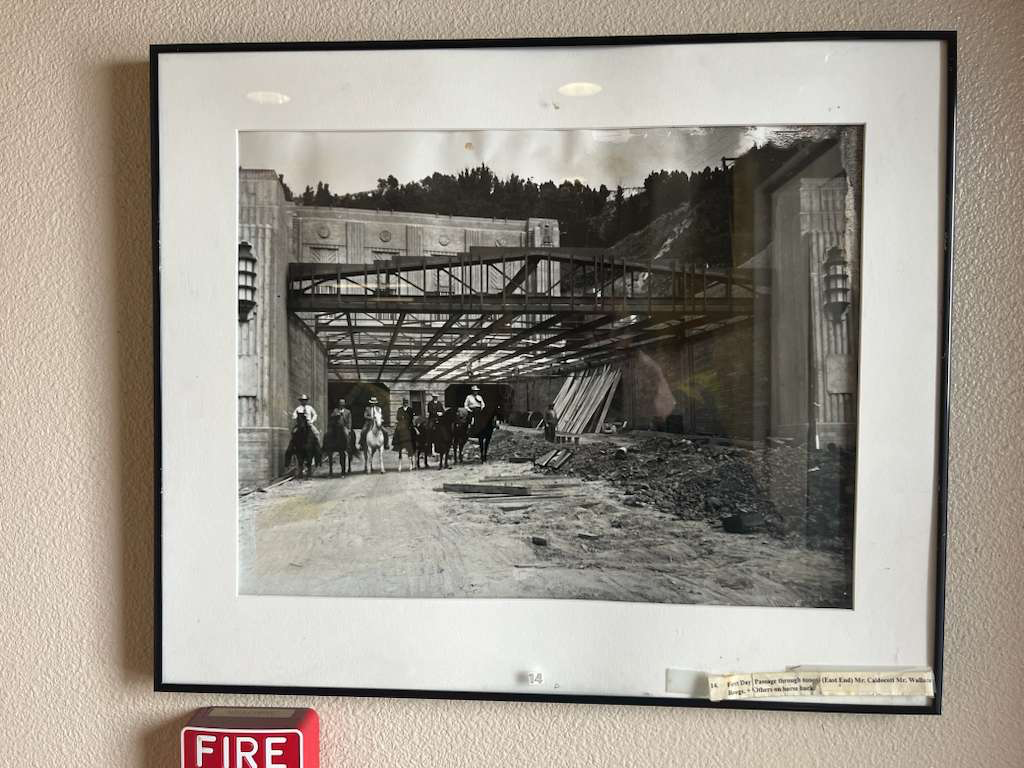
When the Model T came out in 1908 and, with it, the promise to shape and reshape every human landscape in the nation by and for cars, the need for something that could handle the added traffic became more apparent. Alameda and Contra Costa counties formed a joint highway district, led by the English-born mayor of Berkeley, Thomas E. Caldecott, and began construction in 1926 on a new, modern tunnel, paid for largely with gas taxes. It would make driving from one side of the hills to the other as easy as the Posey Tube would soon make driving from Downtown Oakland to Alameda. (That project, which began in 1925, opened to motorists in 1928.)
Workers drilled and blasted from both sides, and, in 1937, the two-lane passage opened to the public in a day-long celebration that drew cars from around the region. Surely the traffic would never be so heavy again!
After the tunnel joined Contra Costa and Alameda County with one unceasing flow, it grew larger to accommodate more traffic, going from two bores to three, in 1964, and then to four in 2013. Each bore accommodates two lanes of traffic. As our guide noted, it wasn’t much of a boost to the cities at its western opening. Upon its opening, anyone headed to Concord or Orinda from this side of the hills could drive straight to the budding suburbs without stopping in Oakland and Berkeley. Most still do.
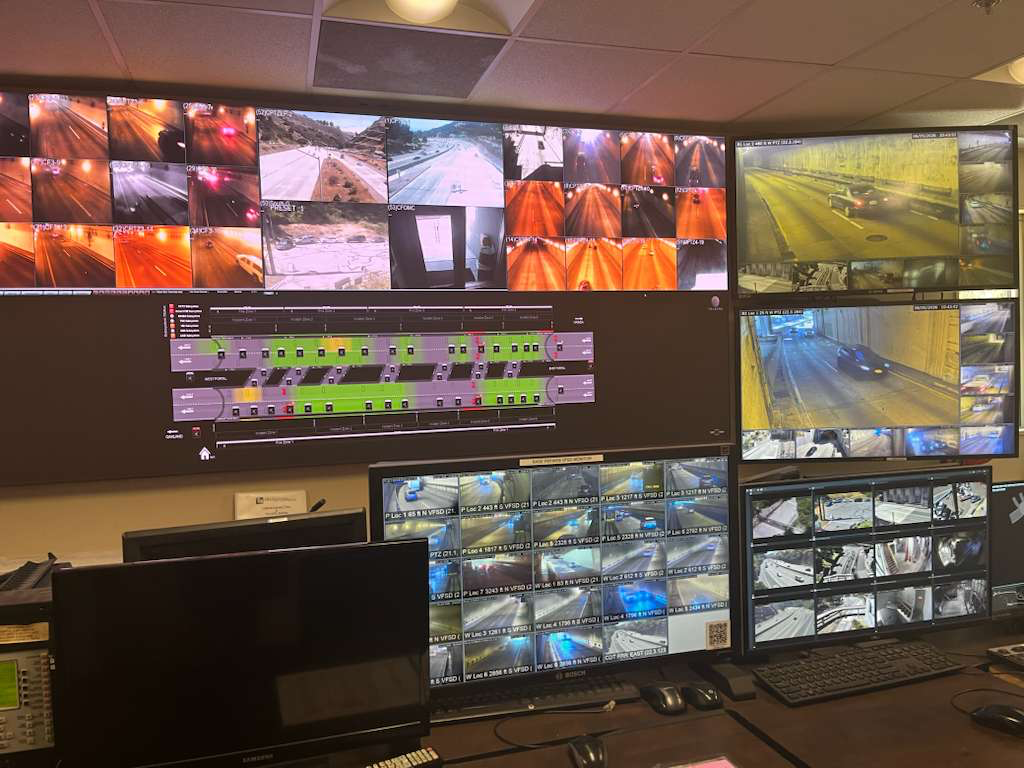
Car infrastructure needs people to watch and maintain it, just like trains or airports. Since the first bore opened, someone has been at the site every day, 24 hours a day, without exception, a Caltrans official told us. Even something as seemingly uncomplicated as a hole in the hill needs unfaltering guardianship. Next to the conference room, a few of the agency’s staff were upholding that tradition with a wall of screens, watching the cars pass in silence. A few of us joined, and they were excited to share their view with us, but there were few questions and no one stayed for long.
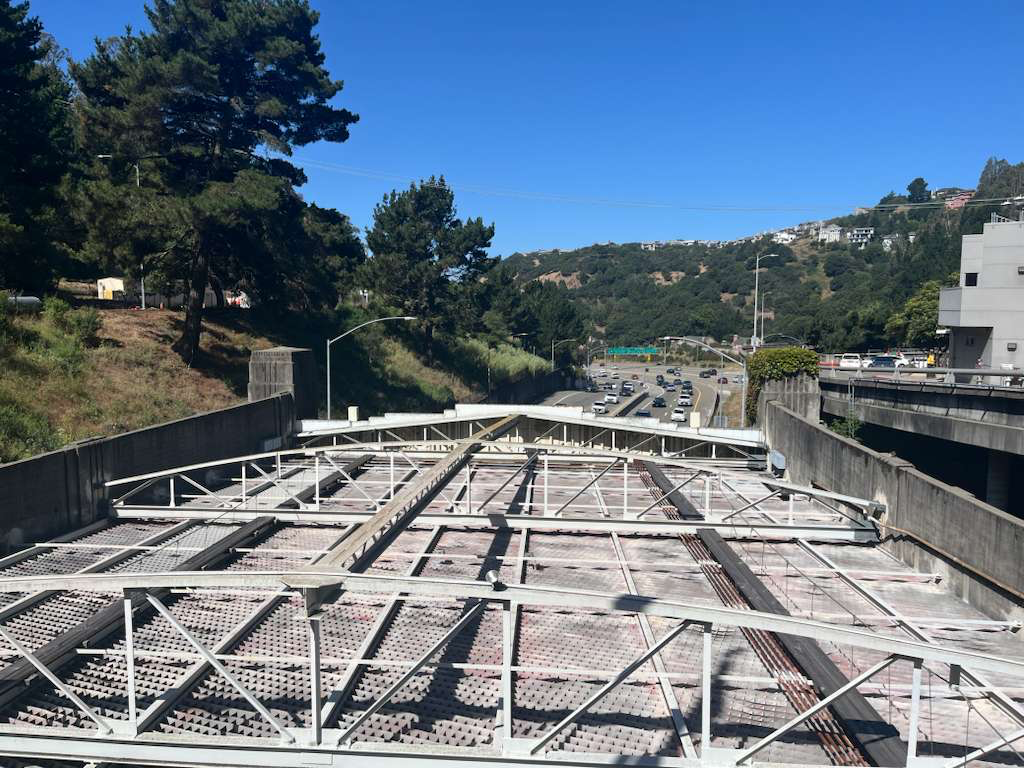
When the yellow vests and hard hats came out, there was a stir of excitement. We wouldn’t go inside the tunnel, but the Caltrans people were eager to show off something that had scarcely been visible to the public since al Qaeda put the threat of terrorism at the forefront of every public works agency’s list of worries. We stepped through a side door into the edifice above the two original tunnels, where four giant fans sucked in air from hillside windows two stories tall to send into the tunnels (while other machinery drew air from inside and sent it towards the sky through funnels connected to the ceiling). When the tunnel opened, these machines would have been lifesaving: gas was leaded and smog was ever present. But today, decades of regulation and automotive engineering improvements (not to mention the prevalence of hybrid and electric cars), have all brought down the smog levels to the point that the fans are only needed in the event of a fire.
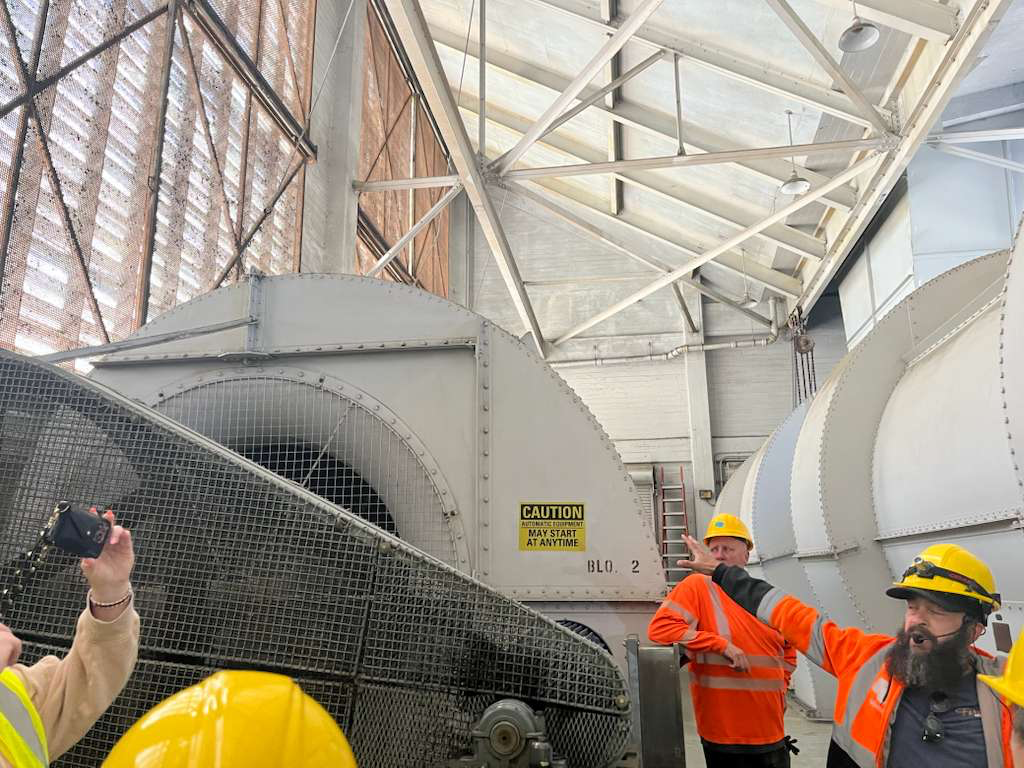
Yet fires, it turns out, are common enough that they need to be planned and engineered for. And what’s more terrifying than a gas-powered fire inside one of the busiest tunnels in the state? A fire powered by electric batteries. The more electric cars in the mix, the greater the risk of such a disaster. For this reason, much of the focus of the new construction will be on improving its fire suppression systems.
Near the end of our time inside, one of the Caltrans officials accompanying us asked if we cared to see a fan in operation. The group didn’t quite scream its enthusiasm, maybe unsure what putting such a thing in motion would entail. It would be loud, he said. No one said no. With the flip of a switch, a fan went on, the drivers in Bore 2 got a dose of fresh air. The noise was loud at first, and then as distant and steady as the hum of traffic had been a few minutes before.
Correction: we got the number of bores wrong in an earlier version of this vibe report.