An endless complex
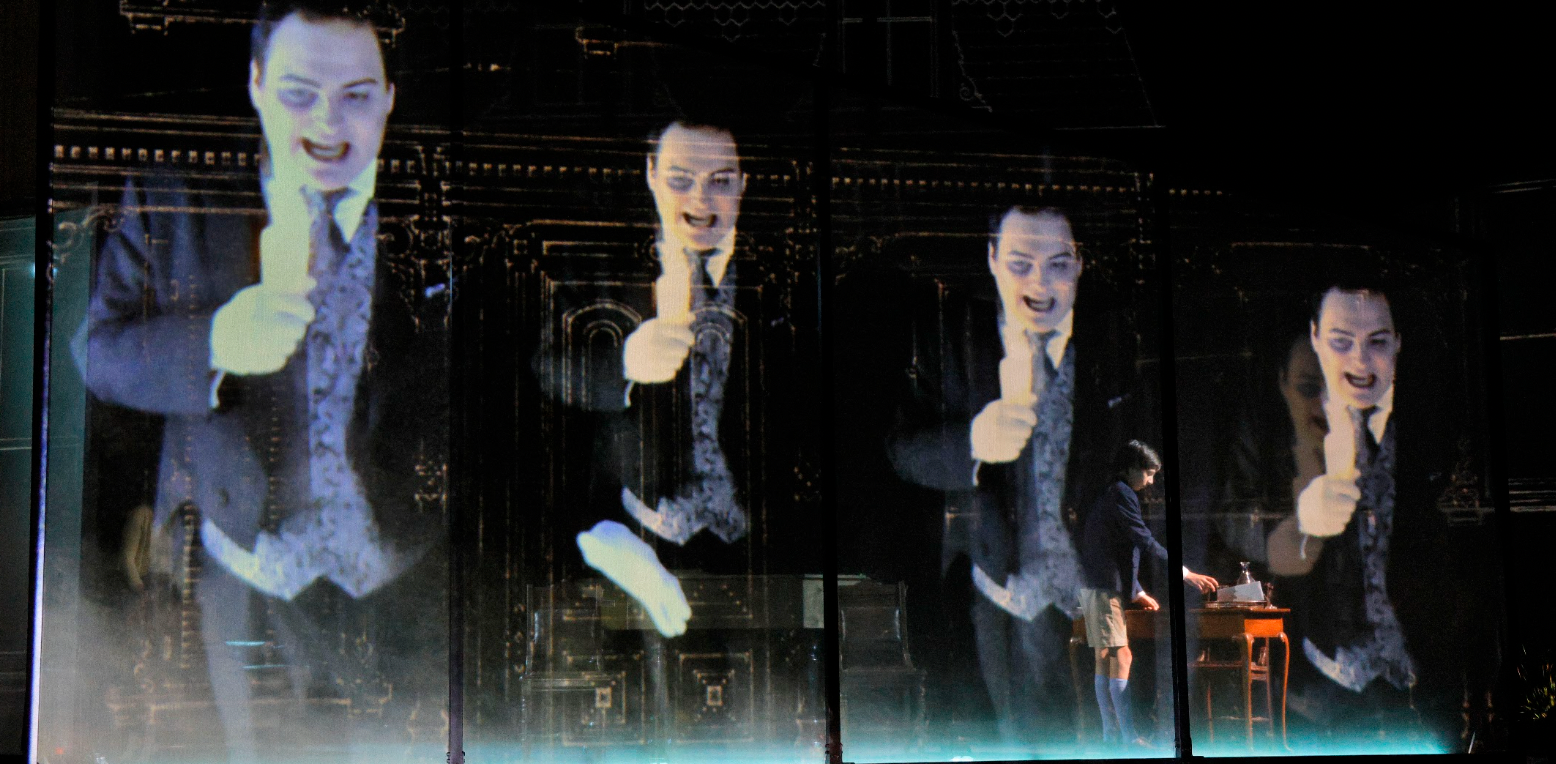
Henry James is a taste like cilantro, not so much acquired as hopelessly divisive. It’s not just his famously roundabout prose. It’s that so many of his characters inhabit mental worlds with deeply disturbed weather. Long ago, when I was in grad school, my friend N. came to visit and I lent her The Turn of the Screw, a novella I love for its ambiguity: a young governess in a remote country house either is being haunted by the ghosts of her predecessors, or is mentally breaking down.
At the end of the day, N. handed the volume back with a scowl. “This book is sick,” she said, “and Henry James is a sick fuck.”
Twenty years later, when I found myself with an extra ticket to Benjamin Britten’s opera of The Turn of the Screw, now playing in Oakland as part of the West Edge summer festival, naturally I invited her along.
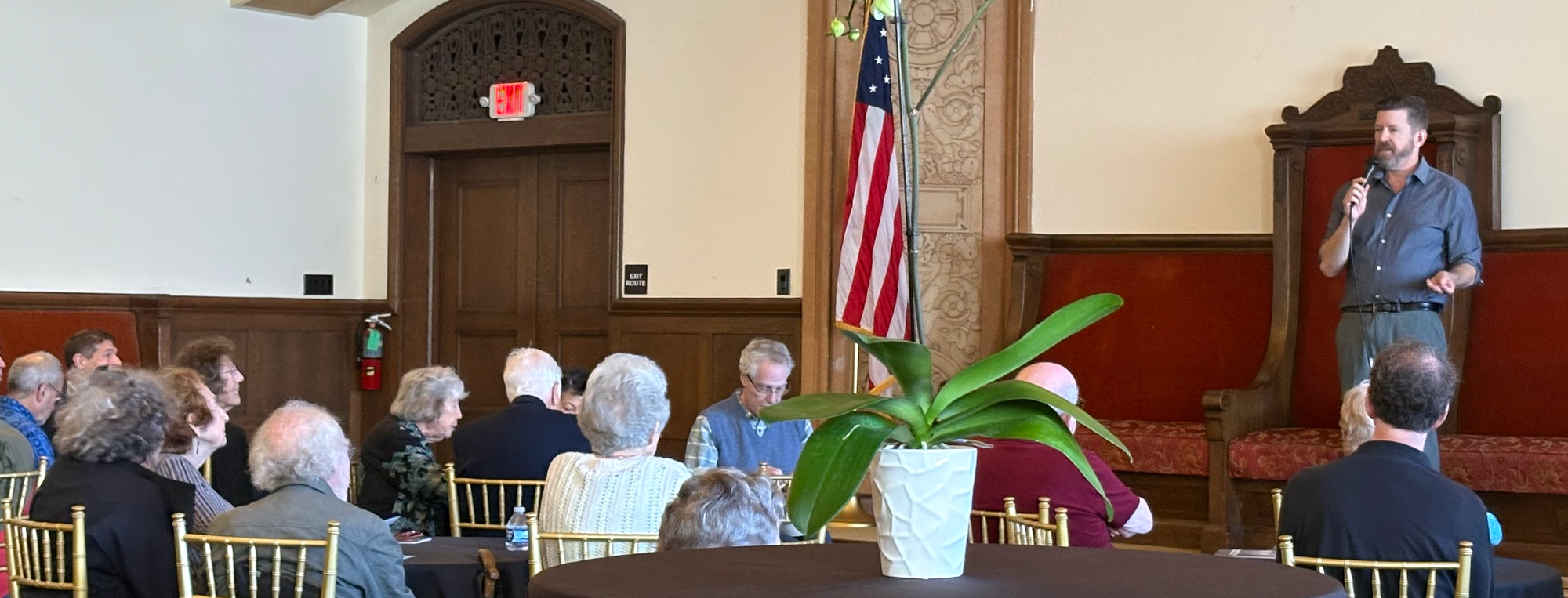
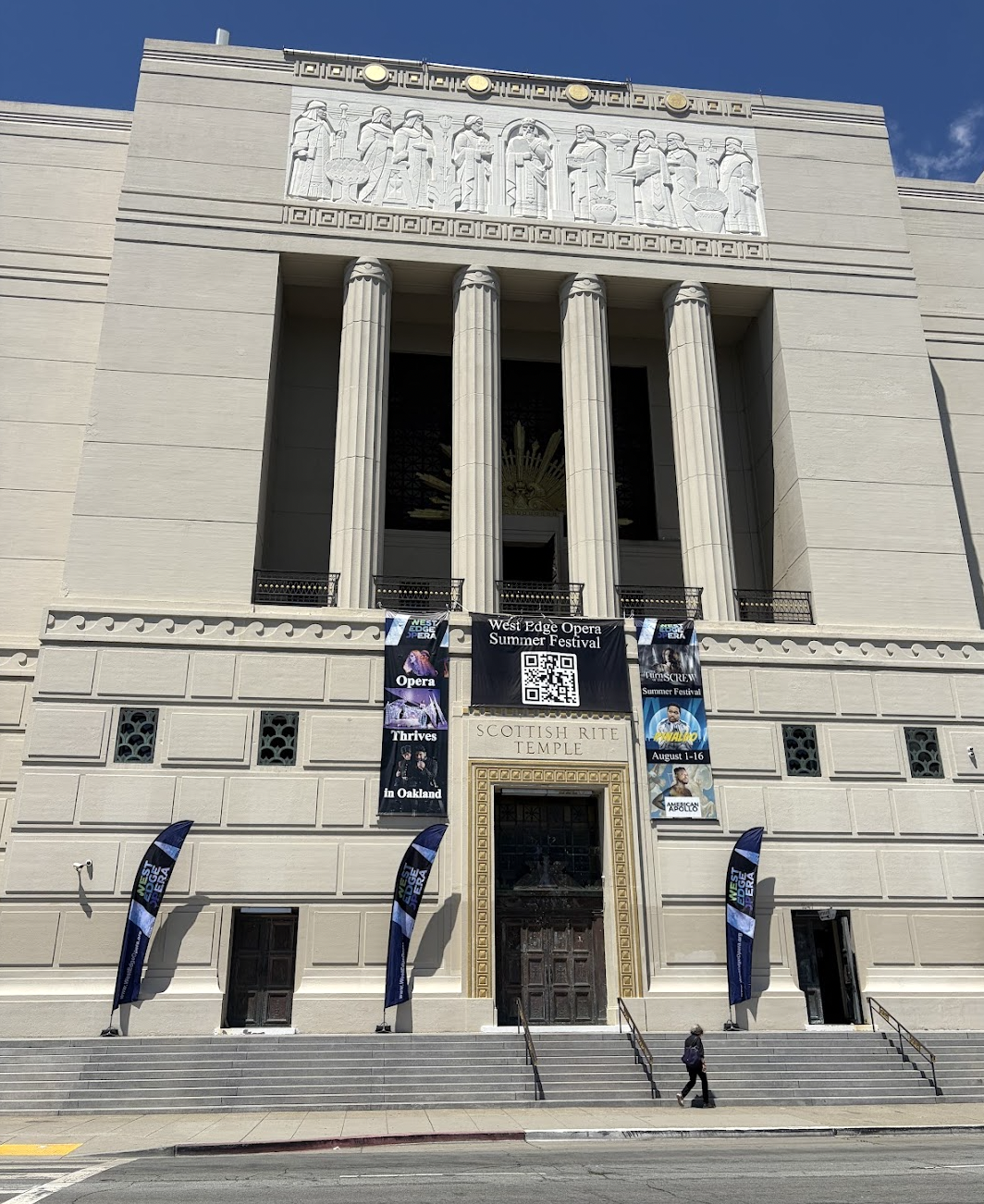
We showed up early Saturday afternoon at the Scottish Rite Center, a building whose eccentricities I never tire of showing off to out-of-towners (N. had crossed the bridge from the West Bay). Squinting at the facade, she asked if we were planning a sacrifice to an elder god. Inside she goggled at the ancient wood-paneled elevator, accepted a complimentary pour of wine and followed me into a plush red room, where director Mark Streshinsky was giving a pre-show talk in front of a throne right out of the Stonecutters episode of The Simpsons. As often happens on the opera scene, the audience demographic was such that we got to enjoy the rare feeling of being the youngest people in the room.
“This story is one of the first examples of an unreliable narrator,” Streshinsky told us. That may or may not be true—you can argue that unreliable narrators exist in the Odyssey—but the governess’s mind is certainly the main field of action. The scenes of predatory ghosts haunting young children that so disturbed N. are colored by her distress and repression, if not hallucinated outright. The production stages this by externalizing her struggle as a set of angular panels with video projections, sometimes forming a deconstructed house and sometimes replaying memories or fantasies. The projections also summon up images of the ghosts, who sing live from a hidden location, their voices echoing off the temple’s domed ceiling.
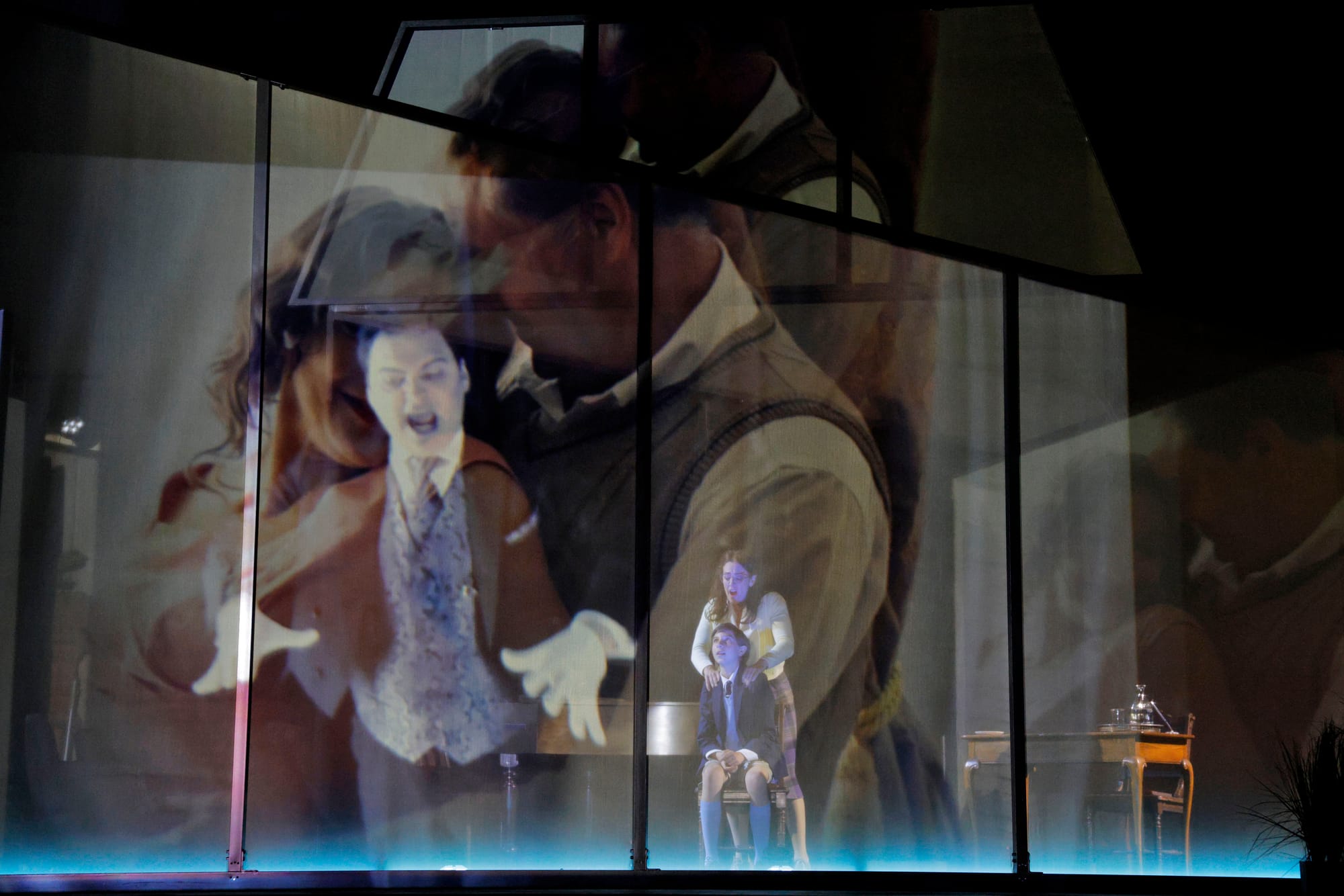
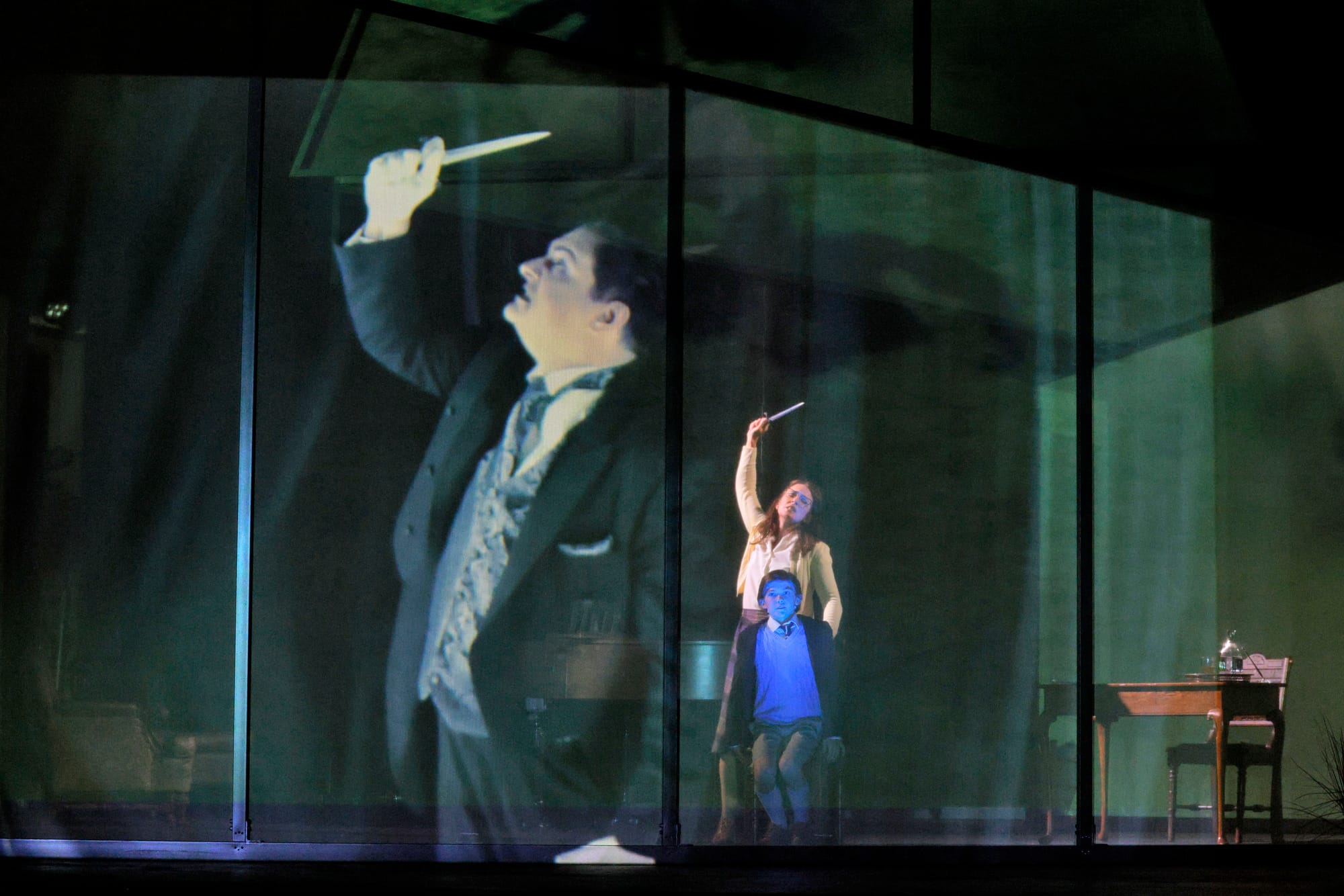
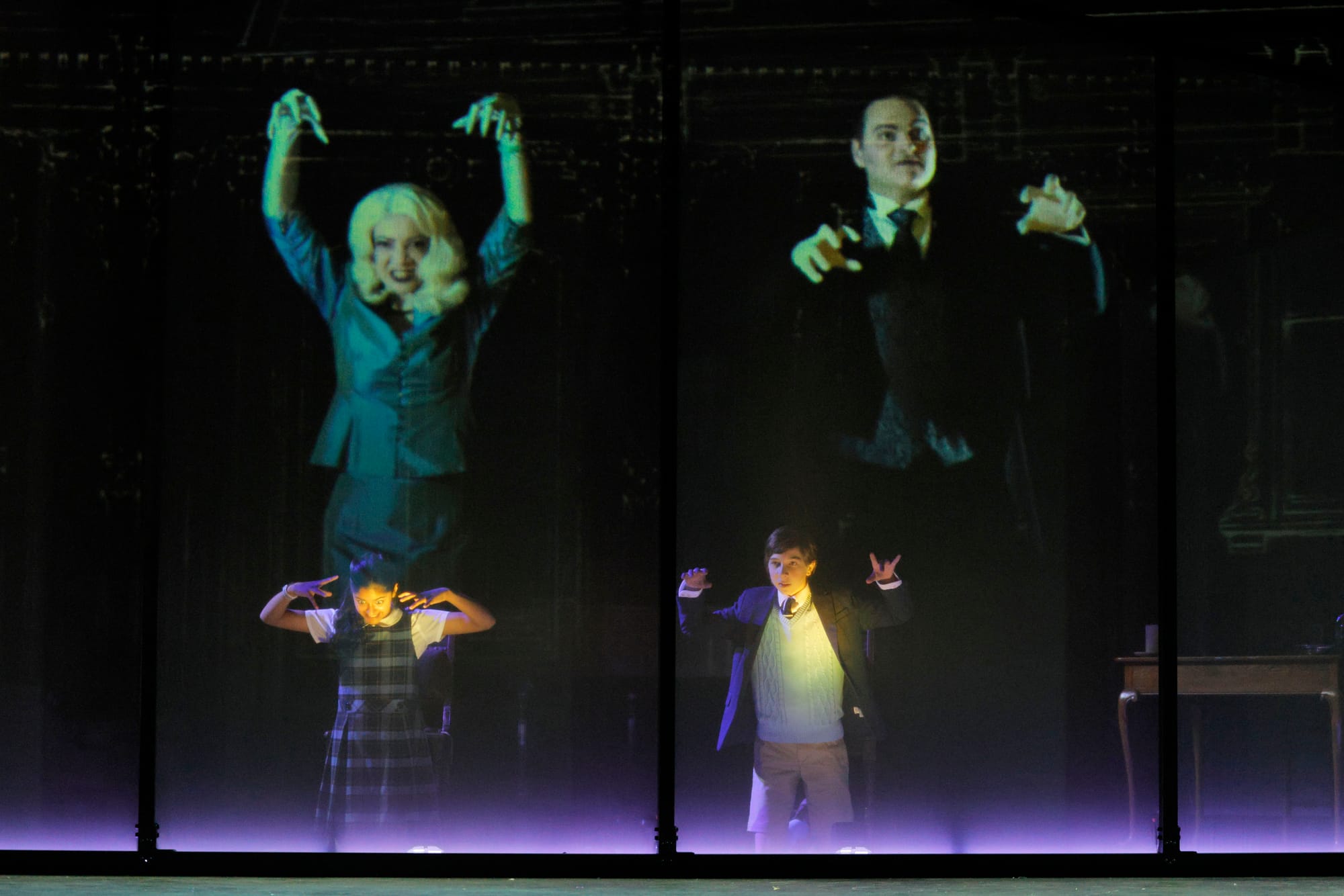
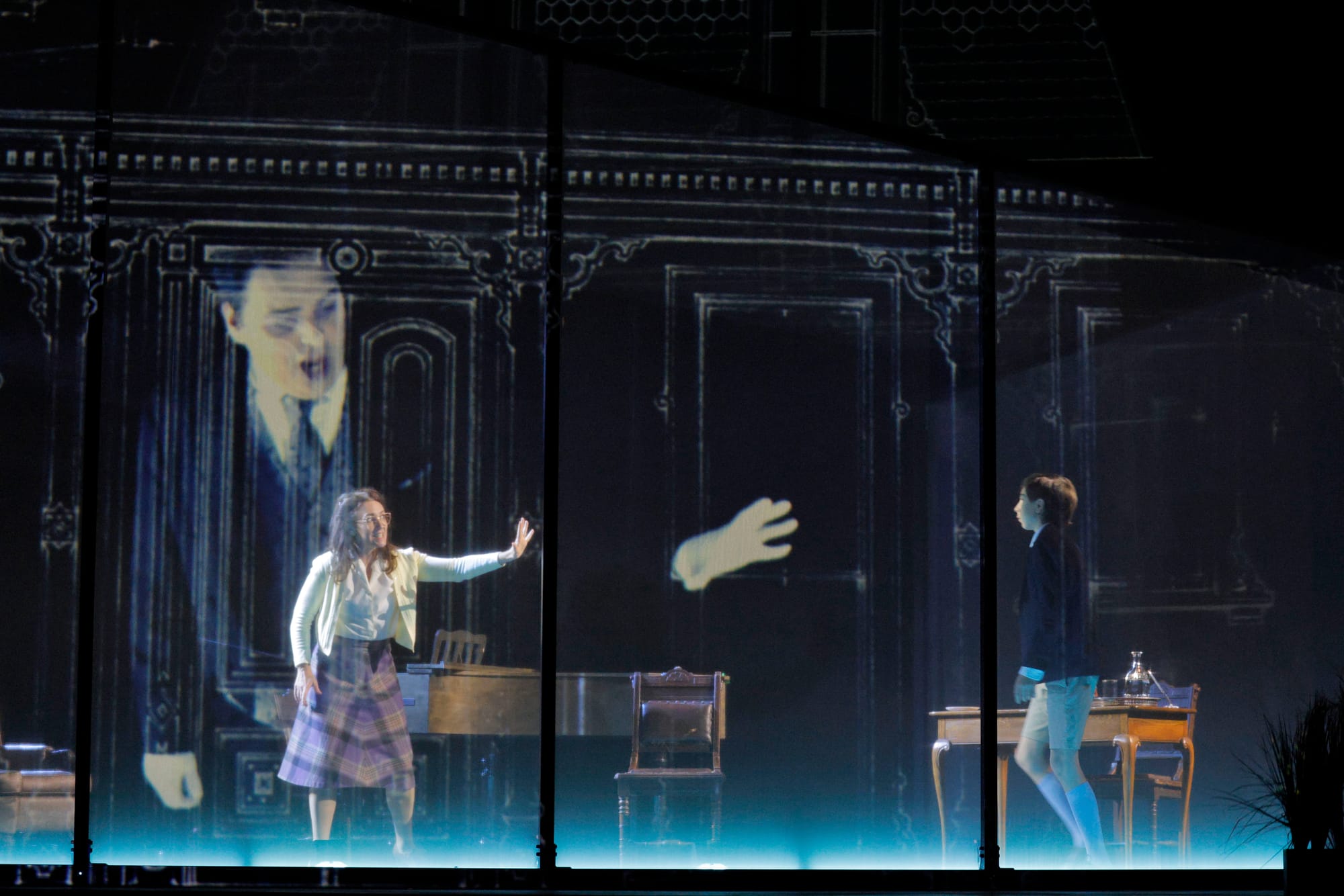
(Cory Weaver)
As the governess, soprano Laura Bohn wanders this psychic maze, obsessing over the absent master of the house and growing increasingly convinced that the children, who seemed so docile and good, have been corrupted by evil forces. Tenor Alex Boyer gets much of the finest music as the offstage ghost of valet Peter Quint, offering blandishments and threats. And the children are sung by children (one of a couple different pairs of children, depending which show you attend), who have no easy task in holding their nursery-rhyme melodies steady over an orchestral score with a slippery sense of key.
The Turn of the Screw is a chamber opera, with only thirteen musicians in the pit, but makes the most of that spare arrangement. Britten’s gift for melody never fails him, but, here, the textures tend toward the demonic. The main theme is a spiral staircase (or, if you like, turning screw) of alternating fourths and thirds that rapidly cycles through all twelve tones of the scale; it’s not as out-there as Penderecki or Ligeti, but anyone who’s heard how Stanley Kubrick used those composers in The Shining will understand what Britten is doing. As Bohn’s voice swoops violin-like among clusters of sound, it grows ever more doubtful whether she is really the children’s protector, or herself has darker motives.
Much has been written about the ambiguities in Britten’s work, the concern with corrupted innocence and the persecuted outsider, and what that had to do with the composer’s status as a gay man in midcentury England. Plenty, of course—the ghost Quint was first sung by Britten’s lover Peter Pears—but there’s no simple decoding. Streshinsky’s talk teased one detail, that the Latin lessons in the libretto include coded messages intended for Britten’s circle at the time. “There are particular slang words in there, meaning penis, scrotum and bunghole. I’m sorry,” he added, scanning the room. “I hope I didn’t offend anyone with 1950s gay code.”
Streshinsky has directed The Turn of the Screw once before. In that first staging, back in 2013, what hit hardest, he said, was having a son who was the same age as the boy Miles in the opera. He felt it sensitized him to the work’s background drumbeat of persecution and loss. “And the boy we have singing Miles, he’s such a wonderful boy. When he smiles, you just want to die—which he does all the time.” Streshinky meant “smiles all the time,” not “dies all the time” (although, no spoilers).
“How old is your son now?” asked an audience member.
“Well, my son is no longer my son. My daughter is grown, and moving to New York to work as a set designer. Please send good juju that way!”
The vibes at the Scottish Rite Center were all good, in direct proportion to the bad vibes of the horror story. What had troubled N. in James’s tale all those years ago was the underside of the same mystery that had first drawn me in, and back then we were still waiting on so many discoveries, including both of us changing gender around the same time. James’s sexuality might not translate perfectly into modern terms, but his work conveys a sense of desire so enigmatic and layered that reducing it to a label is beside the point; it was never going to speak a single name. These days I think of his stories as illustrating what an endlessly complex space a closet can be.
At intermission N. and I went for more wine and a friendly bartender showed us a phone picture of a rainbow crosswalk in Taipei. We said our thanks and cheers, and went out to the building’s balcony. The afternoon was full sun; Lake Merritt rippled a deep summer blue below us. It was good to be outside.
Reminder: Put it on your calendar! Our ORB Launchiversary (“Always Be Launching”) party will be at Eli’s on Thursday August 20, 6pm until late. Members get in free, but NOTAFLOF.