The Undervalley
In 1992, political theorist Langdon Winner surveyed Silicon Valley and concluded that its “most significant, enduring accomplishment” was that it “transcended itself, and fostered the creation of an ethereal reality, which exercises increasing influence over embodied, spatially bound varieties of social life.” In the anthology Variations on a Theme Park: The New American City and the End of Public Space, Winner explained how here “decisions are made and actions are taken in ways that eliminate the need for physical presence in any particular place.”
Winner’s essay, “Silicon Valley Mystery House,” uses the labyrinthine corridors and endless rooms of the Winchester Mystery House—built by a supposedly ghost-haunted widow, in more or less the center of San José—as an analogy for the silicon chip and the valley’s topographical layout. That house, as tour guides will unfailingly tell you, has no foundation: It sits directly on top of the soil, which is how it survived both the 1906 San Francisco Earthquake and the 1989 Loma Prieta Earthquake, staying mostly intact by basically surfing the shockwaves. The metaphor here is that here in Silicon Valley, everything is on the surface—that no matter how complex, nothing lies beneath.
And that’s a lie, of course. I’m trying to talk about the films Backrooms and Us, and how the Bay Area has become the locus for a specific of genre of horror, one that involves endless underground labyrinths. But we’re not there yet. First we have to talk about the lie.
In 1992, when Winner published this essay, home PCs were rare and email was rarer still. Bill Gates and Steve Jobs weren’t yet household names, and Elon Musk was still living in apartheid South Africa. But the magic trick was already complete. The Bay Area was a physical place, with cities and suburbs and freeways and streets and houses and shops and restaurants and bars. Silicon Valley already was not. Silicon Valley was an idea: It was ephemeral, it was abstract, it had no substance, it had no weight, and it might yet be everything, but it was already nothing. It could dance on the head of a pin.
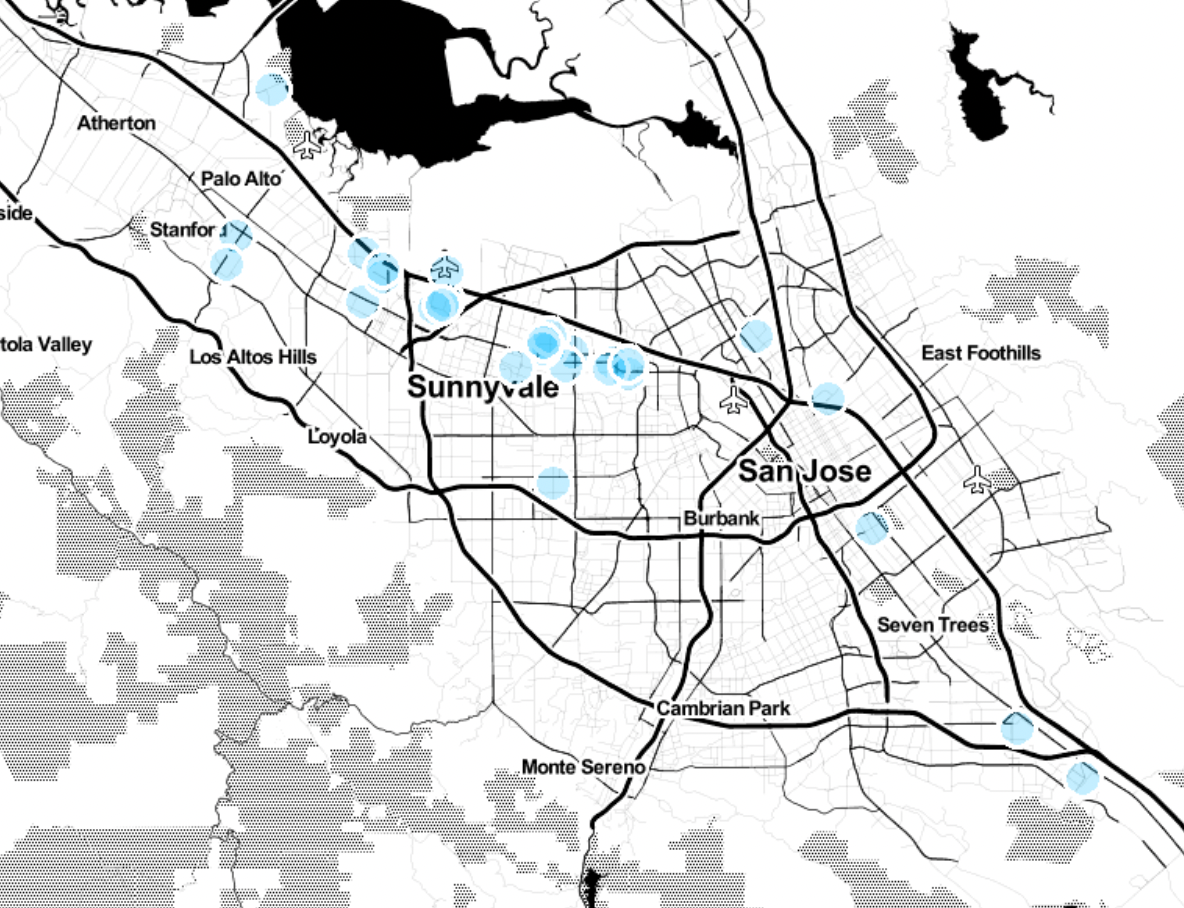
Where exactly was it? Was it anywhere? Years later, Alexis Madrigal (then writing for The Atlantic) would set out in search of what had once been “the center of Silicon Valley.” Using an old 1983 copy of Rich’s Guide to Santa Clara County’s Silicon Valley, he located it as being at 901 Thompson Place in Sunnyvale, California. In the eighties, “before the Japanese manufacturers and the forces of globalization pulled and pushed chip production to East Asia,” this particular spot had been the headquarters of Advanced Micro Devices, aka AMD, sitting in the middle of a dense cluster of tech companies, and an industrial landscape that was, then, “as important a manufacturing center as Detroit or Pittsburgh.”
Arriving there thirty years later, Madrigal found AMD long gone, along with all the industry. In its place, there was a self storage company, as well as an “odd mélange” of businesses, including a Lowe’s, a strip club, real estate brokerages, music schools, a semiconductor company, an Indian restaurant. “The landscaping was so regular, it mocked the idea of nature,” he writes. “Tree, door, tree….Empty office buildings and parking lots abounded. A couple gardeners wandered among them, working solo, carrying chemicals on their backs, ensuring the for-lease billboards looked nice.” The buildings had an empty symmetry that “humans could only besmirch.” The further he wandered into the landscape of strip mall homeopathic universities and empty office buildings, the more uncanny the landscape became.
“I could not parse this neighborhood,” Madrigal concluded. “It didn't make sense.” Like a maze that had been made by humanlike things, only not for humans to inhabit. Like someone had described a city to someone who’d never seen a city before, and then asked them to draw it.
Of course, a good part of the reason why the landscape was so strange is that he’d been traversing a massive, invisible Superfund site. Because the tech campuses built in the postwar area were modeled after Stanford, they were designed to welcome scholars and scientists, not laborers. Accordingly, their industrial components were governed by strict building codes: no visible smokestacks, storage tanks, generators, or ducts. All of that was pushed underground, concealed, out of sight, into a doubled city in the soil below, toxic and invisible, forgotten and unknown. And then, when manufacturing moved across the Pacific, the already underground dirty twin to the Valley’s shimmering success was sealed up and forgotten.
Nothing stays buried for long. In 1981 south San José residents learned they were drinking contaminated water laced with freon and trichloroethane, leakage from the underground storage tanks of Fairchild Semiconductor and IBM, two companies who’d established records as environmental stewards. More groundwater contamination was soon discovered. Remediation cleanups have been underway ever since. Santa Clara County remains one of the most toxic places in the country; there are currently twenty-two active superfund sites there, twice the number of sites in the entire state of Illinois.

Before we talk about Backrooms, before we talk about Us, before we talk anything at all, then, let’s begin with that understanding. That the soil beneath the Bay Area is sick.
It’s rotten, it’s polluted. There’s a darkness beneath the surface. A poison that’s been hidden down there longer than I’ve been alive. A disease seeping up through the soil that I played on when I was a child. Where the house I grew up in was built. It was there, put there by companies like AMD, where my mother worked for years when I was young. It was down there below the strip malls and the dead tech spaces and the Devoid that became the hallmark of Silicon Valley architecture. This sickness is the reason places were built they were they were built, the reason the landscape evolved as it did, with hollowed-out malls and overlarge parking lots and manicured trees that never seemed to grow and places where no humans never seemed to be. Everything above ground was a maze, because everything had to accommodate an underground labyrinth of pollution that couldn’t be named, couldn’t be spoken of, that could only be remediated (or not) in silence.
When Apple and Microsoft were building the future, they were doing so by laying the seeds of death in the ground. It was beneath us this whole time, we just didn’t talk about it. When the companies that “saved” America from Japan and Taiwan sent all that manufacturing overseas, to great toxic slag pits, they tried once again to reimagine the Bay Area as an antiseptic pure place of dreams and ethereal technology. But it was beneath our feet the whole time. It never went anywhere.
So when I say that the Bay Area has become the preeminent site in horror movies involving underground labyrinths, as imagined in Jordan Peele’s 2019 Us and now with Kane Parsons’s Backrooms, I don’t mean it as a metaphor. I mean there is actually a very real labyrinth of sickness down there, and it’s pooling at our feet in the sodden grass, and people are finally starting to look down and notice it.
◎
Us is set in Santa Cruz, over the ridge of mountains that separates the Bay Area from the Pacific Ocean, much of it filmed at the iconic Santa Cruz Beach Boardwalk. One of the few landmarks in the region that remains unchanged over the past few decades, it’s still as cheesy and borderline run down as it was in the 1970s and ’80s, when, just up the road in Scotts Valley, a plant run by the Watkins-Johnson Company—a semiconductor manufacturer and defense contractor based in Palo Alto—was contaminating the soil through the improper handling of hazardous waste. (The site is now adjacent to a park and baseball field.) It’s a film that, Peele has said, is about “the idea that what we feel like we deserve comes at the expense of someone else's freedom or joy.”
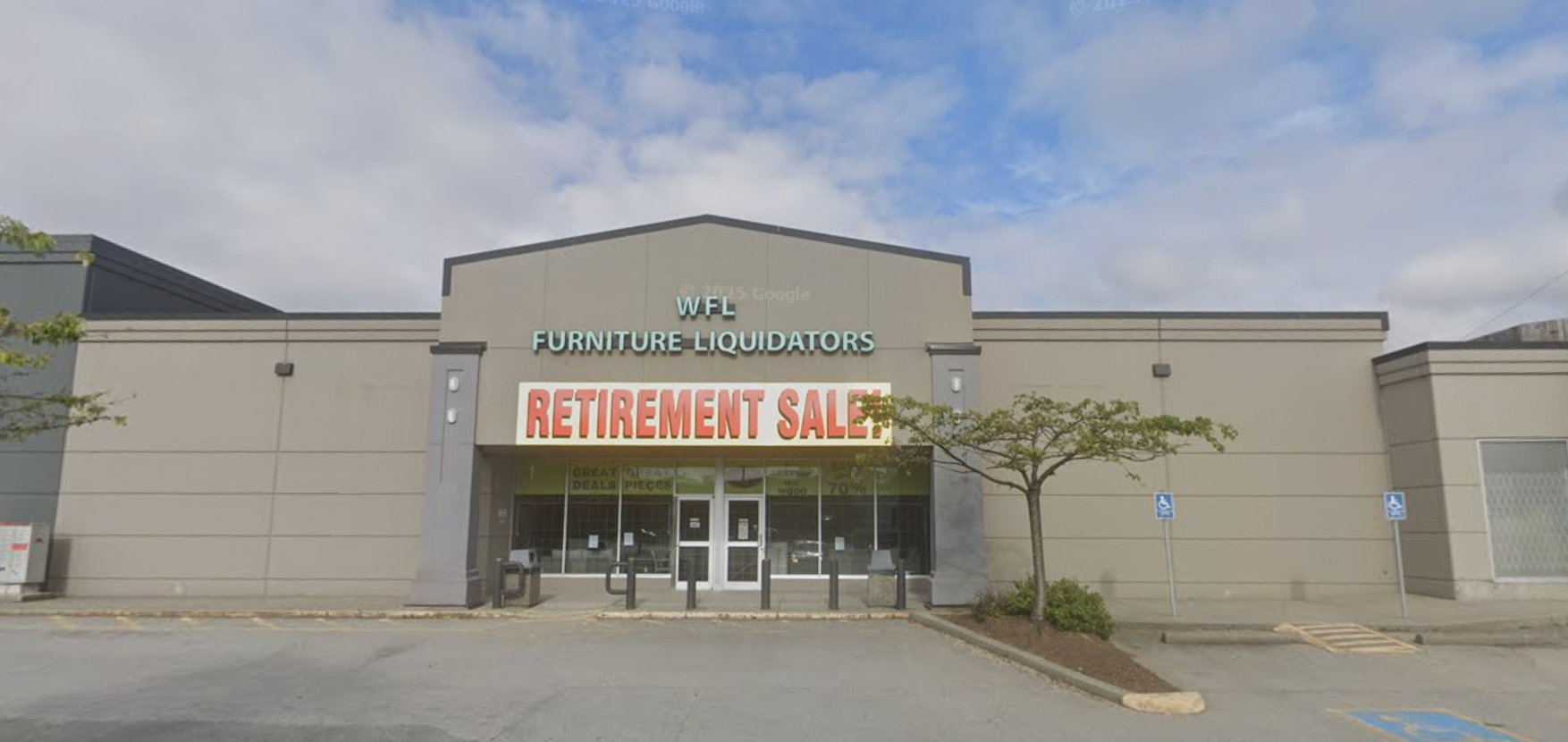
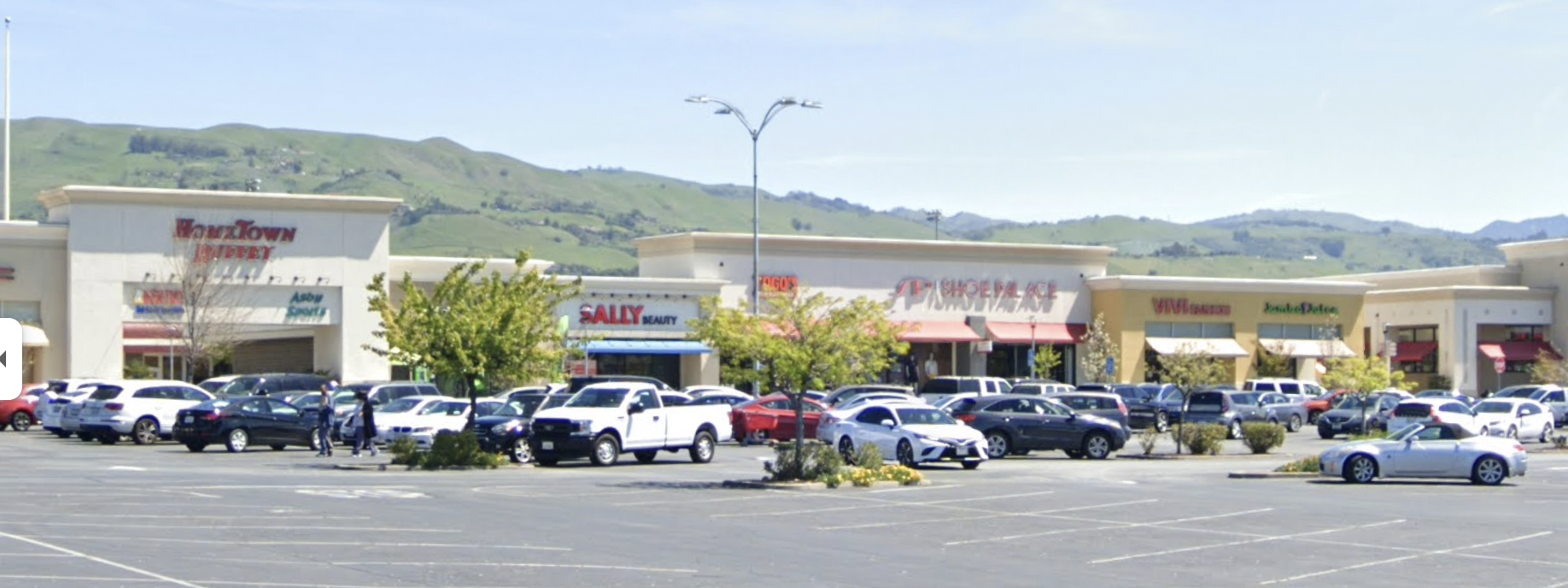
Backrooms is set in east San José (at Capitol and McKee, just off 680, according to the commercial), twelve miles from ground zero of that first Fairchild/IBM groundwater contamination event. The eponymous rooms are accessed via the basement of a furniture store (“Cap’n Clark’s Ottoman Empire”) that anchors a strip mall in a larger labyrinth of strip malls and housing developments and elementary schools and baseball fields and churches and storage units and freeways and expressways and parks and gyms and grocery stores that replicate and replicate again and again through the valley, each identical in every way. The geography of this world is maddening, endless, it is numbing, it never changes, it never relents, it is hemmed in on three sides by low foothills that never get any closer, receding like a perpetual illusion, the freeways offering to take you somewhere but never leading you anywhere, a closed loop. And that’s just above ground.
In both Us and Backrooms, a weird, unreconstructed subterranean labyrinth menacingly reflects reality, a sort of mirrored dream space of the world above. Exactly like the architecture of Silicon Valley has its own subconscious: as above, so below. In both places, familiar bits of rooms are evident, but nothing makes sense.
In Us, the below world is filled with hallways and rooms that look vaguely like high school classrooms, with tiled floors and overhead fluorescents. Yet the walls are lined not with blackboards but with cages where rabbits are bred, the sole food for the Tethered who live down below. It’s accessed, oddly, via a lumbering escalator that only goes down. Hallways appear to go on forever. Individual aspects make sense, but nothing adds up. The opening text crawl reads: “There are thousands of miles of tunnels beneath the continental United States…Abandoned subway systems, unused service routes, and deserted mine shafts…Many have no known purpose at all.” But the actual world that Lupita Nyong’o’s Addy enters is none of these; it’s a nonspace, uncanny and place-less.
Backrooms takes this idea further. What furniture store owner Clark finds through a hidden doorway in his store’s basement is room after room, oddly constructed, not quite right, filled with things that are also just not quite right. Piles of furniture that turn out to be stuck together, a stop sign that reads POTS, walls without design or purpose, ever leading further and further into a receding fluorescent yellow abyss. Gradually, it becomes apparent things and images from the world above seem to get regenerated down here as physical objects. Everything slightly off, twisted. As Clark explains at one point, “Imagine describing a dog to someone who’s never seen one before and then asking them to draw it. It will look similar, but the devil is in the details….” What’s waiting for Clark, and the people he ends up bringing down into the Backrooms, ends up being worse than the devil.
◎
There’s apparently a great deal more lore to be learned about Backrooms through Parsons’s extensive YouTube series, if you want to get lost in that rabbithole. But the film itself is thankfully much more evasive and elliptical about the origins of the rooms and how they work. The less we know, the more disorienting the whole experience is.
We know a bit more about the space below the Boardwalk in Us—or at least, we have Addy’s double Red’s interpretation. “It was humans that built this place,” she tells Addy. “I believe they figured out how to make a copy of the body, but not the soul. The soul remains one, shared by two. They created the Tethered so they could use them to control the ones above. Like puppets. But they failed, and they abandoned the Tethered. For generations the Tethered continued without direction. They all went mad down here.”
In Us, therefore, the story is that what begins as a (perhaps utopian) attempt to clone, or mimic, or recreate the human—not unlike AI—quickly falters, as the unnamed, unidentified startup engineers behind the project realize that what makes us human—the soul—can’t be so easily copied. From there, the project switches to exploitation. If not with unique souls, then at least as puppets that can control those who do have souls—avatars, if you will, manipulating us. But this doesn’t work either. The project is simply abandoned, the whole thing covered up and bulldozed over like so much freon and trichloroethane.
Spend much time on YouTube, or Instagram these days, and you’ll get a glimpse of what’s coming: just one more version of this mad, Tethered world. We’re on the verge of a social media space that’s increasingly nothing but soulless AI clones of humans, abandoned, talking and broadcasting only to other clones, looking and acting less and less like humans and slowly going mad in this parallel, abandoned world.
You could say this reading of Us as a parable of AI is a stretch, or you could say it’s prescient, coming as it did years before sloppelgängers began to overtake the digital landscape. But you could also say that it’s obvious, even overdetermined, because nearly every tech startup follows a pattern like this: something pitched as utopian, almost immediately revealed to be exploitation, and then abandoned, left as some toxic waste site, buried and forgotten.
Backrooms is set in 1990, and its aesthetic is a love letter to that time period. Parsons was born in 2005, but it’s remarkable how well he gets the early ’90s, down to the boredom of watching infomercials simply because one watched whatever was on. The grain of the VHS tapes, the décor and the furniture all seem primed to bring the viewer back to a pre-Internet age as effectively as the more nostalgic touches in Us do. These are movies that remember the appeal of the thing it was supposed to have been, that we, as children, perhaps still believed that it was.
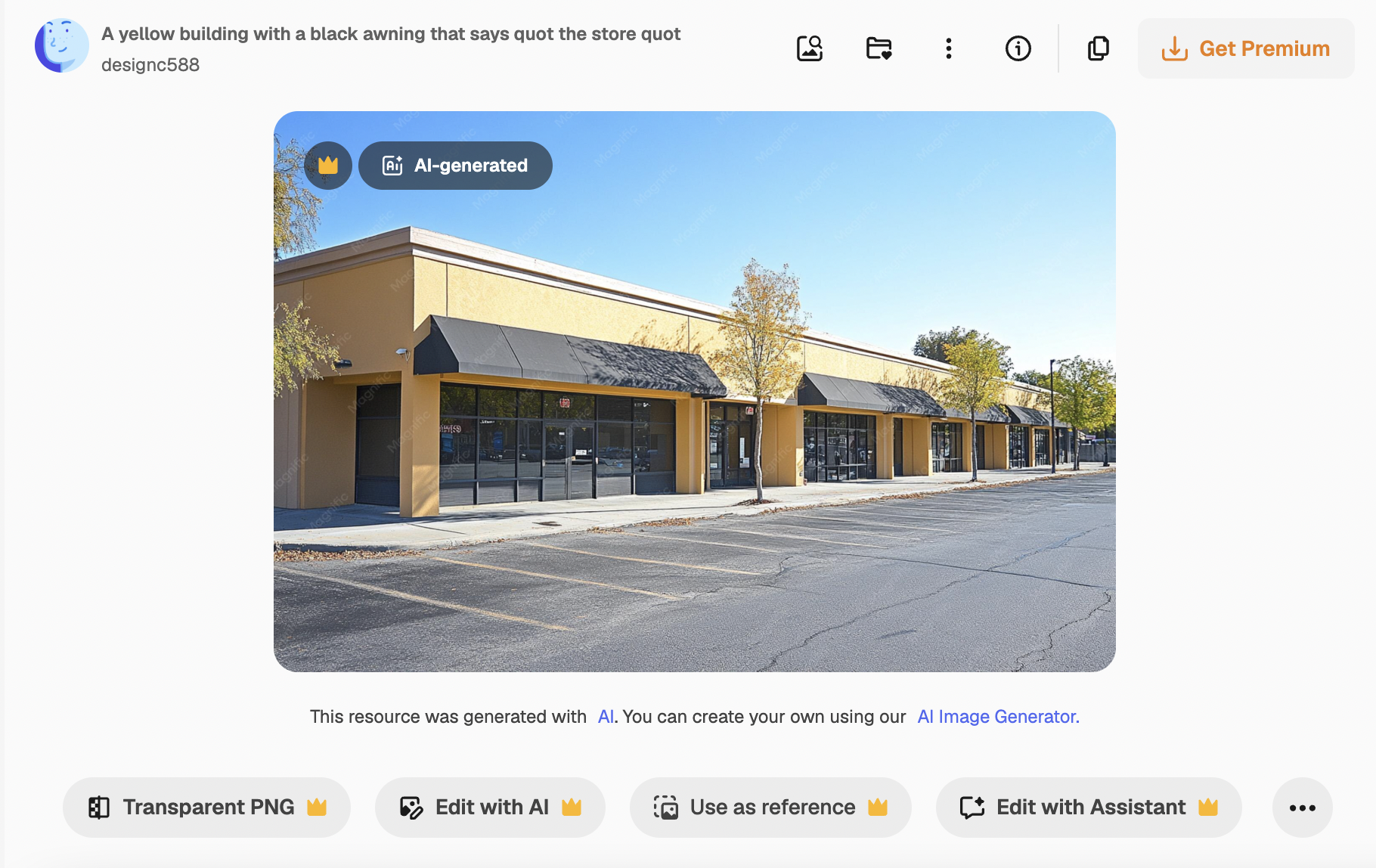
But as lighting designer and writer Elizabeth Harper pointed out to me, it doesn’t seem a coincidence that the backrooms are bathed in what can only be described as “AI yellow,” that strange tint that AI image generators seem to default to. And once again, it’s easy enough to read the landscape down there as a function of some kind of AI generator, something that’s trying to mimic human understanding and getting it badly—upsettingly—wrong. Or as some kind of unconscious dream space, some version of the planet Solaris that is reading our thoughts and making them real. What seems down below in both of these films are the botched attempts to replicate what makes us human, the failed experiments that have turned ugly and resentful, and have been finally set loose.
But you have to be careful here. Watch your step. Reading either of these spaces simply as a metaphor for AI misses the point. Or at least misses the point somewhat. Remember the soil. These are movies about how the subterranean landscapes of the Bay Area are deadly, how things buried beneath the surface of Santa Cruz and San José can come back and kill you in quite a literal way.
◎
What connects these two terrors—the literal reading and the figural reading? Perhaps what’s most relevant here, the thing that ties these two strands together, is the fact that Backrooms is hitting theaters as the billionaires running Silicon Valley are finally waking up to the fact that America hates them. Americans overwhelmingly distrust autonomous vehicles in poll after poll. The number of people “more concerned than excited” about AI is growing. Graduation commencement speakers touting it get consistently booed. People dislike Elon Musk and Jeff Bezos, and they hate Mark Zuckerberg.
Tech is hellbent on replacing us these days, hellbent on replacing our jobs, replacing our art, replacing our livelihoods, reducing us to servitude and blind consumption. But it can’t quite pull this off—any time it tries, the results are either soulless or weirdly off, in ways that are upsetting or somehow malevolent. And people are just sick of it. As David Wallace-Wells recently put it in the New York Times, AI represents “a vision of a near-total takeover of the country’s economic, social and cognitive lives by tools engineered by just five companies, run by five particular people, several of whom are widely described as sociopaths.” It isn’t always so directly put—most people’s revulsion is visceral, felt without being named—but it’s there.
But tellingly, the sharpest backlash has been against data centers. Seventy percent of Americans don’t want a data center near them, a number that has shot up from only 40 percent last September. Americans are rapidly seeing through the lie that Silicon Valley exists in the cloud, that it has no presence, that it has no shape. Reality denied has come back to haunt.
"Right next to our wastewater treatment facility," he says.
Silicon Valley built its entire reputation on being useful, but also on being ephemeral. Its products—search engines, social media, smartphones, e-commerce—promised to vastly improve our lives, make things easier, more fun, more engaging, more efficient, and so forth. Sometimes they did. But they also promised to be invisible, their mechanisms kept out of sight. The Amazon package showed up on your doorstep from out of nowhere. The iPhone you bought proudly said “designed by Apple in California,” but nothing about where it was built, how it was built, and what kind of destruction that manufacturing wrought upon the world. That was not your business and not your problem. The massive server farms needed to keep the cloud up and running were not something that concerned you, were not something that you could even conceptualize. The people who assembled these things, who brought these things to your door were supposed to be faceless, their rights and dignity beneath you.
Now, as soon as Big Tech has stopped being able to deliver useful products and ideas, as soon as it has run aground—its last decade being a remarkable run of nearly nothing but Ponzi Scheme and Suck—the public is suddenly acutely aware that all of this has a physical presence and a physical cost as well. And they’re beginning to revolt.
Precisely in this moment, Parsons’s film springs up out of the collective unconscious, vomiting up out of the ground like so much toxic sludge, reminding us that the literal and the figural are one, that the creation of these uncanny nightmares is also the poisoning of the earth, and in the process bringing us all back to the beginning, bringing us back home to where it all started, to the Eden where the original sin took place. And it turns out it’s been there all along, right there off I-680 at Capitol and McKee, beneath one more strip mall furniture store, just underground, waiting to kill us.