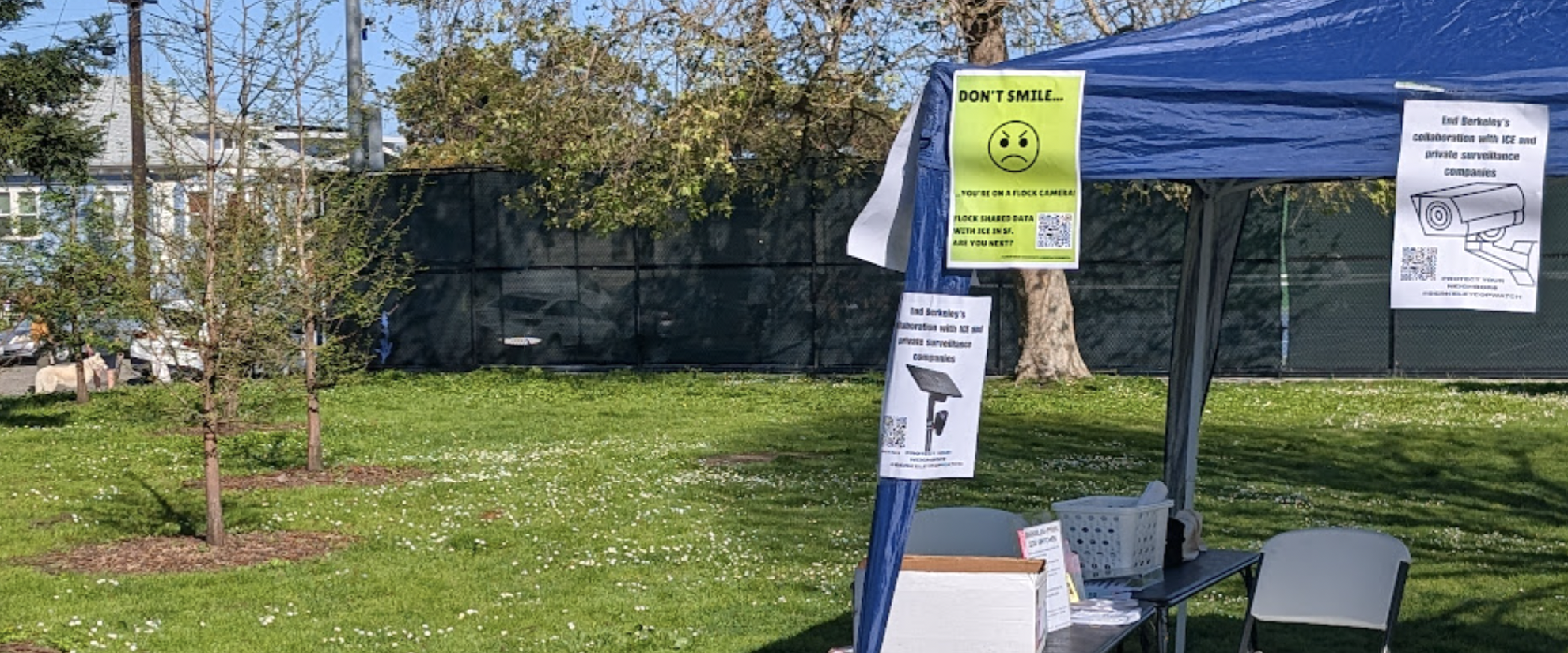
As the initial plan was explained to us by someone who authoritatively addressed the perhaps two dozen people who had shown up, on bikes—as well as offering us snacks and drinks—there would be four teams of two: one person could hold the Don't Smile... You're on a Flock Camera poster, while the other person taped it to the pole. In general, this was more or less how it played out, but only in general. Someone had a clipboard with a list of intersections and there were Berkeley Copwatch T-shirts scattered around, and a few yellow vests, for safety, but beyond those few self-selecting (and rotating) roles, you wouldn’t call the thing organized so much as just generally consensual, in the sense that we were in consensus about what we were doing. Everyone, even the Daily Cal reporter along for the ride, knew why we were there and was having a good time doing it. We all followed each other, and whoever was in the lead.
It was a sunny day. We were having fun. We were smiling. We were a “we.”
There’s an idea from midcentury Marxism that subjectivity is formed by how we are interpellated, or how you respond when someone calls out to you. The famous example is that when a cop calls out “Hey you!” it constructs police authority by the way you respond, the way you turn and look as if it is you that they are calling out to. Even if you don’t respond, you still know that it’s you they’re calling out to, still know yourself to be hailed. In that instant, you create yourself as subject to the law’s power, and also the law’s power over you, its subject. By extension, perhaps, if you’ve done nothing, you have nothing to fear, to be seen and addressed by a cop is, a little bit, to become a criminal.
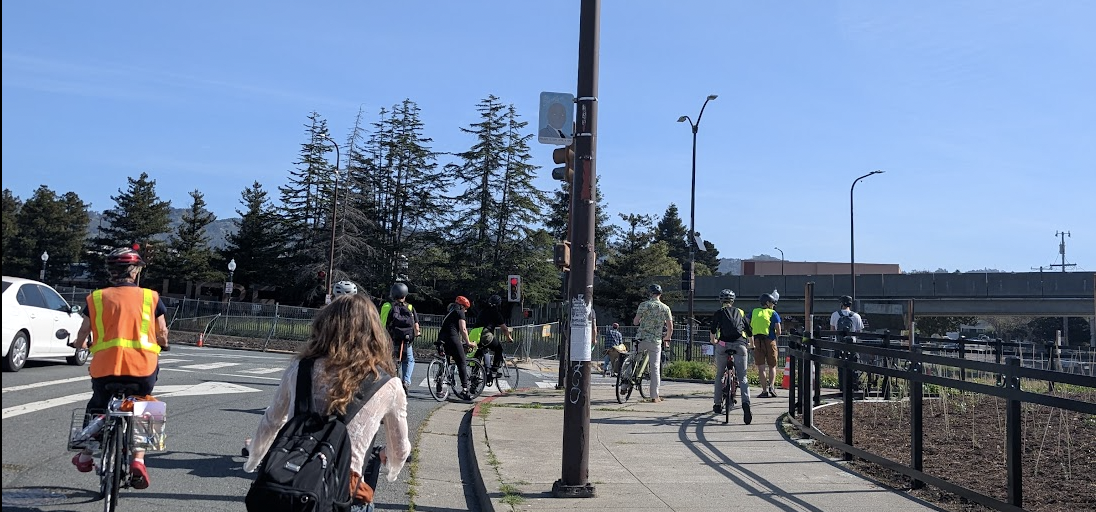
I thought about that, as we were putting posters on the poles where Flock cameras were feeding information to some central repository; perhaps a “suspicious activity report” was being generated at that very moment, about the flock of cyclists armed with posters and tape; perhaps an AI was collating the pattern and determining what kind of group activity we were engaged in. Or maybe not, of course. A lot of this technology is still in its early stages, and Flock is only a few steps down the road towards the total surveillance apparatus it wants to use your public tax revenues to construct (and which Bay Area city councils are enthusiastically participating in). But whether or not we were being tracked and known, as a group, as we navigated the bike-unfriendly intersections of MLK, Ashby, Stanford, and Adeline, the act of doing so, of being in that group, was doing something just as fundamental to how we were, and who we were. I thought about how I had come because I was curious, and about how—a few minutes later—I was working hard, as part of a group, to accomplish our task.
“Do you guys live around here?” a lady with what I took her to be her adult daughter asked, smiling, after I hailed her; “Some of us!” I explained, smiling back, and handed her a pamphlet. “I’m from Oakland, but a lot of us are from Berkeley.” I had a pack of a dozen or so informational pamphlets that someone had given me and I managed to give them all away to whoever randomly happened by. I felt very much part of a team effort.
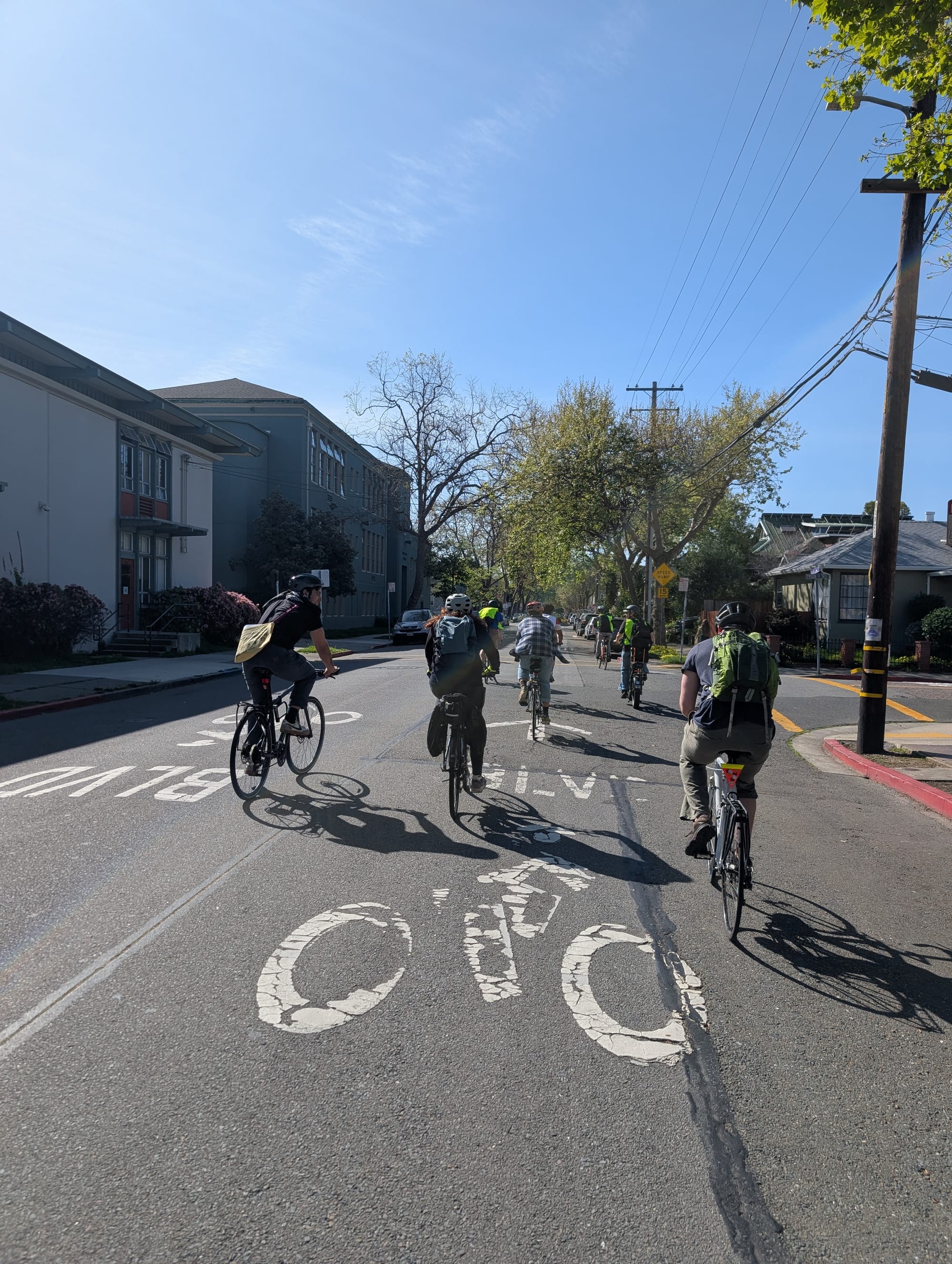
But we were also just a random group of new friends, out in the sun, getting some exercise on a lovely East Bay Sunday. There’s nothing better than a pleasantly collective task for meeting people, and I sometimes forgot that we were there for a reason, just chatting with whoever we happened to be biking next to (or, more often, to be standing by our bikes waiting for the flotilla to get moving again). Everyone there was a comrade, in whatever sense you want to take that term, and we were all enjoying each others’ company. Some emails and signal contacts were shared, and we talked about Flock surveillance (“oh there’s one; you can tell by the solar panel”) but also about random things, about web design, about the coal terminal, about how annoying it is to bike through this part of town and the routes we would normally take. I met the guy who made the “Cancel Piedmont” T-shirts and the stickers you sometimes see around town (I gave him $20 for a shirt and a pile of stickers), and he told me how much fun it is to wear that shirt and have people respond to it. The Daily Cal reporter mentioned that she’d rented her bike, but it was comped. No one seemed to know the right way to use the tape dispensers, and I might have been slightly annoying in trying to explain the right way to use them (you thread the tape through the little thing, so that you can apply it in one swift motion).
Most of the poles didn’t have posters; when they did, we removed and replaced the ones that referred to events that had already passed. Sometimes there were posters from and for anti-ICE organizing, or pro-Palestine demonstrations; at one point, we came to a pole where one of our group had, apparently, made and applied that very poster, and we all admired it to them. At MLK and Ashby, there were already Flock posters applied to that pole by someone else, some other group; we added ours to the chorus and rode on. A few Flock cameras had been vandalized, and we speculated how a person—not us, of course—would get high enough to spray paint them. We engaged exclusively in lawful expressive acts, such as posting posters and cheerfully declining to mourn those sprayed, nonfunctional cameras.
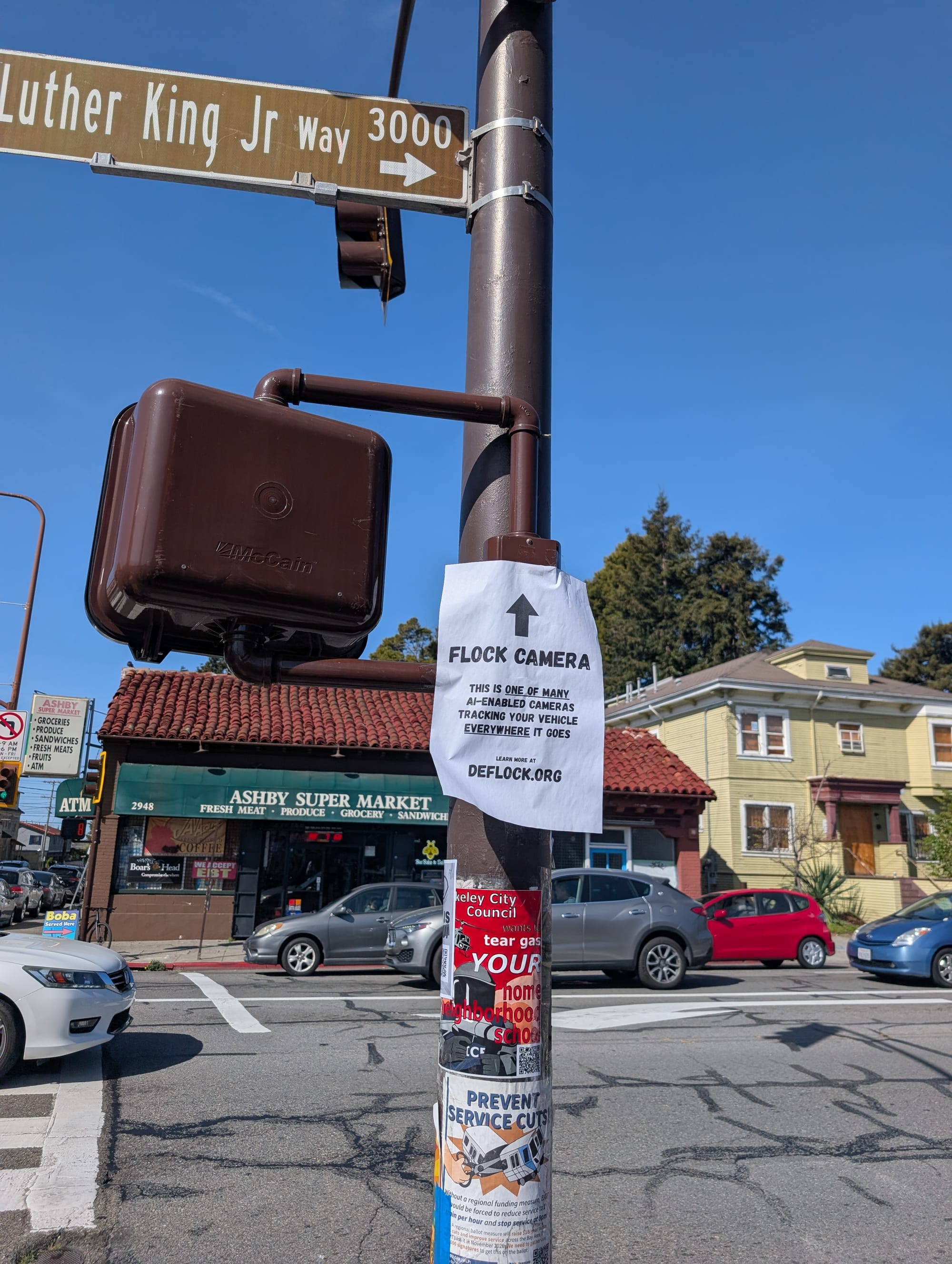
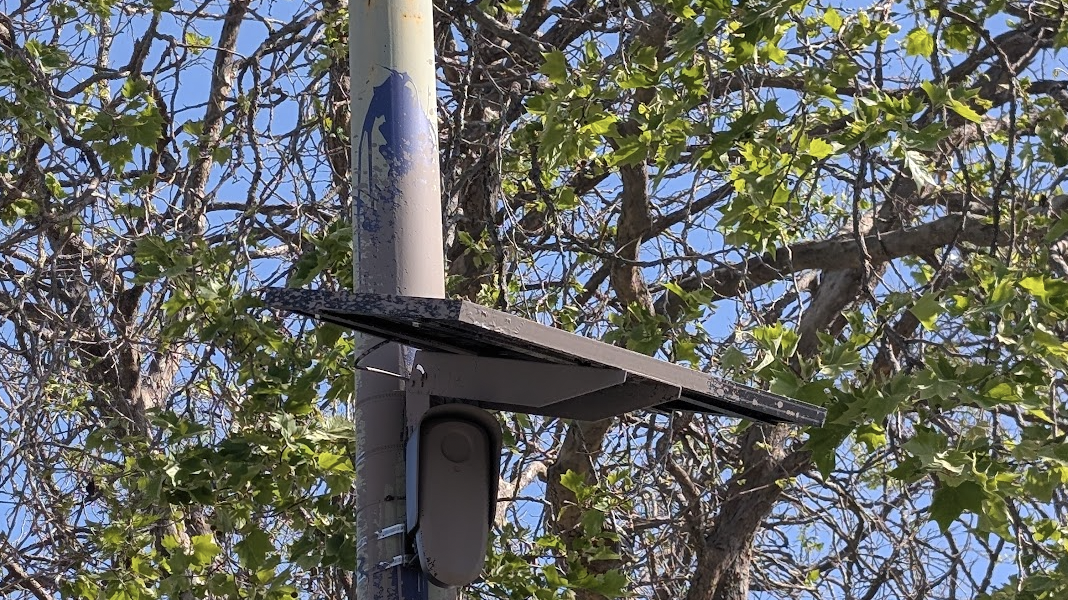
And then I had to go, because of reasons, had to break off from the group and ride home, where a different set of Sunday tasks awaited me. I handed my posters over to someone else, and for the entire ride home, I couldn’t help but scan the poles at intersections for that distinctive camera; my impulses and sense of my environment retuned towards the task of putting posters on poles and chatting with strangers. I kept wanting to stop and talk to people as I passed them, out of reflex, to tell them why we were out there, and to give them a pamphlet; it took me most of the ride home to remember myself as an individual again, to get back to that normal feeling of being alone in the world.