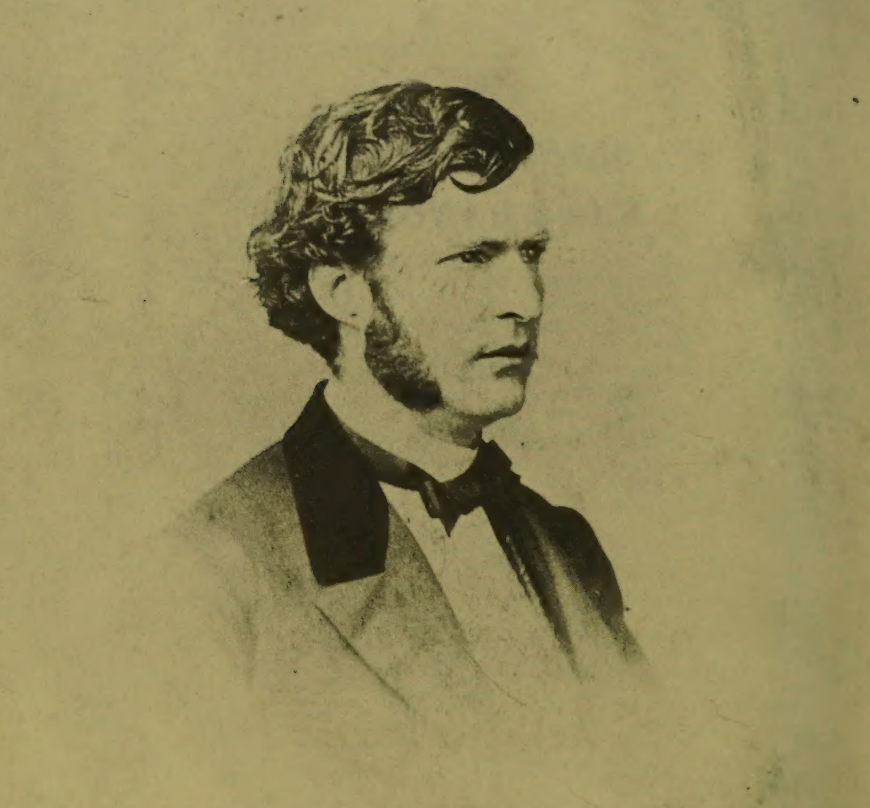
Herb Caen in Oakland
It’s difficult to dislike people who mock themselves for what they’re most proud of being, but I’ve been working through that difficulty with Herb Caen.
For nearly sixty years, he was the West Bay’s Garrison Keillor, a talented humorist and hack who produced, over and over again (and over and over again), a very particular vision of the city: the only real city in the Bay Area, against which other places (especially Oakland) were quite beside the point. The city’s hegemony was so total and unquestionable that it could laugh at its own provincial self-regard, over a drink, which was also his main thing. But of course, laughing at yourself is a power move, and that power move provided a reason to read the newspapers that started publishing him before Nancy Pelosi was born—when Dianne Feinstein was still in diapers—up until and beyond when he died, in 1997, millions of words later. You’d read Caen to laugh with him at the power the city had come to represent. You’d read him to feel powerful enough to laugh at yourself.
And you liked the guy. He was likable. He wasn’t so crass as to capitalize The City, which tended to come later from other, worse writers in the generations who occupied the cultural space that he opened up. And he won you over with all the sotto voce retorts with which he’d undercut his own most sweeping pronouncements, because no one punctured his own self regard as pointedly as he did. That was how his work worked, as his millions of words accumulated, week after week, year after year, decade after decade. But what a colleague at the Chromicle called his “always-fresh, never-predictable collage of inside news, celebrity sightings, one-liners about current events and love notes to his chosen city” was also, collectively, a single, endless story about how the city had changed from what it once had been. Seen historically, his corpus was one long space-clearing gesture evacuating San Francisco of all its prewar identities and history, gentrifying a city that had been built from industrial vice, gold, and organized labor by reimagining it as a respectable vantage of sophisticated leisure and consumption.
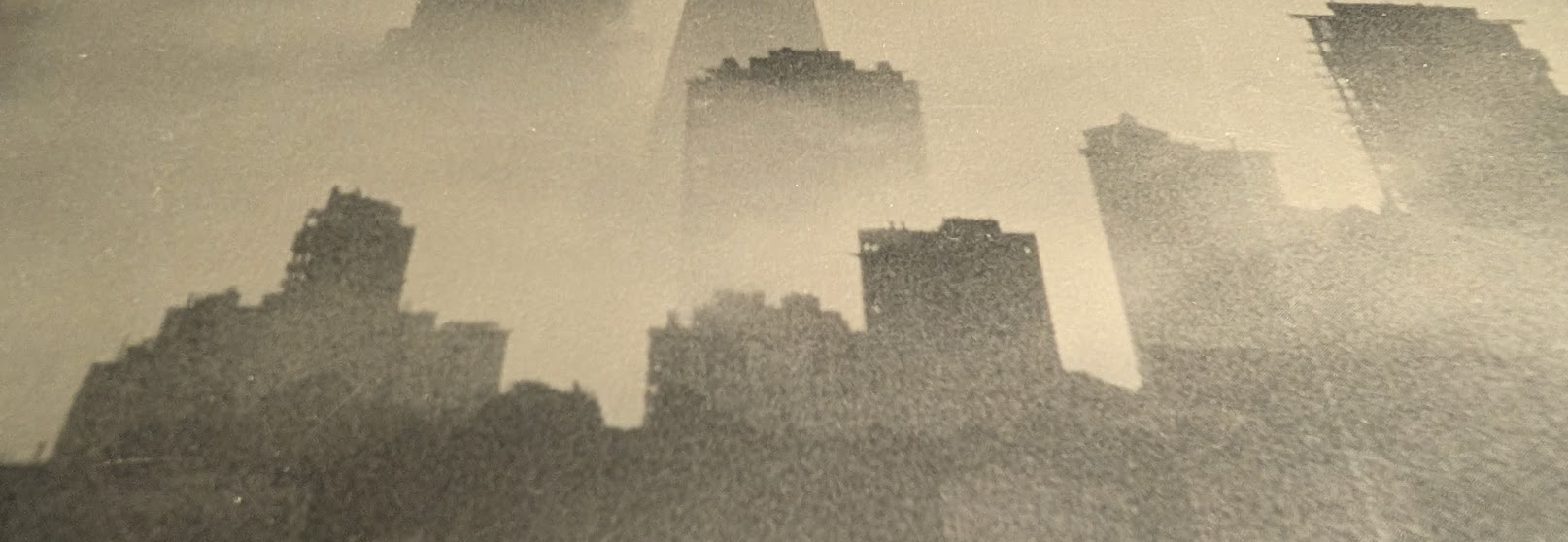
This was a reimagining that someone had to do, and he did it. Before him, to put it only a little too simply, “Frisco” had been a gold rush disaster of a town, a far-flung mining frontier on the Pacific rim whose soul was in the earthquake, fire, and labor of its factories, port, and hinterlands, and particularly in all those working-class homes that were destroyed in 1906 (whose occupants relocated to Oakland, many of whom stayed). A financial center rose up, of course, because there had to be somewhere for all that gold to go, and so that was where it went, rising high above the city around it. But the financial district wasn’t Frisco, or at least not what people meant when they said that name, which they certainly did say. Until, in the bubbling prosperity of the affluent postwar, when San Francisco started dining out on government contracts and massive military spending, Caen was there to narrate that “Frisco” out of existence, replacing it with something higher and more elevated, a city of hills and vistas, known from above. It’s no coincidence that so many pictures of Caen show him against that skyline, high above it. We in the East Bay know what the word hills means, and so did he.
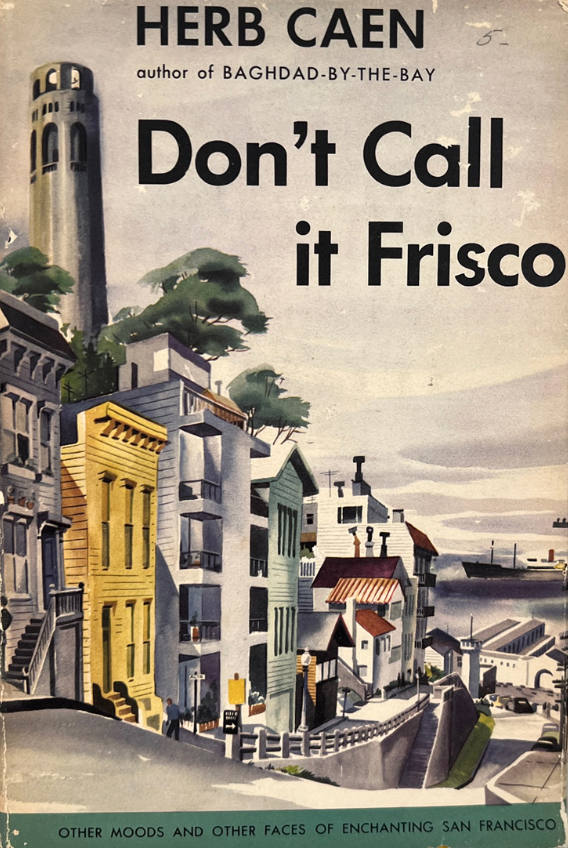
And so, in a very clear and direct way, Herb Caen is why you don’t call it “Frisco,” if you make a point of it, which I bet you do: “‘Frisco’ is a nickname that reminds the city uncomfortably of the early, brawling, boisterous days of the Barbary Coast,” as he wrote, in a column that became a book that became an ethos; it “shows disrespect for a city that is now big and proper and respectable.” Caen taught real San Franciscans to show respect for the city by eschewing what real San Franciscans don’t call it (even if that had been what everybody had called it for the better part of a century before he arrived).
Not calling it “Frisco” is probably his most enduring cultural footprint, which is saying something for the man who coined “beatnik” and popularized “hippie” (in both cases helping his readers dismiss and diminish the counterculture). He did not invent not-calling-it-Frisco, strictly speaking; Emperor Norton did it first, and there’s a story about Ogden Nash being challenged in 1940 to write a poem on the spot, and coming up with “May I be boiled in oil and fried in Crisco/If I ever call San Francisco Frisco.” But on-the-spot poetry only crystalizes what is already there; Nash must have already had the injunction in his head, as did Caen. But Caen coined it in the sense of giving value and currency to some preexisting material by stamping it with your name and words. Because as many a resident of The City has realized, creating value with your labor is not the thing that makes you rich. The trick is to be the one who puts your name on something someone else made, and then sells it.
Perhaps only someone from somewhere like Sacramento, as Herb Caen was, could have made “Don’t Call It Frisco” into the anxious pseudo-fact that every tourist or newcomer learns, the fear that calling it “Frisco” will identify them as what they shamefully are. And isn’t it silly to be an outsider and pretend you aren’t? Why, after all, do tourists work so hard to deny their station? Shouldn’t the point of tourism be to be a tourist? But it was the innovation of this young man—who never forgot he was from Sacramento—to insist that this refusal was the substance of a true San Franciscan. You didn’t have to be from the city, if even Mr. San Francisco himself was not: To claim the place, you had to relate to it in the ways that real San Franciscans did, luminaries who were known by they way they didn’t call it Frisco. In this way, in other words, his columns modeled a particular gentrifier type, the person who looks at San Francisco and sees what it could and should and will become, as long as it stops being what it used to be. And while Herb Caen might be dead, that kind of guy sure lives on. (No one doesn’t call it Frisco as much as someone who’s moved here in the last ten years and passionately longs to upzone the Outer Sunset.)
This is about whiteness of course. Caen is also why the phrase “Baghdad-by-the-bay” exists, to the extent that it still does, and though it mostly doesn’t—having become one of those terms that you realize you’ve heard people say before, when you hear someone say it—that familiarity only makes it sound more strange. It dates from the hot minute when, “in the understanding of the common man,” as a district court judge once put it, “the Arab people belong to that division of the white race speaking the Semitic languages.” Arabs became a lot less white after that—and “Baghdad” came to signify a place that white people dropped bombs on—but Caen coined the name to index an Arabian Nights fantasy of urban pleasure and cosmopolitan power. That it was a worldly city defined by its trade and sophistication and luxury allowed it not to be about the gold rush, the great fire of 1906, or the “Barbary Coast.” It was also a city that was “diverse,” but in a specific sense that was, then, compatible with still being white.
Even in implied quotation marks, “Baghdad-by-the-bay” was always a little too cute; he would default to “the city” when he was being serious, to an identity empty enough that it could be filled back up with the kind of nostalgia and romance for which his suggestive three-dot style was perfectly suited. In the ellipses between anecdote and rhetorical flight, he could make the place knowable as much by what it wasn’t—just as it was not, after all, Baghdad—as for whatever else, up close, it might be. Which was the point. For all that his daily columns were filled with on-the-ground details and funny little anecdotes of city life, his city came into focus when it was witnessed from afar, through the aesthetic haze of nostalgic postcard images, which he painted in prose at exactly the moment San Francisco was becoming known to tourists for its delightful fogs. And of course, seen from that distance and distortion, San Francisco is a stunningly beautiful city. But it was Herb Caen who taught even San Franciscans to see themselves from that distance and through that fog:
The tourist, looking at the city for the first time, shakes his head in a puzzled way and sighs: “This San Francisco—it sort of gets you. There’s something about it. I don’t know quite what it is, but it’s something” . . . And the San Franciscan smiles and nods, for he thinks he knows what it is . . .
Caen stayed a tourist, and wanted to, and so did his readers, who had to learn it from him because so many of them weren’t from there. There’s nothing wrong with that, of course; it’s something that’s always true of the populations of fast-growing cities, as San Francisco was. When he first wrote the “Don’t call it Frisco” essay, Caen had at that point lived most of his life in Sacramento, the way so many people who don’t call it Frisco will have lived most of their lives somewhere else. His future was in San Francisco, a city defined by what it would become, rather than what it was, but it was still true that he was mostly a San Franciscan in that future. Frisco was a name for the San Francisco that was gone. For him and for you, his imagined reader, being a San Franciscan had everything to do with leaving that “Frisco” behind.
That’s why even today, “Don’t call it Frisco” remains a thing that tourists and anxious transplants learn to tell each other, to erase all the people in San Francisco who did and do still call it that, all the working-class people in its factories and workshops and ships and ports for whom Frisco was the name because that was what they called it, and always had, and who had no cringing arriviste reason to stop doing so. “Frisco” was long the most familiar name for the people who were familiar with it, who were mostly workers (as most people are), who therefore didn’t tend to see the city they work in from a magical, nostalgic distance (even if they commuted in from, say, Oakland). And just as Frisco rappers still rap about Frisco, the golden era of not calling it Frisco is always a time when people still do call it that, when it’s an active performance of class, a way to mark yourself by your distance from those kinds of city people, and to stage yourself as a consumer of the city’s global pleasures and products, which you do, precisely, because you are not the person who makes them, serves them, or unloads them.
\O/
Very rarely, Herb Caen went to Oakland.
I haven’t read everything he wrote, because no human being could, but by using word searches to scrape digitized versions of as many of his collections as I could manage to acquire—using the same illegal means as any god-fearing LLM would—I got a pretty good picture of what he saw of the Town. Of the multiple millions of words in the corpus, culled from sixty years of his writing about San Francisco, I’ve found him mentioning Oakland three or four dozen times. That’s about how much space what he called “San Francisco’s service entrance” occupies in his mental map of the bay.
When he occasionally did have to go to “the mysterious east bay,” as he styled it, he didn’t tend to find it very mysterious. His 1957 New Guide to San Francisco and the Bay Area devotes three of its 232 pages to East Bay restaurants (and only restaurants); his sense of the East Bay is that it’s basically San Francisco, just massively less so. He’ll mention Oakland if it comes to him, as when the sun rises over the Oakland hills to illuminate his city, or when someone in a city-life column has an “of Oakland” attached to their name, or when he describes San Francisco as people “who were born in foreign countries (including certain parts of Oakland).” It's the halfway point between San Francisco and the United States: if you’re traveling from Sacramento, Oakland turns out to be where you get off the train to take a street car to the mole to catch a ferry to the City. It’s nowhere in particular, in other words, just halfway between places that are.
Mostly, though, Oakland is a joke. “Cross the Bay Bridge and sniff the wonders of Oakland,” he might say, suggesting you do no such thing. One of my favorites is the time he spun an entire column out of having to stop over in Oakland on the way to Tahoe. The gist of it is: Can you imagine? Herb Caen in Oakland? He takes some shots at “San Bruno International Airport” (“a make-work project that will never be completed” and “a carbuncle on the neck of civilization,” as well as describing how hard it is to drive there with a certain enduring accuracy). But Oakland’s airport is guilty of far greater crimes. It is a place for people who shouldn’t be wearing shorts but do, for example, and because there was not, yet, a Trader Vic’s at OAK, they try to serve him Coors, a beer “for anti-union heterosexuals” as he puts it (when he orders a vodka tonic, he reports being scrutinized by all and sundry for signs of being a union gay). Somewhere in there, he recalls the “last time” he was in Oakland, when he was hit with a custard pie as he emerged from a Chinese restaurant, in the shadow of the Tribune Tower, which he doesn’t explain, because such things cannot be explained. That’s the sort of Town business that can happen to Caen’s “Mr. San Francisco” in Oakland, to remind him never to come back.
This is why Caen is hard to dislike, by the way; he has too much fun making himself the joke to be truly cruel. It’s usually other people who tell the meanest Oakland jokes, even if he can’t resist repeating the funniest ones. For example, Ambrose Bierce gazing across the bay after the ’06 earthquake and fire and noting the lack of damage: “There are some things,” Bierce is said (by Caen) to have murmured, “that even the earth can’t swallow.” Or on the question of what to do with the just-closed Alcatraz, Caen appreciatively quotes George Lamont as saying “Let’s put Oakland on it [so] we can have the Bay Bridge all to ourselves.” At a Simon and Garfunkel concert, Carrie Fisher comes onstage to say how she’s enjoying “spending our honeymoon with you,” to which Caen reports Simon interjecting: “Can you imagine spending your honeymoon in Oakland?”
Caen usually let someone else hold the knife, preferring a more gentle, patrician sympathy. “Poor Oakland,” he’d lament, “So far from perfection, so near to San Francisco.” Which is actually a very funny phrase for him to riff on, if you know the original, and he may even have. And his very rare extended Oakland columns once or twice puncture his San Franciscanism: “The San Franciscan, eternally and infernally preoccupied with his own world,” he once wrote, “sometimes forgets that other worlds exist, right at his doorstep (how often does the Manhattanite visit Brooklyn?)”:
[W]hen the San Franciscan does bestir himself to pay a visit he feels like a character in early Ian Fleming or late John Le Carré. It was in just such a cloak-and-dagger mood that I set out one day. . . Putting on a dirty trench coat and arming myself with false identity papers, I crossed the bridge to the Eastern sector. It was cold and rainy, but the chill I felt was caused by more than the weather. What was life really like in the Free Democratic People’s Republic of Oakland? Talk had filtered through to the West that they were making great strides over there, catching up fast. I had to find out. I negotiated the bridge safely—the artificial barrier over which so many had made their escape. The guard at the border was uniformed and grim. I handed over my quarter and whispered “How much to get out again?”
He wrote that column in 1967, a year after the Panthers were founded, but that probably wasn’t why he made Oakland play communist East Germany; it was probably just a cheap east-west joke. He sees Glenn Gould perform at the Oakland Auditorium (now the Kaiser Center for the Arts), and he dreads “report[ing] to my superiors that Oakland indeed has a first-rate orchestra and crowds every bit as appreciative as ours.” He even continues the bit when he visits Trader Vic’s: “As is typical in so-called People’s Republics, Oaklanders claim to have invented it; the more nationalistic among them insist the West’s Trader Vic’s is a copy,” describing the “natives at the bar” as “friendly, but aloof.”
Oakland tends to elicit exactly this kind of gentle self-deprecation, and this awareness of his own hegemonic provinciality, because, in his endless ongoing instruction manual on how to be a proper Mr. San Francisco, it’s a useful foil, a wy to be who you are. “Your reaction to Oakland should always be friendly,” he writes, “but tinged with delicate humor, like: ‘After all, the Bay Bridge had to end somewhere.’” Like the bridge itself, Oakland is necessary for San Francisco to self-define. Without the other side, without the other, how could the city know itself, be itself? Mr. San Francisco is known, he writes, as someone who cannot be convinced “that Trader Vic is really from Oakland,” because to him it’s “a San Francisco institution, with a branch across the Bay.” It’s exactly the point that he, and you, understand that the first Trader Vic really was on San Pablo Avenue. It’s a joke because a real Mr. San Francisco is someone who doesn't care.
Sometimes people think Herb Caen said things that they feel like he should have said, which is telling, even when he didn’t. For example, you can find attributed to him the phrase “The trouble with Oakland is that when you get there, it’s there,” and it’s possible he wrote that. He might have; he wrote so many things. But I’ve never found the original, and it’s uncharacteristically mean. In the one reference to the Stein line that I could find, he just makes a baffled show of not knowing what “that lady” was even talking about. A certain dismissal is implied in his attitude toward the Bay Area’s non-San Franciscos, but it’s sort of the point that it’s never that specific. He just didn’t care enough about Oakland to talk shit. To the extent he did, Oakland was a mirror for his own provincial self-satisfaction, and he only went to Oakland to make jokes about how funny it was when a San Franciscan was forced to survive in the foreign and strange country of reality.
\O/
By the nineties, when he had written his column for six decades, when he was about to start dying of cancer, Caen abruptly decided that it was fine if you call it Frisco.
And why not? It was a “salty nickname,” he wrote. It was “redolent of the days when we had a bustling waterfront.” But with the salty waterfront masses replaced by whatever Fisherman’s Wharf is, there was no need to pretend they didn’t exist. He could admit his San Francisco was made up, that he had printed the legend, because it more or less, finally, come true. And this, too, is often how gentrification goes. Once the old thing is gone, truly gone, then you can truly miss it, notice it, appreciate it. That’s why, when his task was completed, he could finally be nostalgic for when it hadn’t been, when Herb Caen still had work to do, back when “Frisco” wasn’t yet gone enough that it was safe to say its name.
This is, of course, also, about whiteness, as so many stories about the Bay Area dance around how much they actually are. In the nineties, when Oakland was still a very Black city, the absolute freefall in San Francisco’s Black population was what most marked its arrival as a city with a service entrance, which was where all the non-San Franciscans who might still say things like “Frisco” could still live, across the bridge. “Don’t say Frisco” is about whiteness in exactly the same way “no there there” became a way for twentieth-century Oaklanders to talk about how the white Oakland of Gertrude Stein was gone (without having to be explicit about what had replaced it).
Herb Caen was not a racist; his politics were even good, when he was forced to have them. For all his snobbery, when he actually had to have an opinion about a hot button political issue—“the farce that is capital punishment in California,” for example, or the war in Vietnam—it’s often hard to fault him for what he actually said. It’s generous to call him the “conscience” of the city, as people sometimes do, and to credit him as calling out racism. But I suppose we can be generous. He must have done it a time or two, since so many people claim that for him, even if any random Herb Caen column is a lot more likely to tell you who was drinking in what bar on what night.
But it’s also exactly the point that he only had politics if you forced him, and Herb Caen’s San Francisco was the kind of very white city that excused you from doing so. When in 1924, eight thousand Ku Klux Klan members had burned a cross in the Oakland Auditorium, it had been Catholic immigrants they were threatened by and threatening. But in the forties and fifties, Caen could extol San Francisco’s “diversity” because Oakland’s Black population was exploding, and taking the mantle of nonwhite away from all the white ethnics the KKK no longer cared so much about: the entrance of all those Italians, Greeks, Irish, Russians, Germans, Jews, and even Arabs into whiteness was what made them real San Franciscans, in a “Baghdad-by-the-bay.” “Real” San Franciscans were always people who could buy houses on the good side of red lines and whose businesses could and did discriminate against those who couldn’t.
And so it’s no contradiction to note how many Black San Franciscans have said “Frisco” with uncomplicated gusto. It was never them Caen was speaking to, or about. Which is the thing I’ve landed on with him, I guess. When he had to think about race, explicitly—or about Oakland—he was that beloved and honorable type of white person, the “not a racist.” But the comfort of the world he imagined into being, over drinks and in his columns, was one where both he and the you that he addressed almost never had to think about it. It’s a benefit of living only around white people—of having, for example, all the Black people collected in Oakland for you—that it’s just not your problem, not something you have to notice. And you can even make fun of yourself for how rarely you do. You can always let someone else hold the knife.
 Aaron Bady