I have failed to review Tom Lin’s Babylon, South Dakota
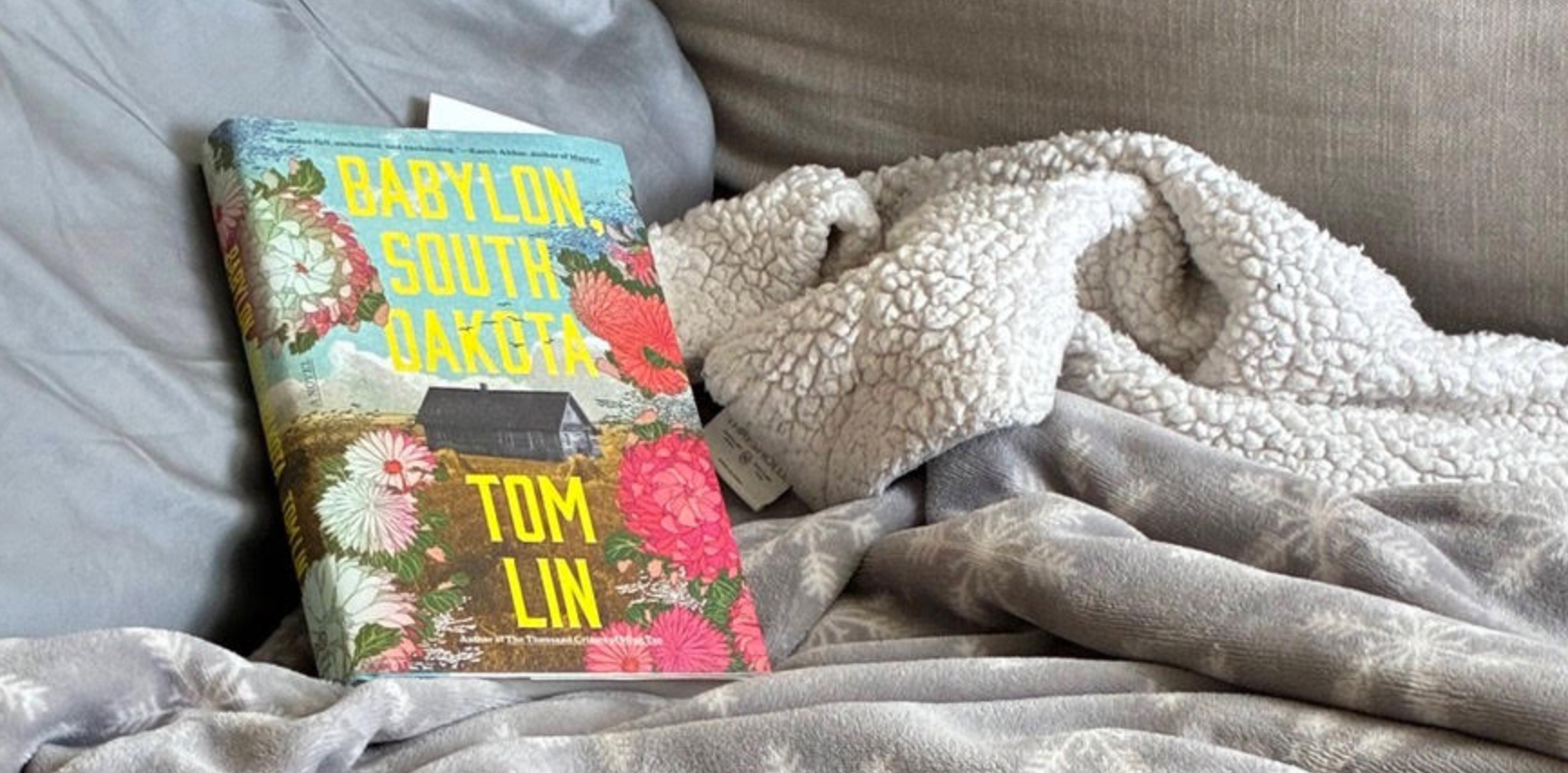
I had high expectations when I picked up Tom Lin’s Babylon, South Dakota. His debut, The Thousand Crimes of Ming Tsu, had been a tense Western with sharp prose and a wonderful protagonist. I was ready.
Unfortunately, my 29-year-old sister-in-law is still living on my couch.
In mid-March, my wife’s mother had called: My 29-year-old sister-in-law, who was living at home, was in a prolonged fight with her older brother. “Can’t she come stay with you, for a few days?” my wife’s mother pleaded. My wife looked at me. “It’s just a few days,” I said. Seventy-two hours later, she had moved in all of her possessions, claimed our couch, cleared a bookshelf for her clothes, and covered our bathroom counter with various bottles and gels.
We do not have room in the two-bedroom we moved into when my daughter left for college, though it’s a far better place than where we lived when my wife first began her graduate degree, here in San Diego. Even that place was much more expensive than the apartment on Kelton Court in Oakland that we left behind. I absolutely hate it here. In Oakland, I had a scene: bookstores and readings where I could talk books with other book friends. But once my wife finished her degree, our children had put down roots, and so I work from home; when I venture out to see acquaintances, none of them read. I started reviewing books to fill the void, a one-sided conversation with unnamed readers because I am lonely. We are moving again soon. That scares me even more.
But I have more pressing matters at hand. I need to read Tom Lin's book. Also, when my wife left for a ten-day trip at the beginning of this week, she gave me a task: get her sister off our couch.
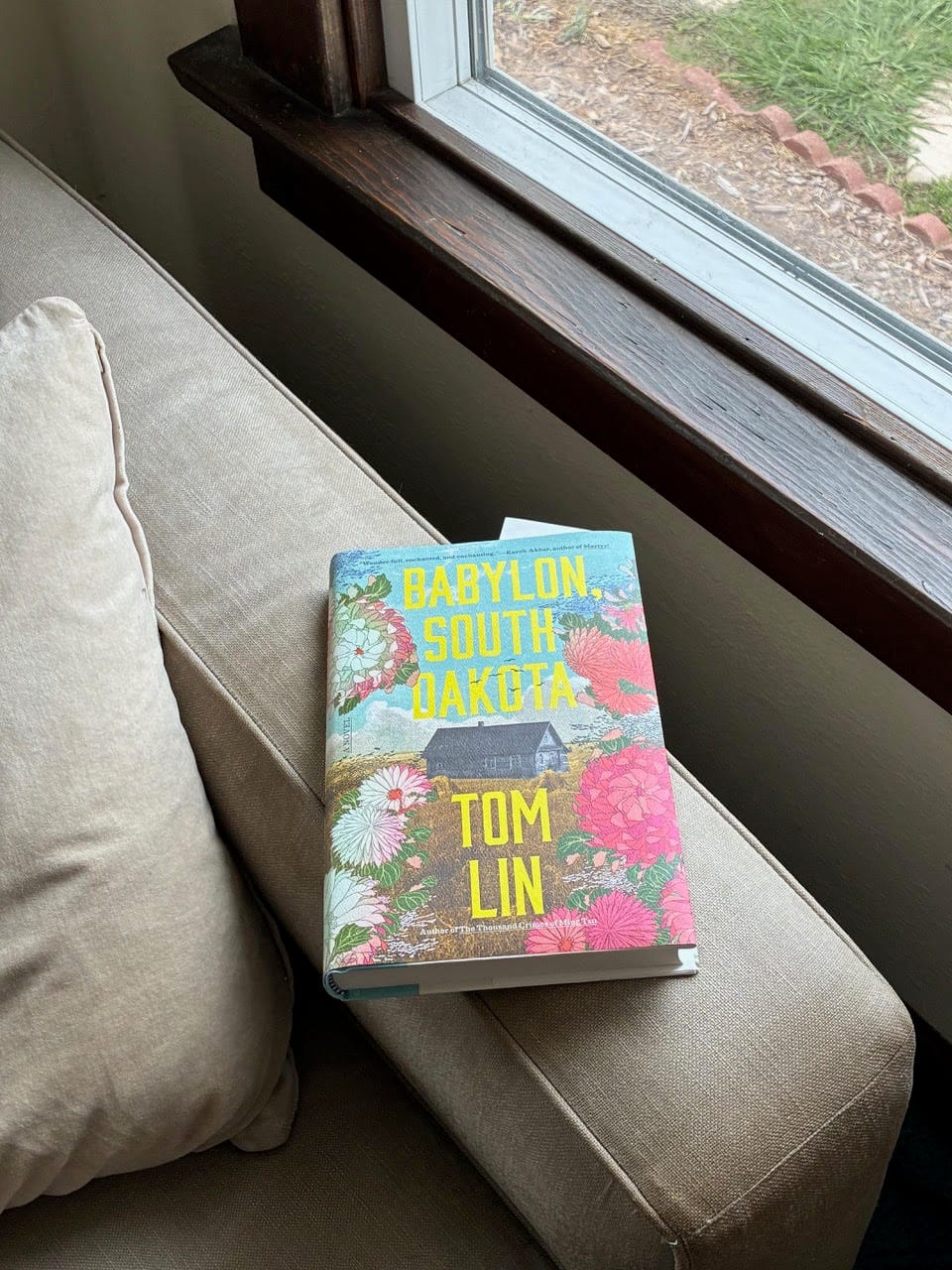
I prefer to start reading books on Monday and finish them by the weekend, but it’s Wednesday and I've made little progress in Tom's novel. The opening is engrossing: Hsiu Keng and Lee Mei adopt the names Saul and Mei, and arrive in South Dakota after inheriting a desolate farm from a distant, unknown relative. It’s clearly going to be a family saga, the kind that unfolds over decades.
My wife calls from the Adriatic Coast. The trip is a graduation present for my daughter. My mother and sister are also in Italy, but I stayed home, because I have a dog. And also a son. “Have you tried to talk to her yet?” my wife asks. “I will tonight,” I say. “We'll go out for beers.”
Tom's novel sits on my coffee table, which sits in front of couch, but a worse couch, not the Alabaster-colored Pottery Barn couch that we had to finance when we first moved down here, that my sister-in-law is sleeping on. I love this couch. It’s where I sit, lonely in my house, and read the books for review. I have not sat on it since mid-March.
“Why don't we go get some beers?” I say to my sister-in-law. She loves getting some beers. I look once more at Tom's novel as I close the door. I think about Tom’s novel as we walk to the restaurant.
I cannot understand why she insists on staying. When she first arrived, she’d spent her days studying for some sort of state licensing exam, after completing physical therapy aide school, or something of that nature. She failed the test but then something bad happened: she got a job. Now she's making decent money, for the first time in her life. I worry that it’s giving her a sense of permanence. She also has this boyfriend, in another part of the state, who wants her to move in with him, get a job in his town, sleep in his bed, in his room, which is next to his parents' living room. A few weeks ago, she told us he was coming to visit, several hours prior to his arrival. They fought before he left. He didn’t understand why she would rather stay on our couch than move in with him. I also do not understand this.
Halfway through our second beer, I try. “Look,” I say to her, making a general gesture. “We all have to make sacrifices in a relationship.”
She stops me and her diatribe continues for 20 uninterrupted minutes. I stop listening almost immediately. A hostess walks by several times, giving us the side-eye, whether because the entire restaurant has noticed my sister-in-law’s impressively long speech or because she’s disapproving of our perceived age gap. I meet her glance once. I shrug. By the time my sister-in-law finishes, I no longer have the resolve to continue.
Back at home, I hole up in my bedroom with Tom’s book. I have had a couple beers, and I have been beaten to a pulp. But as Saul and Mei struggle to adjust to life in South Dakota, they disagree about what to grow on their land: Saul wants chrysanthemums from seeds he brought from China and Mei prefers livestock. (We all have to make sacrifices in a relationship.) Then strange men in suits arrive, Saul signs papers, and the military shows up; they build a missile silo, to house a nuclear weapon, on an acre of the farm. Saul and Mei had not understood the papers they signed. The government capitalized on their naivety, on their willingness to oblige, and it’s not clear how to make them leave.
In the morning, my wife calls from a wine tour, cheerily. “How did it go?”
“Not great.” I don't offer details.
“Make sure this is done by the time I get home,” she says. I have six days.
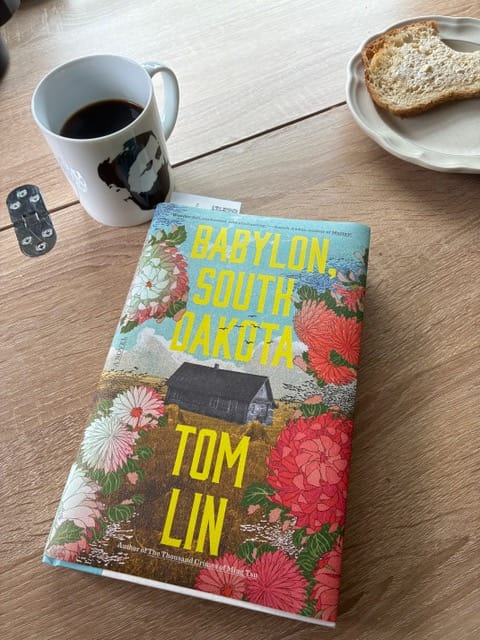
Saturday. Depression sets in. I'm behind on Tom's book. I drink coffee and while my sister-in-law snores from my living room, I make progress. Some of the early sections toe the line of plausibility, so the novel introduces supernatural elements: Saul sees ghosts, their daughter Mara can talk to farm animals, and an immortal dog is adopted. This is not unexpected for those who read Lin's debut novel, but it wasn't telegraphed from the opening pages. But then I worry I might have been distracted and missed something.
Later in the morning, I drive north toward Riverside, past wild burros grazing on the side of the road. My best friend is living with a woman I have not yet met following his divorce from a different woman I have unfortunately met. We sip tea on their patio. I explain the problem of my sister-in-law. They’re amused, and they think they’re laughing with me. I suppose there is humor in this situation, for those not living through it. I tell them about Babylon, South Dakota, about the missile silo. “There’s a metaphor here,” he laughs. I do not respond.
Be more direct, they suggest, when I leave. Forceful but empathetic. I almost hit a burro as I take the corner leaving their farm. There were no burros in Oakland.
That evening, I try to read, but my sister-in-law is watching a dating show. I could retreat to my bedroom, but I am tired of retreating. Forcefully, but emphatically, I suggest we go out for beers again. If I don’t drink too many beers, perhaps I can finish Tom’s novel afterwards, though I’m running out of the time.
“Look,” I say, directly, during our first beer. “I'm sure you don’t want to live on our couch? Have you tried making a plan with your boyfriend?”
An emotion I can't decipher spreads across her face. Then, much too loud for this bar, she starts yelling. “What is it you want from me? I fucking told you what my plan is.”
Everyone around us is staring. She folds her arms across her chest. “Is this the only reason you brought me here?” “No,” and my voice cracks. “I enjoy spending time with you.”
We sit in silence and drink a few more beers.
My wife calls in the morning. She tells me about the purse she bought for our daughter, about the shoes she bought for herself. Italian leather. We make good money, but everything is so expensive. I'm scared to check our bank account. My wife asks for a progress update.
I deflect. I think about a quote from Tom Lin's book., when the Air Force wants to give Saul a new truck, and Saul is discussing it with Abram, a translator who became a family friend, because Saul does not believe the Air Force has the best of intentions: “I just want to know that we're safe,” he says. “You told me we were safe. Were you lying?” I wish I could read that line to my wife.
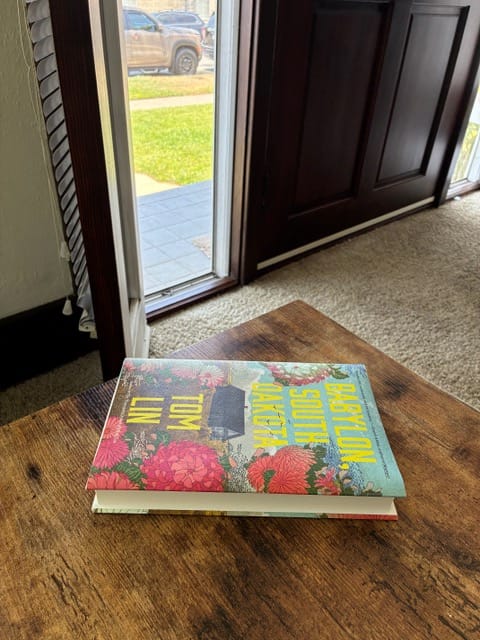
In the near future, we will move again. My wife wants a doctorate. Our kids will be out of the house (we hope). She’s looked at programs in Chicago, in Montana. She does not look at Oakland. I wish we could go back so I could talk to book friends in bookstores and over lunch. But when I look at a map, it’s not the Oakland I remember. The bookstore has a different name. The bars on 19th Street have different names. The Graduate shut down, and there are chain coffee shops on Piedmont Avenue.
On Monday, I finish Tom's book. It's a slow-burn family epic, with strong prose, but it feels different that the immediacy of his debut, like he's stretching his legs, basking in the moment rather than moving the pace. The supernatural elements might come as a surprise. But it’s about displacement, about the difficulty of assimilating to unfamiliar places. It's about how some choices can have profound impacts, for long stretches of time.
I wish I could say more, but I have failed this book as a reviewer.
My sister-in-law avoids me. I worry she is no longer open to advice. I worry that we're facing a much longer residency. I worry about what we’re facing further on the horizon and how difficult it might be to adapt to somewhere new. I worry that even moving to a new house won’t get my sister-in-law off the couch. And I worry about how much I worry.
My wife calls. The connection is poor at the pool where all four of them are, who went to Italy while I stayed home with the dog, and also my son, and also my 29-year-old sister-in-law. “Did you do it?” she asks.
“Yes,” I tell her. “I finished the book.”