Maybe the real boosters are the communist films we made along the way
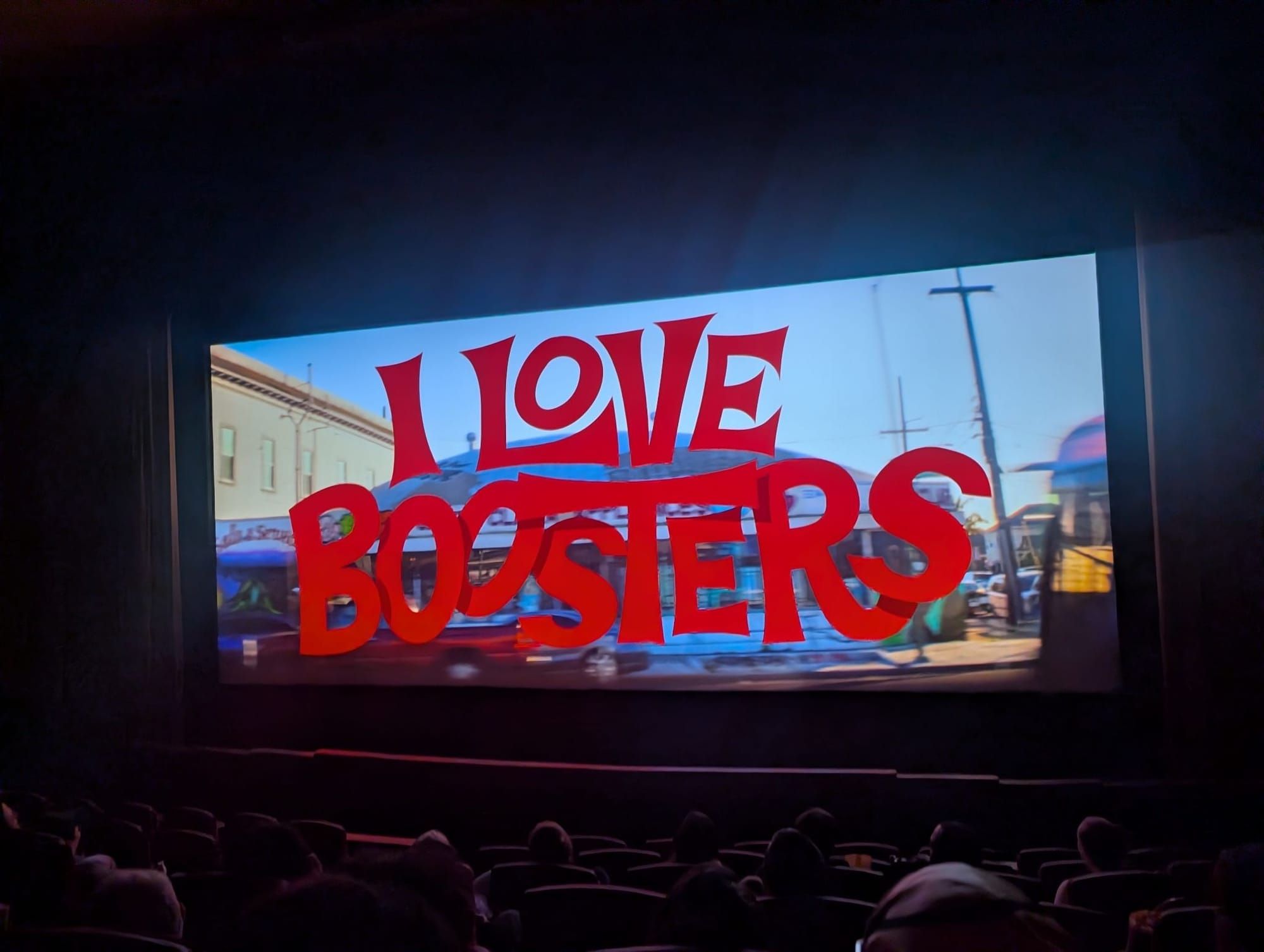
My favorite part of I Love Boosters is the ending where Boots Riley turns to the camera and explains the kind of communist revolutionary he is (which, luckily, is the kind I am). I also liked when he explained dialectical materialism to the masses. Those were good parts of the movie because—by helping to explain to the workers the only-thing-to-lose-ness of their chains (which, of course, as workers, workers already know)—the movie rendered even more inevitable than it already was the always-already-inevitable workers’ revolution to abolish capitalism.
So, good job on that front, Boots.
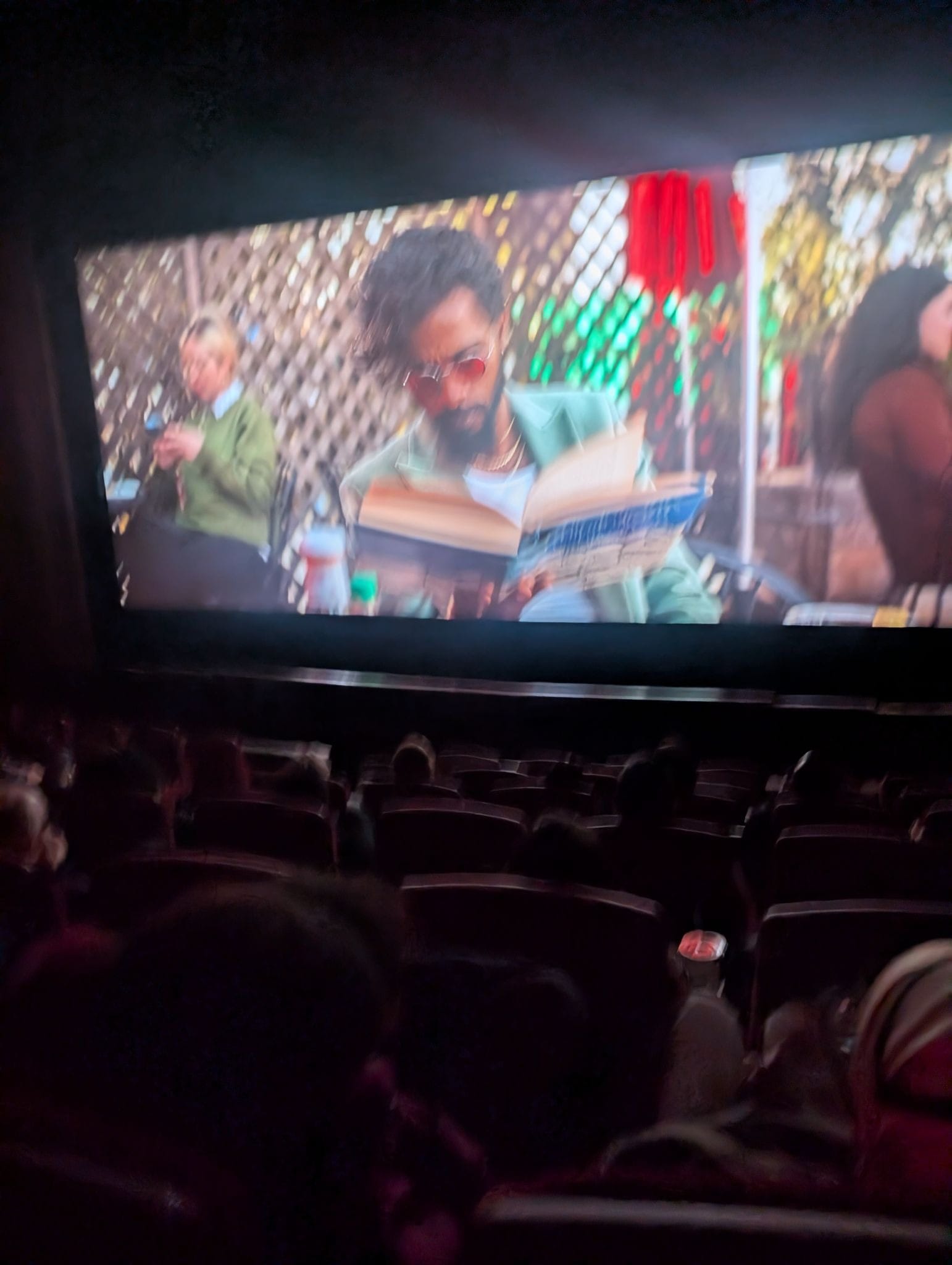
Another thing I liked about the movie was the good-natured male succubus who steals women’s souls through their vaginas by way of supernaturally performed demon cunnilingus. I liked how that character was almost completely superfluous to the “plot,” and I suspect that pussy-pleasing, pinky-ring succubi were one of the things that Marx never anticipated, and any viable theory of anticapitalist revolution, henceforth, will need to incorporate it. There was also something very funny about how the girls were disappointed but sort of unsurprised when they found out that “Pinky Ring Guy” was not just a basic and normal performative fuccboi, but a kind of loosely specified millennial-old infernal cunnilingus dragon. I liked the way they were like “ah well, another one of those,” like that was just one of the things you run into, amirite ladies? But he turns out to be a basically good dude in the end, which was nice, even though you still can’t really date him (because of the soul-draining dragon cunnilingus thing where he sucks your soul out of your body through your pussy). But it’s not like he’s, you know, a capitalist, that would be really bad. That whole business was very funny, especially the part where he performatively read Midnight’s Children, which is the absolute perfect novel for him to be reading in that scene.
I don’t know if plot is fascist, necessarily, or if “stakes” and “agency” are only a euphemism for privilege, but I hope you can tell from my oh-so-arch and hilarious descriptions of the movie, above, that I’m making a distinction between two different ways of reading and critiquing what a communist movie is and is for. One way would be to read the movie by insisting that it’s telling a coherent story about the world, with a message for what we are to do with it; another way is to let it expand our sense of what is possible just by being a thing that exists.
I suspect that if you liked this movie, or if you didn’t, it has something to do with whether you treated it as a Message from the Author, Boots Riley, About the Kind of Communist Revolution He Favors (in which case much depends on whether you favored that precise kind of communist revolution, and the way he advanced his message); whether you liked the flick also has to do with whether you just sat down and enjoyed an experience that, truly, at no point, would you have predicted that this was the film it was going to turn out to be (nor, afterward, would you have been able to explain exactly why it was that way), and which, in that way, expands your conception of what is possible, sort of like the part in Sorry to Bother You where you suddenly realize you’re watching man-horse hybrids galloping around (which I sometimes suddenly remember and am like “wait, what?”)
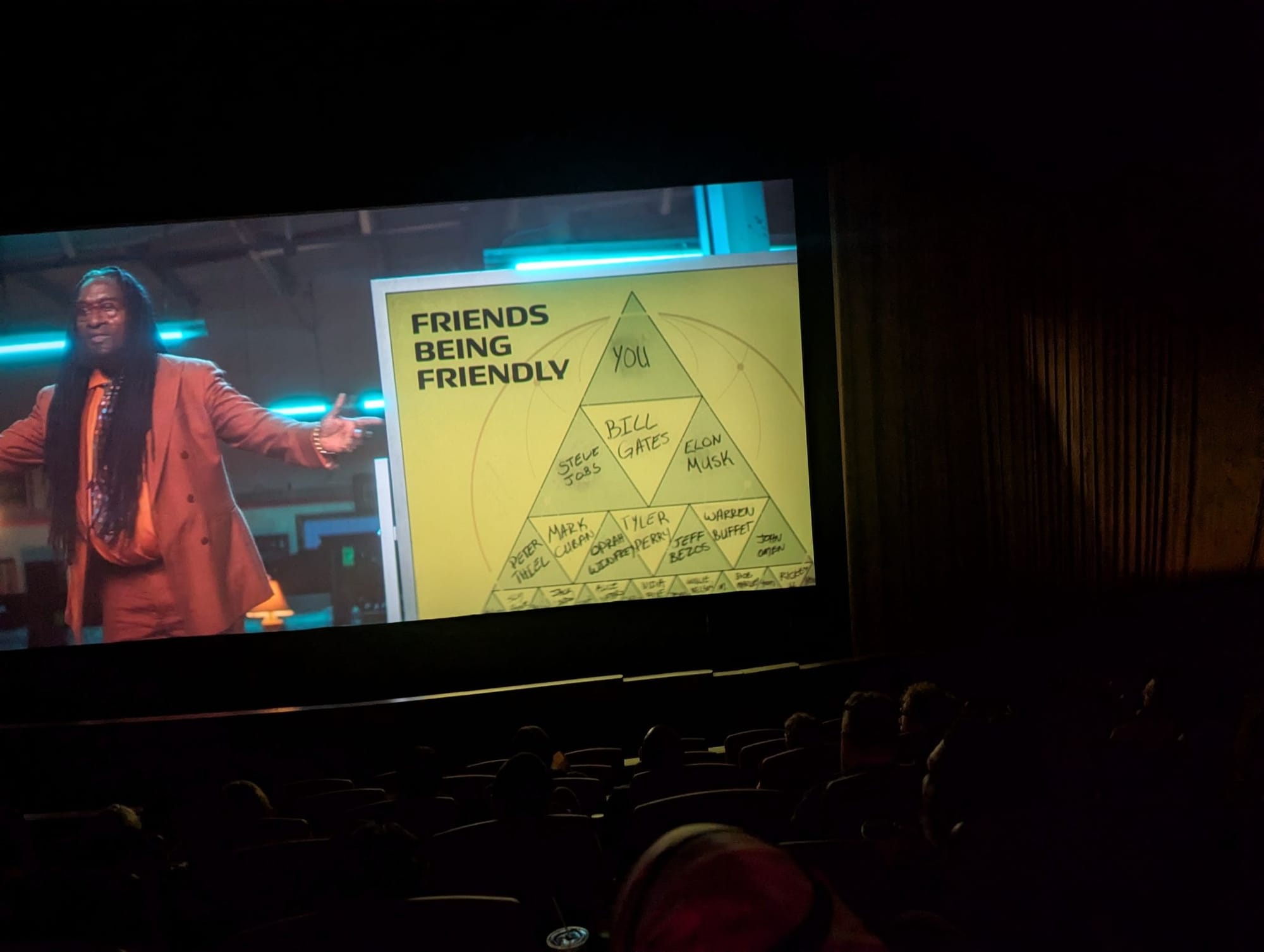
Had you anticipated when you bought your ticket for I Love Boosters that the movie would feature a totally unnecessary extended subplot about skinsuit-wearing Empower Oakland spokespeople? No, you did not.
I Love Boosters is a great movie, but I think mostly in the second sense. It’s got really funny and very surprising stuff in it, and watching it is an experience that is vastly superior to watching your average movie, since your average movie is much more likely to be variations on the same old thing, and often doesn’t think capitalism sucks (nor, specifically, that we should have a workers’ revolution to overthrow capitalism). By contrast, I Love Boosters is not only a Boots Riley movie, but it is the most Boots Riley movie there has ever been. You can throw out comparison names, like Gondry and Godard or whatever and not be exactly wrong (which even the movie itself winks at), but more than Sorry to Bother You—though also partly because Sorry to Bother You exists, such that you can compare I Love Boosters to it, as part of a filmography, and say “that, but moreso”—the main thing one can say about this movie is, “This is a Boots Riley movie, and even more so than the other Boots Riley movie, which is also a Boots Riley movie, just a bit less so.”
The fact that Boots Riley has been allowed to make two movies is maybe the most surprising thing about I Love Boosters. Instead of Hollywood being like “fool me once,” Boots has been allowed to have a filmography. That is not something anyone would have predicted, nor the sort of thing that you could explain how it happened in 21st century American capitalism.
And yet…there it was, a thing that happened, on the screen. I saw it! Maybe you did too. Maybe it will even happen again.
If you didn’t see it, you should see it in the theater, where you can notice—as I did—that people in the Grand Lake Theater at a daytime matinee are all really enjoying the movie and laughing at it and having a great time together with other strangers. No one rioted in the streets afterward, and the workers’ revolution is still buffering, but I feel confident in saying that absolutely no one watched it and said, “Hey, this movie extols communism and yet participates in capitalism, I am very intelligent.”
To the extent that this is a review, then, I feel like you should go see it, if you like seeing movies that are singular experiences, and are also funny, and well made, and surprising, and especially if you are a communist who would like to see a workers’ revolution overthrowing the capitalist imperialist order. But even if you aren’t, you will probably still enjoy the movie, because of the jokes and spectacle and general vibe. You might find the ending—where all the characters turn to the camera and explain that capitalist anomie can be overcome by joining one’s comrades in the joyous work of anti-establishment action, there is power in a union, and also national boundaries are a tactic used by the capitalist order to divide the international working class from its natural and joyous radical solidarity—to be maybe just a bit much. But even so, by that point, I think your bourgeois ass will probably have laughed a lot at the movie, and will have generally enjoyed it, and won’t mind too much.
The critics have tended to really like the movie, because of the whole “this is a good and surprising movie” aspect of it. Those who say they didn’t, make a point of explaining how they wanted to like it, and couldn’t. For the New Yorker, for example, Richard Brody sounds like he’s giving Boots a Gentleman’s B in filmmaker class. (“Riley’s wild spectrum of images and ideas doesn’t fit readily into a clear critique…he doesn’t quite pursue his strongest impulses to their logical conclusions [and] offers no sense of what the boosters achieve, socially or stylistically, with their redistribution of luxury goods”—a funny gloss given that redistribution is not remotely the horizon of the movie’s politics.) Angelica Jade Bastién says things for New York magazine like “Riley is not interested in film as an art form so much as in using it as a vehicle for a galvanizing pro-worker, pro-union, pro-communal rhetoric in a way that ultimately undermines his message,” and suggests that to do what he wants to do, instead of being Boots Riley, he should have been Lina Wertmüller. Others complain about how much it all is, implying that there could have existed a better-edited, streamlined version of the same film that they’d have preferred (Maya Philips, for New York Times: “Too many elements of Riley’s sophomore feature hang like excess fabric from what would otherwise be a stunning, smart ensemble”), and alas that there isn’t.
Those are probably not the only more-in-sorrow-than-in-anger reviews from reviewers in New York City. Though it is interesting that I picked those three as representative before I even noticed that all of them are writing for publications with “New York” literally in the title, a thing that might be relevant for a movie that really does kind of assume that its audience gets all its little Oakland jokes. But those three reviews capture a general sense of how, if you didn’t like the movie, you might articulate that disconnect. And I don’t even think they’re wrong about the movie, exactly: If you didn’t like this movie, which is nothing all that unusual for a movie, then you might have not liked it in very similar ways to them (and if you don’t like a thing, then that thing is objectively not-liked by you, there’s no arguing about it). I don’t even think there’s anything out of bounds about saying, “This movie should be a different kind of movie than the kind of movie it is,” and I say stuff like that all the time.
That said: If Brody wants a more coherent film, if Bastién wants more psychological and social realism, and if Philips wants something trim and sleek, well, I think the thing is that Boots clearly wanted a messy, all-of-the-above-and-more film that functions a bit like a cartoon, and I think he made more or less exactly the film he wanted to make. This is, as he tweeted somewhere, the director’s cut.
So it’s interesting, this assumption that Boots Riley is doing a certain kind of thing, the thing communist directors should do (which is produce a coherent message, satire, and/or critique), and his imagination should have been edited, policed, or educated into producing it that right way, with the implication being that, because it wasn’t, he produced the wildly extra thing he made, instead. (I had the thought, somewhere, that I Love Boosters feels accidentally-on-purpose in dialogue with Ned Isakoff in Seinfeld, the communist who wears “bland, drab, olive-colored clothing,” and with the more general idea of a humorless communist who Delivers a Message. But at a certain point, I realized that that’s really just a way of saying that Boots Riley’s vision of communist art is very specifically not the socialist realism of a certain black-and-white caricature of the cultural front. Here is where I stash this observation, in parentheses, because why not.)
Virtually all of these critics essentially admit that, at least while they were in the theater, they were having fun. So I think it’s something interesting about the place Boots Riley occupies in the “cultural conversation,” where—because he is a communist, his job is assumed to be to tell you, directly, about the kind of communism he prefers—which, then, makes it possible for a critic to tell him, instead, what his job should have been, if he’d done his job better, which he didn’t. In other words, it is by slotting him into a genre called “Communist Director” that it becomes possible to say that if he’s going to do satire, it shouldn’t be like this; if he’s going to extol boosting, yes, but not this way; if he’s going to make a communist movie, well, this is not the kind of communist to be. The more we zero on this sense that there’s a standard version of the thing he’s doing, the more, as critics, we become his managers on a job site, where he is making a certain kind of product which we are in the business of standardizing.
But a thing I really like about I Love Boosters is that Boots really doesn’t work for us, and when he made the film he wanted to make, he made a thing that—like the idea of Boots Riley making two movies—sort of feels like it shouldn’t be possible, and wouldn’t have happened, and it kind of rules that it was, and did. In that vein, I really like that it’s also a movie about how to make art for yourself, in a world where you might have a job, and in which almost literally every space is, in fact, a site of work and commerce—where even your actual goddamn apartment is a literal chicken restaurant that makes you want to eat chicken—but also in which ultimately the thing that makes you come alive, and not be sad, and feel alone, is precisely the extent to which you can figure out how to live a life not defined by the imperatives to produce a certain kind of value.
The real metastory of the movie is just “Get together with your buds and imagine otherwise!”
That mode of life is a thing called Art, which the movie very carefully manages to define as a kind of worldmaking through light and colors, a definition through which both filmmaking and also procuring and choosing clothes to wear come to be, functionally, the same thing. What, after all, is a movie but light and colors used to imagine a new reality? What, after all, is wearing clothes but crafting a person you weren’t before by means of color, and the light that makes your body visible? And both have to be stolen from capitalism, whether that be an aspiring designer making a living by boosting and selling clothes or a communist director making a movie. Maybe neither is going to make the revolution inevitable, as such, but they don’t hurt, either.
What I like most about I Love Boosters, ultimately, is that it's far less a movie in which the actual Boots Riley turns to the actual camera and says, “Do communism like this!” than it is a movie urging us all to pick up “cameras” and redefine the world through art, which he showed rather than told. The device the booster girls get their hands on not only DOES what art does (deconstruct and accelerate reality, transport its user through space, etc.) but it even kind of LOOKS like a movie camera. But just like every critic already knows that it’s Boots’s job to recruit us for the revolution, Boots already knows that, too (and, look, he does do that at the end of the movie, when the example he gives us of how a freed imagination can repicture the world is a fun cartoon about comradeship, where everyone joins together in the streets and negotiates better working conditions, montage-ishly), but I think the real metastory of the movie is just “Get together with your buds and imagine otherwise!”
In that way, I Love Boosters felt like a real development from Sorry To Bother You, which was more of a “here's what you would expect to happen if someone did the insane thing of letting Boots Riley make a movie.” I Love Boosters has the more broad and capacious message of “Can you believe ANY OF US can do this? Any time we want? Please believe that! PLEASE DO IT!” If his first movie was a story about workplace struggles, I take I Love Boosters to be exploring the way the imagination is bigger than the workplace, and broader than the cognitive strictures of capitalist realism allow: You not only have to steal into and steal from that economy to make the thing you want to make, and need to make, but…holy shit? it’s a lot more possible than you'd think it was?
And so, that’s why the protagonists are a bunch of buddies making their art, like Boots and his buddies, through sheer anger, hustle, and love, and why the happy ending is less “and then they smashed capitalism!” than the collective realization that collective action toward self-realization, discovery, and solidarity makes you feel really good in a world where working a job mostly tends to make you feel like absolute goddamn shit.
And that’s what I think I Love Boosters is doing, basically. Sorry to Bother You was doing satire in a recognizable form, the title literally a telemarketer phrase repurposed to voice Boots’s almost apologetic “hey people, uh, don't get mad, but have you considered communism?” But even the title I Love Boosters feels like a riff on the expectation one has that a Communist Director Deliver a MESSAGE. The song the title is taken from already literally does the thing where Boots Riley turns to the camera and says what he thinks. The movie is more like a commentary on that, kind of a “Did you know that you can just make art that says, for example, ‘Actually isn't it great to steal from capital?’ I made a whole-ass song that said ‘Stealing from Capital is good and fun’! And now I made a movie about that!? Can you BELIEVE this shit? Like, holy shit, can you believe you can just do that? PLEASE BELIEVE THAT YOU CAN JUST DO THAT!”
It’s a movie in which Boots says, “YOU KNOW WHAT FUCKING RULES AND IS FUN?!” And the answer is anticapitalist art (which is what all art ultimately must be, under capitalism). And being happy in making it, with your buds (or at least just going to the theater and having a fun afternoon).