A map to being human
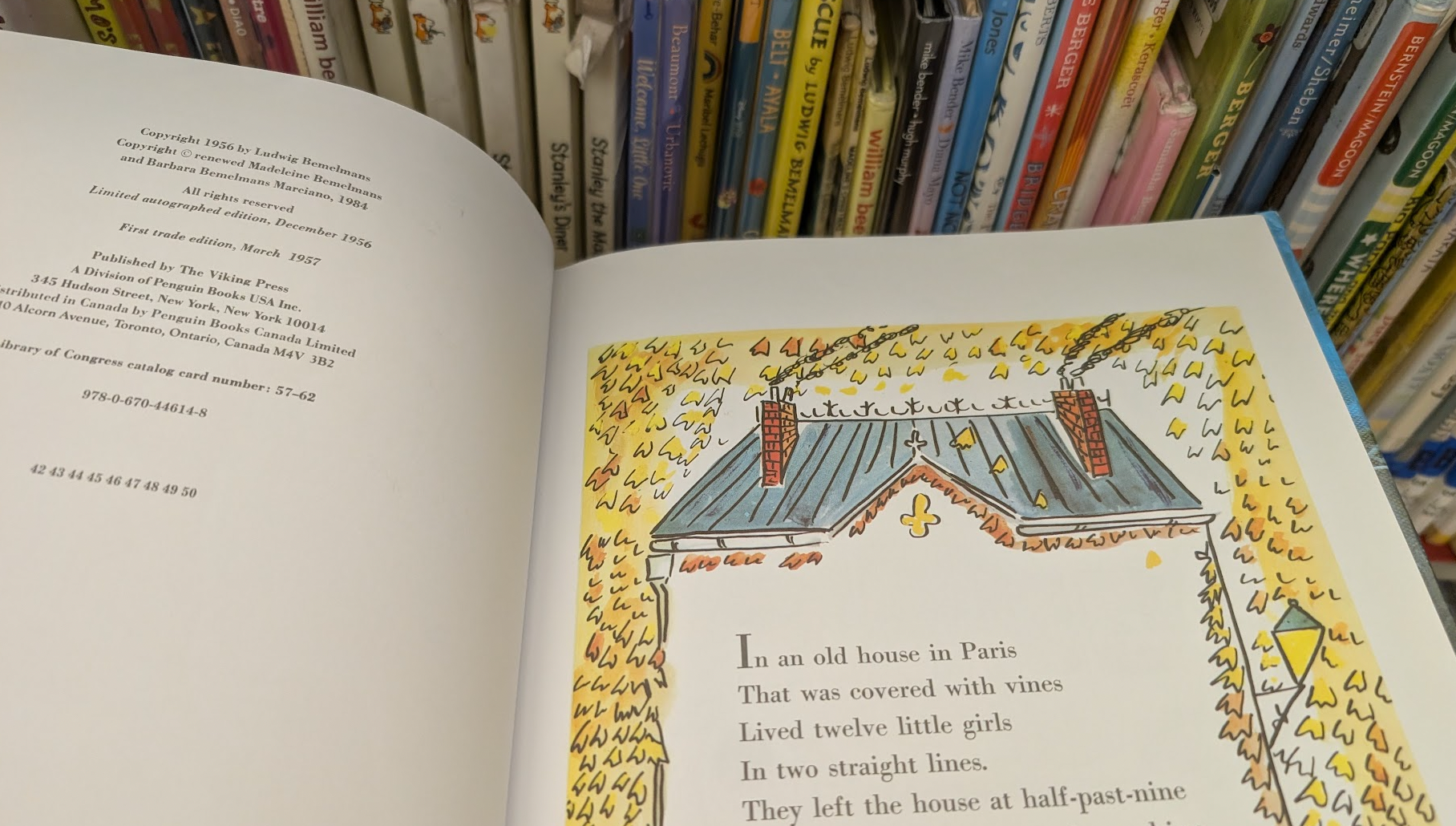
Why does Madeline continue to be such a hit with my students, year after year? Madeline has no flash. No monsters, no dinosaurs, no talking animals, nothing to take the reader out of this world. The language is simple: “appendix” is the only word that requires definition (and yet, without fail, I am never able to describe it). The story lacks a moral message, and its eponymous hero is heralded as being a terror to her teacher and guardian, Ms. Clavel, before being lauded for it with toys and candy near the end.
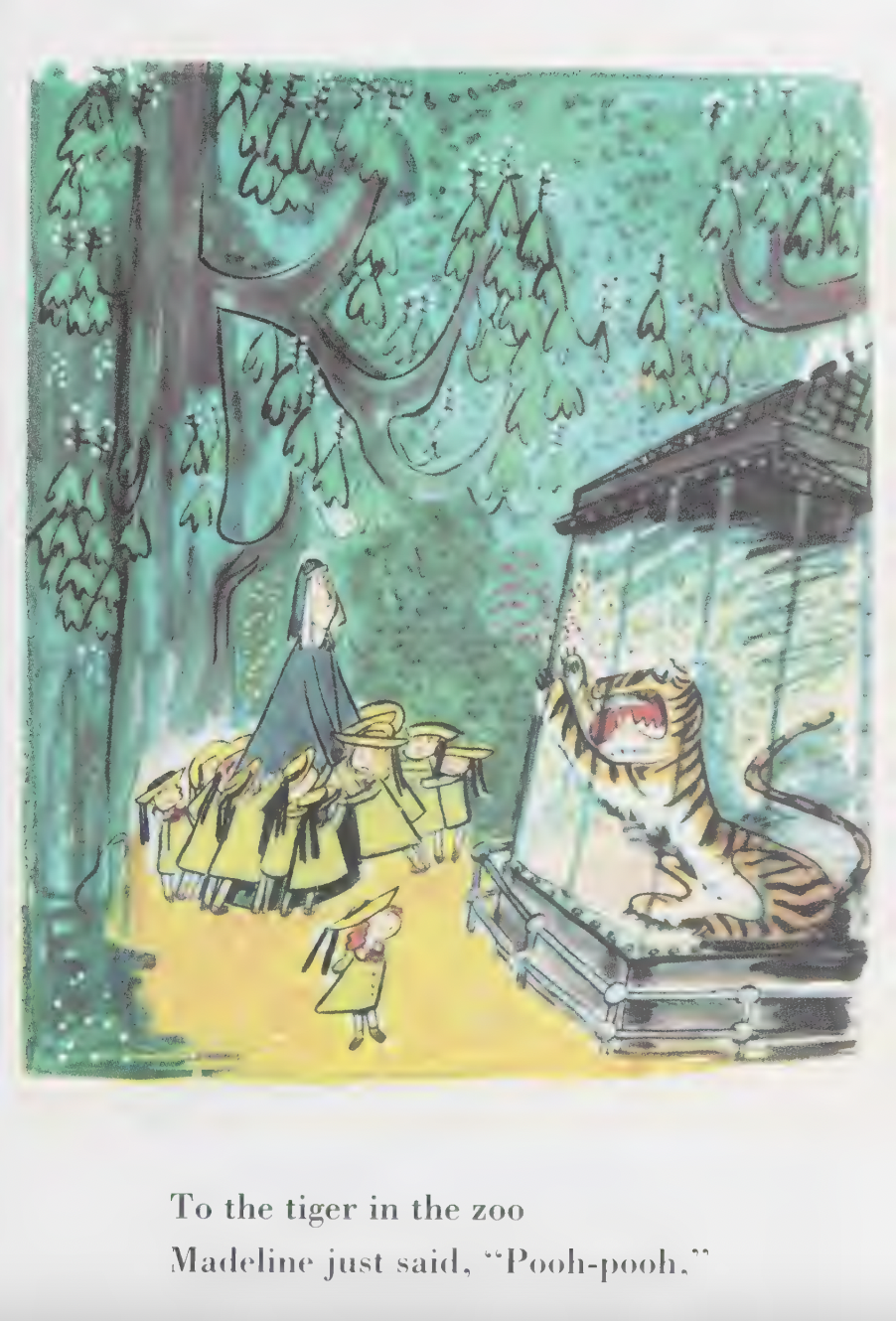
But its opening lines freeze four-year-olds in their tracks. They're transfixed by the rhyming scheme, thrilled by the tiger, and captivated by a red-headed Parisienne who was first illustrated a century ago.
In these respects, it is quite different from so much of the other children’s literature I am gifted, recommended, and required to read as a transitional kindergarten teacher at my public elementary school in Oakland. It is a book not designed to be taught but to be read, the reader moving up and down its lyrical cadences. You are expected to laugh along with at the mere utterance of “Pooh-pooh,” to hold your breath as an ambulance races past the Eiffel Tower, and to slow down as the final words fade out into the page, in defiance of a world constantly rushing adults and children alike. It has no definitions, no lessons, no saccharine, no preaching. It is a story about being human: about going for a walk in the rain, seeing a rabbit on your hospital room ceiling, and feeling so jealous of your friend that it makes you cry.
“The child and the writer are both engaged in the same huge task: trying to figure out what it means to be a person,” writes Mac Barnett, the children’s book author and National Ambassador for Young People’s Literature, in his recent essay collection, Make Believe: On Telling Stories to Children. With “childish enthusiasm” children’s literature demonstrates the human condition to the youngest readers, depicting the world with “freshness and wonder.” In his slim collection—three chapters, an author’s note, and an epilogue, all under 100 pages—Barnett explores “the potential of children’s literature, the role of the children’s writer, and the boundless genius of children,” by taxonomizing genre, analyzing Margaret Wise Brown, and proselytizing on the importance of fiction not just for children but adults too.
Much of this has been absent on his press tour. In the opening essay, Barnett cheekily wrote that “94.7 percent of kids’ books are crud,” which went unsurprisingly and uninterestingly viral. This view is “dangerous,” as authors of kids books complained: Because children’s literature is facing threats of censorship and the publishing industry for the genre is in decline, Barnett’s percentage was taken as a betrayal by someone whose job, they seemed to believe, was to advocate for them, and their books.
And yet, should children suffer through condescending, garish, boring, or moralizing books because political actors and Amazon have restricted access to children’s books as a whole? Barnett has been faulted for being “not terribly timely,” because we are in a literacy crisis. Yet if ineffective literacy instruction is among the myriad reasons behind persistently low reading scores, the cultural decline of reading is among children and adults alike. And if the problem is that people—and kids, after all, are people—don’t spend as much time reading, then might not more engrossing reading material be more likely to help than hurt, precisely at this moment? When is the last time you read a book solely because you wanted to raise your “reading scores”?
It is important to ask what the role of children’s literature should be in this political moment, when the perspectives and experiences of some but not others are taken off of shelves and silenced. Like Mac Barnett and his critics, I take seriously the issue of how children’s literature can promote and support the literacy development of pre- and early readers at the start of their academic careers and human development. That students so often do not get to see their experiences and their consequent humanity in children’s literature is a disservice. It feels especially personal given my own work.
In Oakland, where I have lived and taught since 2020, many if not most of my students are not always represented in the books available in our bookstores, classrooms, and libraries. Eighty percent of OUSD students are nonwhite, forty-eight are multilingual, and eighty-one percent qualify for free and reduced lunch. They represent a racial, linguistic, and socioeconomic diversity that can be often absent from texts available to them. I have taught four-year-olds who are unhoused, who are newly arrived in the United States, who are Muslim, who are Jewish, who are gender-fluid, who have autism, who have cerebral palsy, whose parents are incarcerated, whose parents are deceased. I teach four-year-olds whose rich and troubled and joyous humanity could, would, and should fill up pages and pages of books, and whose stories matter so much.
What Barnett decries is exactly the problem, however, with so many of the books whose well-intentioned attempts to “see” children end up moralizing, and privileging values and virtues over story and narrative. Stories addressing what makes children different can so often forget what makes children the same (and the same as adults): a love of literature, sustained over decades, of texts that demonstrate a “control of language, a sense of rhythm and pace, appreciation of beauty, a knack for character, a strong point of view.”
And much of what does not have that, I agree, is crud, as well-intentioned as it is. Certainly, there are ways to reflect and promote values of diversity and inclusion that avoid being aggressively didactic, that instead tap into the universal awe and wonder that being a child entails. Julián is a Mermaid shows the magic and liberation of dress-up. Last Stop on Market Street marvels at the world of public transit. We have these stories and more, and we need to raise the bar to include more like them. But we should also be honest and critical of the ones that do not.
Since the pandemic, educational discourse has been particularly unrelenting in relaying the continued and consistent failures around providing students with the skills and knowledge required to be fluent readers. The problem is real, exacerbated by learning loss and other, longer-running trends. In Oakland in 2025, for example, sixty-six percent of district students did not meet the state standard in English. Asking how to leverage children’s literature to support reading skills could be useful, so Barnett draws on his experience as a teenager working with younger, struggling readers: By swapping out tedious Early Reader texts in favor of more challenging but engaging picture books, his student was not only more successful, but enjoyed reading more.
This objective so often gets left out in the discourse around reading scores. But why do those scores matter in the first place? Yes, there are many economic and sociopolitical correlates. But reading is about more than that. We want kids to be able to read so that they too can get lost in a book like many of us once were, transformed by the characters and adventures they meet along the page. Learning to read can and should be fun, and we need books that let kids experience the beauty of that for themselves.
In my work as a teacher, I have seen how the Lucy Calkins era of literacy instruction encouraged students to stare at beautiful books that they could not and therefore did not read. But in our current Science of Reading moment, phonics-based instruction can mean sacrificing more artistic works, the works whose literary power justifies the exercise. The risk is the creation of generations of readers who are functionally reading without actually reading (or knowing why they would want to). I have seen many students who are, in fact, increasingly able to sound out words, but have no idea what they are reading because they do not care. That the stories they are being asked to read are boring and unimaginative should bother you, if you care about scores, because it impacts comprehension. And students who struggle to understand stories are unlikely to be able to write down their own.
(I’ve gone this far without mentioning AI and I’ll only do it quickly now: Because comprehension and writing are at the top of the list of skills that AI will atrophy, we seriously need legislation and policies to stop under-18 students from using ChatGPT in schools to tell them what a story was about and to write a story for them.)
There is a reading crisis, but the role that children’s literature plays is getting kids excited about reading again. My pandemic-era TKers are now fourth graders, and as a way to spend more time with them, I started a book club after school with a few upper-elementary students at my site who were reading at level, and whose teachers believed they would benefit from more higher-level texts. But despite being fluent readers, the majority of them had never read an entire book outside of the classroom.
Every Friday, we read a chapter from The Bad Beginning, the first book from A Series of Unfortunate Events by Lemony Snicket. This is not a book with a wholesome message or with preselected sight words; it is a book with complex language, an engrossing plot, and characters who are heroes not role models. I picked it because I loved it when I was their age for all of those reasons, and also because my students remind me of the Baudelaires: kids who had gone through tribulations but carried and continued on, but in West Oakland instead of Briny Beach. There were no worksheets, no assignments, no tests, we just read and paused to ask each other questions and share our impressions (and for the kids to shriek in shock at the twist and turns). Two of the kids skipped ahead to finish the book at their own time; their teacher told me that the English-language learners in book club were reading not only with more fluency but more confidence in the classroom. Most importantly, to me, they all agreed that it was a really good book that was different than they had ever read before.
Shouldn’t this be what children’s literature is for? Shouldn’t it be to expose children to good art through “the sublimity of a sentence or a picture, the thrill of a plot, the intimacy of communing with a character,” as Barnett puts it? Regardless of its utility in imparting a lesson or teaching a skill, literature transports, and tells us about ourselves as it does so.
In pedagogical discussions, people often cite a distinction, made by Professor Rudine Sims Bishop, between mirrors and windows: Some texts reflect the reader’s experience back to them while others show them somewhere new. Years ago, at a conference, I heard an addendum to that idea, that the text is a map, showing the reader where to go and how to be. This is what I want children’s literature for my children to be for. How to sit with your friends and eat bread. How to look out for your family when you’re in trouble. How to treat others and yourself with love in a world that does everything to tell you to do otherwise.
What is all of this debate for? Why is children’s literature important for adults, particularly and especially for those who don’t have kids, don’t work with kids, and perhaps don’t care for kids much or at all?
Asking what children’s literature is for pushes us to ask what literature as a whole is for. Why looking at a page instead of a screen still matters, a fact that we loudly insist is critical for children but silently ignore for ourselves. If we believe that children’s literature is for teaching kids how a person should be, maybe that will remind us that is the secret hidden in books for adults, too. And in any other art that requires engagement for more than thirty seconds, with an objective greater than having us subscribe, spend money, or consent to being surveilled. Children need art that engages their thoughts and emotions; we demand that for them and we should demand it for ourselves too.
I want children’s literature to be a place to go to undisturbed, away from ads and algorithms, with our thoughts that are our own, in private communion with the writer/artist and no one else. To help us think, breathe, recoup, and have our nervous systems left undisturbed by bright lights and cheap tricks. Art, literature, children’s literature return us to being human through the very real human experiences of awe and meaning-making. Kids need this, and artists like Barnett remind us why this matters.
Make Believe: On Telling Stories to Children, Mac Barnett
Little, Brown and Company; 112 pages; May 2026