Overthinking BART Prom
Britt didn’t hesitate when I asked them to be my date for BART Prom, not even to ask what BART Prom is. This was fortunate. First, I’d already bought us tickets. Second, I didn’t know what BART Prom is. I barely know what normal prom is. Was this actually an event for high school seniors? Would it be cringier to take this seriously or to treat it like an extended inside joke? Am I supposed to dress for a BART-themed parody of prom, or a prom-themed parody of BART? Appropriately, I haven’t felt this much premature social anxiety since high school.
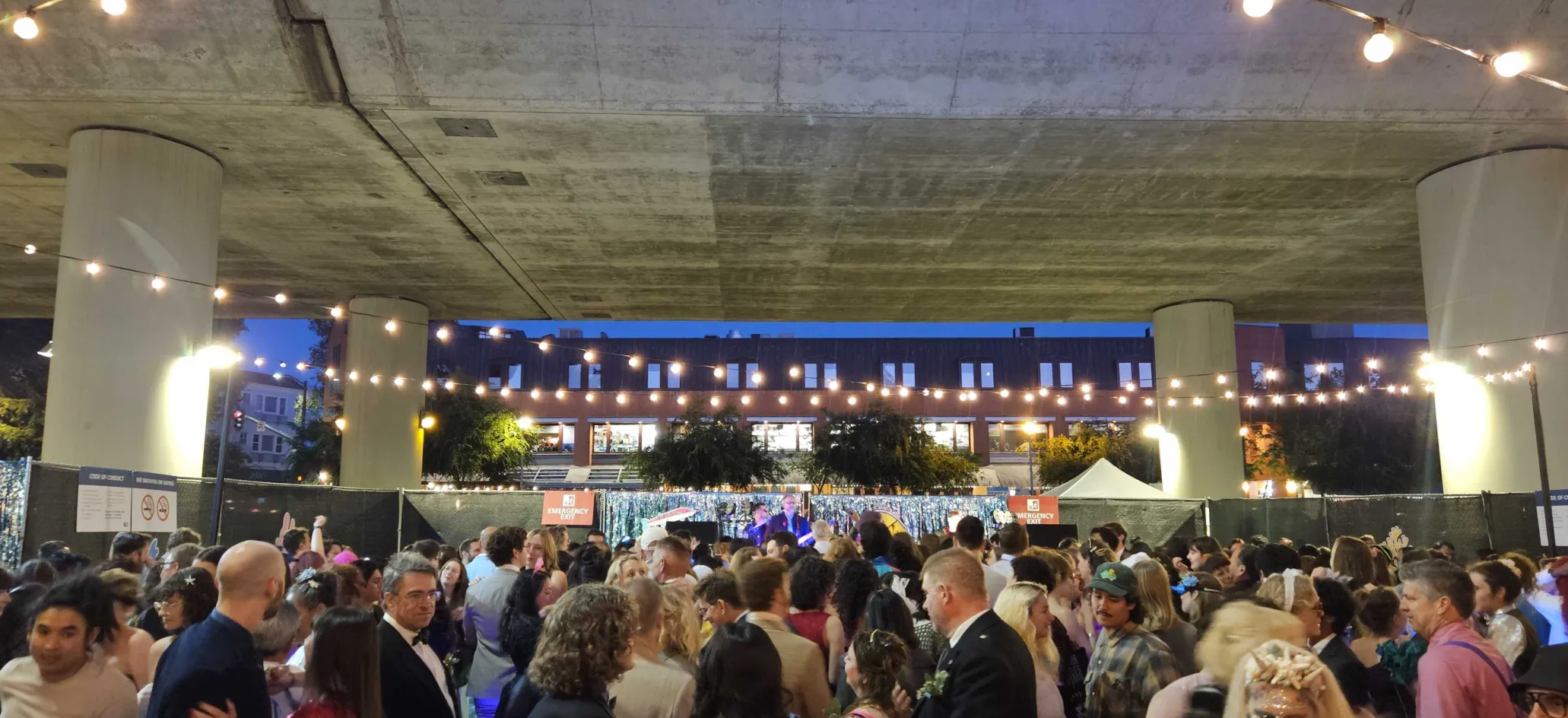
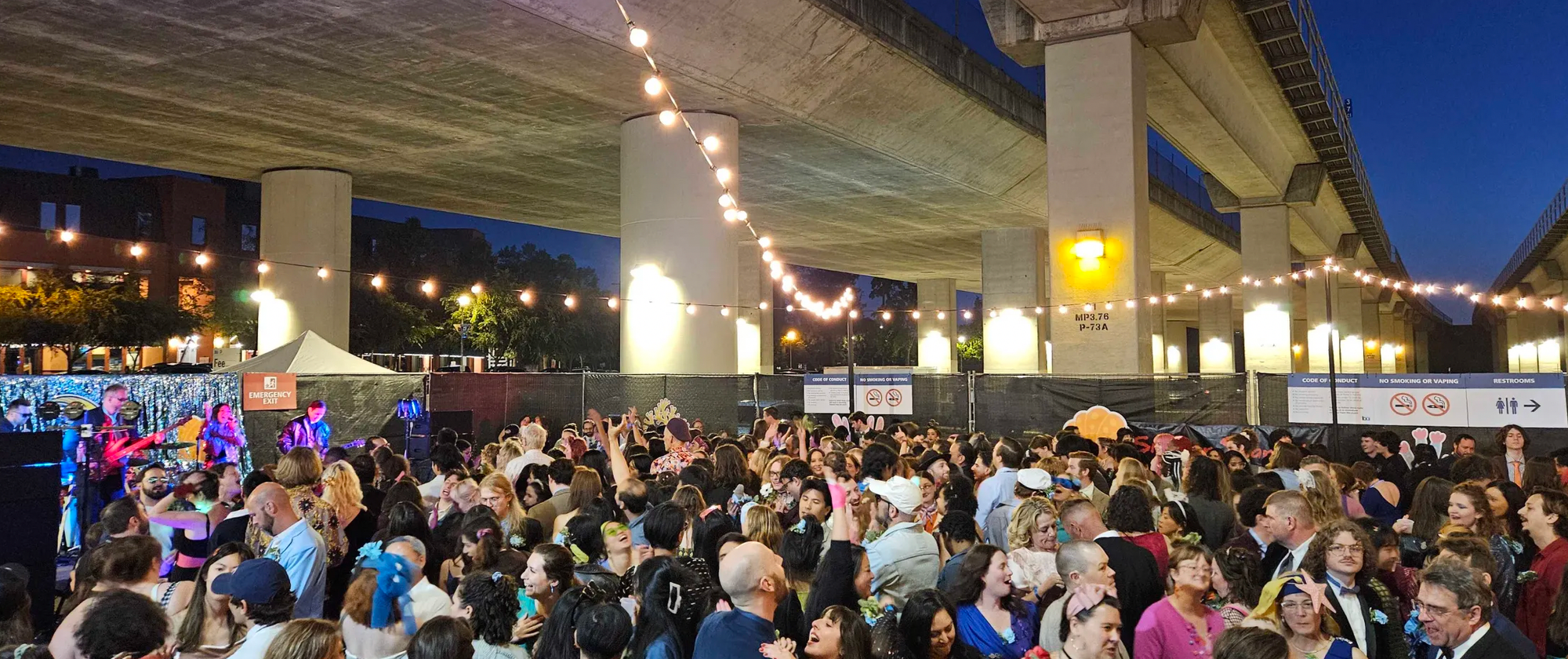
Upon arrival, it becomes extremely clear that I’m overthinking it. The venue—a fenced-off portion of the lower Rockridge BART parking lot—is filled with amiable railfans who range in age from eight to eighty, and while a number of them likely attended normal prom recently, the majority of us look like chaperones. My BART-blue suit (with a yellow belt, since Rockridge is on the yellow line) and button up with a florid, Weyland-esque oceanscape brimming with whales managed to hit the sartorial sweet spot within the dressy-to-goofy continuum, landing somewhere between those wearing tuxes to those in enormous octopus outfits.
The event, confusingly, has four different themes: BART (of course), prom (as a generalized but implicitly contemporary American tradition), a more specifically eighties prom (which is somehow categorically distinct) and “Under the Sea” (which is, thanks to Back to the Future, itself coded as 50s-by-way-of-the-80s prom, which is also a distinct aesthetic). The resulting dizzying variety of costumes blend periods and benthic zones along a wide spectrum of camp: a mélange of kelp boas and poodle skirts and BART ship captain/conductor’s hats and cardboard train costumes covered in fish. Others interpret the hodgepodge as a general Halloween costume party and arrive as characters like Mario and Luigi, who admittedly do kind of have train conductor vibes. I think I see a nun costume. Maybe she’s actually a nun?
The DJ is playing it safe with a playlist of Bar Mitzvah classics, mixing Suavamente with Black Eyed Peas. The event is sold out, and the dance floor is maybe too crowded for comfortable dancing. A woman in an elaborate lobster costume slips and falls on the dance floor, sparking a series of slapstick attempts by strangers to assist her. She returns to her feet and earns a round of cheers just in time to line up for the Cha Cha Slide. Finally, the eighties cover band Sixteen Scandals takes the stage. Sixteen Candles is probably our most-hated John Hughes movie, but Scandals sound fantastic, with slick renditions of Chappel Roan and Alanis Morisette that keep the crowd exuberant and the dance floor packed to the gills (or squashed like sardines, etc. etc.) for the rest of the evening. A familiar, organic bond of solidarity between strangers washes over us, the kind that blooms on crowded BART trains after baseball games or Pride events. Like amino acids forming protein chains in a warm cytoplasmic soup, a conga line forms (conga lines are, of course, ritualized train dances). A chant breaks out: BART, BART, BART!
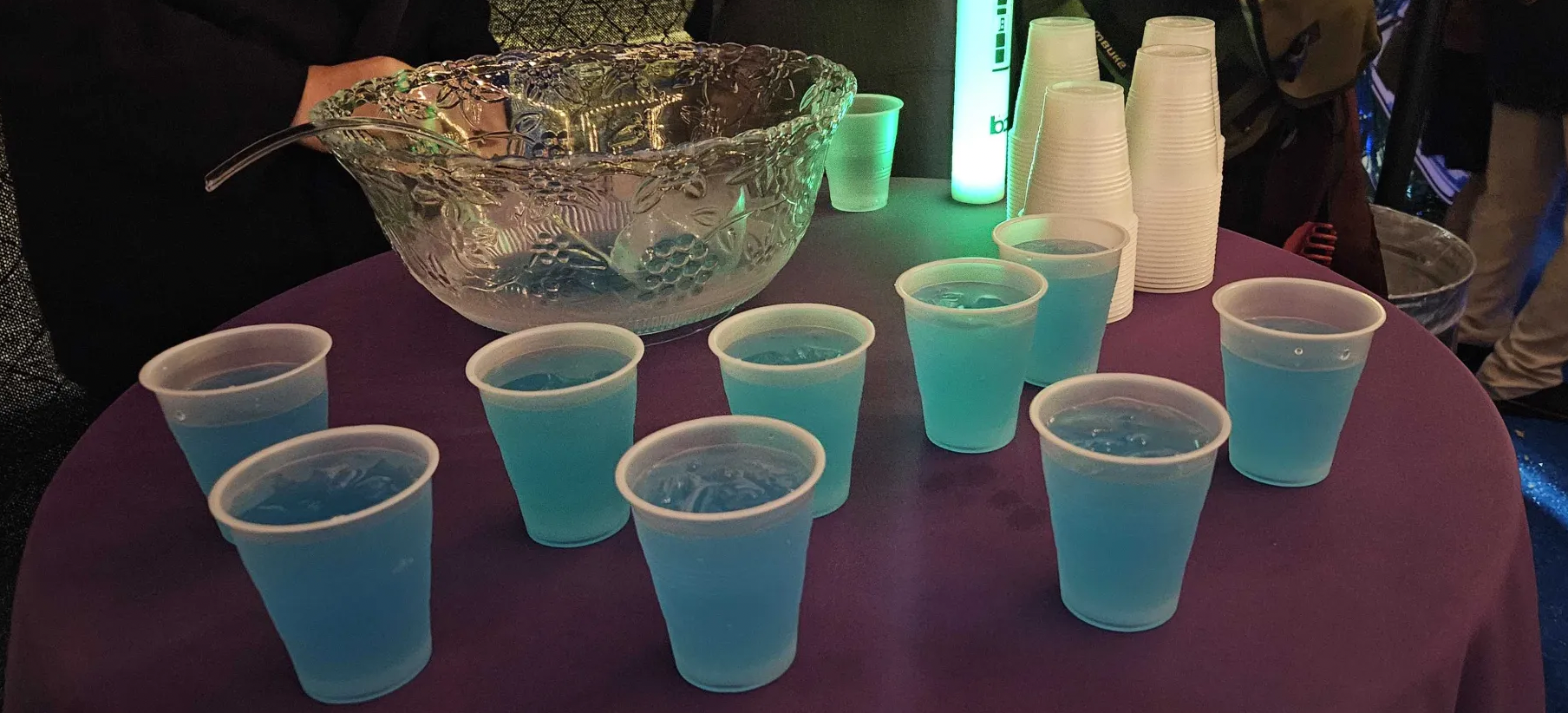
Alcohol isn’t allowed on BART, nor at prom, so the only drinks served here are water and punch—Hawaiian Punch, which I haven’t had since I was eight (has there always been a blue flavor?). BART employees/chaperones are stationed at each of the punch bowls to ensure, I guess, that no one spikes them with something more interesting. The food trucks on offer have taken the theme seriously and serve only cafeteria fare: chicken fingers, tater tots, and burgers. We duck out to get food with more fiber on College Ave, and whenever passersby ask where we’re coming from in semiformal attire, we reply “BART Prom” without elaboration. They all seem content (delighted, even) with our answer. The rest of the world seems to understand the concept better than we do.
When we return for more dancing, I feel a tap on my shoulder: “Excuse me, I have a quick question.” Turning around, I see a woman in a vampy lace-forward outfit. “How do you think the North Berkeley BART station would dance? I’m taking a quick poll.”
She’s dancing and not holding a clipboard, so I relax upon realizing I’m not being solicited for donations. “Well, it’s really flat, so it would probably dance like this,” I reply, holding my arms horizontally to simulate a staid parking lot. “But it’s also an underground station, so it would probably go low,” I continue, dipping deep with each beat. She nods and imitates my movements. I choose to believe that I’m not being mocked.
We run into Alfred Twu, a long-time local transit advocate sporting a BART train corsage. We discuss the crowd, and especially why the NUMTOT-adjacent transit world seems disproportionately queer. Alfred suggests that this is partially because queer people simply tend to aggregate in cities, and public transit is what makes urban queer life possible. I am reminded of a gay city planner I know who sometimes jokes that his career path is just an extension of his love for interior decorating, and also of my macho suburban cousins whose straightness seems deeply tied to their motorism. They each speak to a profoundly different sexual geography than the one described in John Cheever’s midcentury stories of New York City’s compulsorily heterosexual commuter class.
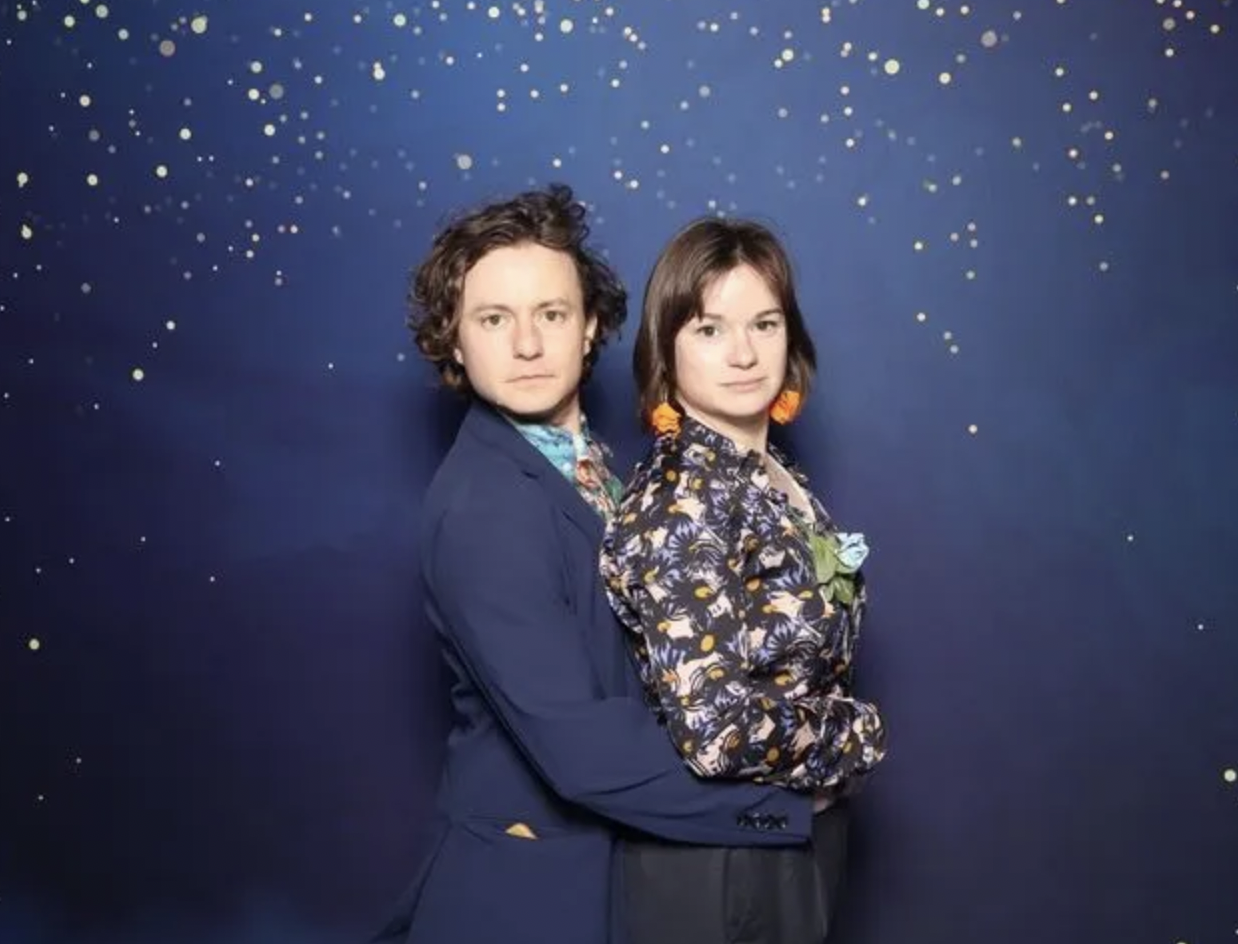
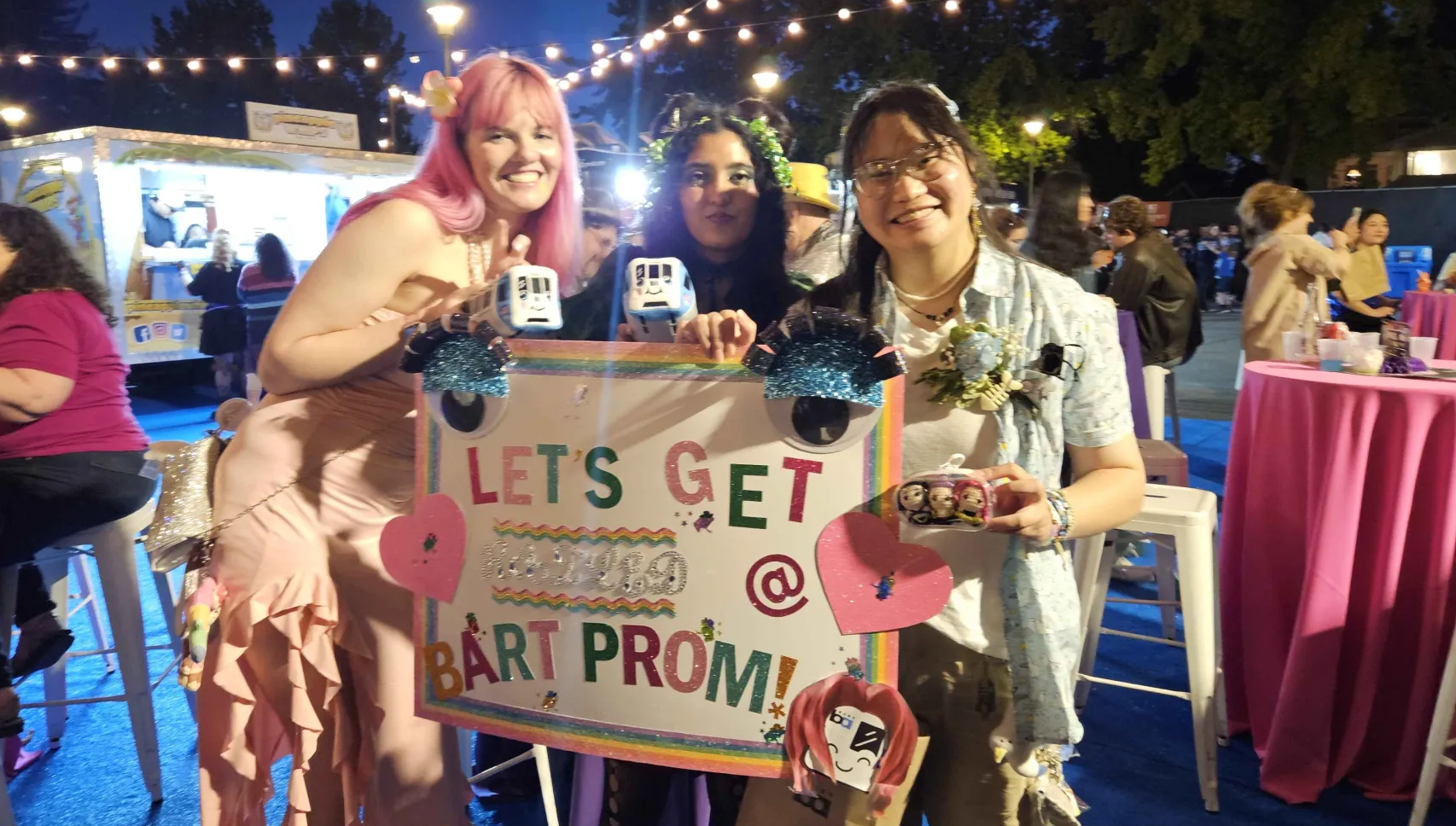
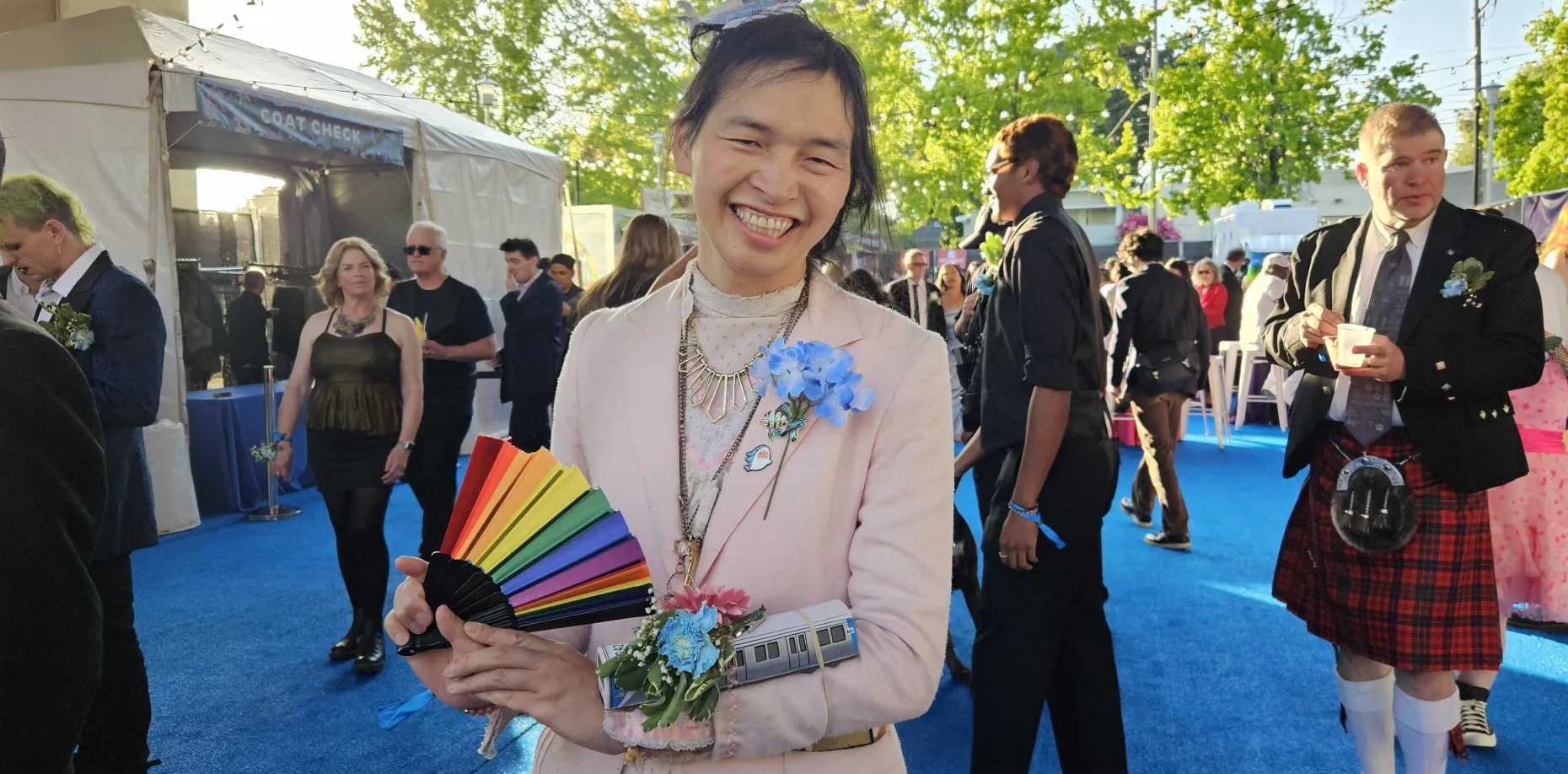
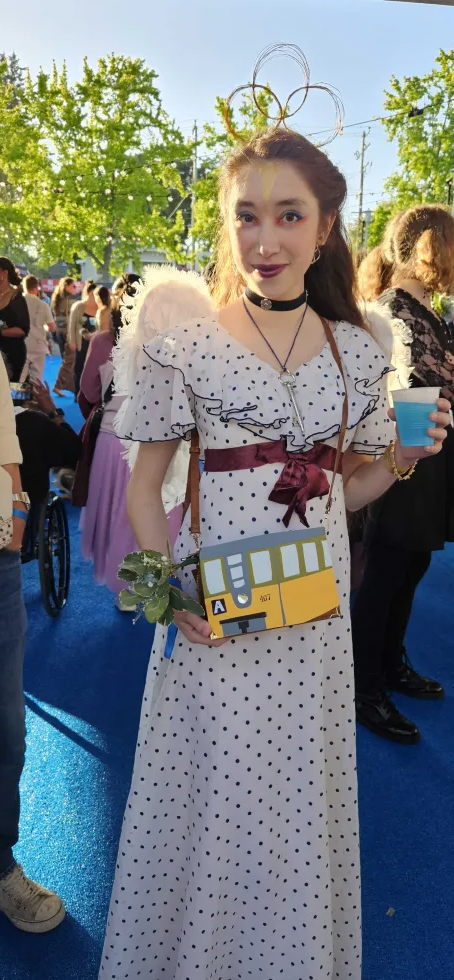
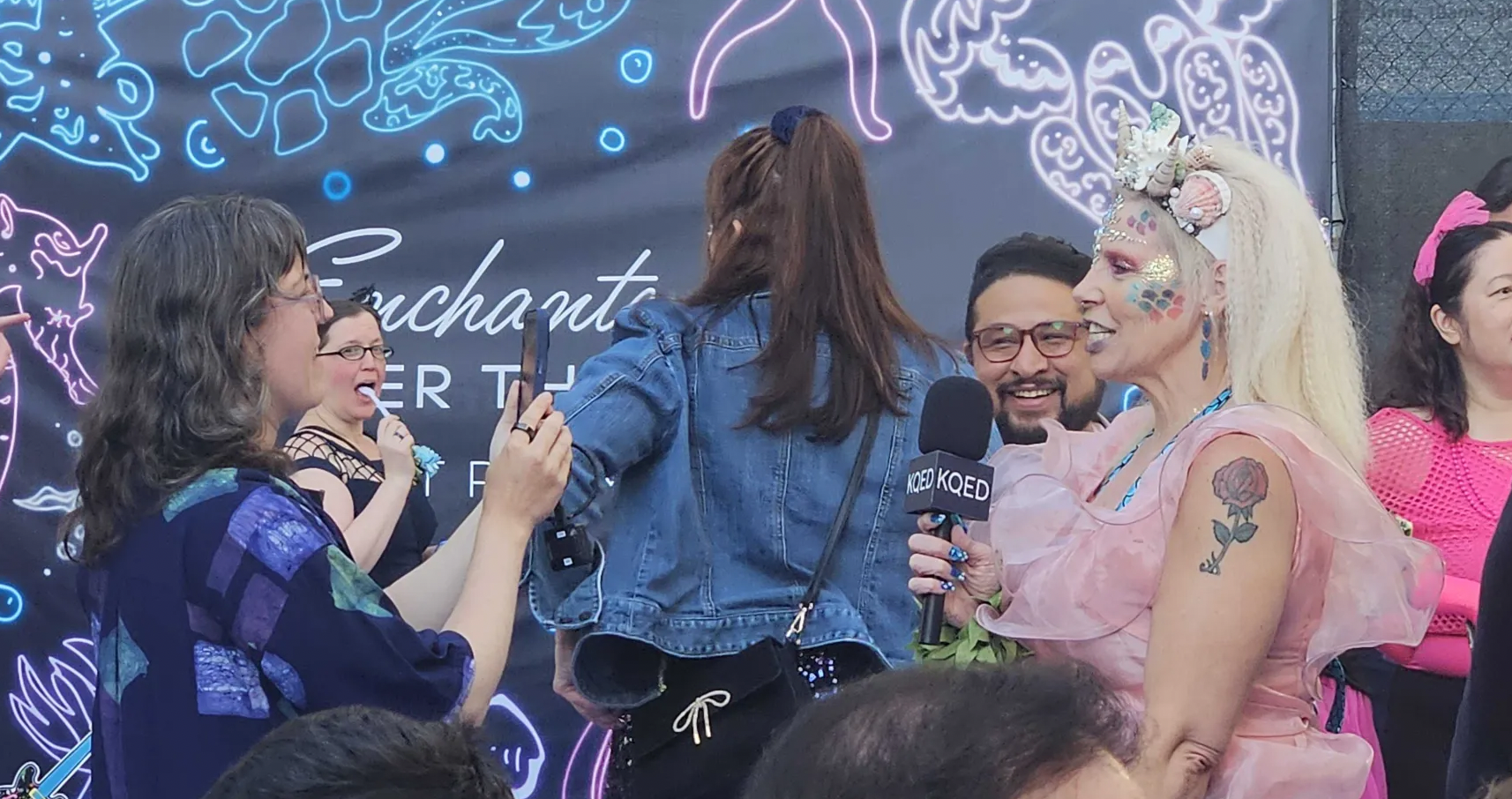
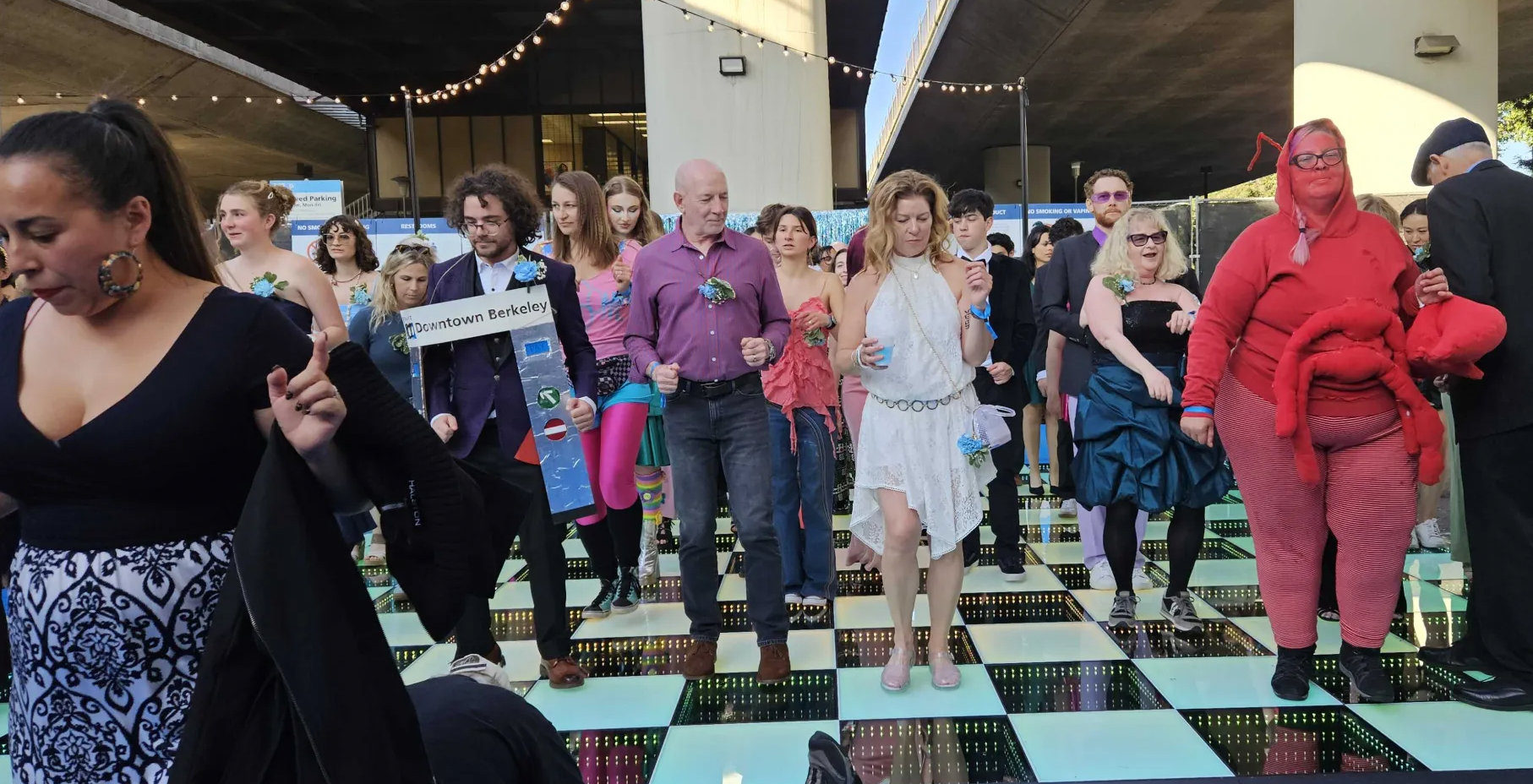
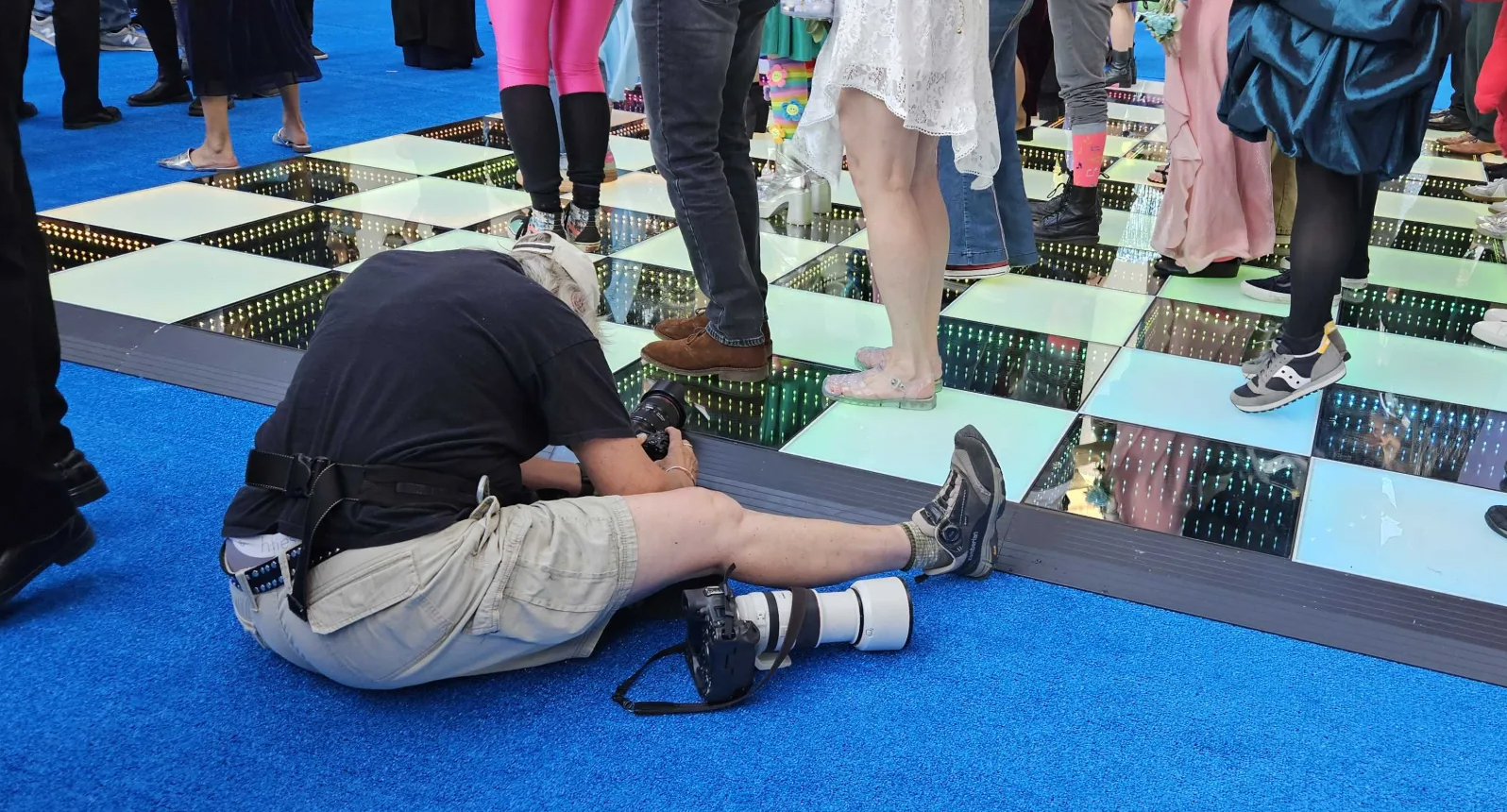
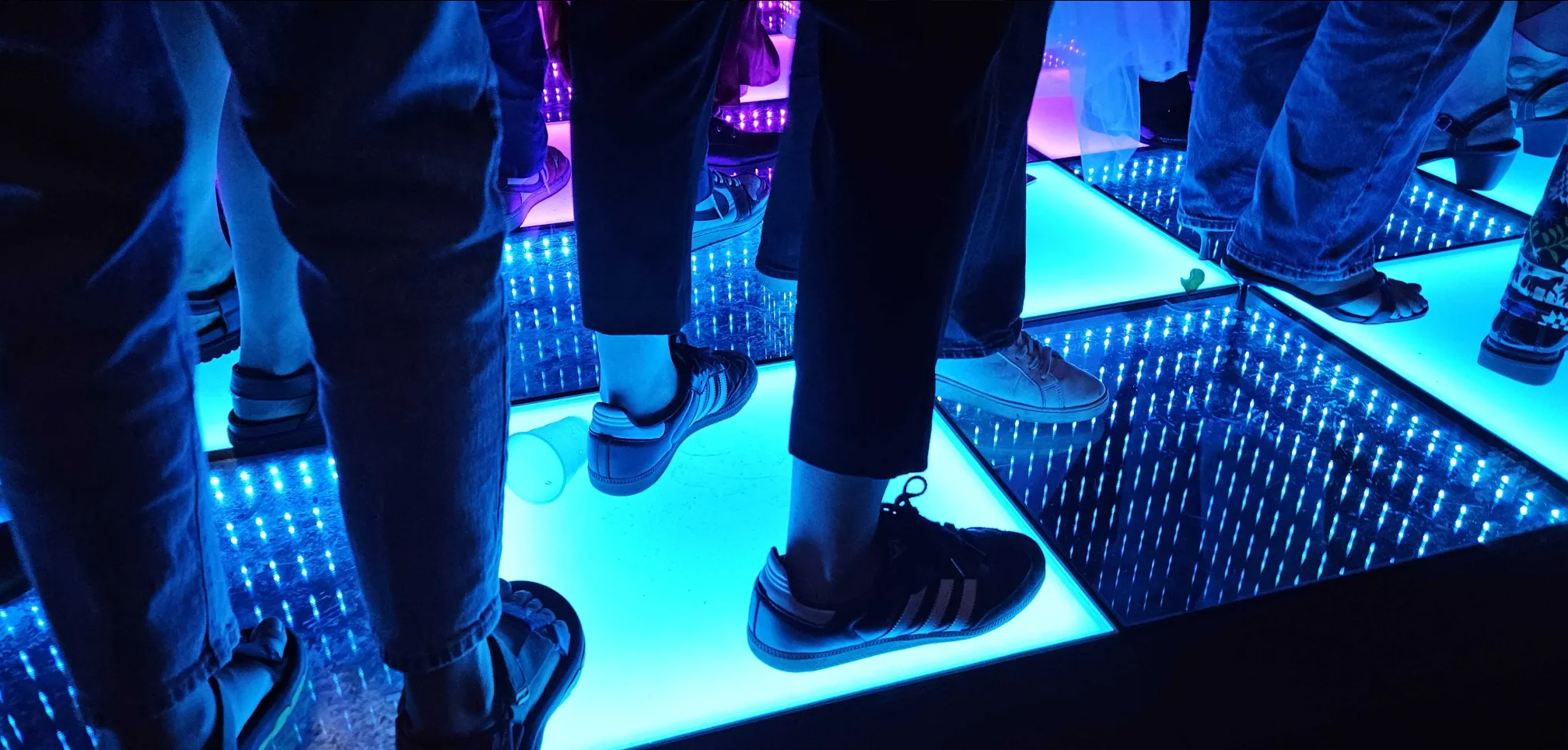
Gallery of revelers at BART Prom (Xander Lenc)
KQED, The West Bay Chronicle, and other media bigwigs are in attendance, grooving through the crowd and conducting quick interviews. The atmosphere began to resemble a con—one for big, weird transit dorks. Despite the growing trendiness of public transit, the Bay’s most essential passenger rail system is in dire straits, and East Coast outlets like the New York Times are salivating over nightmare scenarios that could play out if voters decline to save BART this November. BART ridership took a hit because of remote work, it’s true, but also because the pandemic left us more isolated and less likely to travel to visit friends, to attend events, or even just to aimlessly explore the bay.
BART has never been perfect for these purposes: as a commuter rail, its designers were more concerned with shuttling white collar workers from majority-white areas like Walnut Creek to and from the financial district than the hop-on-hop-off crowd of urbanite revelers, let alone psychogeographic urban explorers. The Bay Area’s rail geography was etched into the edifice of an existing race and class hierarchy, and it isn’t a coincidence that so many of the people murdered by BART police are Black Oaklanders who are riding for something beyond work. Oscar Grant was riding home from New Years Eve celebrations along the Embarcadero, Sahleem Tindle was with his family; since the system first opened, Bay Area residents have found ways to make BART work for them even if it wasn’t quite built for them, but not without resistance, from aggressive policing to exceedingly annoying faregates that were, of course, prototyped at the West Oakland station. BART can announce as many anime-styled mascots as it likes, but it is hard to overcome the politics of infrastructure once it has been built.
Even so, at BART Prom we witness few buttoned-up Cheeveresque commuters and more weebs and Cockettes. Gatherings like this feel like small mends in a tattered social fabric—friendly, bubbly, vibrant, happy dorks forming conga lines under the overpass. Overhead, departing revelers wave at us from the BART platform. A nine-car train screams into the station. The ecstatic crowd below erupts in cheers.