Pickiness tastes like trauma
Welcome to Taste Week! in our “Six Senses of Oakland” membership drive. Read more about the drive here. Check out other Six Senses stories here. Take a big bite of ORB by subscribing here.
◎
When my son was seven months old and beginning to eat solid foods, my husband asked if he could feed him a single Froot Loop. I hit the fucking roof. Processed sugar and red dye 40? Why don’t you just hand him a beer while you’re at it? It was July in Berkeley, all our windows wide open. They could probably hear me at the other end of the block. I didn’t care.
“Parents are often deeply insecure about how their children eat, and it can be devastatingly personal,” writes Helen Zoe Veit in Picky: How American Children Became the Fussiest Eaters in History, a book whose title alone raised my blood pressure. I was ready to tell Helen to fuck off before I read a single page. How dare she speak to me in that tone? How dare she imply I haven’t done everything I possibly can to make this kid eat his broccoli? You don’t know my life, Helen.
But Helen doesn’t actually think it’s any individual parent’s fault, as it turns out. And we’ll get to that. But Helen? I am so tired. I can’t think of a single thing I’ve agonized over more than my son’s diet. He’s four now, tall for his age, all legs, and the other night he was in the bath with his little sister, sinking his toy boat over and over, when he asked if kids can die too. I gently said yes baby, sometimes.
I try not to think about his time in the NICU. My five-pound baby was hooked up to wires under a heat lamp in a room full of other babies hooked up to wires under heat lamps, and they were all so unbearably small. It bubbles to the surface only when I drive past Alta Bates on Ashby where the NICU is, or when I look at the single photo I felt compelled to take of him there, or when I have to answer questions that he’s grown up enough to ask now.
“Your body will make everything the baby needs,” the nurses and doctors had said in the hours after my son was born. But at his first check-up, we found out that my body wasn’t making everything a baby needed, which can happen when you lose a lot of blood during childbirth like I did, even though nobody told me until it was almost too late. He’d lost about a pound from his birth weight and needed to go back to the hospital immediately.
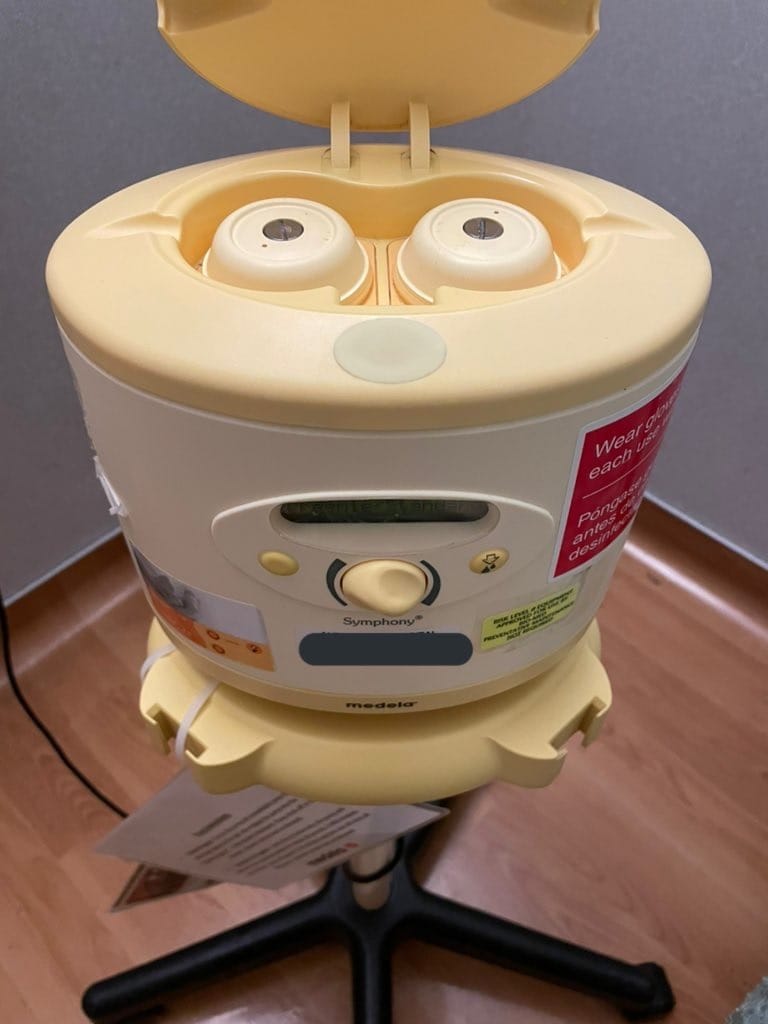
That’s where my parental food anxiety began, in a dark gray hospital room with a vinyl couch down the hall from my son. The best way to increase my milk supply was by tricking my body into thinking I had a very hungry baby who was breastfeeding constantly, but since my baby was hooked up to tubes and I did not have access to him, this meant breast pumping. A lot. With a hospital-provided pump that looked just like Bob the Minion (I took a picture of him too.)
I liked being able to track exactly how much milk I was producing and how much my son was eating. Obsessing over the numbers, milkmaxxing, the incels might say. After he came home from the NICU, it gave me anxiety to not know how much he was eating, so I shifted entirely from breastfeeding to pumping, two hours a day, in twenty-minute chunks. I remember pumping in the bathroom of a fancy restaurant along the Embarcadero, as a voice from the next stall asked what the fuck that noise was. I thought about almost nothing but milk and my boobs, which were very sore.
This is how you must picture me: starving, dehydrated, eating “Emergency Lactation Brownies” that I bought from some lady on the internet, nipples cracked, and smelling faintly of sour milk at all times. Now picture my husband asking, “Do you think the baby might like a Froot Loop?”
These days, my kid loves applesauce. He does not care for broccoli on its own, but if we purée it and put it in the mac and cheese he’ll eat it. He didn’t like french fries when I started writing this essay but he likes them again now. He likes a jelly sandwich, with peanut butter sometimes, though it must be cut into a circle with a cookie cutter ever since he discovered Uncrustables in an Oakland Zoo kids’ meal. Last Hanukkah when everyone else was eating homemade latkes, he had pizza rolls. He likes tikka masala. He doesn’t like the way spicy foods make his mouth feel, but he loves honey mustard and “fancy sauce” (ketchup mixed with mayo). He likes eggs only if you put them in his preferred form (breakfast burrito).
I’m picky too. I don’t like raw onions. I don’t like olives. I don’t like mayonnaise. Meat often gives me the ick, to the point that I was a vegetarian for a decade. I don’t like Jell-O. I don’t like many of the traditional foods from my culture (though to be fair, it’s the culture that brought you gefilte fish). I was pickier as a child, but I did not grow out of it entirely, so maybe it’s my fault. Maybe I made my kid picky.
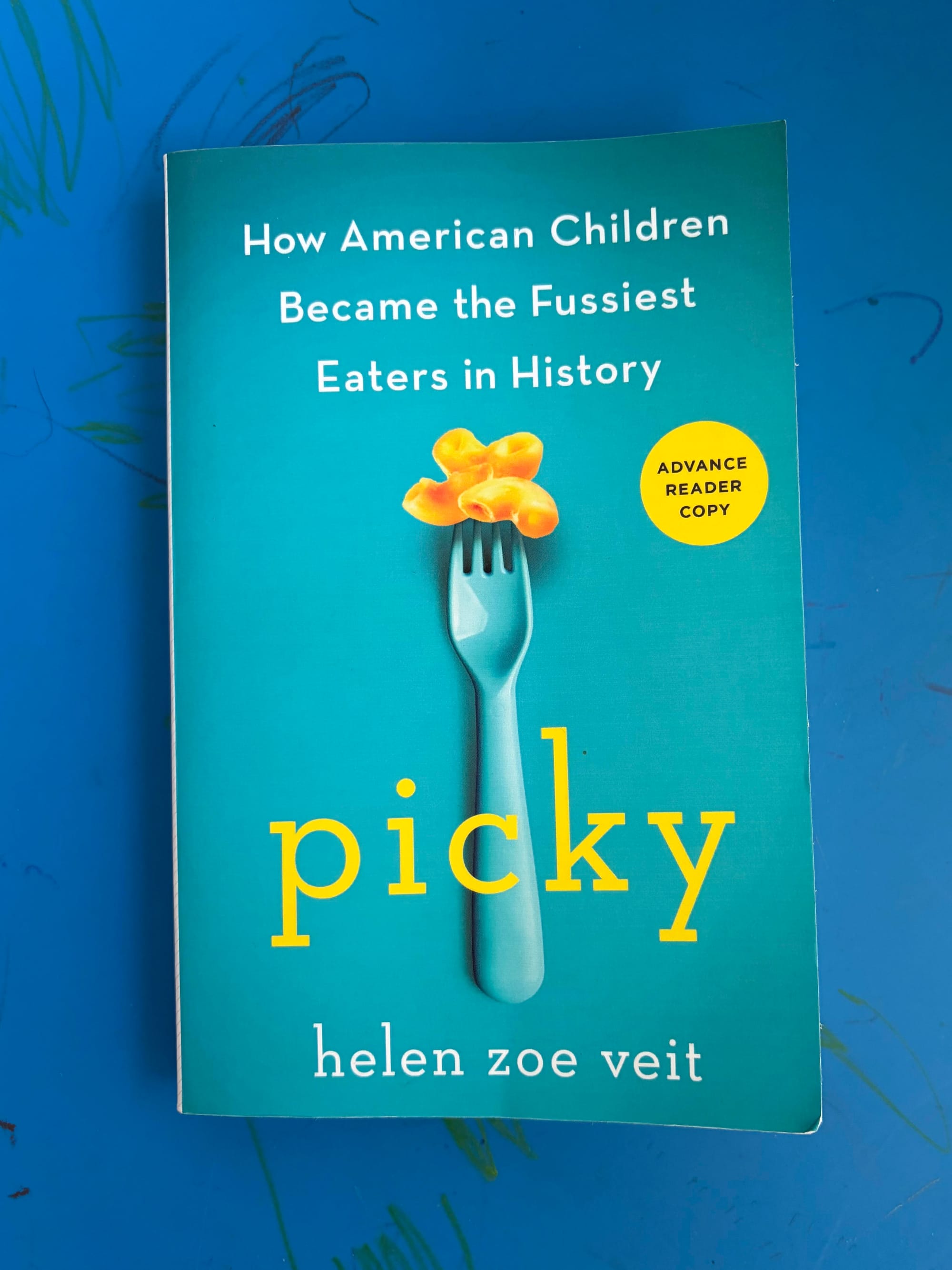
But it turns out that Picky is not about what modern parents are doing wrong. Helen is a historian and she traces a wide variety of factors across hundreds of years—things like industrialization of the food supply chain, advertising and its consequences, and the weaponization of parental anxiety for nefarious purposes—to explain how we got here as a culture.
Taste is the least understood of our senses, Helen tells me. Though it’s become broadly “known” that kids’ taste buds are more sensitive, or somehow different than adults’, there’s no actual real science to back that up. But taste is only partially biological, and doesn’t really live in the tongue. It’s emotional. It’s psychological. Matzo tastes like cardboard, but I love it because it reminds me of Passovers with my late grandma. (Cardboard does not.) I can’t eat at Subway because I lived above one my junior year of college and the smell permeated my apartment constantly, and now even a whiff of freshly baked Italian Herb & Cheese has the Pavlovian effect of making me feel hungover.
People try to blame pickiness on genetics, Helen writes. But it’s much more linked with a broader shift in environment and culture. But, then again, as Helen also points out, parenting trends often tend to move in zig-zags. For example: John Harvey Kellogg of Kellogg’s, the company that brings you Froot Loops, is something of a great-grandfather to the MAHA movement. He invented corn flakes because he believed bland foods would cure masturbation, and he was also a proponent of something called a yogurt enema, which I suspect is exactly what it sounds like. He was following in the footsteps of Sylvester Graham (MAHA’s great-great-grandfather?), the inventor of the graham cracker, which he believed would (say it with me, all together now) cure masturbation. These guys were an offshoot of the larger temperance movement, who you might remember from their greatest hit, Prohibition, but who have a deep and rich catalog stretching back centuries.
It’s worth adding a thing about the past. In the 1800s, for example, kids used to die a lot more often. Back then, my son wouldn’t have asked if kids can die because, statistically, he would already know the answer. Families were bigger because parents planned for the inevitability of losing a few, which they would, because, until we came to a modern understanding of microbiology and nutrition, we didn’t tend to know what was killing them.
A loud faction of reformers decided it must be the food. We needed to restrict children’s diets, for their safety. The concept of “children’s food” began with this very sympathetic desire, Helen tells me: Parents were desperate for their kids to make it to adulthood, and even though we were beginning to develop germ theory, it was new, and some parents didn’t trust the conclusions that scientists were making. This led to the rise of influencer experts, many of whom were just loud, but who were believed and elevated regardless of credentials. Sound like any raw milk–drinking, beef tallow–slathering, vaccine-denying tradwives in your Instagram feed?
Eventually, American society came to agree that children are inherently picky, that they’re inferior eaters, with more delicate taste buds. Helen explains that was not our attitude toward feeding children for hundreds of years up until that point; until the early 1900s, restaurants didn’t have a concept of a “children’s menu,” beyond a smaller portion of the adult entrée. In an effort to curb the child mortality rate (and save their souls), parents began restricting their kids’ diets. Spices might make them masturbate or drop dead, they reasoned, but corn flakes wouldn’t. (And they weren’t entirely wrong.)
“Pickiness was a privilege before it was a problem,” Helen tells me. And we live in a time of increasing abundance. I can go to Costco anytime of year and get fresh blueberries and a five-pound bag of dinosaur-shaped chicken nuggets. When people ate what they had—and they had what was in season, what they’d preserved, or what they hunted that day—if they didn’t eat what was served, they’d go hungry. Only the truly affluent could afford food waste and a second entrée for the toddler.
My kids have only known a world where mommy can press a button on her phone and a guy shows up at our house with Cholita Linda, a world where there are seventy-five types of cereal and every movie ever made is available to watch immediately on Netflix (a problem we’ve been contending with lately, as my kids seem to want to watch every television show in history simultaneously). How could you not become picky under these circumstances? Even the family dog is picky, a descendant of wolves who won’t eat his expensive prescription kibble unless we sprinkle three different kinds of treats on top.
It’s not only that, of course. We’re also all exposed every day to factory-made flavors and textures, which Helen says contributes to pickiness. My kids eat a serving of Goldfish crackers, every individual fish identical, and then ask why the blueberries don’t all taste the same. And there’s the advertising. Apple juice is better for them but Capri Sun has Donkey Kong on it, and I’m trying to get out of the grocery store without a temper tantrum. On this point too the parenting trends have zigged and zagged. Do you let your kids make their own choices, even if it means Cheez-Its for dinner? Send them to bed hungry?
Parenting is fraught with baggage. I’m a human woman who was alive in the aughts, so food has been a sensitive subject for years, even before I had children. My mother has been on a diet my entire life, and once told me as a small child that eating too many mozzarella cheese sticks would make me fat as I stood in front of her, naked, eating a mozzarella cheese stick. I don’t blame her. She didn’t develop her attitudes toward food in a vacuum. My grandma probably said something worse about cheese when my mom was a kid.
Helen doesn’t get into it too deep but she makes enough passing mentions of not wanting to give her children an eating disorder for me to know she too was probably raised by a boomer in an unrelentingly thinness-focused American culture. I sense the trauma. I sense she too fears saying something fucked up that her kids will think about every time they eat cheese for the rest of their lives.
But Picky isn’t a parenting book, not really. Helen confines her advice to the epilogue, if that tells you anything. And she doesn’t have any revolutionary suggestions. Don’t let them snack too much between meals, she says. Don’t offer an alternative if your kid rejects their dinner. It’s okay to tell them they have to try their broccoli to get dessert. Describe what you’re eating and why you like it. Avoid highly processed foods if you can. Be confident.
I’m not convinced that being picky is that big of a problem in the end (though that’s easy for a woman who doesn’t eat mayonnaise to say, I suppose). I try to remember the advice I got shortly after my son was born. A nurse, mid-50s maybe, noticed me trying to get my son to breastfeed, on the verge of tears with my tits out in the NICU as he screamed and screamed and a million machines beeped behind me. She helped me get the baby back under the heat lamp, and then leaned in and told me she’d had four kids, all formula-fed. She told me they were all grownups now. Strong. Smart.
“They’ll tell you ‘breast is best,’” she said, “But I think fed is best.”
My son is fed and loved and happy. He just went up another pants size, another shoe size. He starts public school in the fall. He read the word “Jeep” this morning. He can do two plus two and knows that the sun is a star, that the moon revolves around the Earth, and that some cars are gas but some are electric.
And maybe someday he will eat his vegetables.
Picky: How American Children Became the Fussiest Eaters in History, Helen Zoe Veit
St. Martin's Publishing Group; 304 pages; February 2026