Please do not hang out in the street
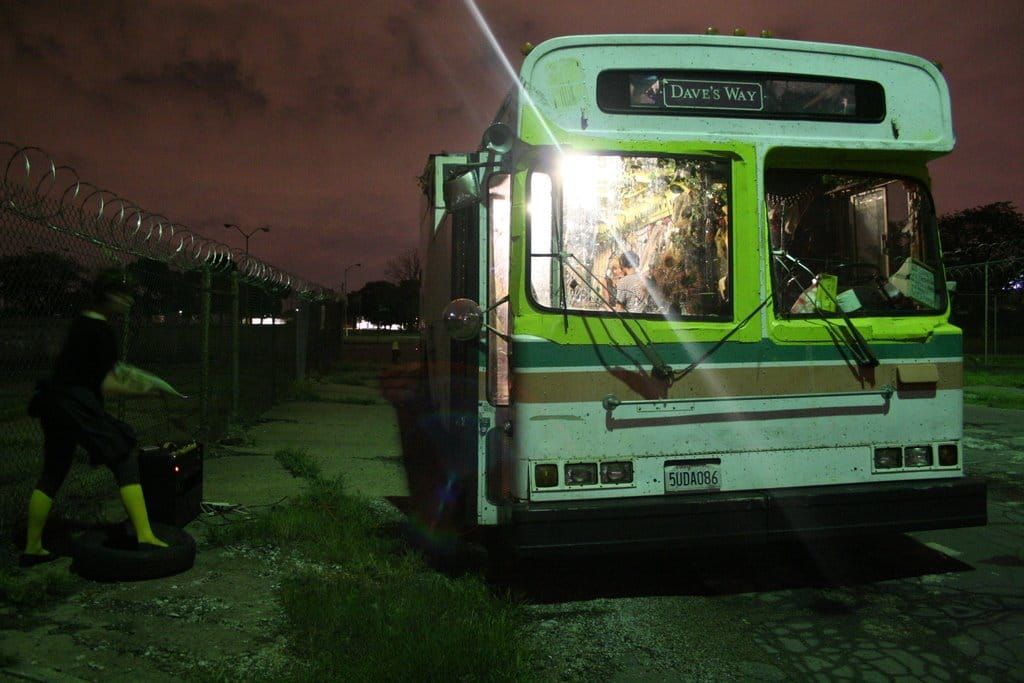
The AC Transit bus pulls up to the West Oakland BART station, buffed white, with a DIY addition to the roof. The only reminder that it once carried tired commuters across town are the iconic green and red stripes marking its face. Tonight, instead, it’s about to host a punk show. Get on The Bus!
Showgoers park their bikes and pile on, waving to the driver and caretaker, musician Jhon Benson. As The Bus lurches toward 7th Street, High Castle starts their set and everyone is immediately thrown to the side as the vehicle takes a hard left. Guitar feedback and shouted vocals fill the air, along with the scent of recycled veggie oil. Homemade costumes. Layers of thrifted clothing. Jhon slams the brakes as a car cuts him off, and someone spills beer on a pile of old rugs. Everyone cheers. Now Ettrick is playing, and skronking saxophones and drum beats wash over the crowd.
Three hours later, when The Bus glides to a stop, back at West Oakland BART, we all deboard from what had seemed like a totally normal experience.
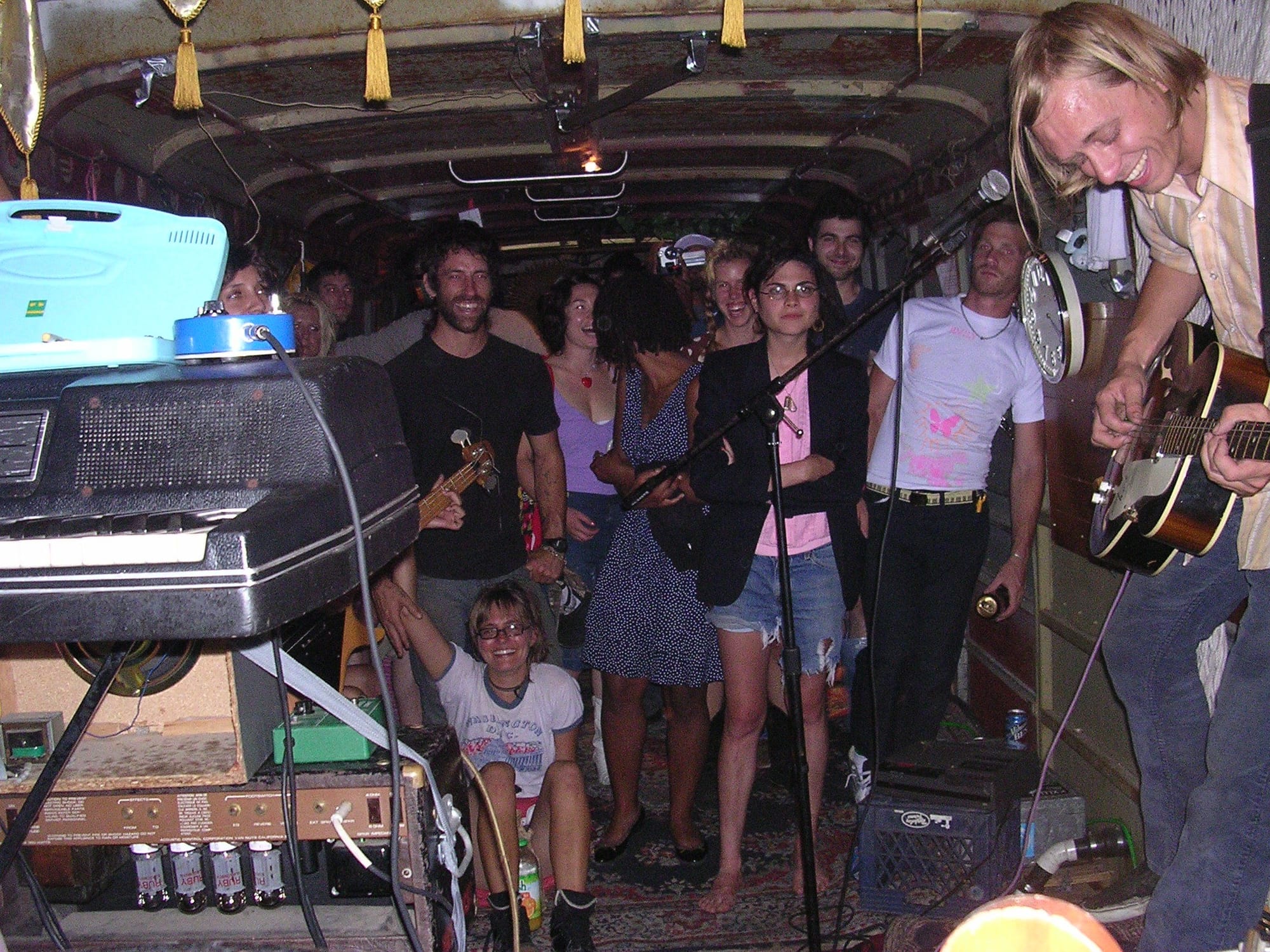
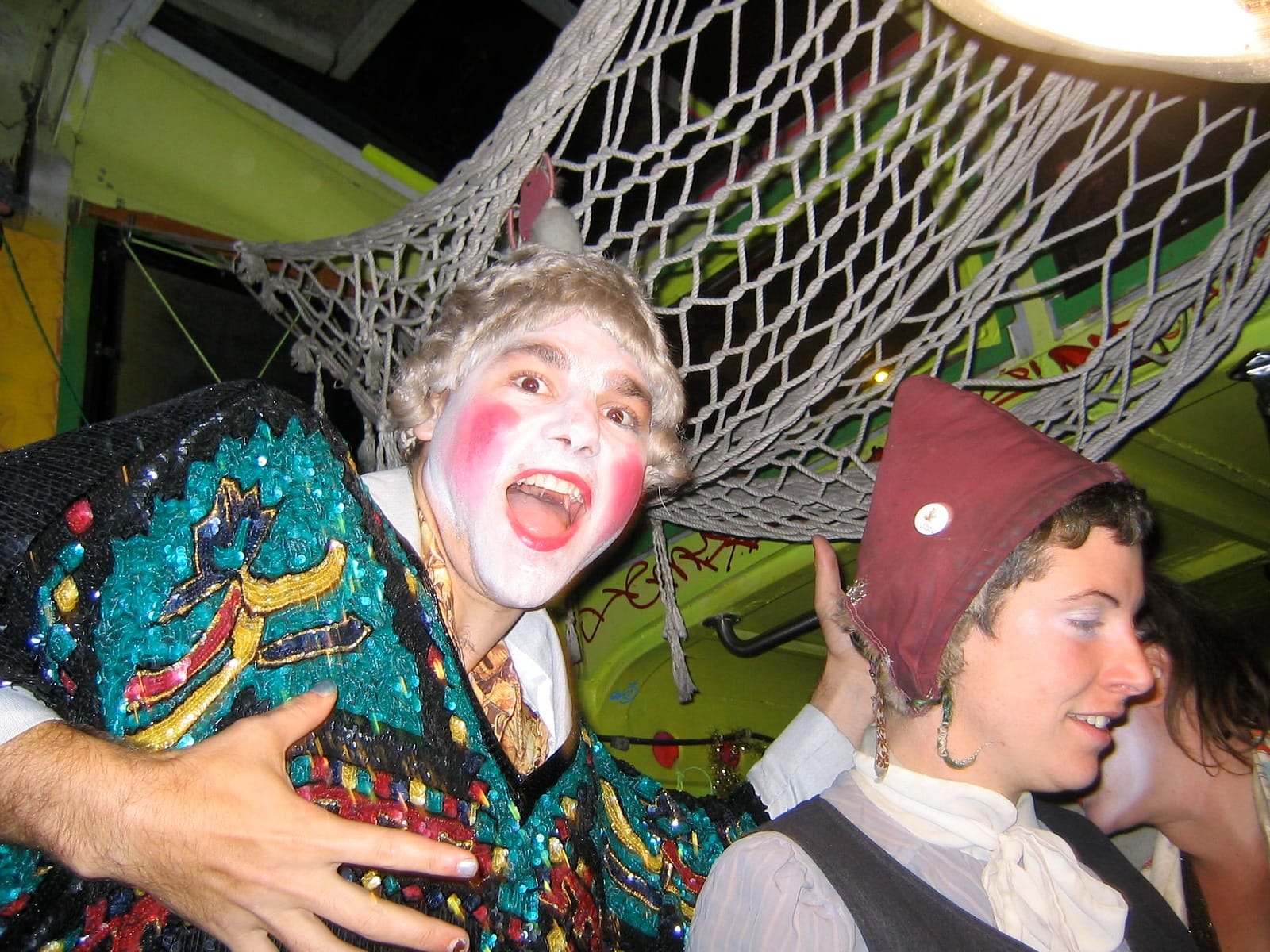
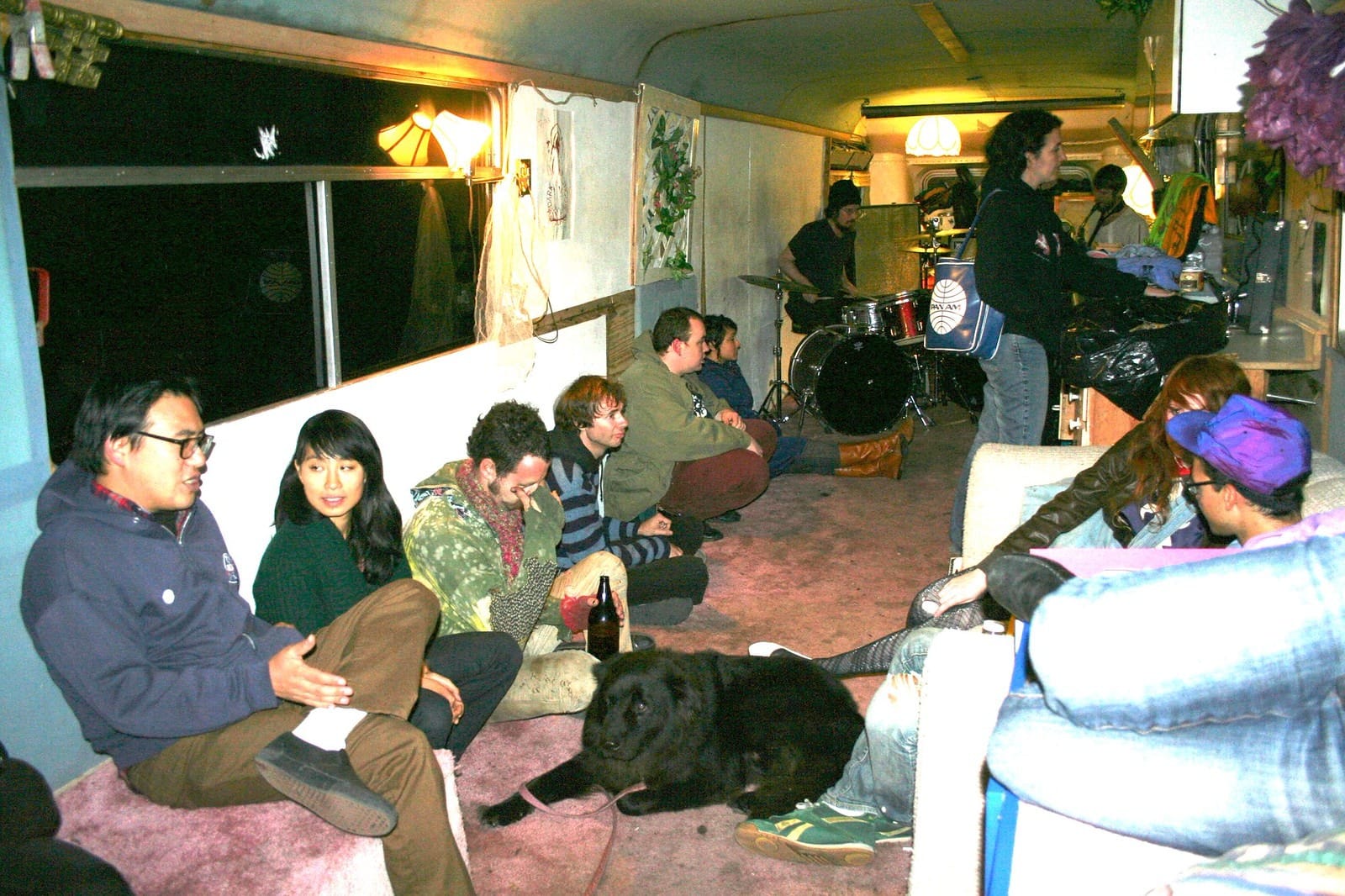
A show on Jhon Benson’s Bus exemplified something about Oakland in the mid- to late-00s: You could rent a warehouse for $1 a square foot and since you barely needed a job, you could spend your free time on “projects.” That could be music, art, or activism; it could be getting your woodworking certificate at Laney College, as many of my friends did. You could do anything, make anything, take risks. Want to set up a show in the abandoned train station? A group of friends would help you sneak a PA through weeds and crumbling graffitied walls, set up a makeshift stage with lights, and play extremely loud noise music. Twenty years later you’ll still be talking about what an awesome show it was.
Oakland had specific characteristics that facilitated such endeavors—most of all, in this brief window between the gutting of West Oakland and its refashioning into a site of real estate speculation, there was plentiful, cheap, and relatively ignored and neglected post-industrial space. But there was also a strong sense of networks and community and an embrace of the interdisciplinary that made this moment possible: A punk show might also include a poet, an experimental hip hop band, and a free improvisation quartet. When people moved away in search of even cheaper places to live like Olympia or Albuquerque, or were pulled by the sparkling promise of bigger cities like New York or Los Angeles, new people always came through. Much of it was facilitated by schools like UC Berkeley, the San Francisco Art Institute, or California College of the Arts (the former now spiraling into unaffordability and the latter two since shuttered and shuttering).
People also moved to the Bay Area because it was a place you could be accepted despite (or perhaps because of) your nonconforming identity. That’s not to say it was a perfect community; we don’t need to idealize it to remember it. But what makes Oakland’s early ’00s DIY music scene linger in the minds of those who remember it is that it offered an all-encompassing creative life to anyone who chose to join in. Screenprinted or otherwise handmade show posters, food lovingly prepared for bands and the audience, performances that considered the art of performance (clothing, makeup, sets!), planning and organizing between community members, all of it was as important as the music itself. Oakland’s long history of radical politics informed the art and music—you could find yourself playing a show at Lobot one day and at an Occupy Oakland protest the next. Or a group of friends from the music scene might decide to build a homemade raft adorned with housing statistics and launch it in Lake Merritt (shout out Aquapy!).
For my part, I moved to the Bay Area from San Diego in 2006, drawn by the scene which I’d come to know while booking shows in San Diego. Some friends and I started Club Sandwich, a loose collective booking all-ages shows all around the Bay, roaming back and forth between San Francisco and the East Bay, everywhere from official venues to punk houses to improvised environments like a waterfront dock or an abandoned building. Because these spaces were unsanctioned—and difficult to discuss while they were active—they were ephemeral, and we only remember them in fragmented personal archives, collective discussions on social media, and personal memories.
But we do remember them. What follows is a portrait of some bygone spots that played a significant role in my life, in this era, a time when cheap warehouse rent allowed me to get by on, for years, part-time teaching English & ELD at a San Francisco public high school. This is not an investigation or an oral history, just an attempt to capture the feeling of a few of these spaces, as I personally experienced them.
It’s easy to say exactly when that era ended, even if it’s painful to remember: On December 2, 2016, the Ghost Ship Fire claimed thirty-six lives and accelerated an already tenuous situation into crisis. As rents were skyrocketing, increasing attention to the variety of code violations that had accompanied the cheap-rent era helped bring it to an end. After the material conditions changed—and I, for example, had already been evicted earlier that year—the trauma and loss of that event made it easier to turn the page on the era that preceded it. Everyone I know from back then knows someone, if not several people, who passed. I know some people who lost over a dozen friends in one night. I vividly recall riding my bike through West Oakland to BART, in a haze, in the days after, and passing two people openly sobbing and comforting one another on the street. No need to ask why.
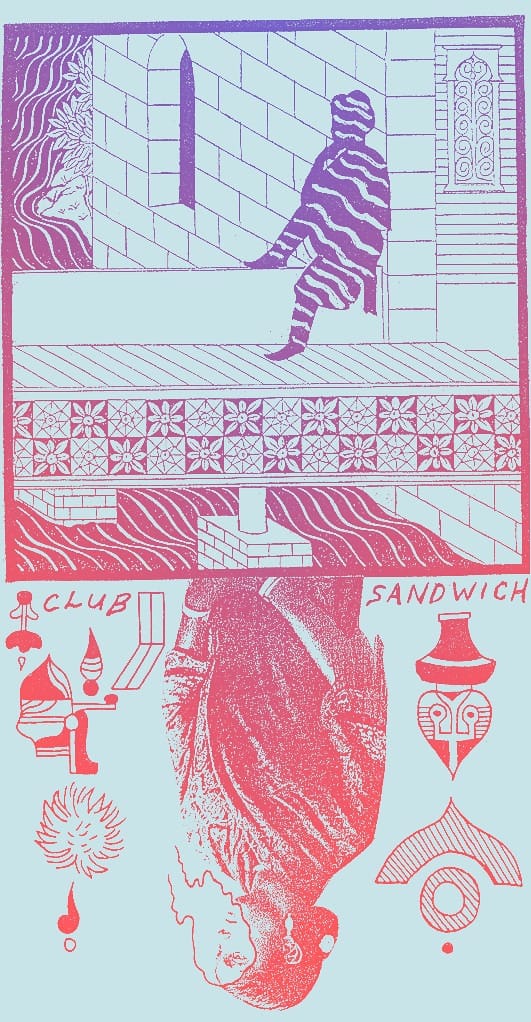
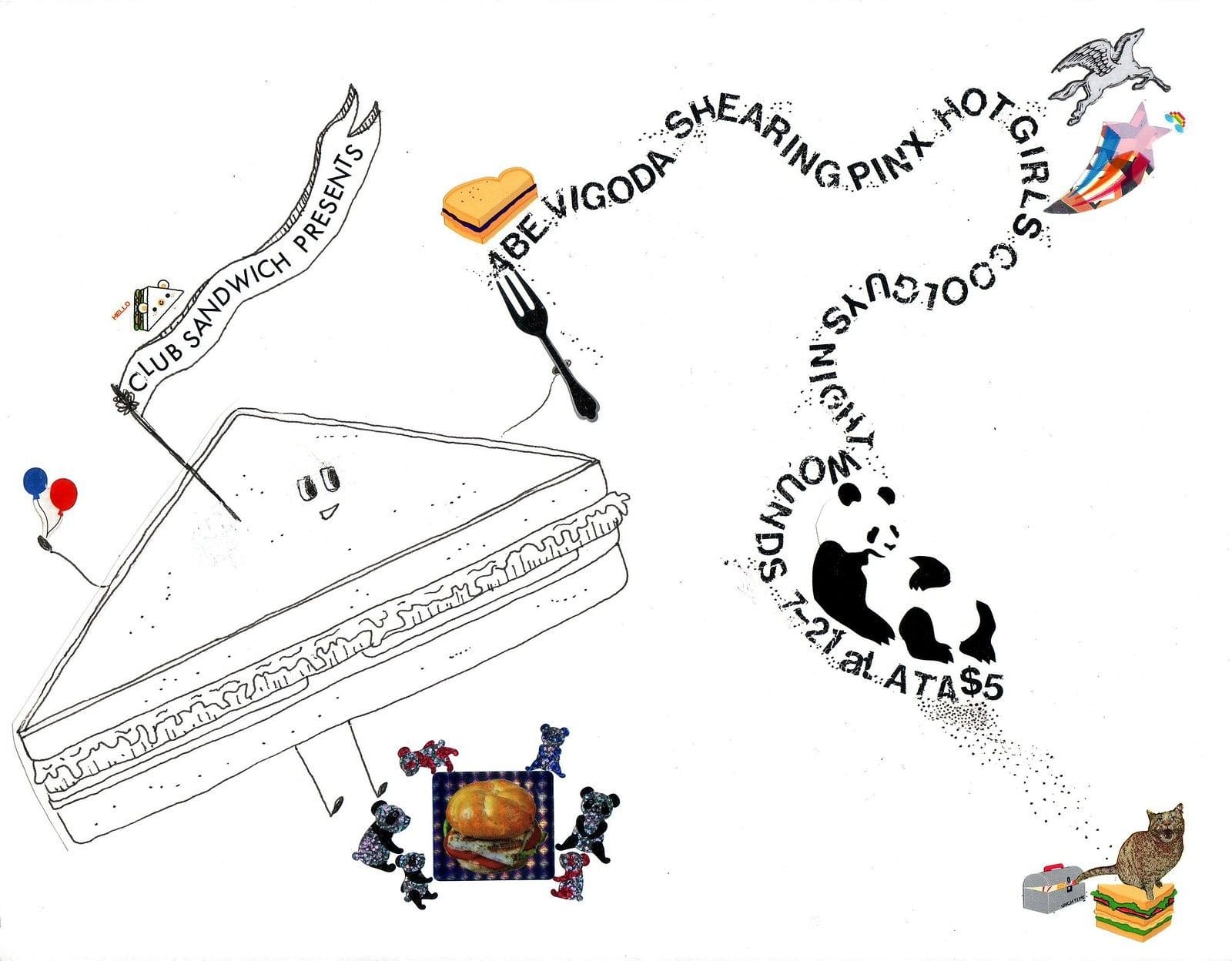
“Supposedly [the event] was to start at 8PM yet at 8:45PM there were less than a dozen people there,” as a showgoer reported in a 2009 Yelp review of LoBot Gallery. Like many alternative art spaces, Lobot ran on punk time, as the irate reviewer discovered: “About an hour and a half later we came back and only a dozen more people showed up. What a depressing scene. The abstract electronic sound art and sketchy neighborhood didn't help either. No thank you.”
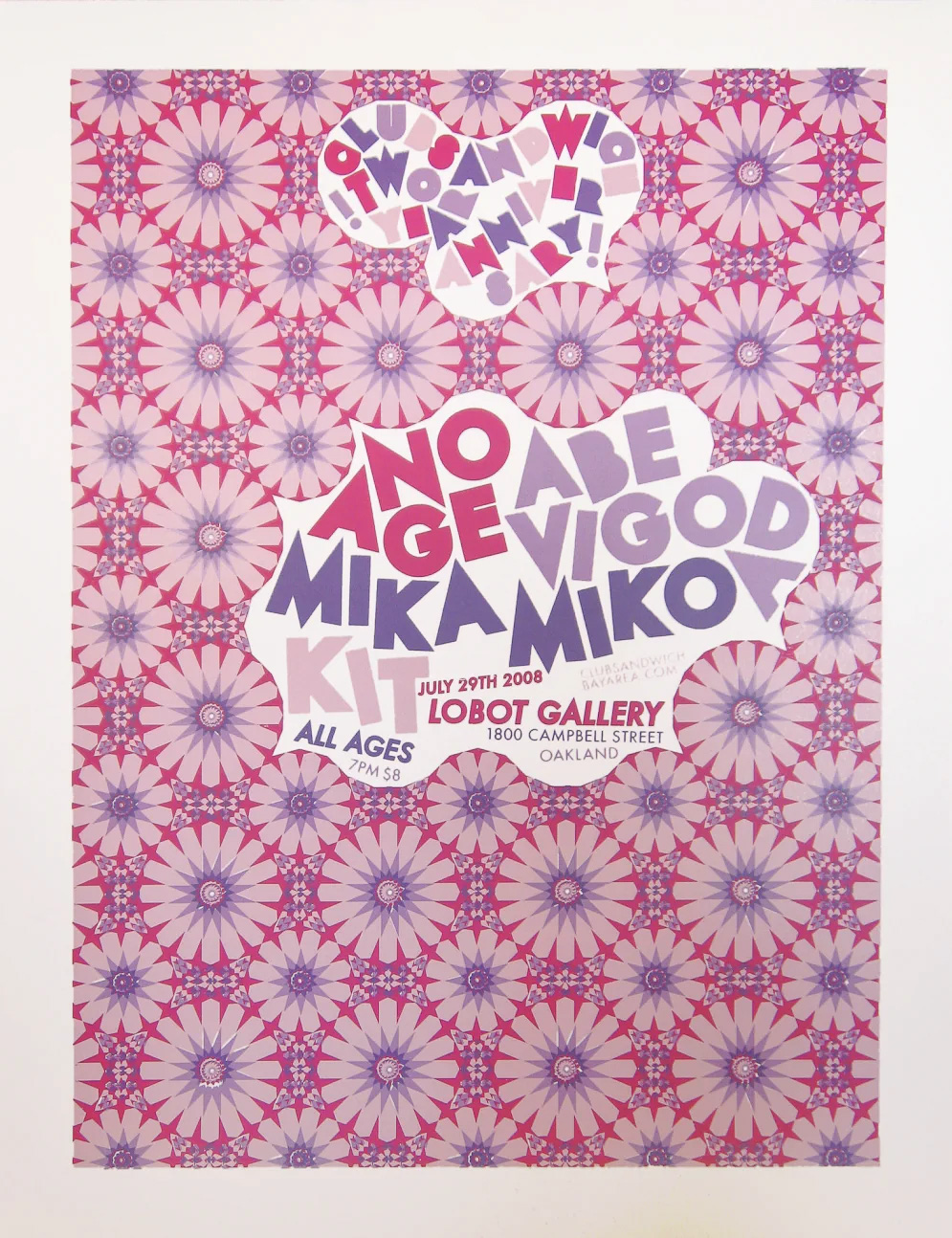
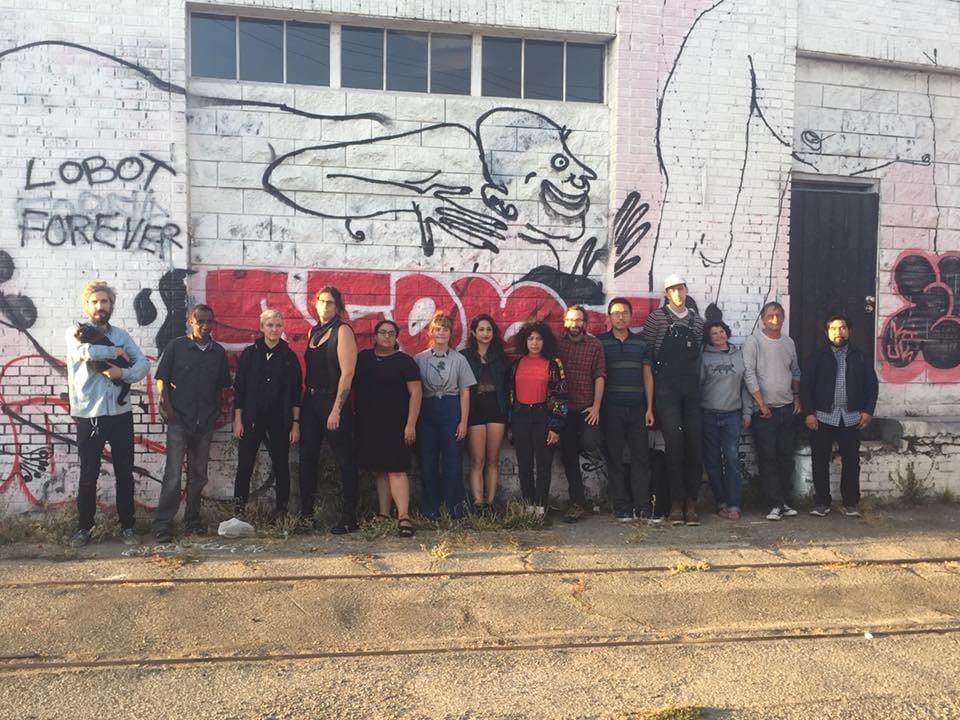
As regulars knew, attendees would line up outside along the graffiti’d brick exterior in the Lower Bottoms, waiting their turn to enter the red door set in a corrugated metal roll-up. I worked the door there, in 2008, for an extremely sold out Club Sandwich anniversary show with No Age, Mika Miko, Abe Vigoda, and KIT. We sold sandwiches we made before the show with BBQ mock duck from Koreana Plaza on dumpstered Semifreddi’s bread (IYKYK/sorry everyone). (That Club Sandwich sometimes made sandwiches was just a coincidence; we (mostly I) liked to prepare food for shows, and we liked "Club," as in group, we thought "Club Sandwich" was just funny.)
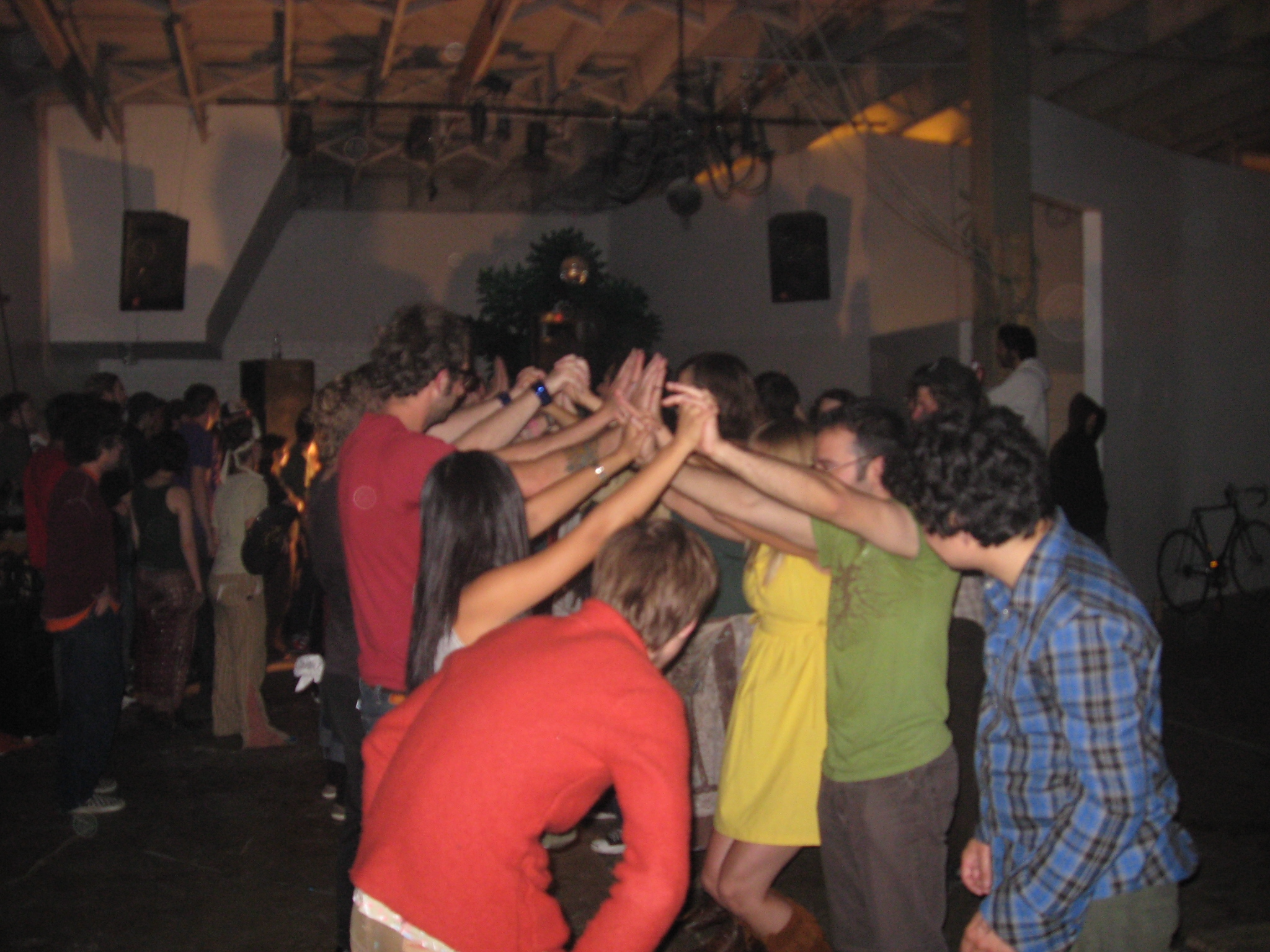
Inside the cavernous former-carpet-factory-and-construction-warehouse, the twenty-feet high ceilings could contain high-energy, frenetic, jam-packed parties, with ample room for such jovial activities as a Dan Deacon human tunnel, a conversion of the entire gallery area to a forest, and many, many art shows. Toward the end of the gallery’s run, my friend Ben Valis had a lofted bedroom that doubled as a practice space.
(A series of steep rent increases eventually led to the space’s demise. RIP Lobot, 2003-2016, now a vintage furniture warehouse adjacent to Prescott Market).
When you walked back outside, the quiet post-industrial neighborhood was a stark contrast to the loud bands, like Lightning Bolt, Black Dice, XBXRX, and Animal Collective (Classics of the Era!). The empty baseball field across the street (now home to the Oakland Ballers) only added to the quiet, but shows often spilled into the street or the park, with people drinking and chatting near their bikes. A 2007 show listing on Zum included the exhortation I’ve used as the title for this piece.
Once, as I was riding my bike home on 18th Street, dodging the remnants of railroad tracks, a passing cyclist shouted “you’re cute!” as we drifted our separate ways. You remember little things like that.
When I moved to Oakland in 2008, Mama Buzz was one of a few cool coffee shops to hang out in. A vegetarian cafe primarily staffed by punks, the prices were inconsistent; a bagel with avocado might cost $1.50 one day, $4 the next. I miss the somewhat funky patio with the aquarium, where I’d spend hours with my friends drinking one cup of coffee because we had no money. Now that third wave coffee shops, or various watered-down or suburban derivatives are the baseline, there was something “culturally informed” about Mama Buzz, if that makes sense; you could meet other cool, subculturally inclined people there. It wasn’t third wave even, it was just funky and random, but with decent (though not exceptional) coffee. Funny to remember that it was pre-“coffee shops as gentrification” discourse, mostly.
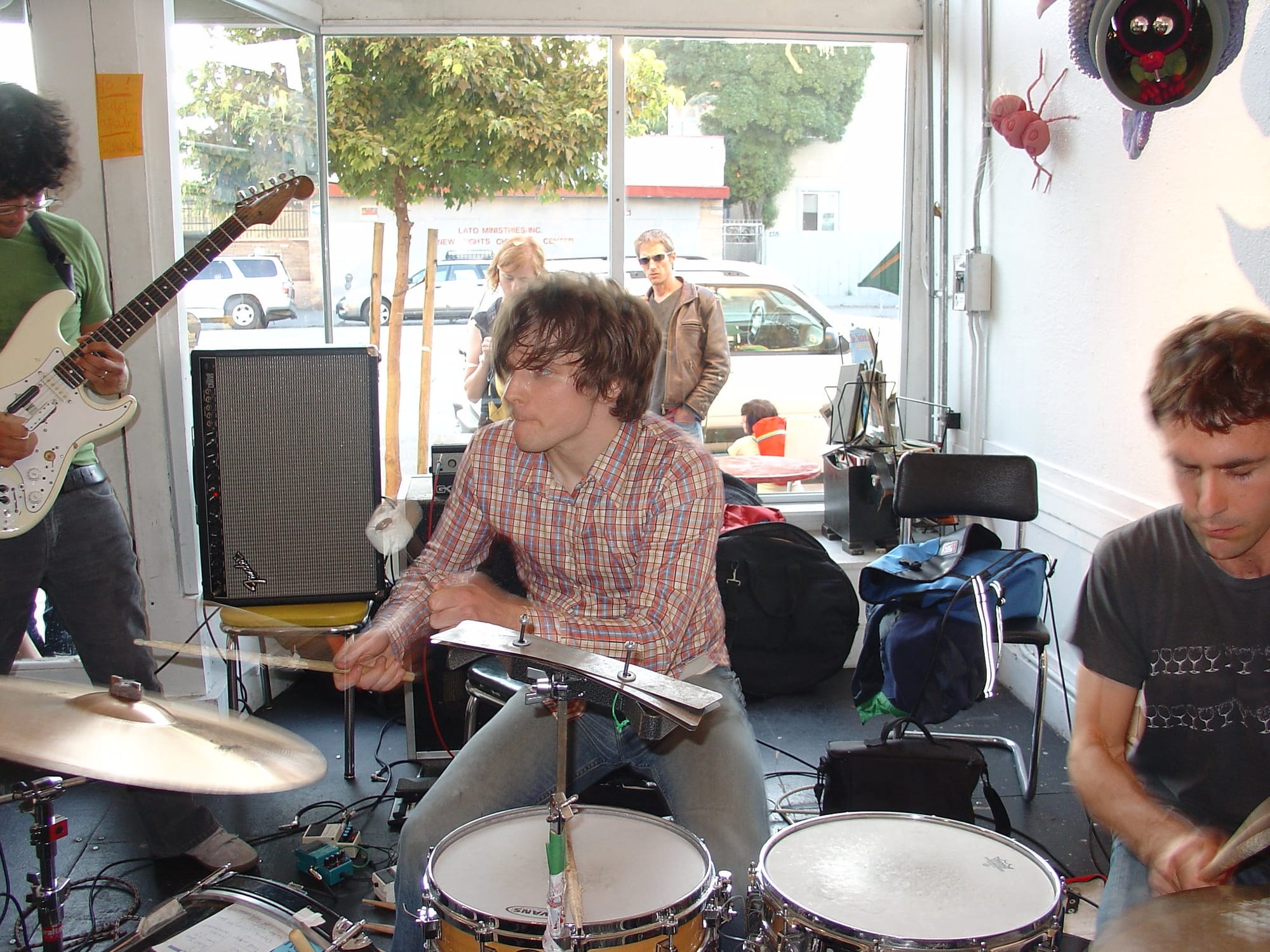
It was also an important tour stop for out-of-town DIY bands. Shows started and ended early to avoid the 10pm noise curfew, usually taking place in the seating area on the right side of the storefront, but sometimes in the backyard (where I participated in one of my first readings organized by Erika M. Anderson). The main show space was on the small side, so if the room was too crowded and raucous for your liking you could watch from the window on the street. It eventually closed when the landlord declined to renew the lease; his son opened a beer garden in its place, now called “Beeryland.”
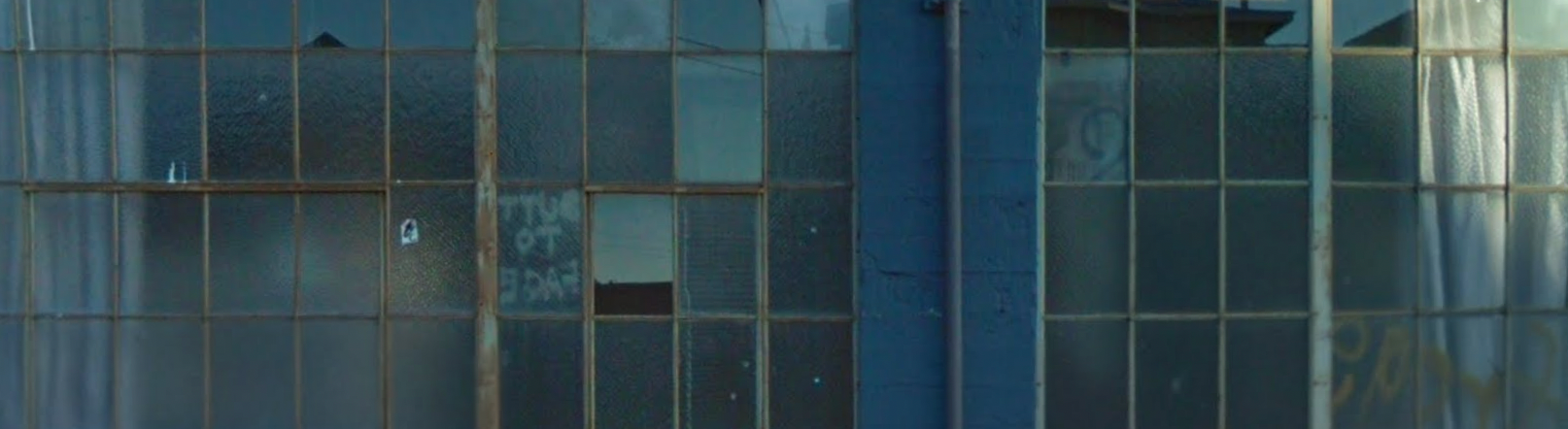
After two years in San Francisco, it was the allure of renting a crumbling warehouse with tons of space at a low cost that pulled me to the East Bay. My partner and I would bum free wifi off Mama Buzz and peruse places on Craigslist. When the space of our dreams popped up—a large warehouse unit at 1919 Market Street—we immediately went to look. A unit in a larger warehouse that was once a Greyhound bus terminal, it had been vacant for a couple years. Metallic confetti was still glued to the floor and the phrases “I like frogs” and “butt to face” were still spraypainted on one of the tall windows. I sent some photos to my friend, Club Sandwich cofounder and local music legend George Chen, who responded, “I think that used to be Grandma’s House.”
I never attended a show there, because Grandma’s House had shut down a few months after I moved to the Bay Area. The lore—which my neighbors confirmed—was that a party had gotten out of hand and the public toilets, located down the hallway, had clogged and overflowed. A good enough metaphor for how wild the energy had gotten; people had taken to going in and out through the windows facing Myrtle Street, or through the loading dock next to the unit.
Sometimes friends stopping by would point out graffiti they’d left in years past. On the second floor where my art studio was located, a poster of a white sports car placed there by Rob Enbom loomed over me as I worked. Other units in the warehouse that also hosted art, music, and performance venues at different times: Liminal, Project Bandaloop, Muscle Beach, the Living Room Project. I always pictured Lightning Bolt playing in the loading dock when I took out our trash; during our tenure, it had been converted into a nearly-windowless apartment, and it was occupied by an elderly man who listened to the same Traveling Wilburys album on repeat.
We were evicted in the beginning of 2016: After a year of mounting chaos and drama, both with the landlord and between tenants, our building was purchased by a new owner, who was notorious for turning SROs into tech dorms. After it was deemed “uninhabitable” by the City of Oakland, we had seventy-two hours to move. Imagine the chaos of hundreds of people moving decades of stuff out of a massive warehouse, trying to maneuver dozens of U-Hauls and personal vehicles around one small parking lot. A growing pile of discarded objects accumulated in one corner of the parking lot, which we referred to as Trash Mountain. Some neighbors, including one known for hosting “burnlesque” parties, decided they weren’t moving (needless to say, they did not get all their stuff out in time). Several did not have anywhere to go.
Eventually most of the building was demolished (without proper permits) and redeveloped into apartments. I felt vindicated when I learned that, last year, the person who purchased our building lost it to foreclosure.
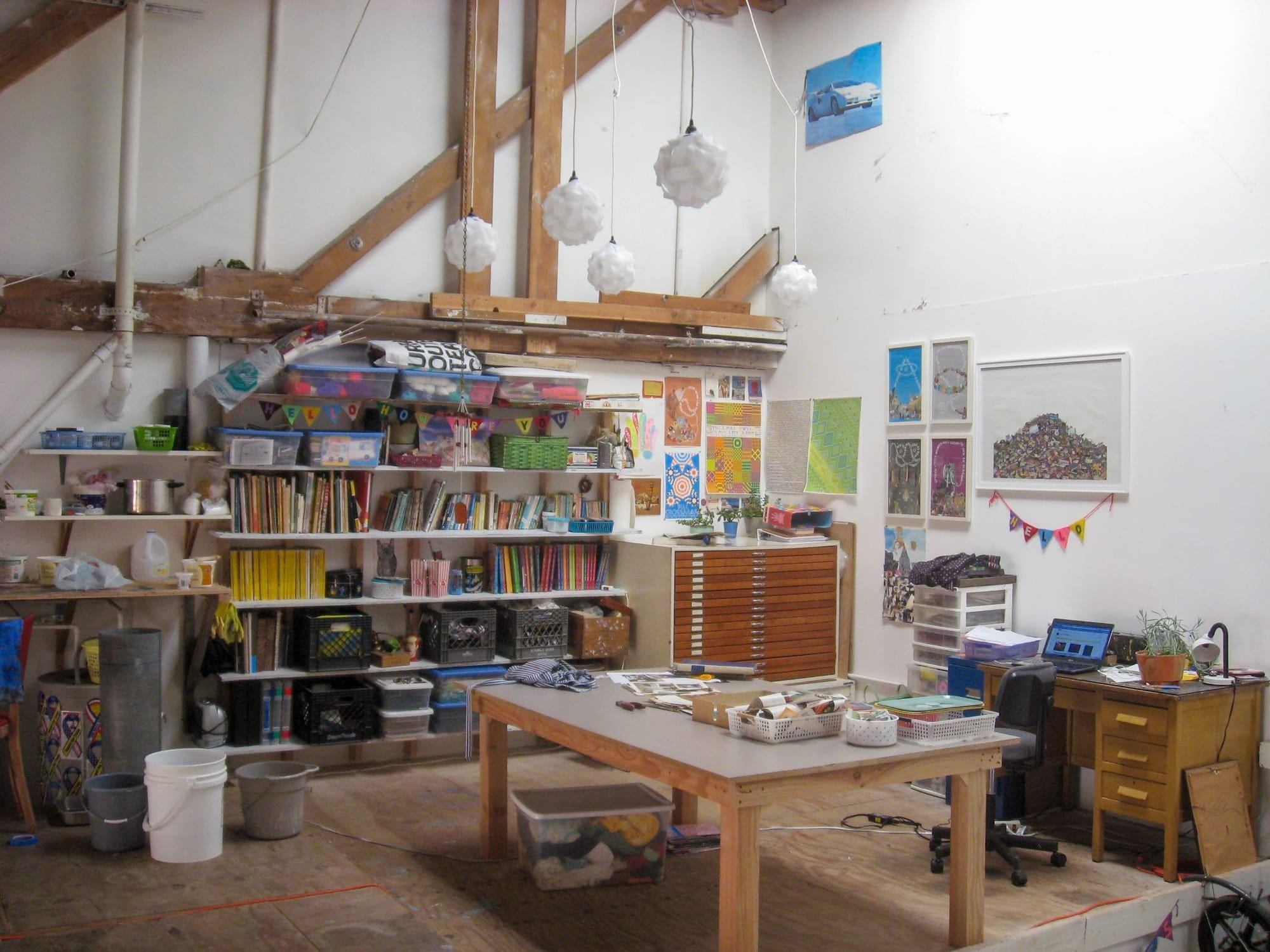
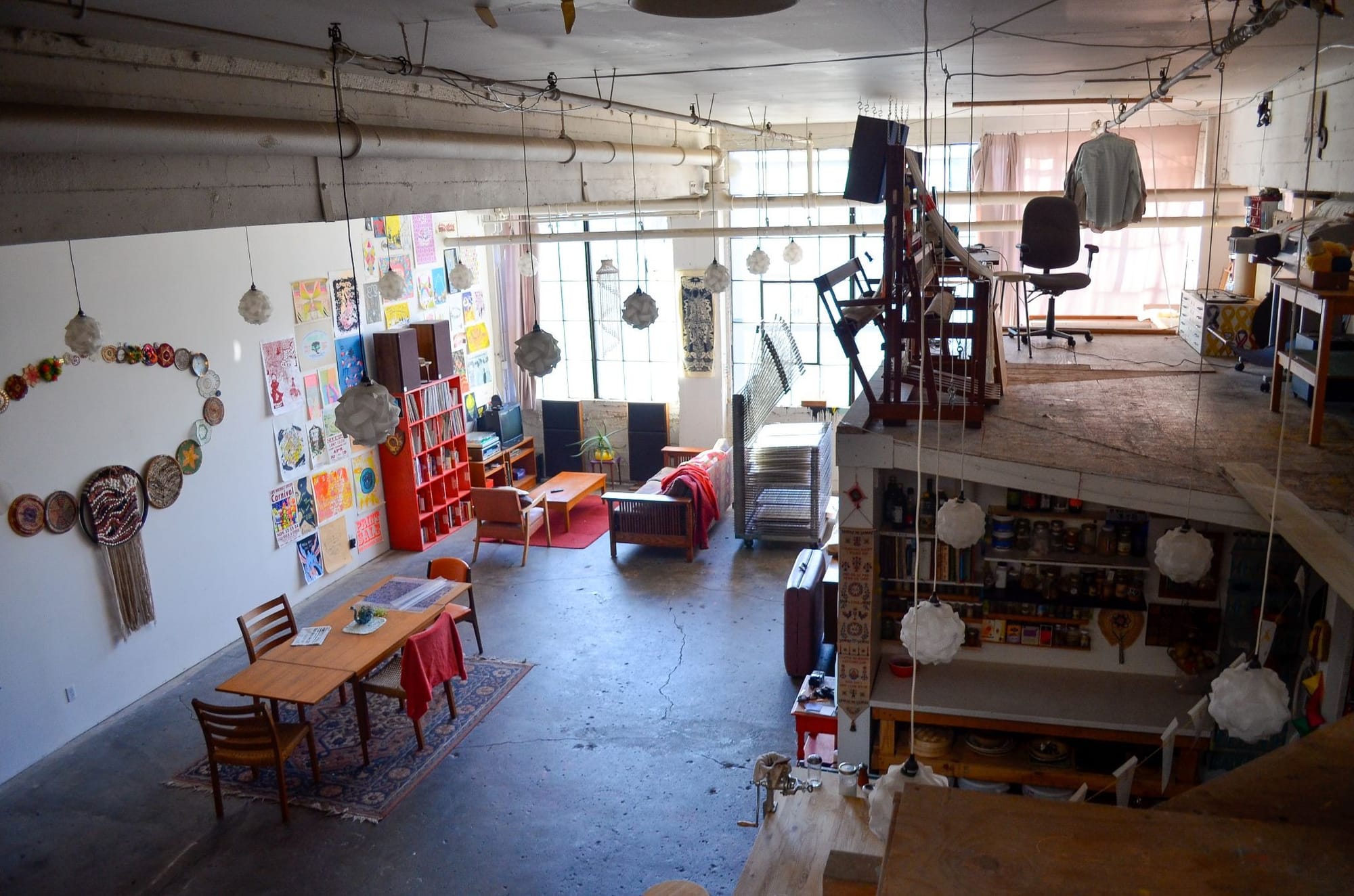
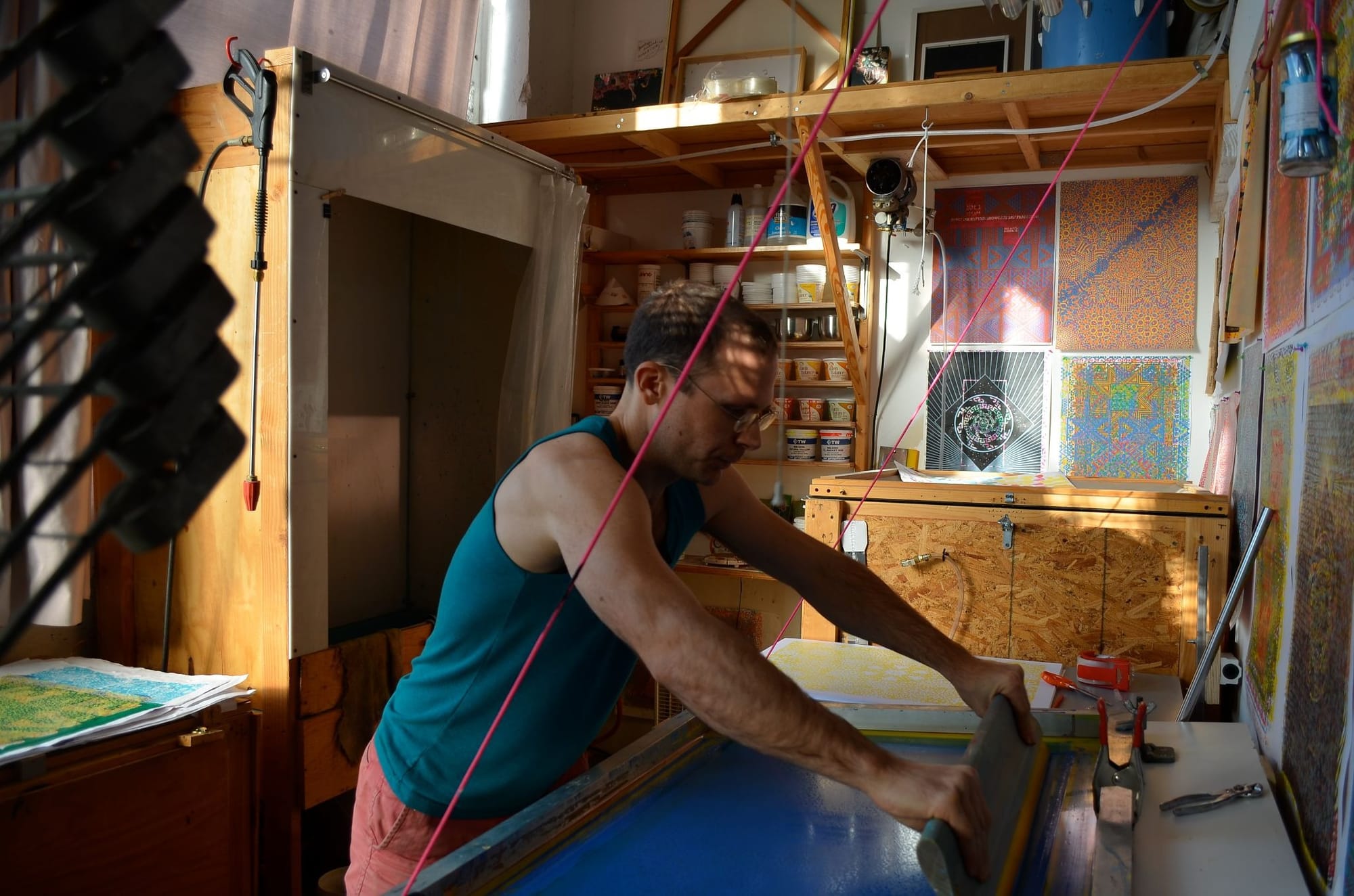
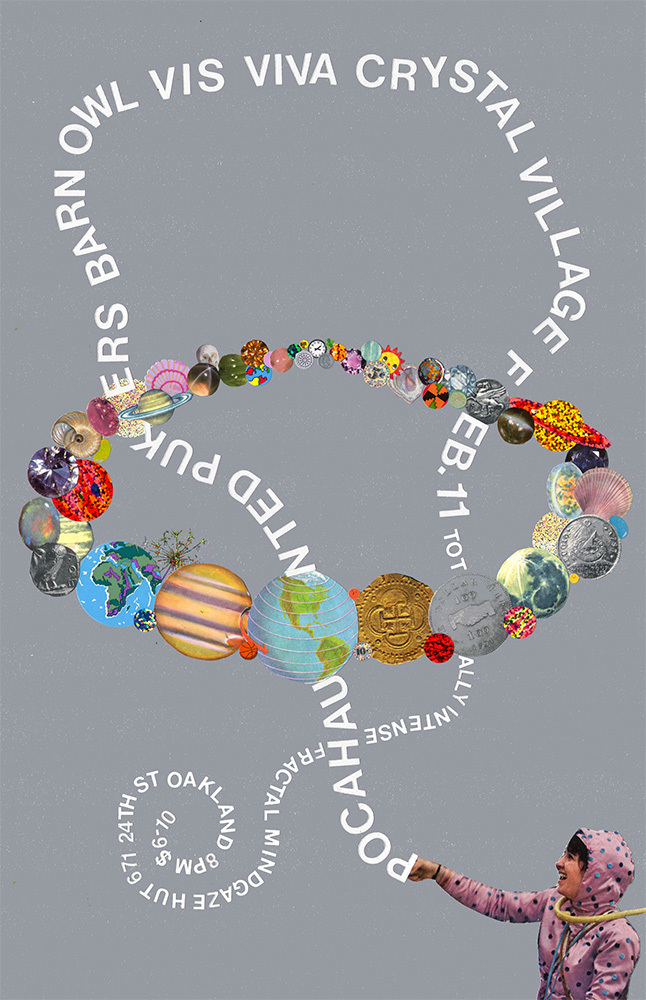
Totally Intense Fractal Mindgaze Hut was six blocks from our place, on 24th Street. It was a brick building and former armory populated by experimental musicians connected to the legendary Mills graduate music program. The name was apt: A typical show would often involve drone, improvisation, spacey synths, or expanded cinema (a Bay Area specialty), with musicians like John Wiese, Lucky Dragons, Gowns, Grouper, or Sic Alps.
Imagine you’re sitting on a concrete floor: Dreamy ambient sounds envelop the room while a 16mm film featuring imagery of oceans, clouds, butterflies, and abstract patterns plays on the wall. It’s a small crowd—intimate, informal, friendly, attentive. People smoke outside and chat between bands. A few candles glow softly. On some occasions there’s harsh noise or a rock band, but overall the energy is mellow. Calm, peaceful. Bathlike.
In 2015, a fire broke out in the upstairs unit and two people died. The flames spread to the adjacent 23rd Street building that housed AK Press and 1984 Printing, where we had paper trimmed for screenprinting show posters. Dozens of survivors were displaced. The fire was the first in a series of upheavals: The eviction of the 150+ people who lived in my building less than a year later, followed by the Ghost Ship Fire (which a friend who lived at Mindgaze Hut also survived). Both buildings were later purchased by the same developer who bought our building and are now apartments. There is still a Facebook page: “Its totally intense and it's totally not booking anything anymore,” it says.
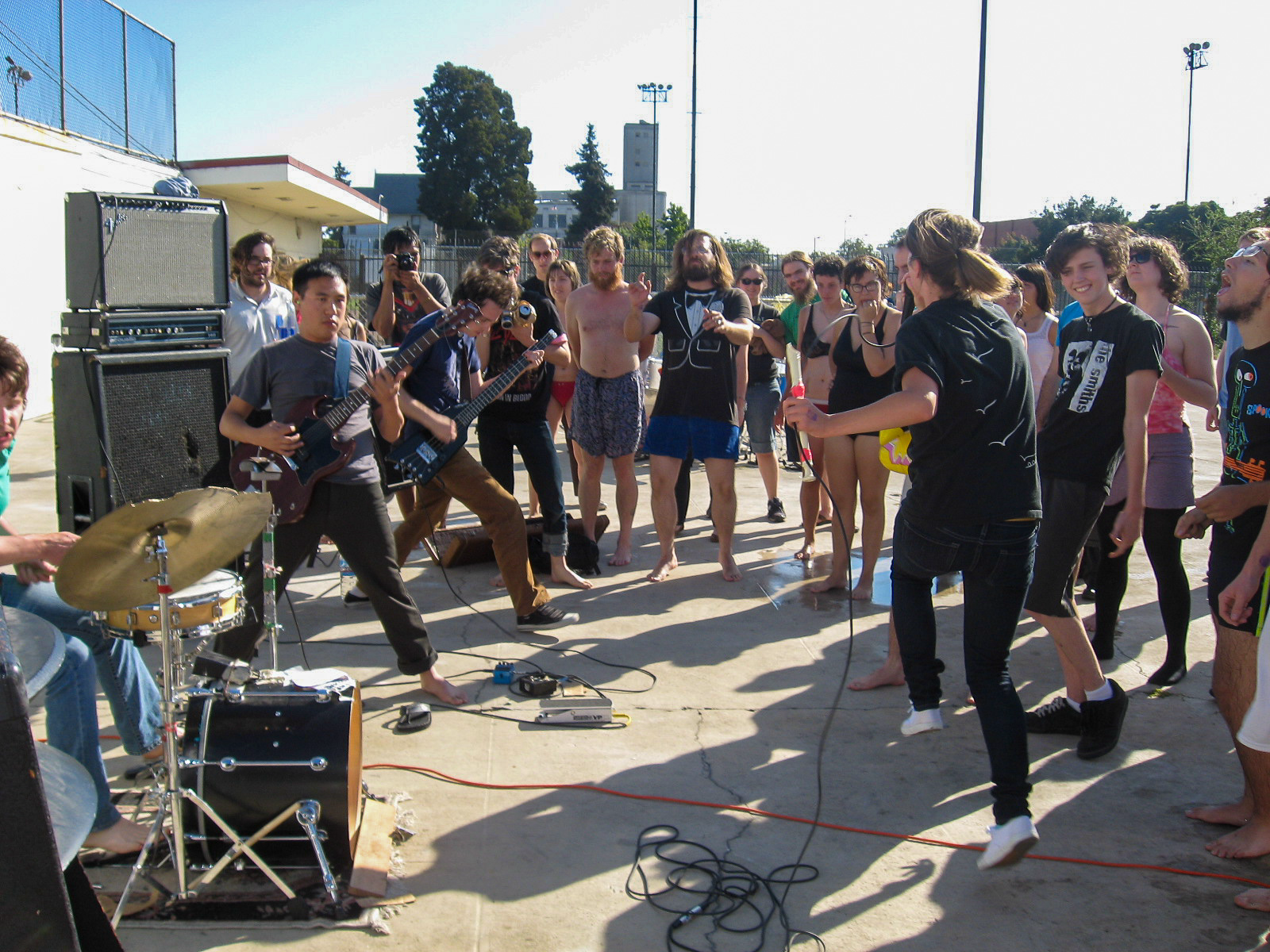
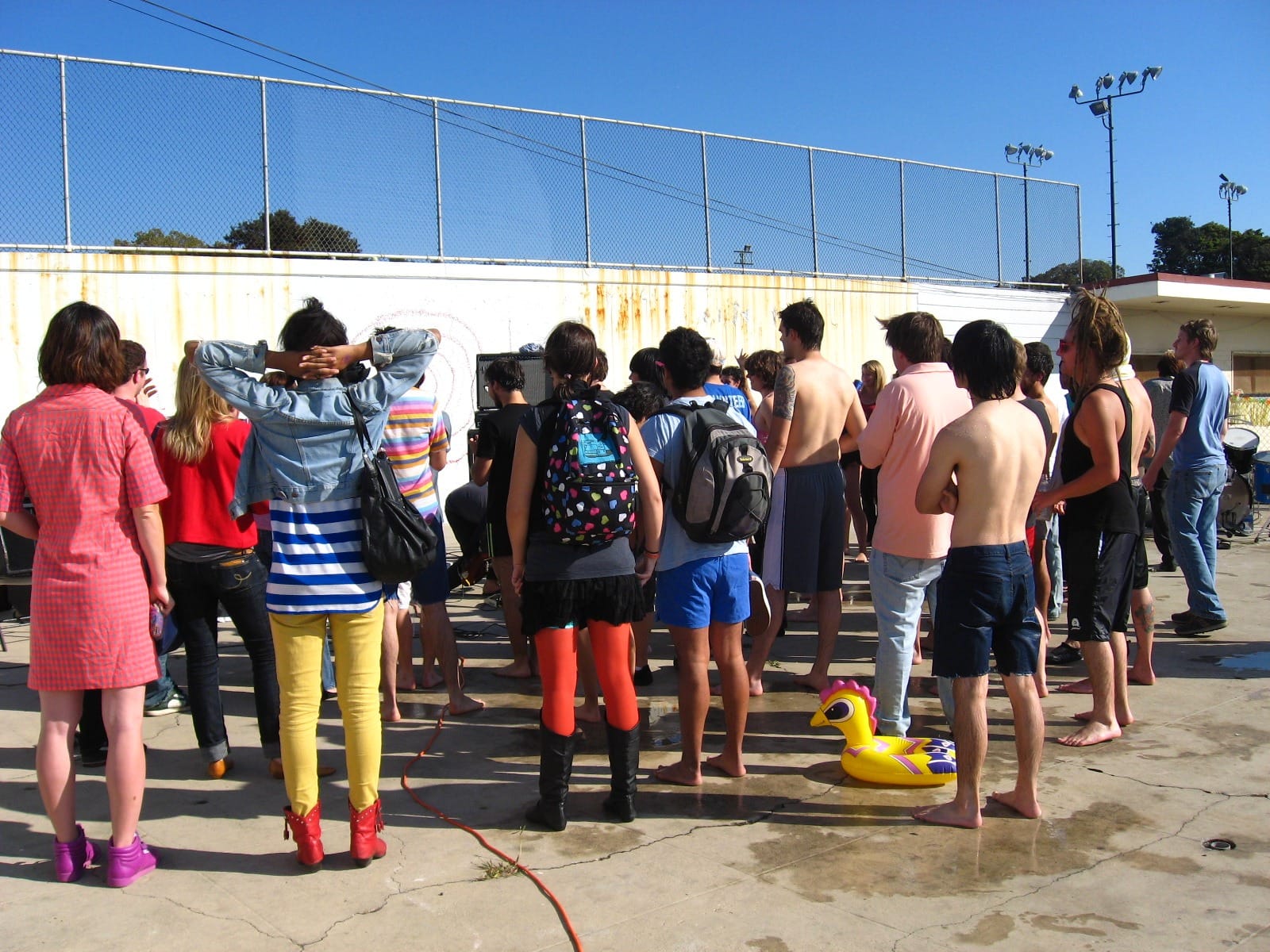
Not all DIY music shows during this time happened in illegal industrial spaces. Defremery Pool was not normally a DIY music venue, but it was for a day in 2007 when, for reasons I still can’t fathom, the City of Oakland let us book a Club Sandwich show there. Los Angeles bands Foot Village and Captain Ahab (whose main member now plays in clipping), as well as local bands KIT and Cellblock played the show. Amid the red-and-black flags and neighborhood kids cooling off, I went swimming in my underwear with my roommates while my friends played on the deck on a sunny September day.
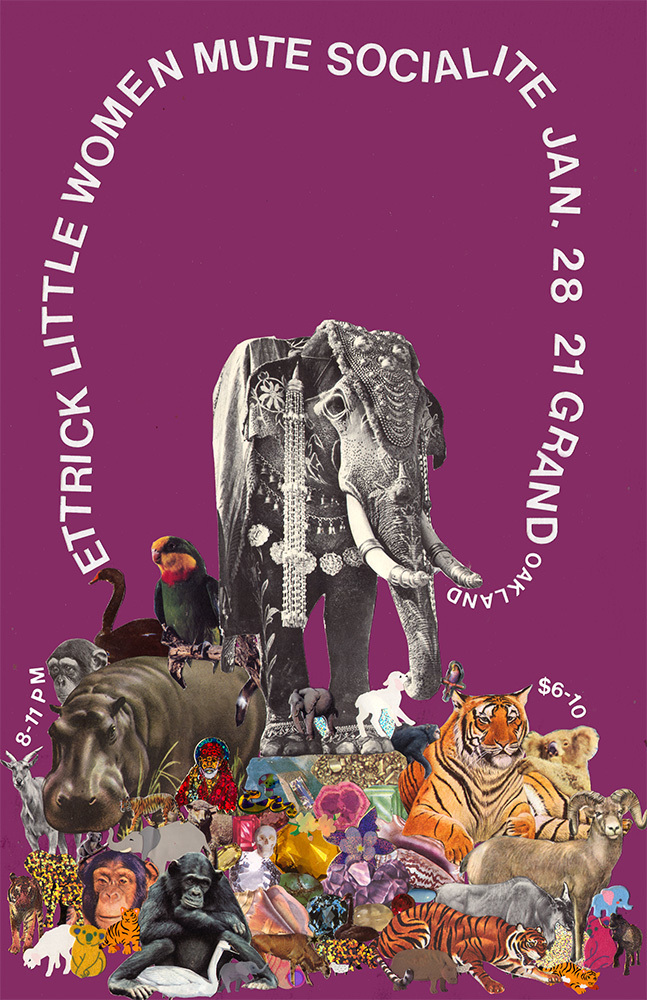
Some venues were actually aboveboard, like the gallery and experimental music venue 21 Grand. Its name came from its original address, though I only ever knew the final location on 25th Street. Shows at 21 Grand often included musicians who were well known among the underground—Damo Suzuki & Malcolm Mooney, Kim Gordon & Thurston Moore, Mike Watt, Thee Oh Sees (now Osees), Mt. Eerie, Vivian Girls, Lil B—or some of the more experimental flavors one could find at Mindgaze Hut. 21 Grand also had a robust program of visual art exhibitions, showing artists like Alicia McCarthy, Tuan Andrew Nguyen, and Sarah Cain. Writers were also featured—Eileen Myles, Dodie Bellamy, Kevin Killian—along with other community gatherings.
Club Sandwich actually started at 21 Grand, after Shannon Stewart (who founded Seattle’s all ages DIY venue Vera Project), hosted a convening, in 2006, of people who were involved in booking all-ages shows along the West Coast. After I came up from San Diego, on behalf of the Che Cafe, I met a number of friends from the Bay Area and beyond (some of whom, like me, would soon relocate to Oakland), and we realized we could accomplish more by combining our efforts and divvying up the labor of communicating with bands, finding a space, putting up posters around town, and running the door and sound. Thus, Club Sandwich was born.
The space itself was a medium-size white-walled room, a little smaller than Lobot. The front of the building housed Smythe’s Accordion Center (which still exists! although now relocated to Petaluma). You’d pay the door person, and enter a narrow walkway through to the back, the accordion shop on your left and the iconic black, red, and green God’s Gym on your right. People were always hanging out in the walkway in between bands, chatting and smoking. There was a large leather couch, as well as a bulletin board where you could plan your next several weeks at local DIY shows (or post your own flyers!). A set of metal-rimmed glass double doors that you might expect to see in an office then opened into the main performance area.
After an eleven-year run, 21 Grand was issued a “cease & desist cabaret activity” letter in 2011, by the City of Oakland. In order to acquire a $750 per year cabaret permit, they would have to overcome numerous obstacles: fire and health inspections, permits, business tax and alcohol/beverage licenses, and zoning clearance. The building would have to be brought up to code at an estimated cost of at least $120,000, and 21 Grand were not the building’s owners.
I was part of the last art exhibition there, along with my partner Paul Morgan and several of our good friends. Fittingly, it was an archive of show posters and flyers from the early ’00s. Sarah Lockhart, one of 21 Grand’s cofounders, went on to work with Safer DIY Spaces, which was founded after the Ghost Ship Fire to help underground venues navigate code compliance issues.
Now, the building seems to have returned to its Broadway Auto Row roots, and is an apparently nameless repair shop.
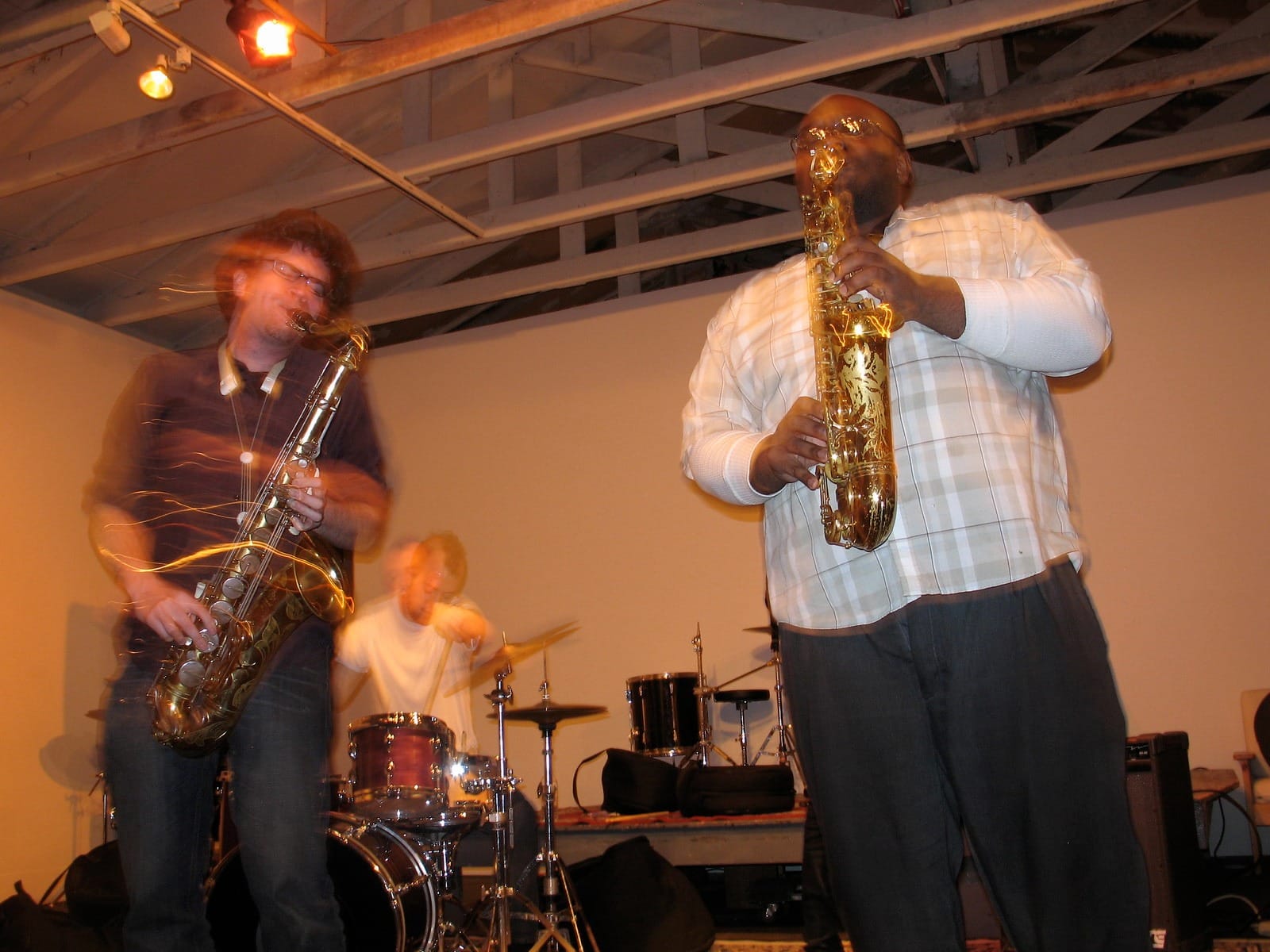
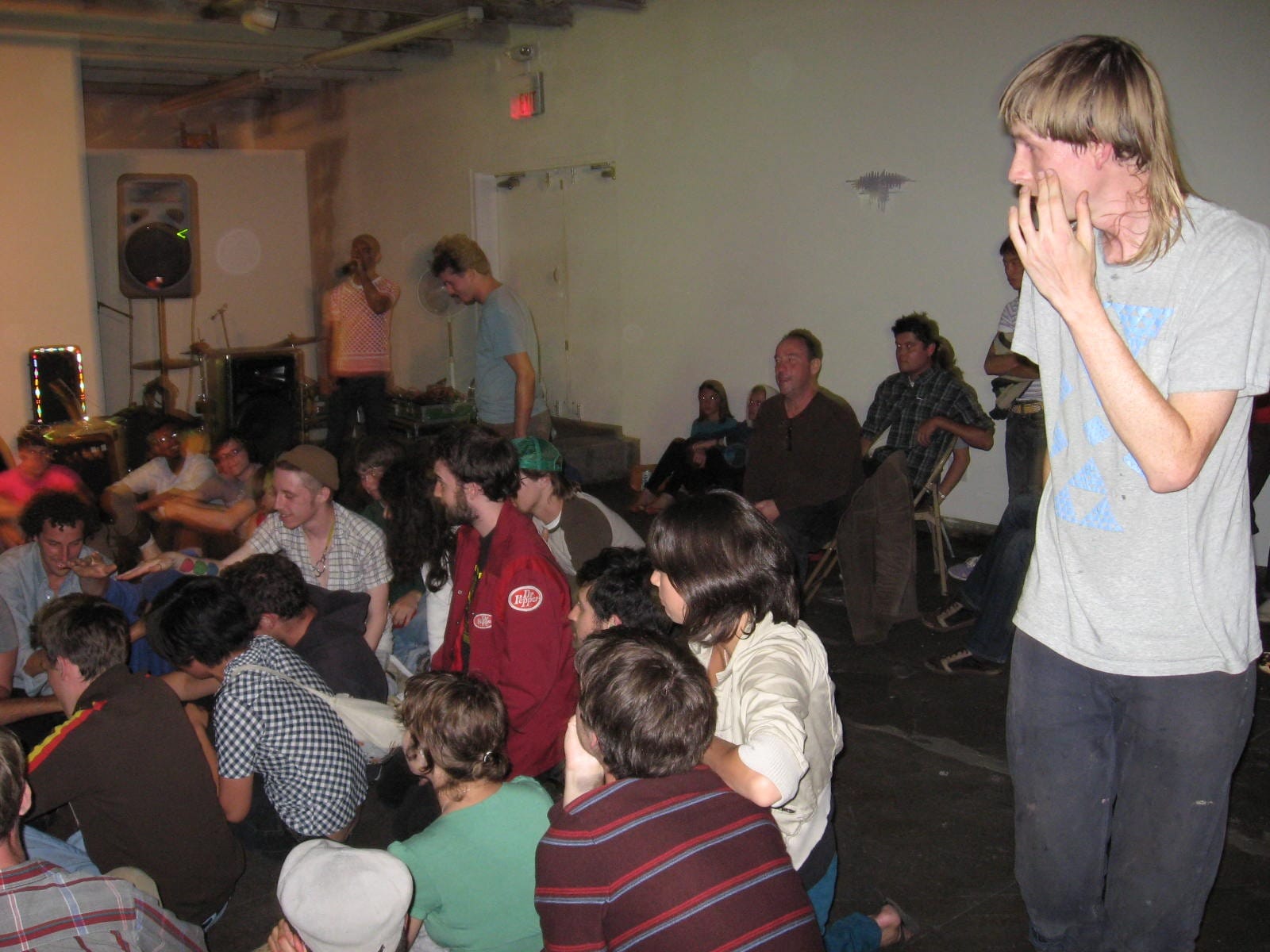
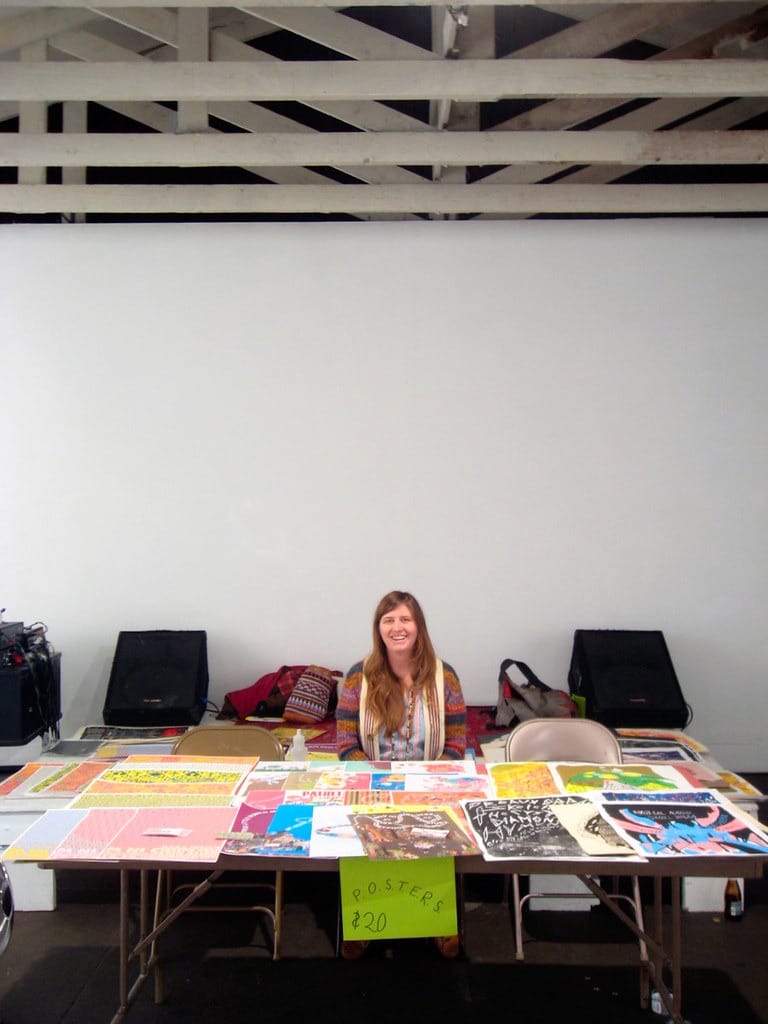
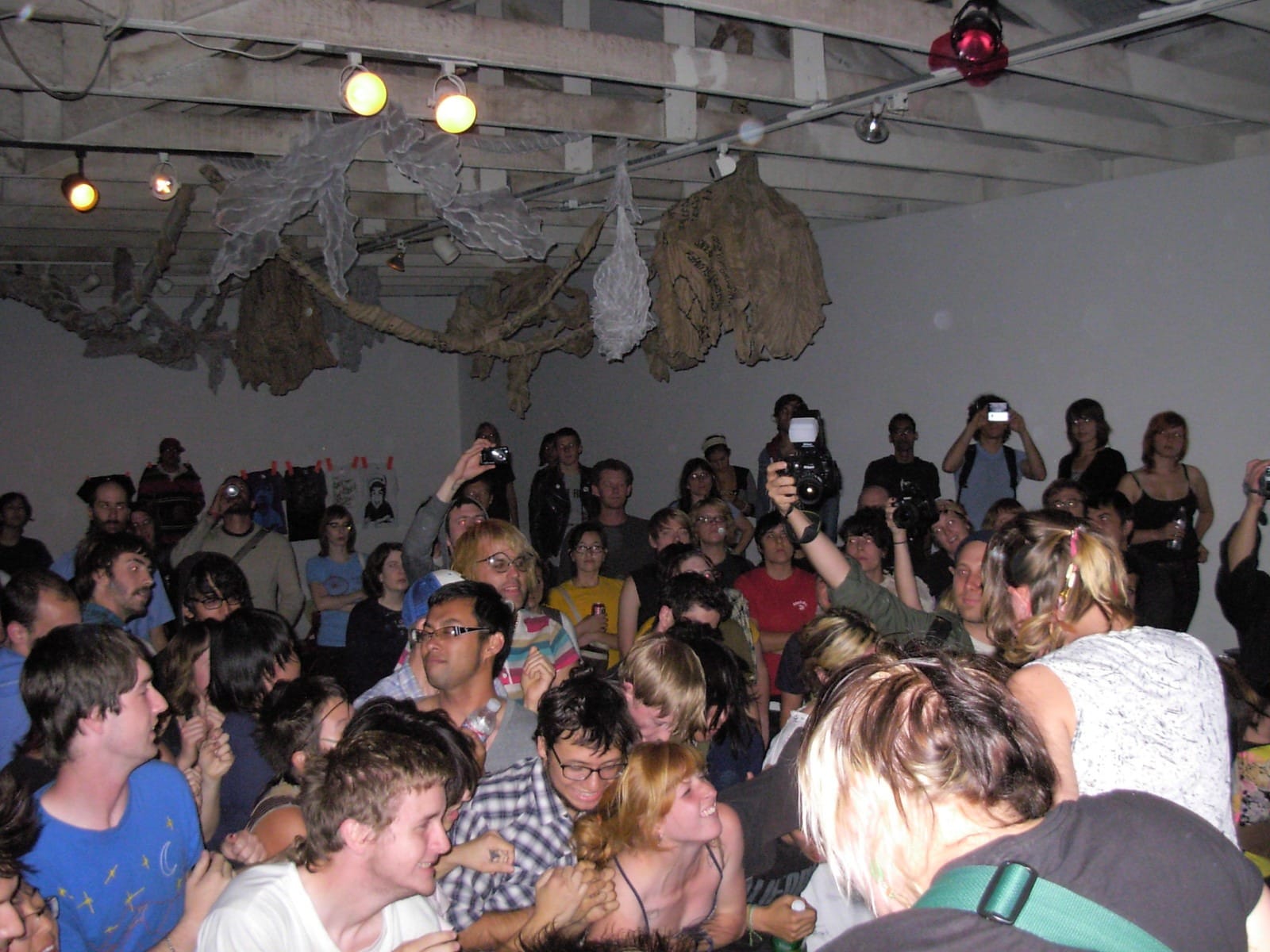
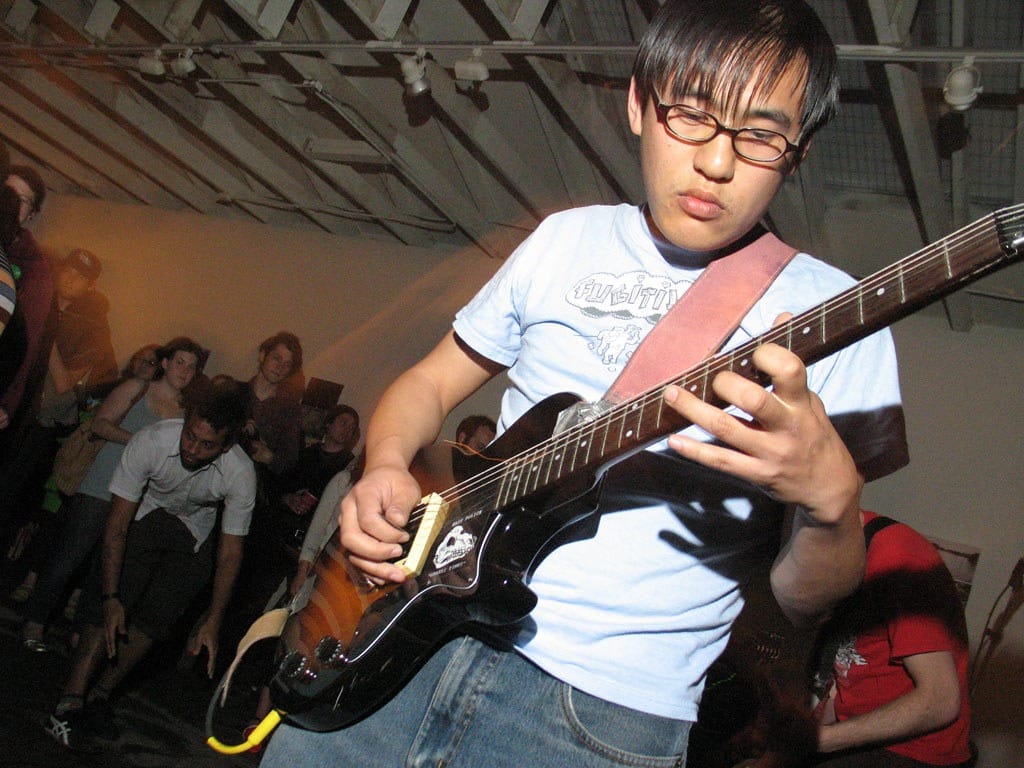
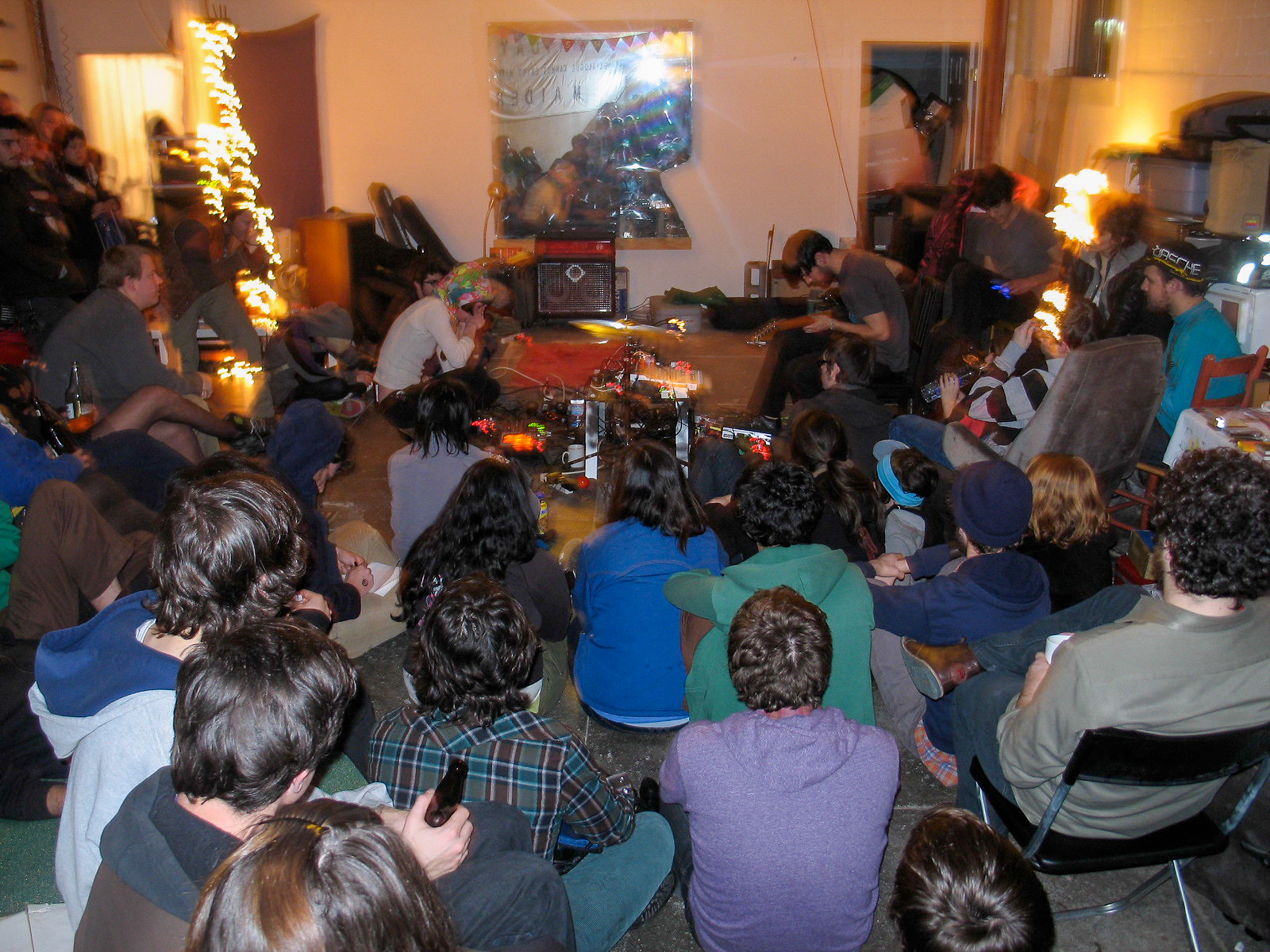
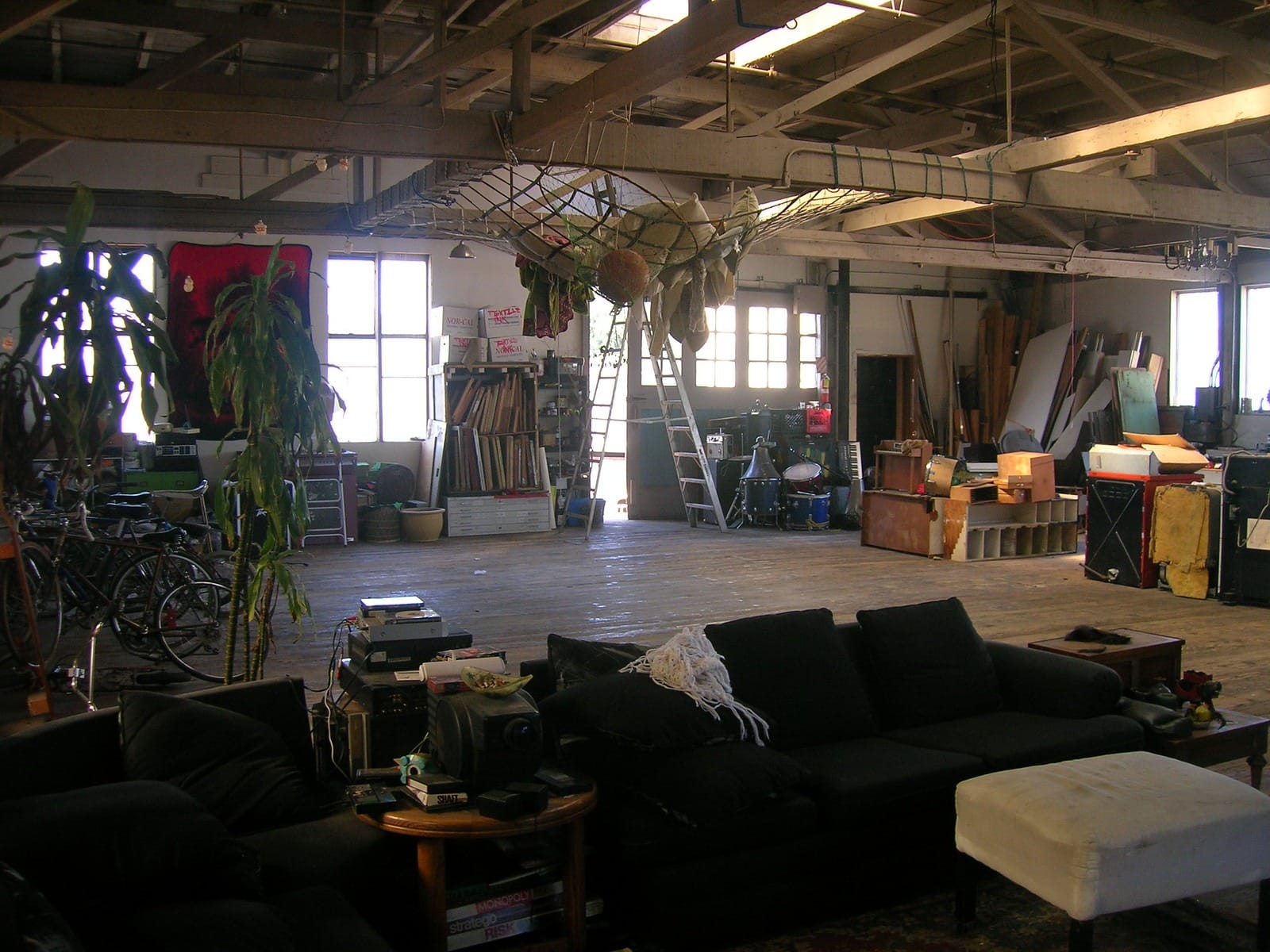
Of all the Oakland DIY spaces, Huffin House is where I spent the most time. It began in the early ’00s, a sublet warehouse within a larger subdivided building near Laney College on the corner of East 10th and 8th Streets, founded by artists and musicians from the local noise community (most notably, Grouper, Yellow Swans and Eats Tapes). The name came from the paint fumes that would drift upstairs from the main tenant and leaseholder, an artist who used the first floor for his studio. To get to the second floor, you’d climb a rickety narrow wooden staircase going past hulking metal sculptures. I can’t remember what they looked like, now, beyond “metal” and “big.” It was always dark in there. At the top of the stairs at one point was a washing machine and dryer someone acquired (what a luxury!). You’d throw open the door and be greeted with a dark, cavernous expanse almost as far as the eye could see.
It was dark because most of the windows had been subsumed into the bedrooms built out along the sides of the space (definitely not to code), for artists and musicians whose bedrooms doubled as studios. One room was dubbed “the Paint Room” and literally used for this purpose. Its main feature was a wall-sized, enormously powerful fan used to expel the fumes. My friend Gaby Wolodarski, a skilled oil painter, made meticulously accurate portraits of the residents that hung there for years after she left Oakland to attend grad school in New York. Next to the fan room was an ambiguous area towards the back of the warehouse that seemed mainly to be used for storing belongings of former residents.
Like all good Bay Area punk and collective houses, the bathroom had a perpetual mildew smell and many layers of not-recently-washed towels (acquired from thrift stores, obviously). A great selection of books and zines accumulated as reading material. There were classic arguments about who purchased toilet paper most often.
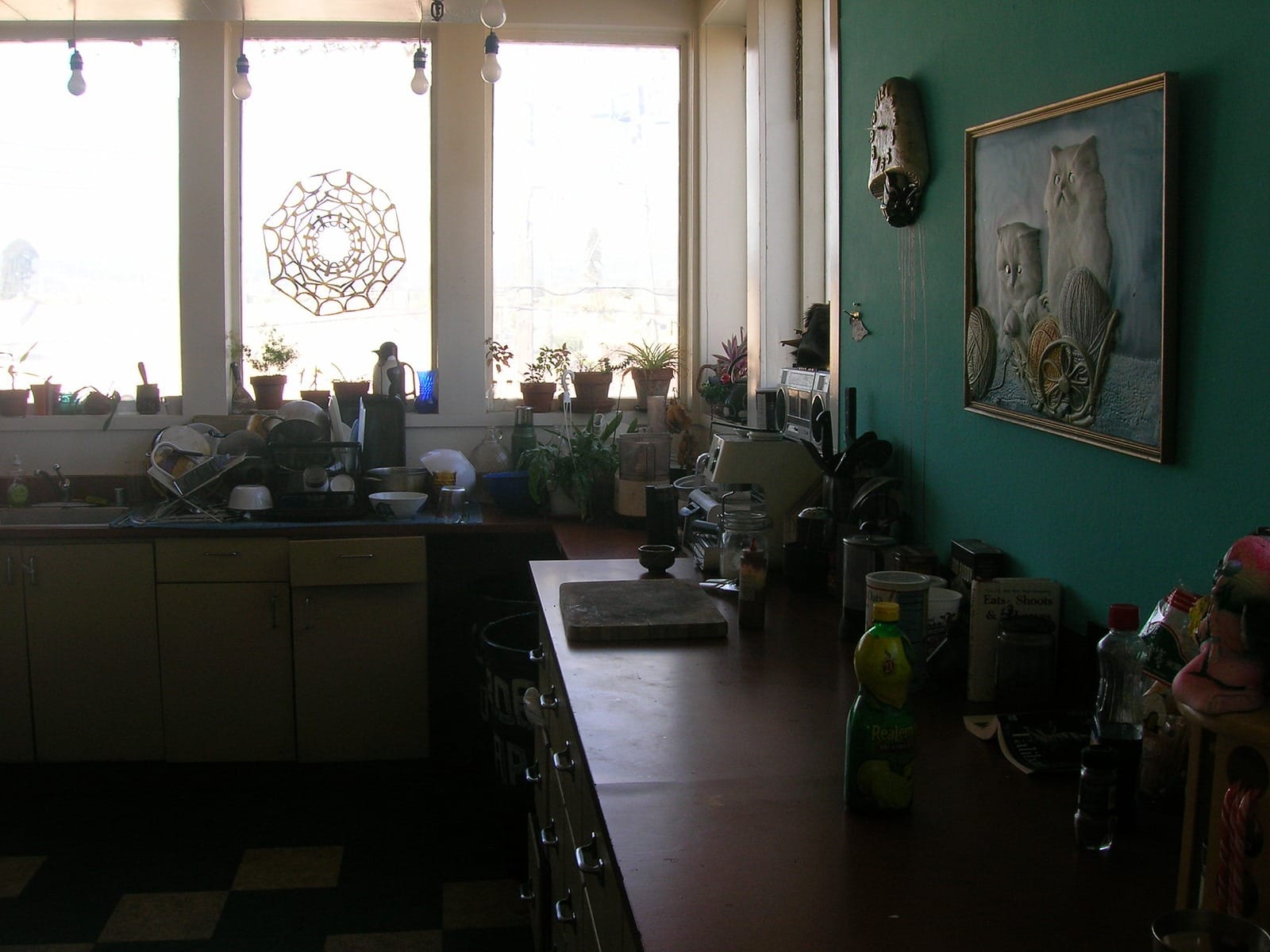
Both the bathroom and the kitchen had windows that looked out across Oakland onto the hills, a view I treasured. You’d have to dig a glass or ceramic mug out of the sink and wash it to drink from when hanging with friends.
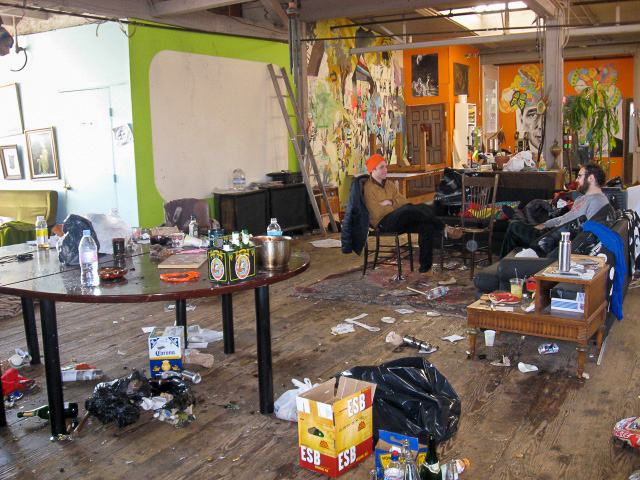
A few key features of the main space are etched into my memory. The old wooden floor splintered easily, so it was not a surface you’d want to traverse barefoot. A round dining table would end up piled with bottles and cans after a particularly raucous show or party. A net was hung from the ceiling, and usually stuffed with pillows, sometimes a sleeping guest. One of my favorite areas was the Library, an alcove just outside the kitchen full of books and sofas. Thrift store paintings hung on the aqua wall. Sunlight filtered over the couches, a peaceful scene.
The living area was perfect for shows, as there were a variety of places for bands to play. There was a projector area by the couches, which was also great for karaoke. If you needed to make posters for your show, you could screenprint them in the print shop next to the bikes.
All dreams could be fulfilled at Huffin! As artist and Huffin cofounder Jacqueline Kiyomi Gork put it, but she could have been talking about any number of spaces in Oakland’s alternative arts community, at the time. “I can’t imagine what kind of artwork I might be making now having not had the supportive and judgment-free space to be weird.”
On New Year’s Eve, 2007, a friend was handing out mushrooms, and I took some for the first time; Ettrick, a black metal free jazz band with two musicians who both played drums and saxophone, performed at midnight. My vision was full of trippy crystalline forms. I couldn’t get myself home, so I slept in a van parked outside with someone I had just met. Juan Caballero later became a friend of mine (and the van turned out to actually be Gaby’s, on loan during her grad school sojourn). The next morning my new friend and I had a lovely time eating Cam Huong banh mi at the Teahouse, a rickety shack on the waterfront our friends enjoyed hanging out at.
When the main artist tenant passed away, his son took over the lease to finish some of his dad’s work. My friend Erin Allen (who had the longest residential tenure of about a decade) turned the downstairs into studios that nonresident artists could rent, along with a garden in the small outdoor patio. Right before he started the build-out he held a roller-skating party on the concrete floor.
The downstairs area eventually housed a kiln and an even more extensive screenprinting studio. When Paul and I were evicted from our own warehouse, we donated his hand-built equipment (and the drying rack our friend Sam and I bought for $50 off Craigslist and drove up from LA) to this endeavor, since we no longer had the luxury of space.
After the fire, neighbors immediately lodged complaints with the city about the unsanctioned living environment. Huffin’s future was uncertain, but it miraculously persisted until 2021. Eventually the landlords (who lived out of state and who nobody had actually met) demanded they stop having shows, and the residents complied. Though in an all-too-common tale, its demise would come after a very heated housemate drama (I’ll spare readers the recounting).
After the landlords made code-related structural changes (no more janky stairs!), in a surprising twist the space was rented to a new group of artists and musicians—safariiiCAMP, who continue to use the space for art-making, workshops, pop-up markets, and other creative activities.
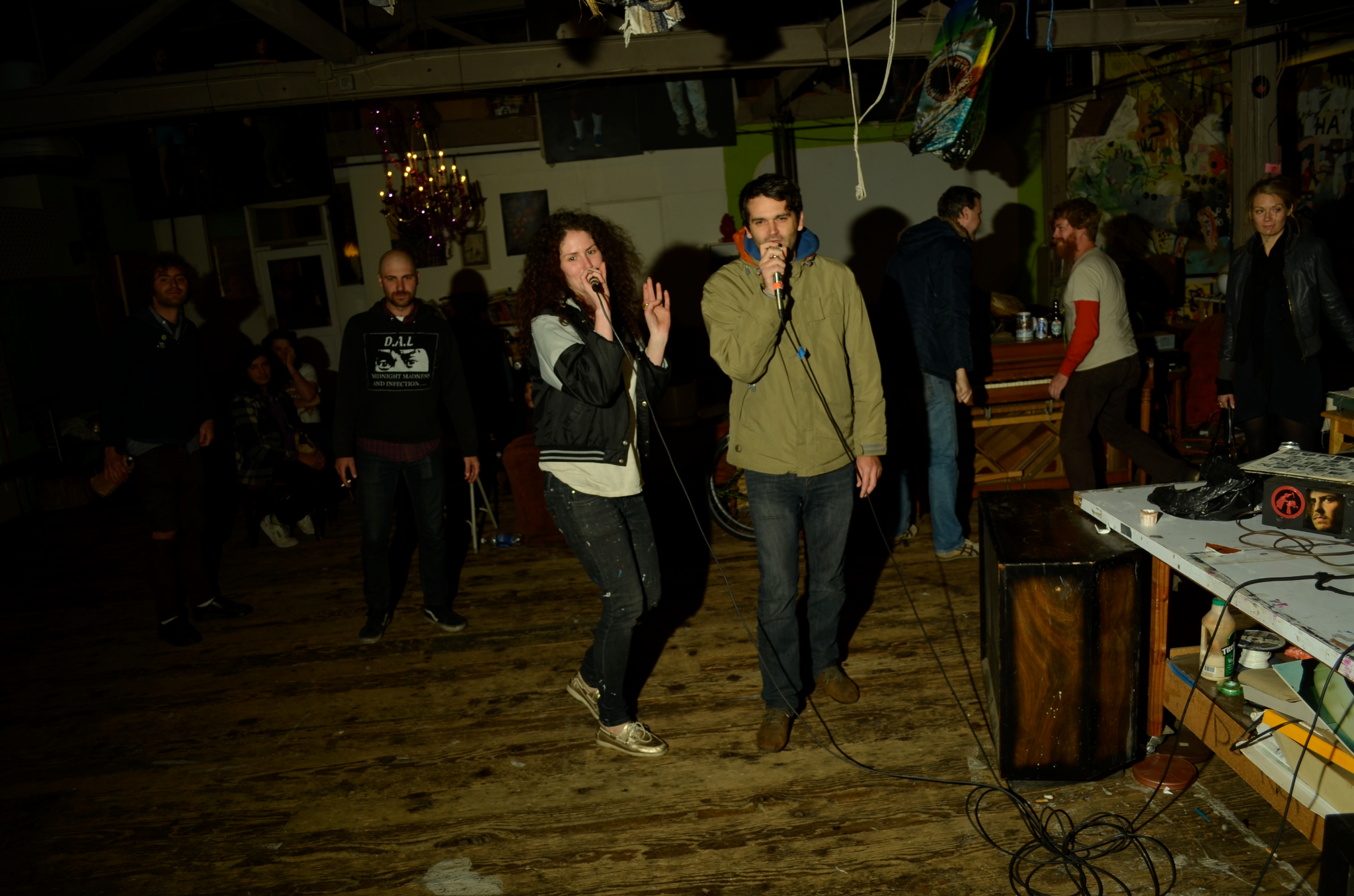
Today, none of these spaces exist. The conditions that made them possible, when they were, have changed drastically. Oakland is a dynamic, ever-evolving place, and has always been. But in new DIY spaces in Richmond or artist-run galleries in Vallejo, its spirit still persists. Maybe the spaces aren’t also housing, and maybe they’re shared by more people. Maybe they’re temporal. But unsanctioned formats continue, like a band of punk teens playing on BART or somewhere outdoors; the first show I attended since the pandemic began was at a pier at the Oakland Estuary.
I see this spirit in my current practice as an artist-publisher with a small press, where art book fairs and zine fests all over the Bay Area demonstrate the same convivial and community-minded spirit I once found in the DIY music scene (and where I’m often in the room with people much younger than me!). The energy looked different, fifteen years ago, but it must have been just as different thirty years ago, or forty. Yet it’s still here, in punk houses that still exist, in practice spaces above downtown storefronts. It’s still here, like in the moment on a pandemic walk when I came across a friend playing saxophone in an Emeryville sewer, the notes drifting over the culvert where Temescal Creek meets the Bay. Like the creek that tunnels under city streets until it opens into the San Francisco Bay, the scene lives as it shifts and reshapes itself.