Tempted to touch
Our “Six Senses of Oakland” membership drive gets tactile now with Touch Week. Read more about the drive here. Check out other Six Senses stories here. Reach out and fondle that subscribe button here.
When Michael Campus shot The Mack entirely on Oakland streets, in 1973, what he captured wasn't just a film about a pimp: it was a story about seduction as survival, style as armor, and the streets as the stage. Willie Hutch scored it for Motown—funky where the film needed swagger, tenderly soulful where it needed to hurt—and the music became as iconic as the film itself.
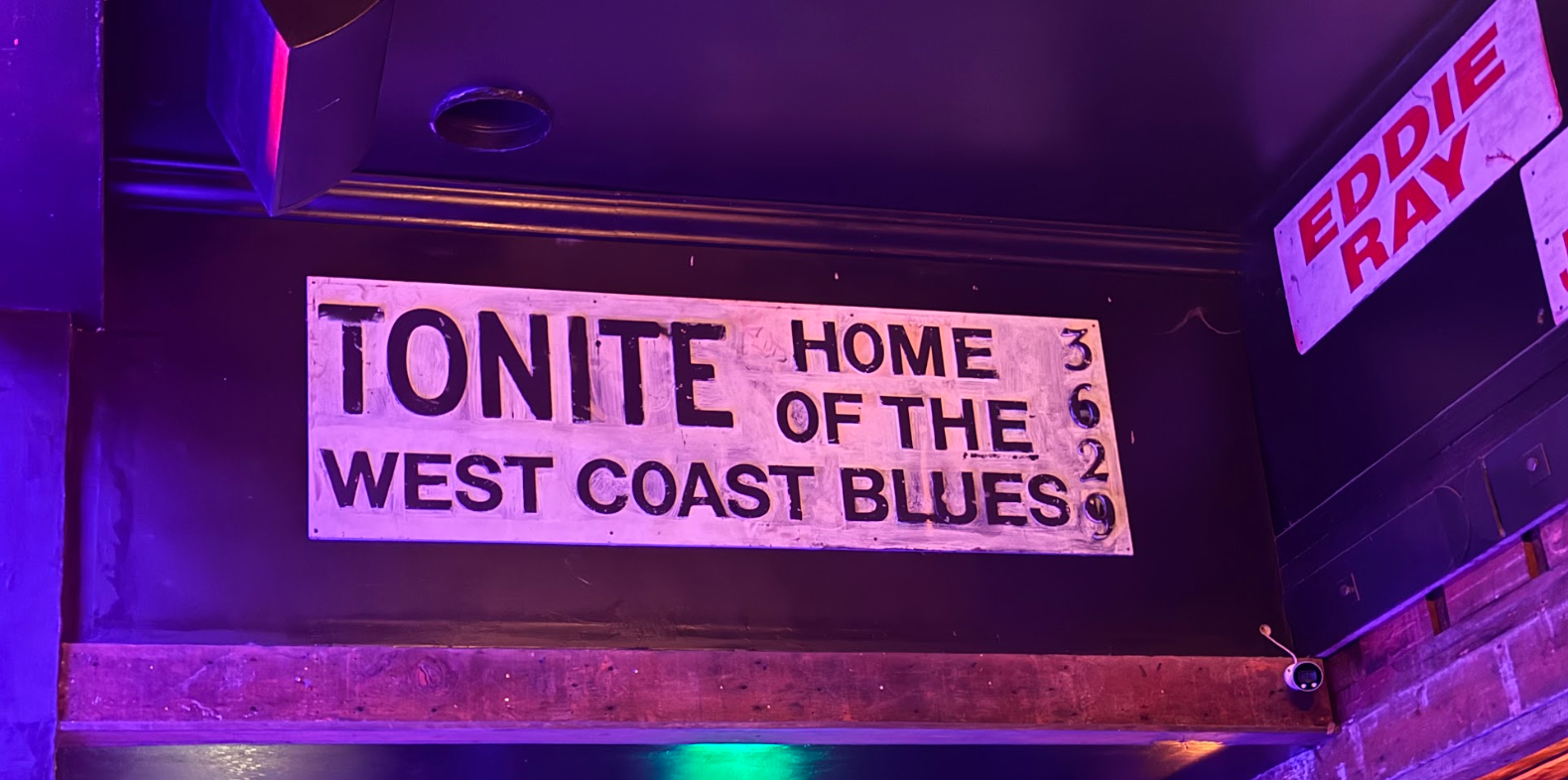
One year later, Eli and Alberta Thornton would open Eli’s Mile High Club on 3629 Grove Street in North Oakland. The same city that had just watched itself mythologized on screen now had a room where its soundtrack could live, breathe, and be played live. The blues and soul that poured out of that room weren't far removed from what Hutch had scored for the screen—music built from the same neighborhood, the same bodies, the same particular grief and joy of Black West Coast life. Eli Thornton showcased locals like J.J. Malone and Troyce Key but it became a known spot for heavyweights such as James Brown and Etta James, too.The address has stayed the same—though the City of Oakland renamed Grove Street to Martin Luther King Jr. Way in 1984—but the music inside has changed dramatically. As the popularity of the Blues died out in the early nineties—and new ownership took over—Eli’s went from being “the home of the West Coast Blues” to a grunge dive bar, where punk, indie rock, metal and alternative musicians got their chops. In the early 2000s, they began welcoming rappers too.
The latest chapter in fifty years of vibe shifts sounds like jazz and looks like flight. In the same room where The Mack could've been shot, now “Sax and Pole” is telling Oakland's story through the music. The monthly series is produced by Queer Fem Parties, puts a pole on center stage, with the Markstep Trio around it, playing live jazz as dancers take their turns in the light. The night I attended, DJ Melo-D opened the floor before the band took over, providing late-night dance party vibes.
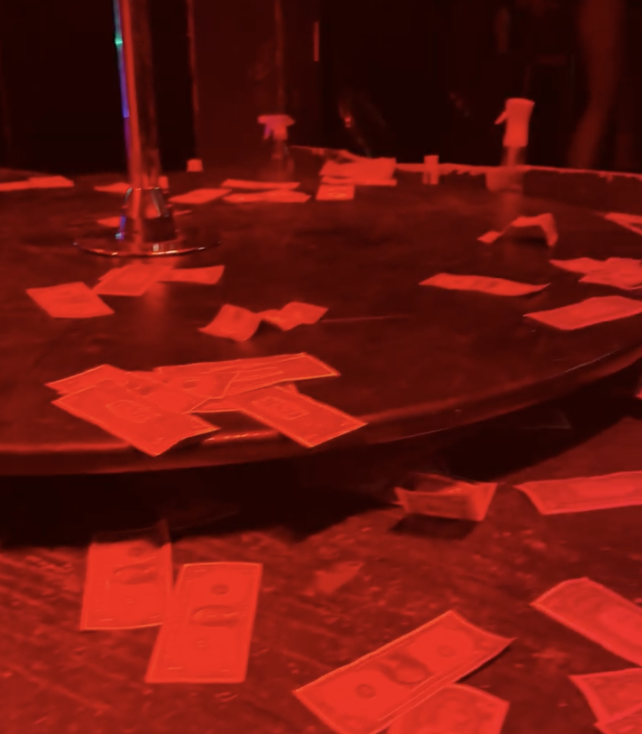
The crowd is instantly caught in a rapture they feed into by throwing dollar bills. To be clear: There is no nudity. This isn’t some underground strip club filled with lustful men; the crowd is mainly women (presenting), and they are not watching the dancers the way men watch women in rooms built for that purpose. They are watching the way you watch someone do something you didn't know a body could do—in reverence. Most people in the room were being introduced to something new and falling in love for the first time.
But that’s not how I was watching. I was already fully aware of what these dancers’ bodies could do. What I didn’t expect was for my worlds to collide so completely that I couldn’t help but think this event was made just for me. I grew up the child of two Bay Area jazz musicians who had me past their prime. I was basically a middle school band geek by inheritance, the kid on the playground who knew the jazz samples of all the ’90s hip hop songs but wasn’t really allowed to listen to hip hop at home. As an adult, I also became a pole dancer myself. In pole spaces—whether hobbyist studios or traditional club environments—the music runs from club bangers to whatever eclectic thing reflects a dancer's personal taste. Jazz almost never enters the room unless I’m alone at home, practicing. So watching others translate complex jazz theory into effortless physical movement—swapping chord progressions for trick transitions—was healing.




“Sax and Pole” is both very much Oakland while also feeling slightly out of place. Eli’s is still grungy and doesn’t match the elegance the dancers or trio brings. The vibe begs for wine and champagne but the patrons inside are satisfied with shots of whiskey and tequila. Yet this, too, is what Oakland does: It puts something transcendent in a room that was never built for it and dares you to act surprised.
The impulse to reach toward the stage is real. The understanding that you don’t is equally so. You are a spectator in this museum, except the admission is paid in singles. As the Markstep Trio goes through classics from jazz greats like McCoy Tyner, Gene Harris, and others—taking us back to the original 1973 essence of Eli’s—it’s a show where applause is replaced with dollar bills, landing softly at the dancer’s feet. Solos from both the instrumentalists and the pole performers are tipped generously.
By the end of the nearly three hour show, the stage resembles a collective offering plate.