Terminal symbol
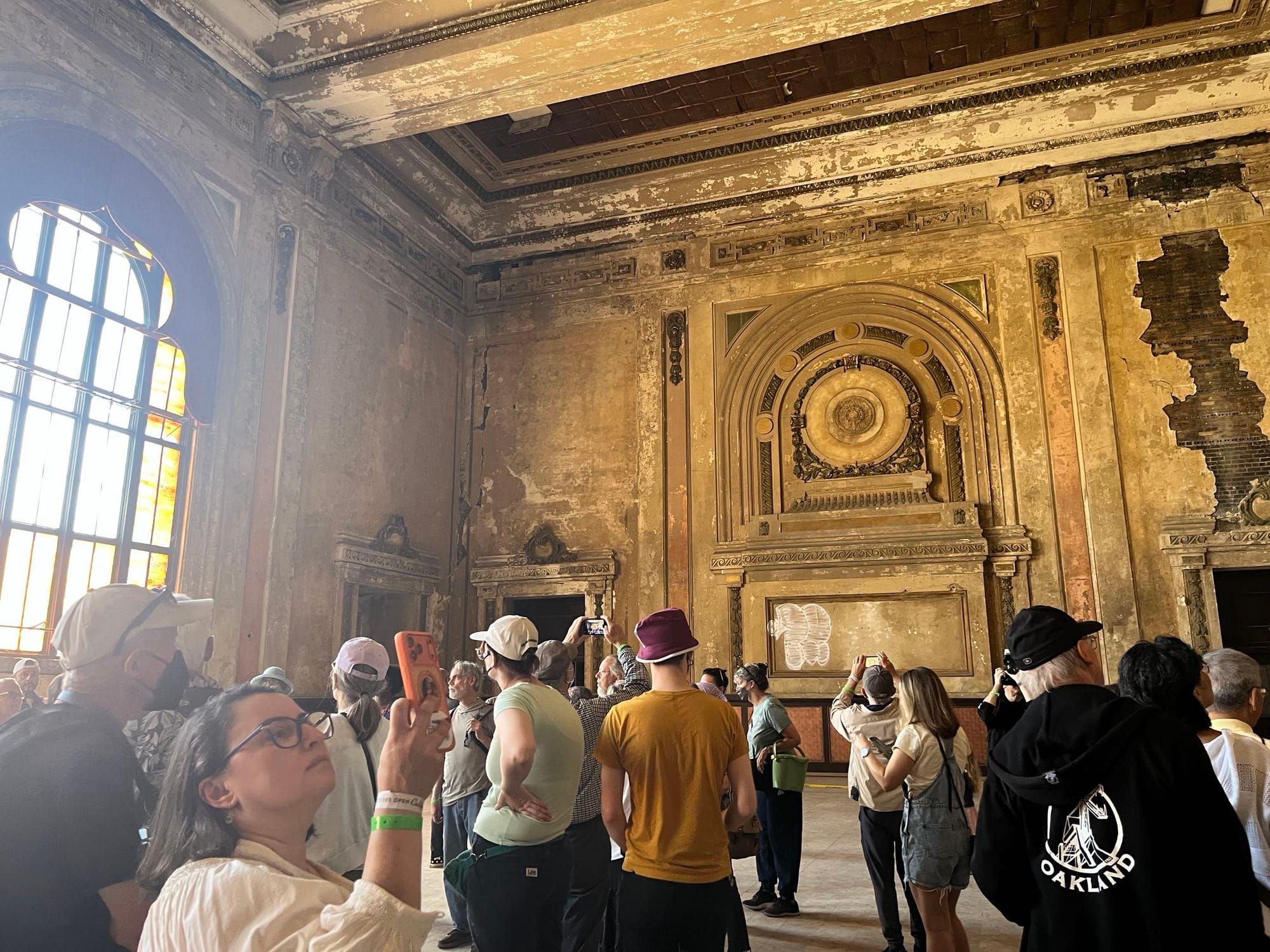
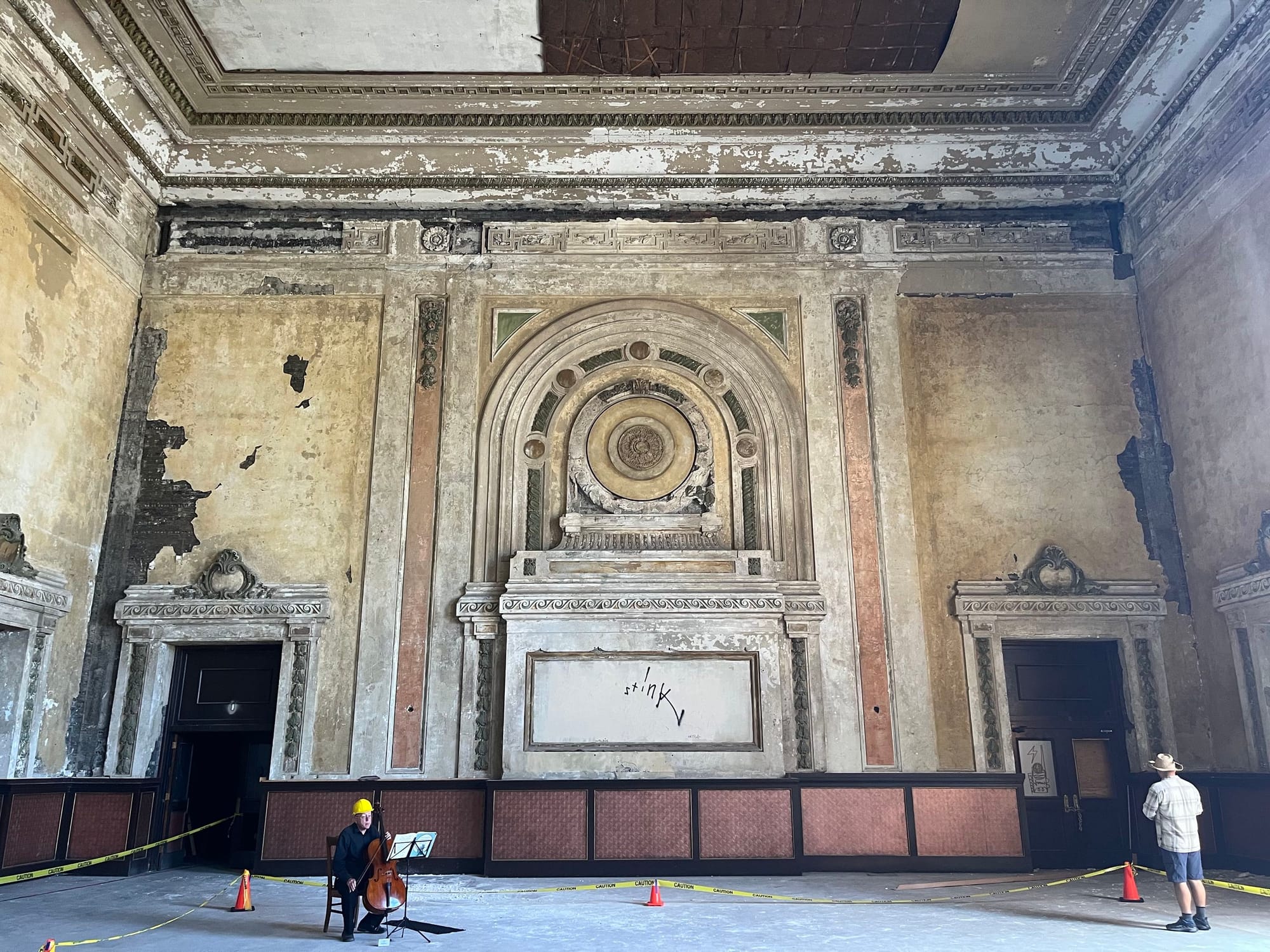
The 16th Street train station closed a little more than thirty years ago. It was functional then, though far from grand, an essential terminus in a network that had long before been stripped down to its essentials. The grandeur that had once characterized it had already faded and has not come back. The idea behind the tour of the station earlier this month, organized by the Oakland Heritage Alliance, was to remember it as it was, not at the end of its useful era, but in its noblest days, and to peek at what it might yet become.
The station was built in 1912 at the edge of a marsh. An old photo posted for the tour on one of the fences around the building showed what things used to look like, before there were freeways or much of anything else in West Oakland apart from the train tracks. A little to the north, a long track that hugged the edge of the Bay split off. Trains hauling timber would make for a giant warehouse with the word “furniture” painted on the roof. Trains carrying passengers came here, and it was here that so many people’s long-held dreams of California met the fresh air and suddenly became real. So much of everything that made the city, the Bay Area, and the West flowed through this place.
“This building built Oakland, built the Bay Area,” Feleciai Favroth, one of the people leading the Oakland Heritage Alliance’s efforts to preserve the station, said on one of a series of tours scheduled throughout the day.
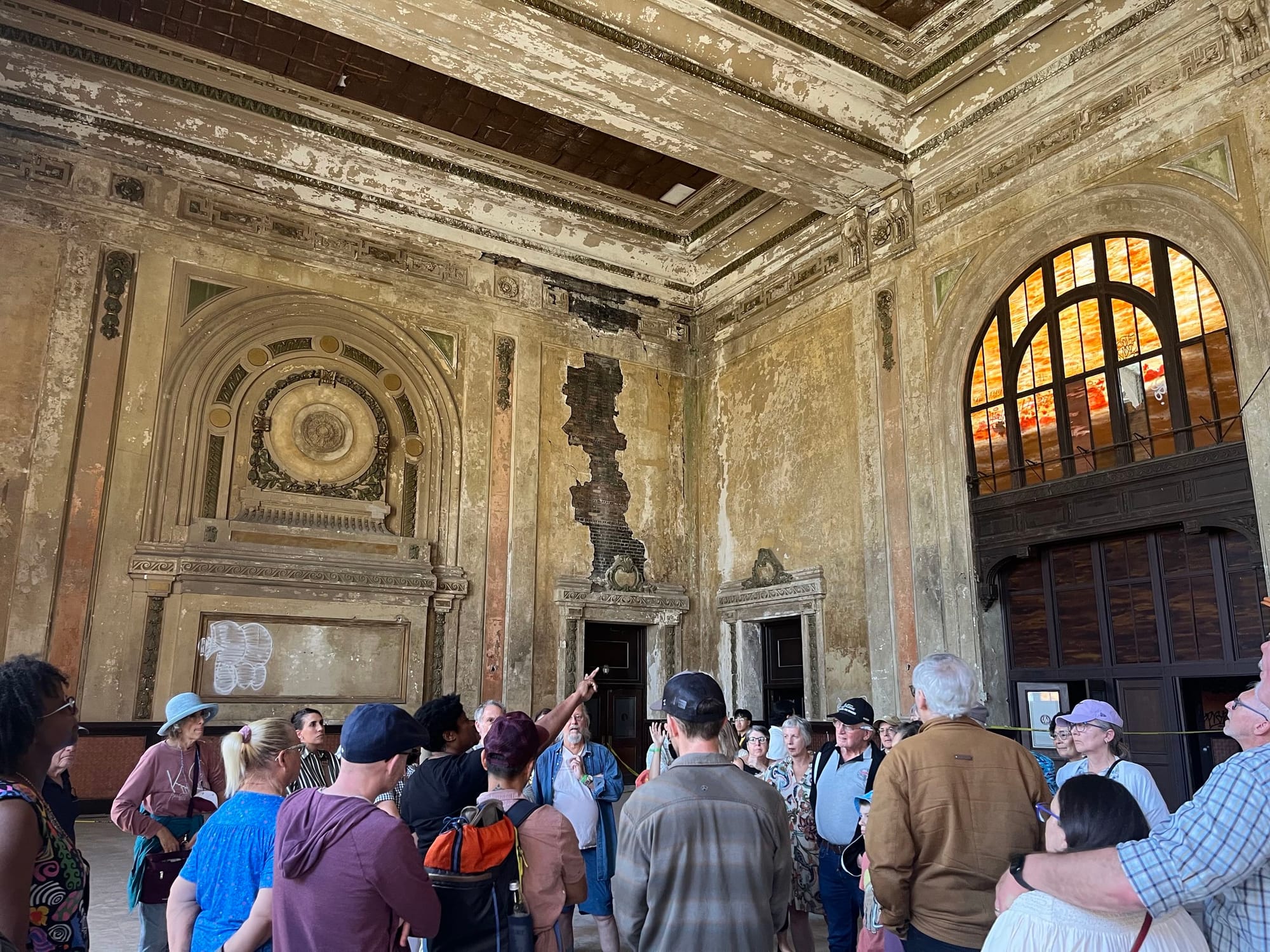
We started in the baggage area, once the convening place for the Pullman Porters. As Favroth explained, the porters largely came from the South. Many were born into slavery, and on the train, they were slaves by another name, working up to 400 hours per month. But off the train, they commanded respect, revered for their knowledge of the rest of the country. At a time when Black communities were suffering in similar ways, the porters connected them to each other. “The Black internet,” in Favroth’s words.
The train system mostly faded with the highways and air travel, and so did the porters. So did this station, like many others. The walls were left to decay over time, so that when the Loma Prieta earthquake shook the entire region in 1989, it was easy for Caltrans and anyone else with the power to decide these things to declare the building unfit. The building didn’t get repaired. Instead, Oakland built another one, a glass greenhouse-like structure in Jack London Square, across the street from Jerry Brown’s residence, though Emeryville became the new terminus for transcontinental railroads that still trundled along in the name of nostalgia. The notion that the building was unfit was always a bit bogus. The walls could be repaired, Fovroth said. But look up and you can see the steel girders that once held up the trains. Those are still strong, as strong as they ever were, and they could never be replaced.
Outside, the stretch of freeway where 580 spurs off from 80 blocks out the horizon and the view of the Bay. The windows are mostly boarded up, as are the entrances. The people charged with carrying the burden of this place tried to bury it, insofar as it is possible to bury a building of this size without tearing it down completely. Even then there surely were ideas about how to bring it back in some other form. The plywood that covers its gaps has mostly been tagged over by people who came and made it their own once it was clear that no one was watching
There are plans now to build more housing nearby. Once every lot but this one is filled with new construction, the station could be remade into something else, maybe a place for events, with a restaurant upstairs. Entertainment is these days the only way to anchor a big development project like this, Favroth said, and why not the 16th Street Station? It would be an elegant place for such things. That it is still standing, still proud if not exactly grand after having been abandoned for so long, is surely a mark in the station’s favor. The building that made history has watched history pass over it for long enough. A few more years, and it could be part of history again.