The guerrilla investigators of WNBA queerness
Welcome to Week 2 of Touch Week. That’s right—we’re extending last week’s theme in our “Six Senses of Oakland” membership drive. Read more about the drive here. Check out other Six Senses stories here. Caress that subscribe button here.
If you think going to a Golden State Valkyries game is just about watching basketball, you’re wrong. It’s also about watching lesbians watch basketball. Or to be more precise: It’s about watching lesbians watching lesbians play basketball.
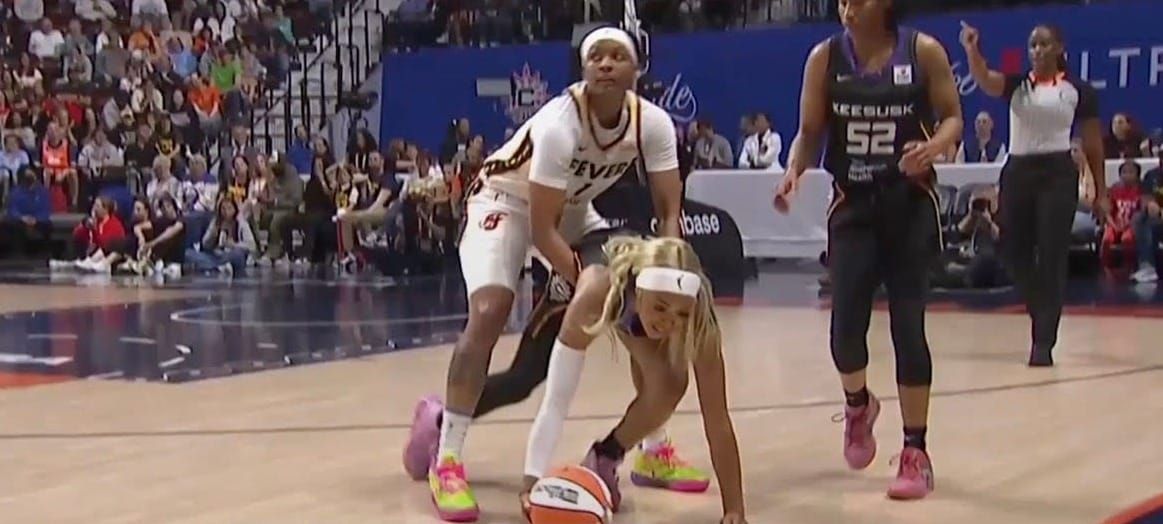
Our subject today is a certain culture within WNBA fandom. Superficially it looks like what we might, in other realms, refer to as shipping culture. But it’s not quite that. I’m talking about the passionate dedication of the WNBA fans who pore over video of all kinds—snippets of game broadcasts, low-quality smart-phone footage, TikToks, Instagram stories—searching for queer clues. A hand lingering on a teammate’s lower back. A grin during a postgame presser. A player helping another up in an interaction which may have seemed innocent enough in real time but which, when isolated and slowed down and set to a Jhené Aiko slow jam, begins to vibrate with sexual tension.
@jadeorjaded Vid is for giggles. iykyk the famous foul 😍😮💨 #fyp #fy #fypシ #fypシ゚viral #wlw #lgbt #miami #dijonaicarrington #nalyssasmith #unrivaledbasketball #wbb #WNBA #xy #xyzbca #basketball #sports ♬ living room flow - Bonus - Jhené Aiko
I’m talking about piggyback rides as portals into blossoming romance:
@all.things.wnba i’m sold after niyas recent post 🫶🏳️🌈#🏳️🌈 #wlw #marinamabrey #saniyarivers ♬ lmk ꨄ - …
Or bestie duos with secret handshakes and intimate undertones:
@editzzz_1567 || #rhynehoward ~ #allishagray || @Rhy 🤩 @allisha.gray #viralvideo #edit #atlantadream ♬ original sound - ༯sisi༯
Or a pair of Valkyries guards whose eye contact is the stuff of lesbionic anthems:
@clutchmuse7 Our girl had to find herself another 22 😏 #katemartin #veronicaburton #valkyries #WNBA #teammates ♬ original sound - ClutchMuse7
These fancams are the work of what I call the the Center for Surveilling Unwitting Players via Guerrilla Investigative Reporting by Lesbians, aka SUPGIRL, for which a member requires no training. In fact, actual expertise or insider knowledge would be disqualifying. The only requirement is the ability to see in gay.
If you want to understand where this all comes from, you have to know about the WNBA long before the Valkyries turned the Bay Area into a progressive centerpiece of women’s basketball. For many years, the WNBA took pains to ignore the queer side of its fanbase, never mind the queer players who were responsible for so much of the game’s success. (The first women’s collegiate basketball game, played in 1893, was hosted at Smith College in Northampton, Massachusetts, aka “Lesbianville USA”!) In 1997, when the W tipped off, the league carefully crafted a non-gay narrative for its athletes, masterminded by David Stern under the patriarchal auspices of the NBA (now widely known as the MNBA).
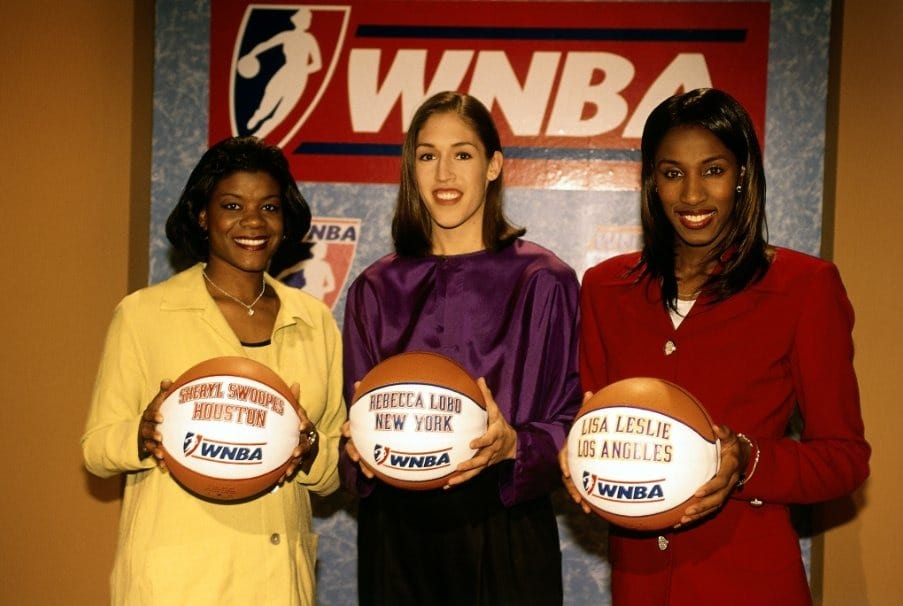
Marketing campaigns emphasized athletes’ off-the-court uniform of pencil skirts and blouses. Camera lenses were trained on boyfriends and husbands alone. The players spoke carefully of being “both athletic and feminine.” The ones with kids, like Suzie McConnell-Serio, were especially prized. The message was clear: These strong, independent, successful women are no threat to the nuclear family. “The WNBA’s Web site goes out of its way to promote ‘family-oriented’ issues,” the New Jersey Herald reported at the time. “Such as what it is like for (straight) players like Sheryl Swoopes who have children.”
It all reeked of 1990s respectability politics, with the WNBA offering up good white girls in explicit contrast to the ever-Blacker cultural footprint of the MNBA. For WNBA players, the long-overdue dream of a sustained U.S. pro basketball league came at the expense of total adherence to the image being promulgated by the league office. They fulfilled their role as grateful, standup athletes—straight, of course—the model citizens of a mostly unspoken corporate agenda.
During this era, the WNBA liked to pretend that its fans were as straight as its players supposedly were…but of course, many called bullshit. In 1998, a group with the name “Lesbian Avengers” unfurled a banner at a Washington Mystics game. It read: “Hey WNBA. Lesbian fans are filling your stands.” And in 2002, when the league reported that 75 percent of its fanbase comprised women, a group called Lesbians for Liberty staged a “kiss-in” at Madison Square Garden. The athletes themselves were less open about their sexuality. When Sue Wicks came out that year, she became the first openly gay player in the league.
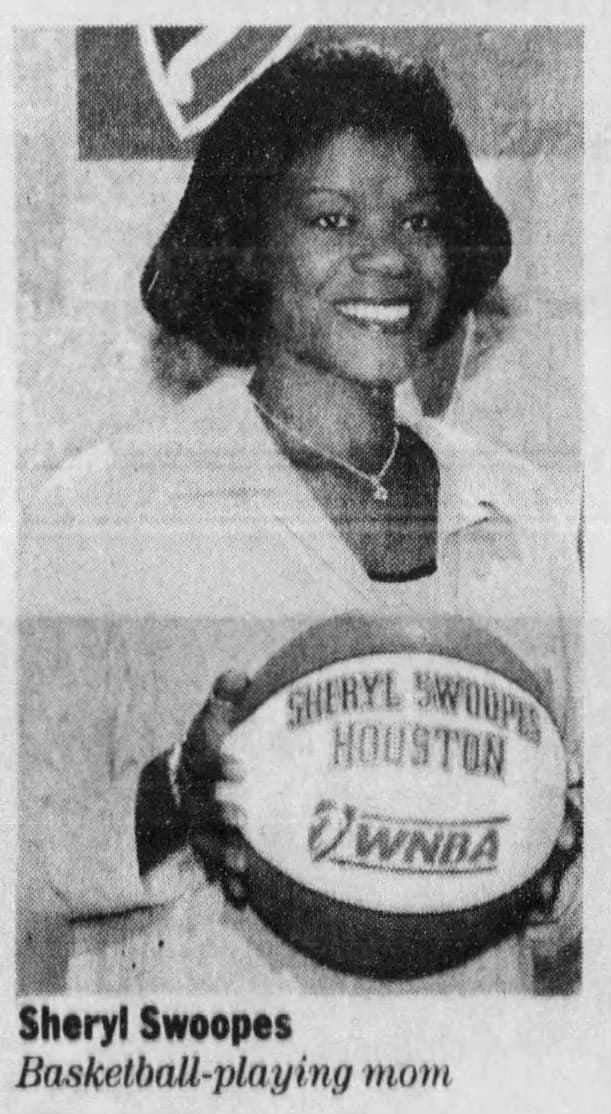
The facade would prove to be fairly fragile. It was not three years after the Lesbians for Liberty kiss-in when—poof!—Sheryl Swoopes herself announced she had a girlfriend: her former assistant coach, no less, the most underrated aspect of this drama. (They broke up in 2011, and that same year Swoopes got engaged to a guy.) It wasn’t until 2012 that the next active WNBA player would come out. And so, into the 2010s, WNBA players kept up their stony silence around their sexuality. For most of its lifespan, the league has existed in a glass closet.
◎
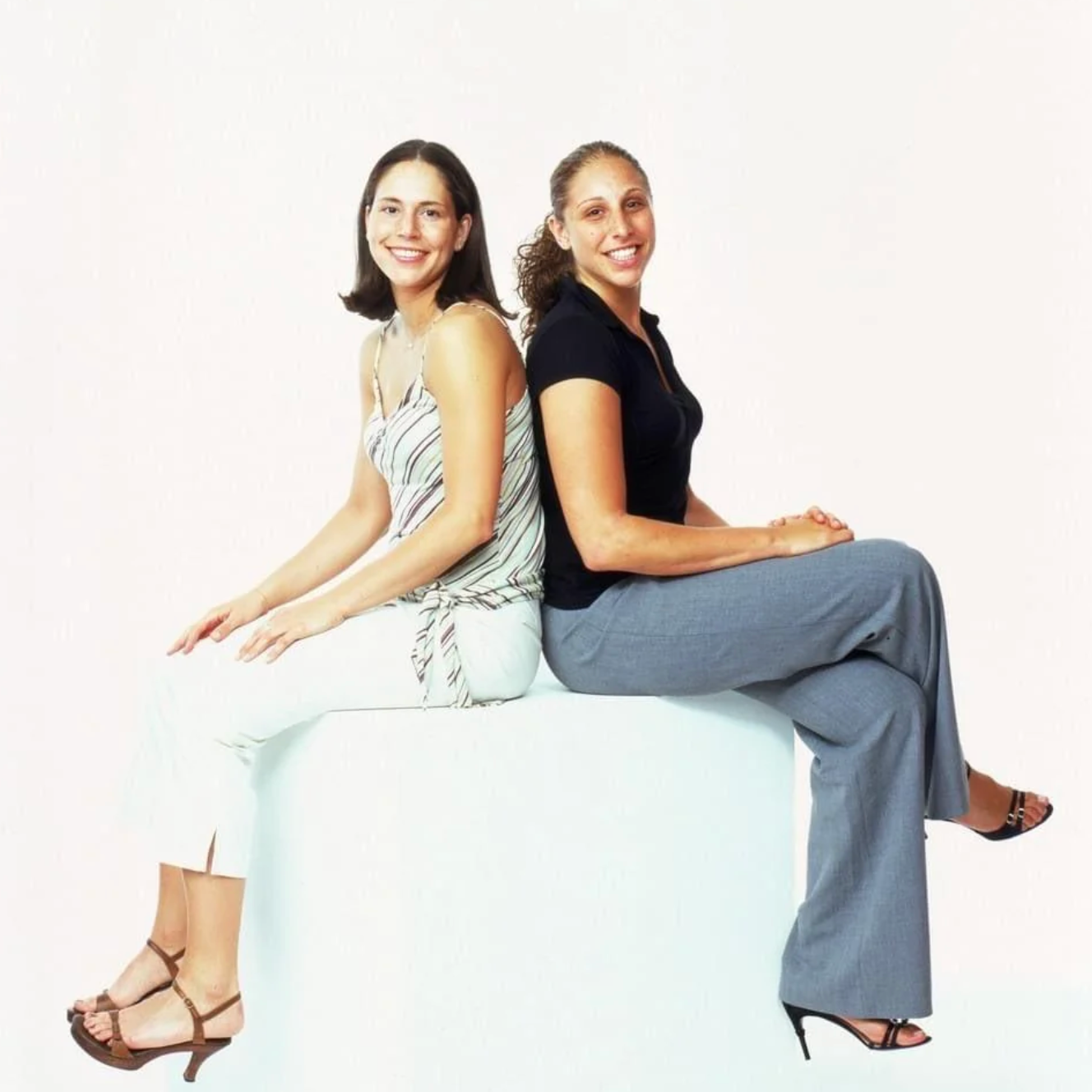
You want WNBA motherhood stories? Here’s one: This era of the glass closet gave birth to a particular mode of queer fandom. Gay fans came to understand the league as an encoded text, full of winks and nods (think: the Hays era of Hollywood.) They had to work to decode it, to tease out the underlying truth, like scholars of the Talmud, looking closely at everything the ESPN camera crews didn’t focus on. That’s where they could find all the clues: in the brief yet intimate eye contact between players or in the way that hands overlap in huddles or even at the stuff happening after hours, at arena-adjacent neighborhood bars like Jabu’s Pub in Seattle, where players would socialize with friends and fans, and once in a while show up with their girlfriends in tow. These were the morsels circulated by the original SUPGIRL communities on long-lost ancient internet forums like Rebkell.net, a site I once scoured for photos of then-closeted Sue Bird and Deanna Nolan drinking vodka at 4am in a Russian club. (Now I can’t find them for the life of me, but if you know where they are, please let me know.)

In the gap between the WNBA's self-presentation and its reality, nurtured along in online communities yearning for furtive glimpses of themselves in the dominant culture, the lesbian imagination could run wild. Or as a friend of mine corrected me when I mentioned this: “It’s not imagining! It’s seeing lesbians even when straight people refuse to.” It was, more than anything, a reclamation, a way of saying not just that we belong here but that we are already here.
In a 2011 YouTube upload called “Dee & Penny have lunch,” Phoenix Mercury teammates Diana Taurasi and Penny Taylor innocuously share salads and sparkling water while discussing the success of their team.
But in the comments, we find one @baller9real, certain they could see something else:
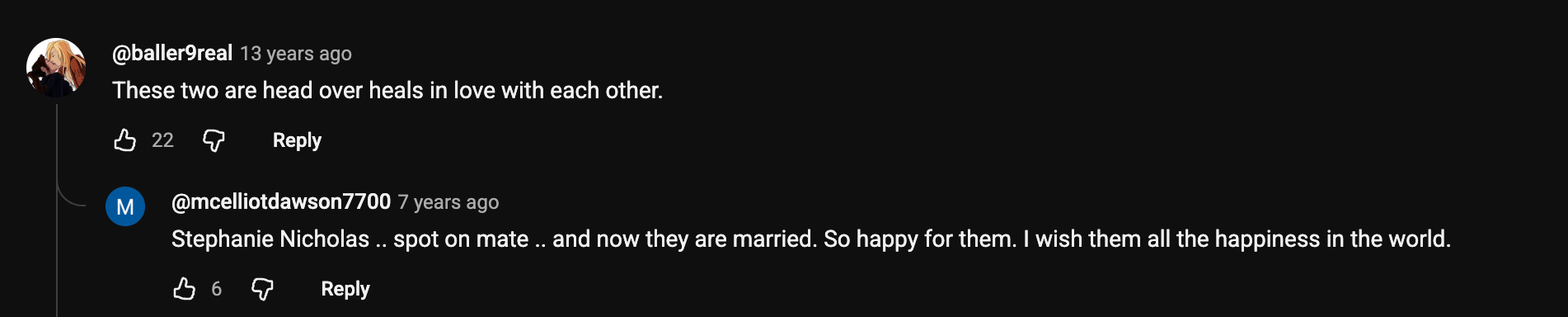
Perhaps it was the way Diana and Penny casually rolled into the restaurant’s parking lot, riding in the same car. Or the way Diana says, “We’re gonna enjoy the weekend” (as in, together) at the end of the video. Or the smiley glances they flit at one another.
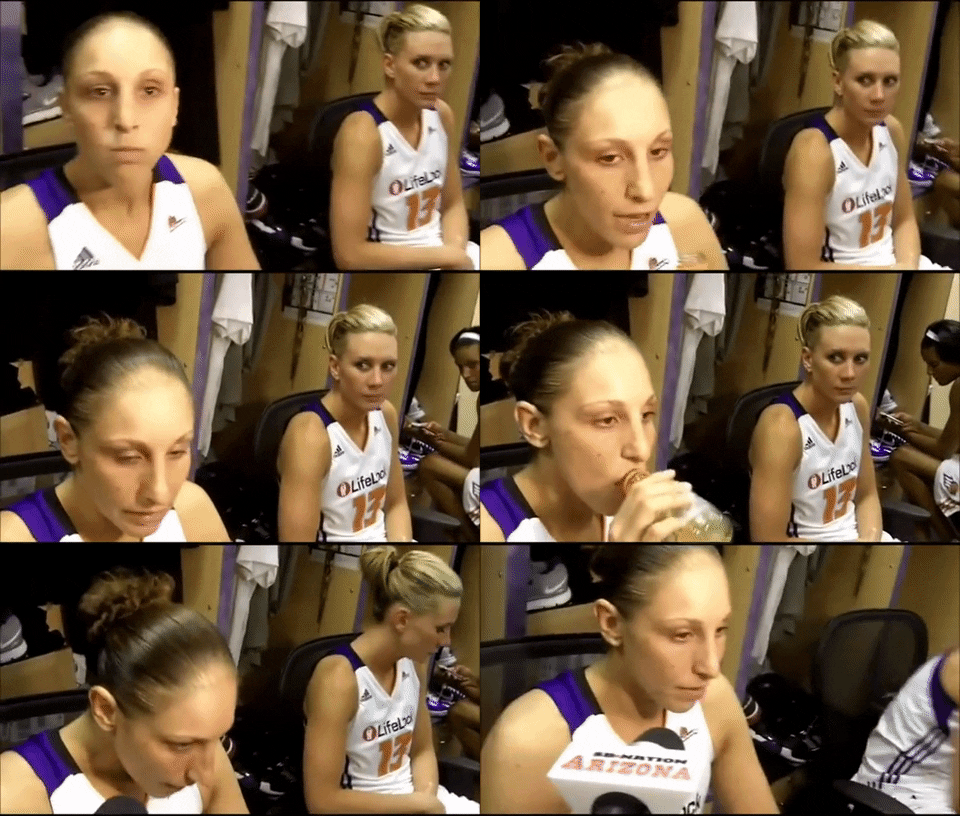
In any case, the lunch became part of the growing Diana–Penny fan canon, which came to include all sorts of little moments supposedly bespeaking their secret romance. I found this GIF of Penny side-eyeing Diana in the locker room on The L Chat” forum, which (devastatingly) shows posts only going back to 2016. It was posted to the “All things Diana and Penny” thread:

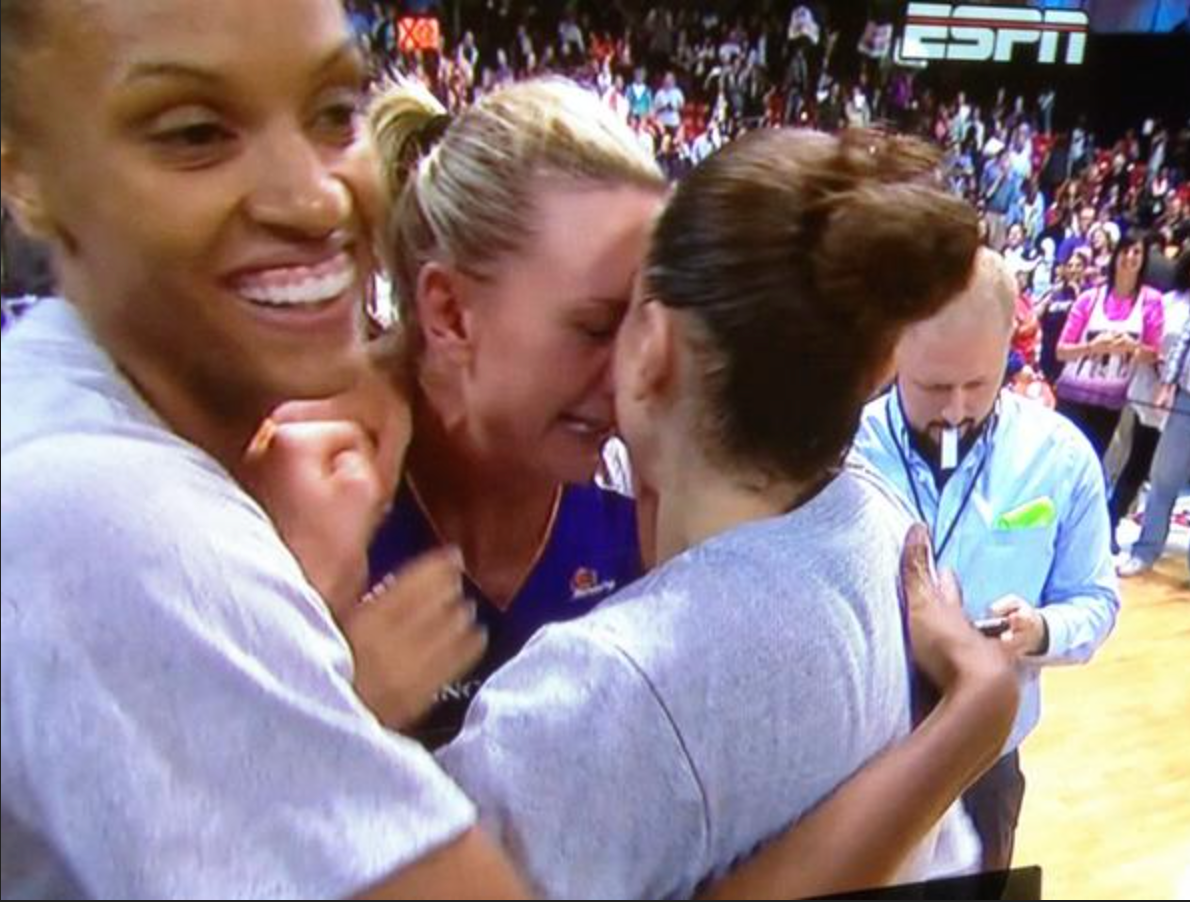
There was also the image of the Mercury teammates embracing after winning a championship in 2014. This, too, was carefully resurrected on The L Chat: Diana nestling her face into Penny’s shoulder, Penny’s fingers curling over Diana’s, the emotion of the moment busting through any genteel discomfort ESPN might have felt, in those last days before Obergefell, about showing same-sex intimacy on camera:
In 2016, the WNBA’s official tagline was “Watch Me Work,” a slogan focused scrupulously on the game itself. But many lesbian fans sought meaning beyond players’ work (woefully paid, by the way) on the court. Small, intimate moments are scattered across The L Chat, such as: “I was at the game, best part all night... Penny fixing shit in DT's hair. You can be as bad ass as you want, but your girl is still gunna play with your hair. ROFL,” or “Both had big smiles, and the person I was with said Dee slapped PT on the ass, but sadly I somehow missed that part.”
By the time Penny had retired and she and Diana had formally come out as married, in 2017, their relationship was essentially old news. “Good for them, best of luck, hoorah and all that,” posted an L Chat user named “Sigh of Relief..........” Then they wrote: “what in g-d's name will we argue about now on this site??”
◎
The arrival of same-sex marriage in 2015 marked the assimilation of gayness into bourgeois respectability. The WNBA's glass closet was cracking. Provisionally, at least, lesbians in the league could now be good white girls, too. Soon after Penny and Diana, Sue Bird announced herself as half of a gay power couple with soccer star Megan Rapinoe (they met at the 2016 Olympics, obviously). In 2018, a pair of WNBA players in Chicago became the first married couple actively competing as teammates. And while the majority of high-profile coming-out moments featured white women (surprise, surprise), they happened against the backdrop of a heightening political consciousness among the league’s athletes, led by Black players. Like in 2016, when four Minnesota Lynx players stood at a press conference wearing shirts that read “Change Starts With Us.” Or in 2020, when WNBA players collectively protested the killings of Black Americans by police, going so far, in Atlanta, of forcing out one of the team’s owners, Republican Sen. Kelly Loeffler, for her opposition to the Black Lives Matter movement. Then in 2021, UC Berkeley alum (!) Layshia Clarendon became the first openly trans and non-binary player in the league. That was the same year that many more Black WNBAers came out, including superstar Candace Parker.
Featured in 2009 by ESPN The Magazine, a then outwardly straight Candace Parker was described as “the total package: your sister's pal, your brother's prom date, supermom-to-be….Obviously, the fellas are going to enjoy Parker's appearance in the magazine.” But as her career blossomed—both on the court and as an MNBA analyst since 2018—her private life receded into the shadows. It wasn’t until 2021, when Parker announced she’d already married her longtime teammate Anya Petrakova (whom she’d met in 2012) that queer fans of the WNBA could openly take that “sister’s pal” business and shove it up the patriarchy’s ass. Now, Candace Parker is the headlining lesbian of this year’s Women’s Basketball Hall of Fame’s queer-ass induction class.
The popularity of the WNBA today is fueled both by its reputation as a catalyst for progressive social change and by its queer culture. Take the StudBudz, former teammates Courtney Williams and Natisha Hiedeman, known for their mischievous masc charm and their infectious cackling on Twitch livestreams. Last year, the two friends streamed the 2025 WNBA All-Star Weekend in its entirety—including a moment in which they instructed Diplo to play more hip hop music at a club in Indianapolis without recognizing him, why would they need to?—all while wearing matching pink fades.
By now, SUPGIRL’s underlying fascination had pivoted from the basic mystery of “Is she…” to the more complex questions of when/how/if coworkers are a little gay for each other (flirting, let’s say) or deeply involved (aka fucking) or navigating the gayest thing of all: remaining “in community” after breaking up.
And it was here, in this constant flow of openly queer content, that a new era of SUPGIRL inquiry could be discerned. During the StudBudz’s 72-hour All-Star stream, fans gleefully watched WNBA players bumping and grinding with one another on the dance floor, Natisha Hiedeman (possibly) low-key shooting her shot with Angel Reese, Sydney Colson openly patting players down in search of strapons, and Paige Bueckers slinging her arm across Azzi Fudd’s chest, the two of them looking cozy and belting out “Love” by Keyshia Cole. (Bueckers was the top pick in last year’s draft; Fudd was this year’s. Both are in Dallas now, their relationship more or less out in the open, though a few days ago a team PR rep shut down a reporter who tried to ask about it.)
By now, SUPGIRL’s underlying fascination had pivoted from the basic mystery of “Is she…” to the more complex questions of when/how/if coworkers are a little gay for each other (flirting, let’s say) or deeply involved (aka fucking) or navigating the gayest thing of all: remaining “in community” after breaking up. This WNBA preseason, one ongoing SUPGIRL investigation revolves around an unconfirmed romance between DiJonai Carrington (freshly and dramatically separated—once again—from former teammate NaLyssa Smith) and Jackie Young (who announced her interested in femme “baddies” via a TikTok last season, in which her current teammate and the aforementioned NaLyssa Smith also appeared, dressed as DiJonai). Jackie and DiJonai’s status as a couple isn’t confirmed. It’s based on what an Autostraddle headline insists “Data Suggests.” (I laughed out loud!)
The data in question are, of course, a bunch of posts on social media. Photos caught by smart phones and dissected from a million camera angles. Players’ own posts captured and delicately compared. This is the evidence that fuels media outlets’ posts, like this video of Jackie and DiJonai sitting side-by-side at a college basketball game underneath the definitive statement: “Jackie has her hair crimped haha she’s on a date lol.”
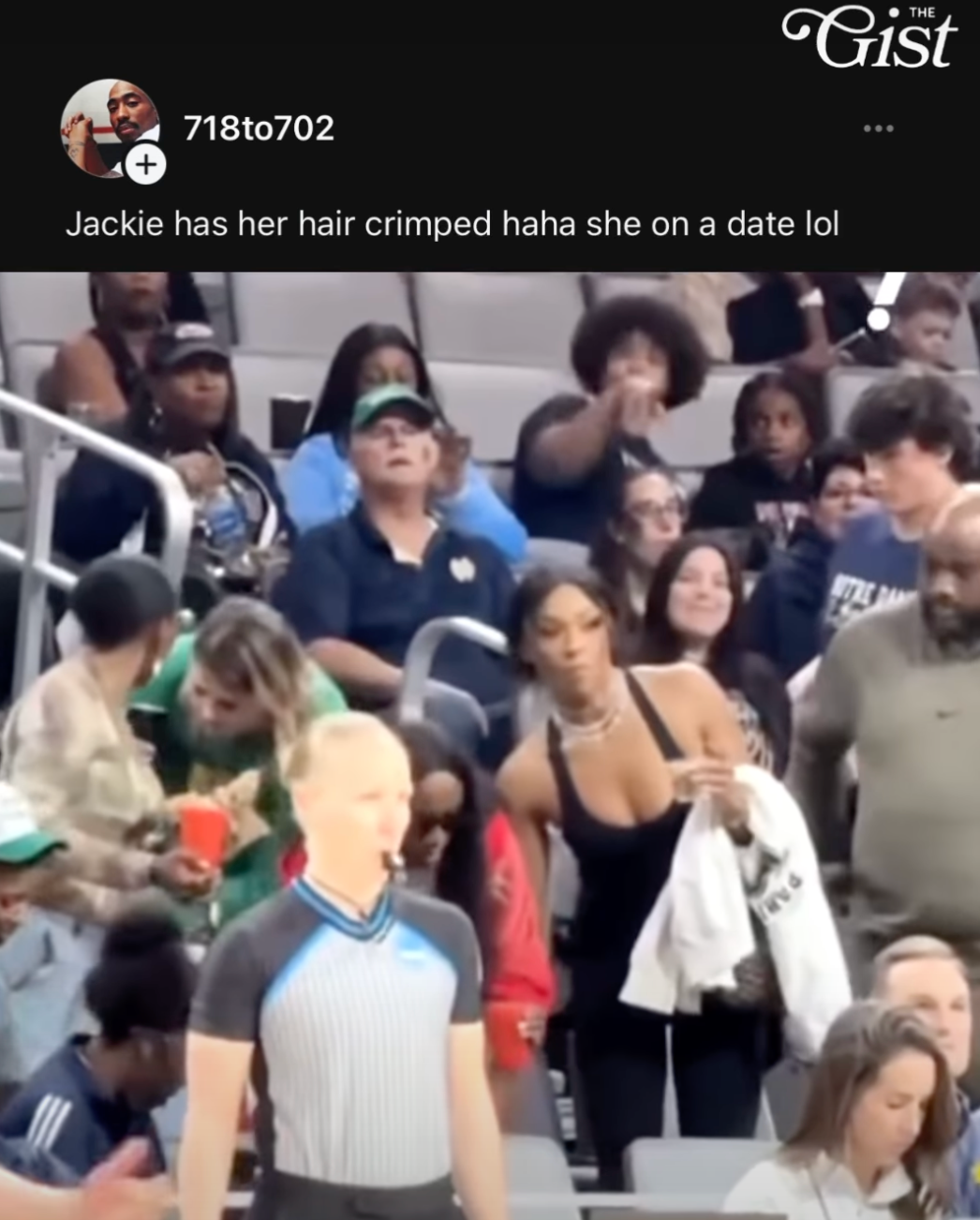
Some people might find this level of scrutiny way too much, unhinged, invasive. And perhaps it is—if I were a player, I’d probably also say something similar to what DiJonai Carrington just recently reposted:

But it doesn’t come from nowhere. Years and years of repression in the WNBA have conditioned its devotees to see things that aren't always there, to question narratives and sometimes even to create new ones. It’s as if the fans are saying: Watch us work.
◎
As I was writing this, I reached out to a friend who anonymously writes an ongoing Google Doc about the WNBA, simply called “LESBIANS.” When I asked her about the “data” she collects to prepare her documentation, she wrote back:
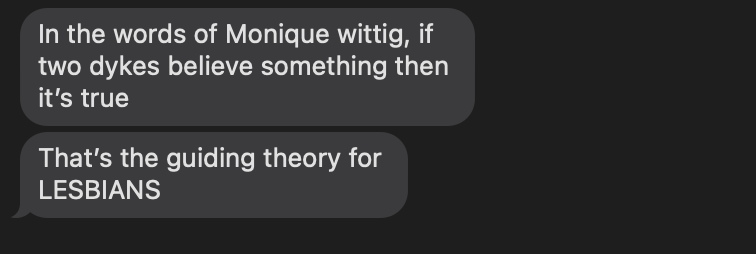
The WNBA has indeed become a counterpoint to the MNBA, not with its racially coded family values nonsense, but because queer spectacle now fully envelops the sport, with players and fans alike participating. And it’s that queer spectacle that, like “LESBIANS,” offers an opening for disrupting our masculinist sports culture. I’ll give you one final example. It’s from 2013, the glass closet era, but it’s nevertheless timeless. This is classic WNBA lore: Two longtime rivals and friends, Diana Taurasi (always a main character) and Seimone Augustus, are competing in a high-stakes semifinals matchup between the Phoenix Mercury and Minnesota Lynx. Tension is rising. The two go bounding across half court, bumping chests. Suddenly, Diana pulls back and places a kiss, ever so slyly, on the side of Seimone’s cheek:
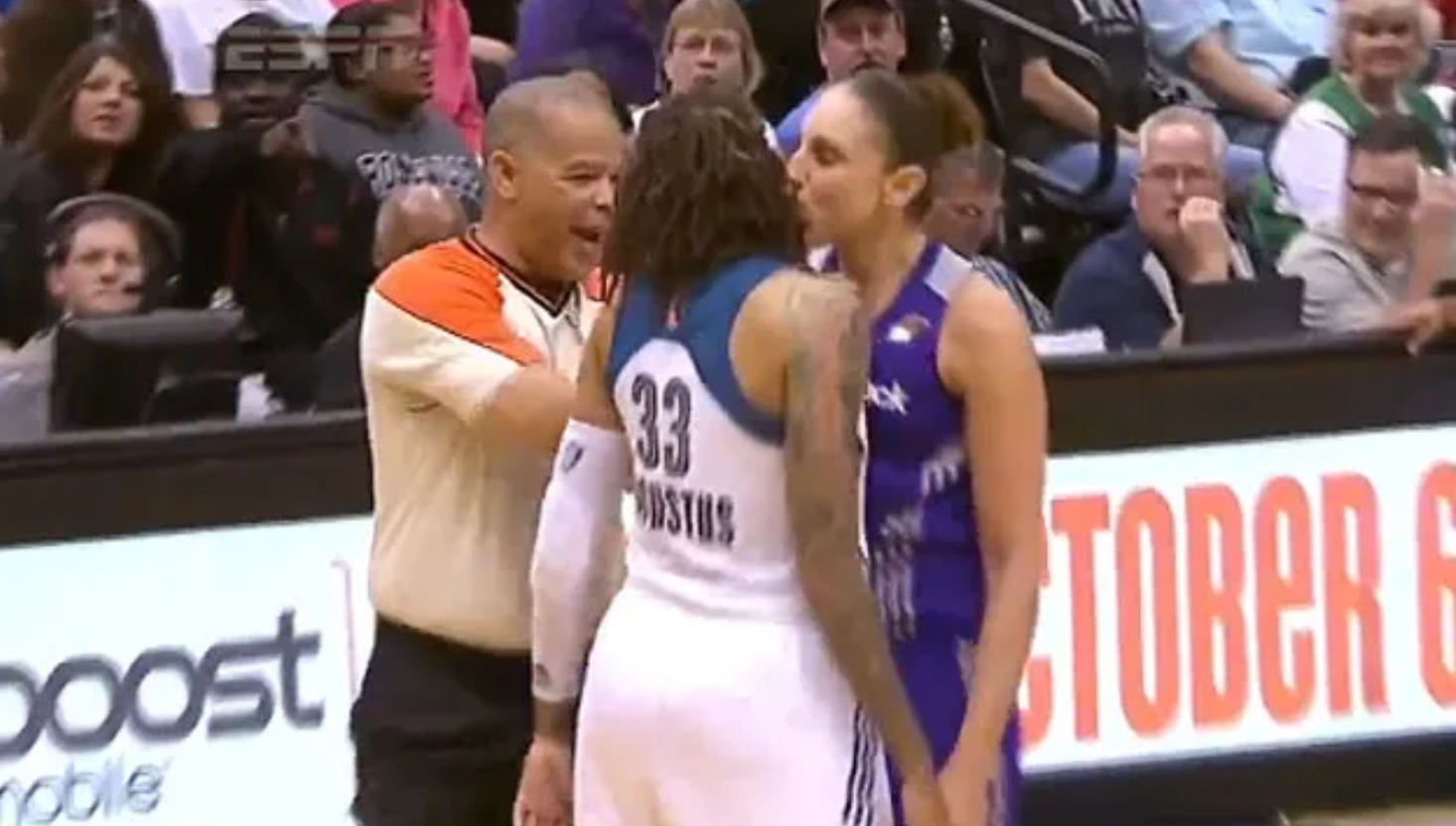
Both players are hit with personal fouls. In the press conference after the game, Diana tells reporters, “We were just trying to make sweet love,” while Seimone says, “I always say she just wanted some of my deliciousness.”
I love this gay-ass image because it’s not actually one of romance. It’s a moment of friendship, of unexpected grace, of competition all at the same time. We are so accustomed to the flinty militarism of sports culture, a separate sphere where only certain patriarchal values are permitted entry: This is rugged competition, no kissing allowed. The image of Taurasi and Augustus says: This is competition, too, and of course kissing is allowed. Humor, conflict, combat, love—all these things are present at once, and conveyed at once with the softest of touches, a kiss. That’s what makes the WNBA so important, so much more than just some pro sports league. It’s an environment that's fertile with radical alternatives. As long as at least two dykes believe it.
Maya Goldberg-Safir (she/her) was born and raised in Oakland, where she now lives. She is an independent writer and the creator WNBA Rough Notes, where you can read more about the heart & soul of women's basketball, chronicle its evolutions, and follow the Bay Area’s own Golden State Valkyries.
 maya goldberg-safir