I like the Bay and the Bay likes me
When I first moved to the Bay Area, I texted a friend back in Brooklyn that this place felt like being on vacation. As I hit send, a butterfly landed on my shared deck. The sun shined brighter and flatter than I knew it could.
When I got divorced, years later, the light was still bright and flat but everything had changed—for me and for the Bay. The landscape was now papered in AI propaganda and teeming with eager doomers. Storefronts had emptied out and no one could afford to fill them. Sleek robot cars slid through the streets and then stalled at intersections. Kids stared dumbly at smart phones.
I’d watched the Bay transform over time, but the sudden exit from my own life made my surroundings snap into focus. I had stepped off a paved path—family vacations, couples dinners, a two-income household—into this uncanny wilderness. I was now alone, with my daughter and my dog. Both were comforts, both needed my care and attention. The Bay was no holiday anymore, and for reasons legal and logistical, I was now stuck here.
\O/
Does every generation believe they’re facing down the apocalypse? Today, the evidence is convincing, but it was in 1963, too.
Two years after the Berlin Wall went up, Austrian writer Marlen Haushofer published The Wall, a quiet, speculative novel about a woman who wakes up from a woodland vacation to realize that her life as she knew it is over. In the night, a long, transparent wall has sliced the landscape in two. The wall is real and physical; she bumps her head on it. The woman is on one side, alive. Everything on the other has been frozen in a bloodless death. Alone in the wilderness at the edge of humanity, Haushofer’s narrator must redraw her existence in this beautiful, now unfamiliar place. A dog is with her, a cow joins soon, then a cat. She is glad to have them, but weighed down by the responsibility. “I was the owner and prisoner of a cow,” she tells us. She is both bound and boundless, embarking on more than 200 pages and nearly three narrative years of an endurance project, haunted by the realities of the Cold War. Could the unnamed narrator of The Wall survive the end of the world—and the remaking of her own life? What would it require of her and who would she have to become?
I’ve been looking for those answers for myself.
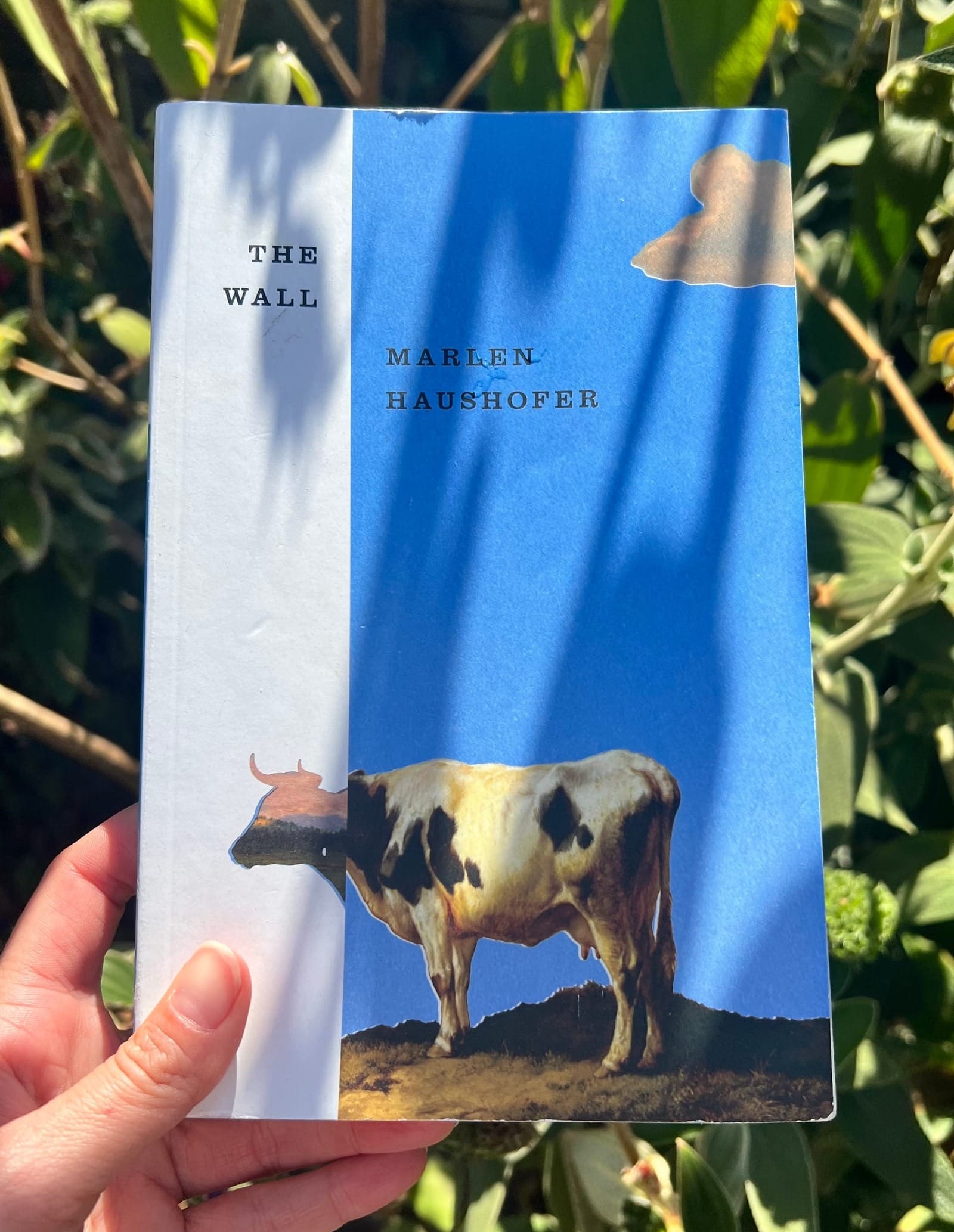
There is no monolithic physical artifact of the divide in the Bay Area (although some may say it’s the bridge), but the two sides are clear: On one, a cold technofascist future of human-free automation expands far into the distance, and on the other, people struggle to make lives that make sense. In billboards up and down our highways, tech companies herald the end of effort and the start of a new era of ease—but ease for whom and how? Everything is more expensive, no one has good health insurance. Haushofer’s narrator called the mysterious, world-ending wall that emerged under cover of night “the most humane piece of devilry ever to have occurred to a human brain.” Today, they’re paving the road to hell with friendly chatbots.
In this apocalypse and my own remaking in this place, I’ve found a fellow traveler in the narrator of The Wall. Confronted with her new circumstances, she doesn’t fall into idle despair. Instead, she takes her cue from nature. “Everything is alive, everything is working,” she observes about the woods around her. Her job is to stay alive, too—so she gets to work caring for her animals, her environment, and herself. She relearns the patterns of the natural world and of her own nature, shedding useless versions of herself from a now frozen past. In The Wall, surviving the end of the world requires becoming a part of what’s left.
When I think I just can’t wash another dish or do another bedtime, when I start to feel sorry for my solo self holding my child’s feelings and teaching her to take them back, when I worry what future I’m even preparing her for and why invisible powers condemn her generation to their own apocalypse, The Wall reminds me that “the troublesome business” of care is what living is.
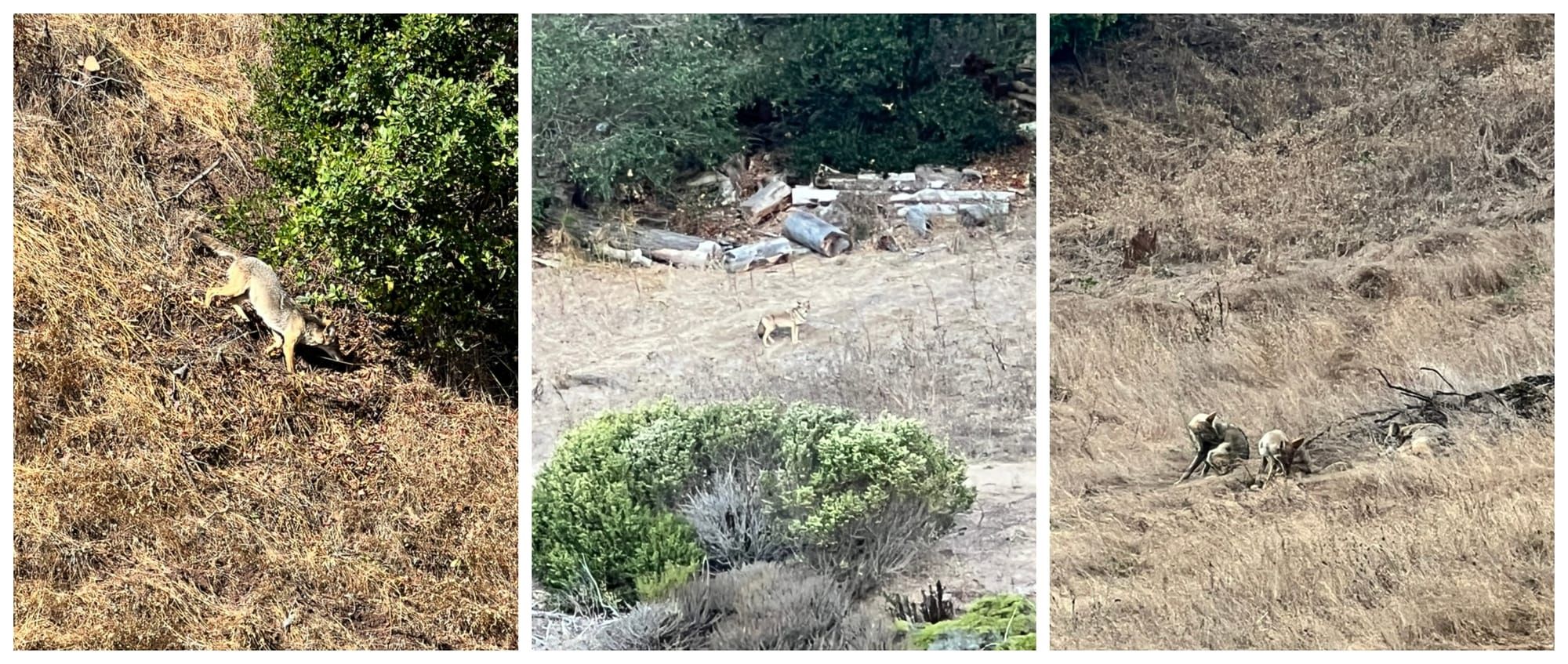
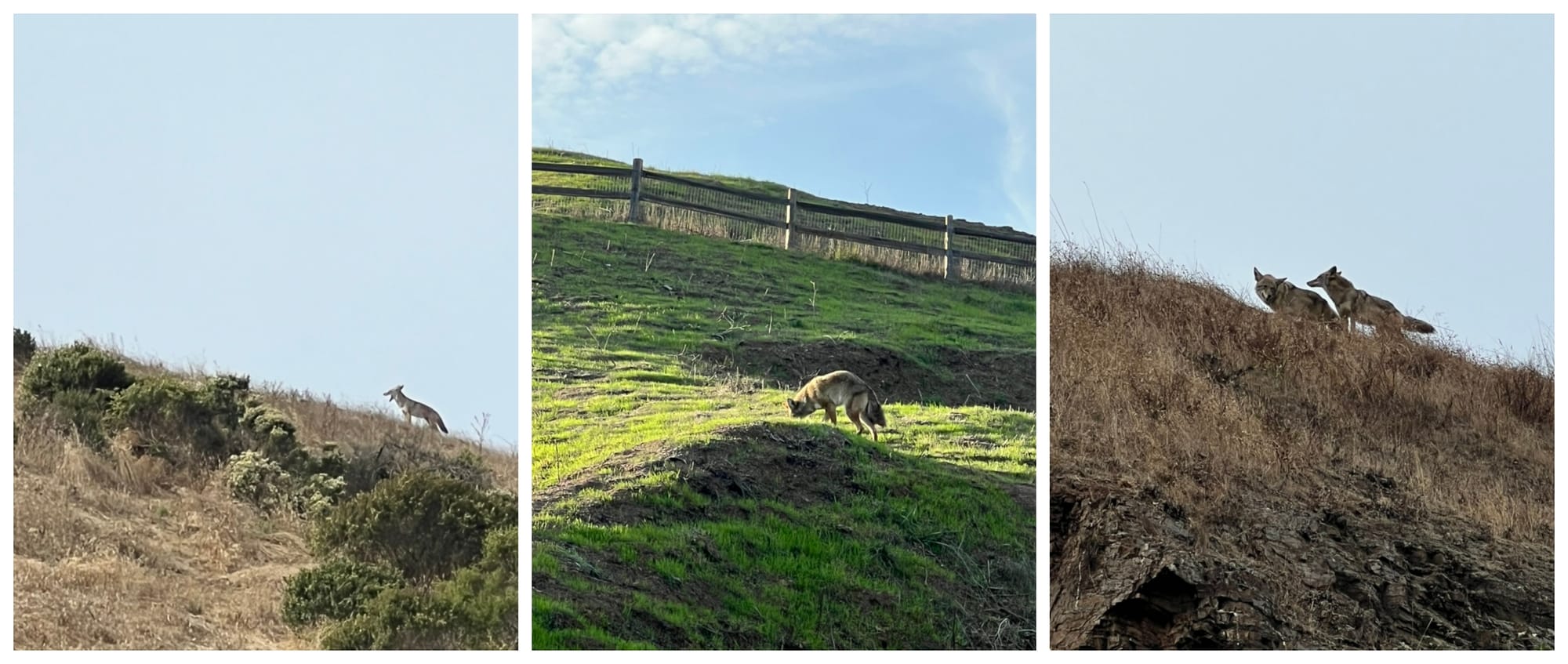
I’ve been trying. Every morning for almost three years—also the length of time The Wall’s narrator has been in her new life—I’ve hiked with my dog through hills and valleys that I still can’t believe are near where I live. It is a pleasure to be in the magic of nature, but it is also work—I am owner and prisoner of my dog, and she needs to walk. I am owner and prisoner of my body and mind, and they need it, too. I keep track of the seasons on our mornings—the dried foxtails in summer, the wet pink ladies in spring. I steer clear of certain patches during pupping season, I look up in the trees when the owls nest. I learn to listen to my own instincts. My dog trots ahead in silent understanding, waiting for me when she gets too far. I see more coyotes than billboards. Sometimes, I see more coyotes than people.
At the end of the world in 1974, German artist Joseph Beuys staged another kind of endurance project on another frontier. Beuys spent three days alone with a coyote in a Manhattan gallery fenced in by a steel mesh barrier. The artwork is called I Like America and America Likes Me, or sometimes simply Coyote. Part protest of the Vietnam War, part quest to heal the spirit of the West, Beuys intended to symbolically bridge the divide between the natural world and the machinery of modernity through his experience. (He brought hay, a felt blanket, a shepherd’s hook, and newspapers into the space, and performed esoteric rituals with them.) “I wanted to isolate myself, insulate myself, see nothing of America other than the coyote,” Beuys said. Like the narrator in The Wall and like me on my walks, he was seeking an old, animal understanding of the world that had been drowned out by the mechanistic rattle of day-to-day life. Like us, he knew that time with nature was the path. He called this artwork a “social sculpture”: human activity that strives to reshape society. Few people saw or paid attention to Beuys’s piece at the time, but maybe that was the point. It was the practice that mattered, not the audience.
But three days is not three years, and symbols are not survival. In video footage of Beuys’s artwork, the coyote often looks nervous and uncomfortable. (Did he in fact “like” Beuys as the piece’s title claims?) He tugs on Beuys’s shepherd’s hook begging to play. He performs for food scraps, he gets bored. It’s unclear whether the coyote was ever actually wild; he had a name, Little John, and Beuys transported him to the gallery through dubious legal means. No one knows what became of Little John after the social sculpture ended.
While the striking visuals of I Like America and America Likes Me attest to a meaningful meeting between man and beast, Beuys missed a critical step in his project to heal the world. It’s not enough to spend time in or with nature; it’s the care you take once you’re there that matters. That is exactly what Haushofer writes about in The Wall.
The novel has been hailed as a feminist masterpiece because it’s a hero’s journey of female competence. (Haushofer kills off the narrator’s husband before the book even begins.) But more importantly, by retelling the lone frontiersman narrative through the eyes and hands of a middle-aged woman, Haushofer transmutes caretaking from a domesticated chore into a wild, instinctive drive. The narrator cuts off her hair, and wears clothes for movement and warmth. She stops speaking, she loses her name. The apocalypse doesn’t remake the narrator, it returns her to her natural state. Haushofer details how her protagonist constructs a barn, clears paths through the forest, splints her dog’s leg, harvests hay for her cow, nurses her cat back to health, feeds the deer in winter, delivers a calf into being—all without instruction or previous experience. “Loving and looking after another creature is a very troublesome business and much harder than killing and destruction,” the narrator writes in her journal. But it’s what she must do. “As long as there’s something fit to love in the forest, I shall love it; and if some day there is nothing, I shall stop living,” she explains. The effort of caring makes her human. “If everyone had been like me there would never have been a wall.”
In the Shaun Whiteside translation first published in the nineties, the language is crisp and direct, matching the narrator’s firm determination. It softens when she describes the creatures under her care, and when she remembers her now-grown children. (Her husband gets a few lines about his old, familiar face.) The narrator notices that time with her animals echoes the satisfaction and exhaustion of early parenting days. She even dreams that she gives birth to a furry family. Of course, the enduring narrator is a mother. Who else could represent the grueling, rewarding, creative, essential, back-breaking, life-affirming work of shepherding other living things through the world?
My daughter is not a cow or a coyote, but make no mistake, a child is a creature. Caring for one over hours and years can feel like communing—and wrestling—with the natural world if you’re paying attention. And now I am. When I think I just can’t wash another dish or do another bedtime, when I start to feel sorry for my solo self holding my child’s feelings and teaching her to take them back, when I worry what future I’m even preparing her for and why invisible powers condemn her generation to their own apocalypse, The Wall reminds me that “the troublesome business” of care is what living is. The ease that the billboards promise is an artificial analgesic, not a balm. Effort is natural; caring almost more than we can bear is what heals. (Even and maybe especially if it can’t stop loss from coming, in the book and in life.)
And so I go on at the end of the world, both alone and with so many others on this side of the wall. My dog thwacks her tail on the ground, my daughter curls up in my lap. I admire the butterfly landing on my deck in the flat, bright light. I watch the coyotes hunt and hide—but I keep my distance. I cook, I clean, I walk, I exhaust myself. But I am working and I’m alive.
Rebecca Ackermann is a writer and editor. Her work has appeared in The Atlantic, Slate, the Kenyon Review, MIT Technology Review, and elsewhere.