Orbiting space junk

Another hot trans summer has come and gone. We had our march, broken up by SFPD squad cars, and our alley rave, swept clean by a wall of riot shields. Idaho celebrated the season with a felony bathroom ban. Coach Brett Kavanaugh made the call on who to cut from the girls’ track team. Hospitals around the country continued to shut down their gender clinics. The political candidates hoping to wrest power back from a despised president in his dotage did their best to avoid talking about any of it. And in the midst of this, a trans-authored work of fiction made the shortlist for the nation’s top literary prize. Such is the bewitched logic of the year: the bastions of elite culture are still rolling out carpets and setting places at the table, while the state does its damnedest to define us out of existence.
Any other year, the award would have been ordinary. There’s something tautological about literary prizes; they go to the sort of people who are prizewinners, and what could be less surprising than bestselling trans celebrity Torrey Peters adding one more trophy to her shelf? But in a country whose national policy is now the extirpation of gender variance, it does hit different. The Pulitzer has no public funds to cut, but you could imagine the Department of Justice sending a letter. With so many institutions going out of their way to duck controversy, it felt like a provocation, and a worthy one. If only we had some other author to wave the banner.
\O/
I first heard of Torrey Peters the same way you probably did, through the rave reviews that welcomed her debut novel, Detransition, Baby. It was January 2021, in the giddy run of days between insurrection and inauguration. The autocrat had been expelled, a vaccine was on the way, federal relief was going to lift millions out of poverty. Why shouldn’t a major publisher put out a novel by a trans woman? Why shouldn’t everyone love it? It carried the promise of “insider insights,” in the New Yorker’s phrase; here was a chance to listen in on “the kind of talk that trans people would normally reserve for one another.” It was spilling the T, and I was thirsty as anyone. By some prank of my star chart, the very week that the Capitol was stormed and Detransition, Baby hit the shelves was also the week it first occurred to me, rather to my own shock, that I might want to try out the name Pauline.
I borrowed the book from my friend L. and finished it over a couple of days. Rarely has a novel dismayed me more. It wasn’t just the technical limitations: the sentences were clumsy, the tone grating, the worldview parochial as only a New Yorker’s can be, but that was all par for the course in a first novel from a major press. The hot-button topic of detransition wasn’t the problem either; that was handled sympathetically and with tact. But everything having to do with the baby, or the abstraction that stood in for the idea of a baby, beggared belief. And what most distressed me was that every female or formerly female character in these pages—not just trans women, but women of all sorts—seemed so alien that I had to wonder if I’d somehow misconstrued my own identity.
The novel’s premise is that Ames, a detransitioned man who used to live as a trans woman named Amy, unexpectedly conceives with his cis partner Katrina. The prospect of life with a baby compels him to reveal his past, and to propose a blended family including Reese, a friend and lover from his former life who now longs for motherhood. It’s a fun conceit, and could have made for some wonderful fiction, depending what came next. But what in fact follows, over several hundred pages, is that the characters consider the proposal, explain their positions, hurt each other’s feelings—and that’s all. We arrive at the last page not knowing if the gambit is accepted. Of course irresolution is a choice. But here it punts on the core impasse, that you can’t imagine these characters starting a family together when they don’t even seem to particularly like one another.
Reese, who we spend the most time with, is a “suite of personality disorders” with a mean streak a mile wide. Ames’s detransition has made him a cipher; having abandoned queerness, he doesn’t seem to have replaced it with anything other than a well-compensated tech job and an apartment on Prospect Park. Katrina receives the least narrative attention and hardly seems to possess interiority; the dialogue assigned to her has a neural-network quality. (Trying to digest the reality of who she’s gotten entangled with, she comes up with the sentence: “I realize my knowledge of trans people is largely just detritus that floats around the zeitgeist.”) For various reasons, each character is drawn to parenthood as an aspiration, but nothing ties them together other than screwball circumstance. The New York Times thought this was the sort of novel where the characters end up becoming your friends. To me it seemed like one of those prolonged social functions with an ill-thought-out seating arrangement where, as the hours pass, you and the other people at your table come to realize how little you have to offer one another, and pray for release.
“Oh, trans people aren’t actually like that. That’s just New York.”
Worst of all, for me as a reader, was the book’s despair-inducing idea of womanhood. It opens with an explicit theory, of sorts, of the female condition; Reese serves as an authorial proxy, kicking off her narration with what she calls “the Sex and the City problem.” Any woman leaving behind the first flush of youth, she says, is forced to choose among a limited palette of lives: “Find a partner, and be a Charlotte. Have a career, and be a Samantha. Have a baby, and be a Miranda. Or finally, express oneself in art or writing, and be a Carrie.” I understood this was putting a high-fashion gloss on some old archetypes, but I’d never watched Sex and the City in my life, and it certainly gave me no way in to Reese herself, whose entire presentation—her quips and bravado, her emotional lability, her weakness for designer dresses and kinky entanglements with married men—seemed like the most cursory collection of television tropes. The women I’d wanted to be were Penelope Fitzgerald and Kim Gordon. Was I disqualified?
There wasn’t anywhere else in the novel to look. What little we see of trans people other than Reese and Amy is hardly encouraging. We’re told that Reese has played the role of surrogate mother to other girls, guiding them through the steps of transition, but this chapter in her life remains offstage. By the time she meets Amy, she has “soured on advising just-transitioning girls on the process, or putting up with their dramatics, hookups, and general ‘woe is me.’” Her former daughters are sketchy characters, who do little but exchange eye rolls over girls still younger: “One of them was complaining about how a cis woman looked at her today at the store. That’s how wounded she is, she can’t take being looked at.” The Trans Ladies Picnic in Prospect Park (a real event, which has gone on for decades) provides Reese and Amy their meet-cute; everyone else is window dressing. In passing we observe a “trio of just-out forty-somethings sitting together on a checkered blanket, who self-consciously checked their reflections in their phones with a paradoxically unselfconscious lack of discretion.”
That last phrase cost me a few rereads. I too was a just-out, self-conscious fortysomething, I wanted to check my own reflection in the book, and the writing was so careless that I couldn’t make it out. Are the three women trying and failing to hide their self-consciousness, or are they affecting a self-consciousness that they don’t actually feel, or something else altogether? The sentence doesn’t care; its only job is to show Reese as superior and jaded, and the older women as not worth her time. This was the point at which the book ceased to be merely alien and began to feel hostile. It was taking notice of someone like me just long enough to breeze past her, was doing so in bad prose, and the New Yorker was calling it an insider insight.
“Yeah,” I said, returning the book to L. “I don’t think I can hang with girls like these.”
“Do tell?” they said.
I was shy of expressing my trouble, that I’d opened it looking for common cause and found nothing I could use. “They’re just so mean,” I said.
L. laughed. “Oh, trans people aren’t actually like that. That’s just New York.”
I thought about that. L. had a point; they were one of the very few trans people I knew at the time, and nobody in Detransition, Baby resembled them in the least. As soon as I’d come out, they had stepped with good cheer into the role of my elder, explaining that it always happened this way—the universe just assigned you somebody. I knew they’d enjoyed the book, and I envied their ability to simply take a novel as a novel, and not as a referendum on their existence.
“It sounds like you need to meet some people,” they said.

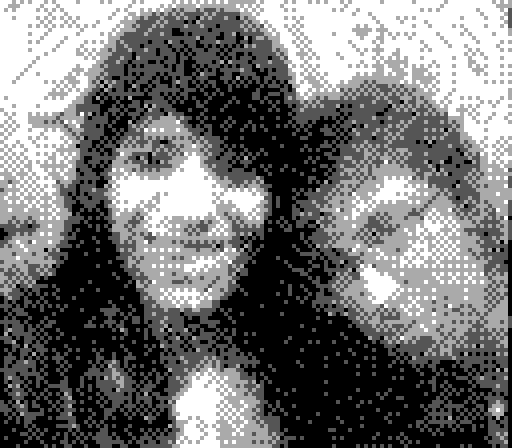

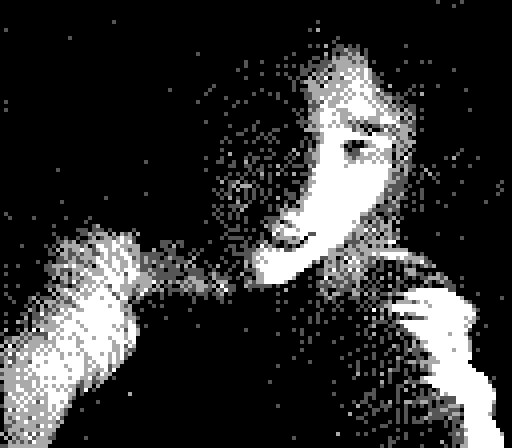
Faces from T-Slur Thursdays at Thee Stork Club, captured with a Game Boy camera. (Sophie Rose Taylor)
Late winter opened up the magnolias. I mail-ordered some skirts. I got my jabs in the Coliseum parking lot, and along with everyone else took my first steps back into public life.
My life as an academic had always centered in Berkeley, but now I was going with L. to poetry readings and clothing swaps in West Oakland row houses, accepting invitations to thrifting in Rockridge, walks around the lake, karaoke at the White Horse. For the first time in my life, I found myself able to make conversation in bars. There was a town within the Town; it had no borders, but once you knew where to look it emerged at set places and times. The faces you saw every Thursday at one particular dive would reappear on different nights at a certain gym, a certain street fair, an art party, a rave in the woods. I met the modular synth–heads, the shibari nerds, the communist poets, the psychonauts with gram scales measuring out research hallucinogens whose names were mostly numbers. Everyone was weirder than I’d expected, and much kinder. No one was patterning their life on Sex and the City.
It had all come so suddenly, with so little connection to earlier life, that it seemed bound to disappear in the same way. One night I texted L. in a panic, afraid that some new connections might be quick to depart. They replied:
Haha you are trans now babe. No such thing as people departing. Gotta be careful who you meet cuz we’re all in each other’s orbit forever like a bunch of space junk
That, I realized, was a good definition of community.
But my lived experience in Oakland was making the novel’s choices seem even stranger.
With life so full, I should have had more on my mind than someone else’s novel. But it wasn’t proving easy for Torrey Peters and me to leave each other decently alone. The literary marketplace, centering as it did on a handful of stars, had room for exactly one trans novelist at a time. Of course the hardcover that stacked every store display in town was also going to be the book that my family asked me about, that my cis friends were discovering on podcasts, that even the priests at my Zen temple were taking as a map of the gender frontier. To complain felt ungracious. It wasn’t the worst possible book! Jonathan Franzen had written worse! Wasn’t it nice that people were interested?
But my lived experience in Oakland was making the novel’s choices seem even stranger. It didn’t just neglect trans community; it actively spurned it. Reese has nothing but disdain for her fellows. As for Ames, it’s understandable that his detransition has cut him off, but that doesn’t explain the lengths he goes to deny the existence of community in the first place. As a parallel to Reese’s Sex and the City problem, Ames tells Katrina a parable, drawn from—of all places—the peer-reviewed journal Nature. He gives an account of young elephants who developed pathological behavior after their families were killed by poachers, and sums up: “Trans women are juvenile elephants.” In his telling, “We are a lost generation. We have no elders, no stable groups… Those older generations of trans women died of HIV, poverty, suicide, repression, or disappeared to pathologized medicalization and stealth lives.”
This is ludicrous and untrue. Difficult and brief as many trans lives have been, there have always been survivors and elders, and if you can get to where others are like you, you don’t have to go it alone. Of course trans women are messy; of course we all carry a payload of trauma in our nerves. But the damage comes from being unable to perform one’s assigned gender before transition, not from lack of found family after. The fact that Ames reaches for an animal story rather than some more human example of intergenerational trauma gives away the flimsiness of the conceit. Even Katrina can tell something is off, and finally extracts an admission that Ames is simply put off by his own kind: “Deep down I was ashamed to be one of them.”
One thing people liked about Detransition, Baby was that it allowed its characters to be imperfect, rather than telling another sentimentalized story of blameless martyrs. No doubt the dialectic needed that turn. But I still couldn’t see why the novel was written as it was, or what need it was meeting for its readers, and I wouldn’t really get it until the national mood began to change, and Peters’s next book came out. Stag Dance: A Quartet was published in March 2025 and got the Pulitzer nod this May. It contains four stories, three written before Detransition, Baby and one after. Taken together they provide an archaeology of their author, just as the historical moment has dug up so many cursed parts of the national psyche that might happily have stayed buried.


(Sophie Rose Taylor)
Trans literature as a formal industry got its start in the early 2010s, and Peters was there from the beginning. Originally she’d apprenticed in mainstream fiction at the Iowa Writers’ Workshop (as did I, though not in the same year), but the agents and editors to whom graduates of that program were supposed to pitch their wares saw no market for any transgender book that wasn’t a memoir. (A tell-all is evergreen; Christine Jorgensen’s 1967 autobiography sold nearly half a million copies.) Lacking institutional support, Peters began to connect with trans writers and artists who were finding each other in those years—first in Seattle, later in Brooklyn. Topside Press had just released its debut collection, Short Fiction from the Transgender Vanguard; the next year it put out Imogen Binnie’s Nevada, the first trans novel of the modern era and still one of the best. How such fiction might deviate from the hackneyed arc of the transition life story was a new question, open to all comers. Under the DIY tutelage of the Topside editors, Peters started to self-publish, releasing her work for free online. These early efforts make up one half of Stag Dance.
Unlike Detransition, Baby—and very unlike what one is encouraged to write at Iowa—these are schlocky genre pieces, full of violence and lurid gestures. Though the template varies, the premise is consistent; in all three stories a first-person narrator chooses to disavow some aspect of queer or trans identity, and is punished for doing so. In “The Chaser,” a romance set at a boarding school, a teenage boy becomes sexually involved with his effeminate roommate but refuses to acknowledge his feelings even inwardly: “I had to be aware of the gravitational pull of that dark place, to keep tabs on it—but never to look directly at the reality of it.” In “The Masker,” a queasy horror story, the fatal choice is between different kinds of queerness. Krys, a young person who identifies as a male cross-dresser, attends a gender-bending convention in Las Vegas and meets two disturbing older figures who represent opposed life paths. There’s Sally, a heavyweight trans woman whose cruelly described surgeries have not granted her the gift of passing; and then there’s Felix, a handsome Argentine doctor who plays the dominant male to seduce the narrator, but also, it turns out, enjoys pulling on a silicone bodysuit and mask to become a cheerleader caricature.
Of course Felix and Sally despise each other. More than that, each finds the other ontologically invalid. Sally sees Felix as a false woman, a predator whose Silence of the Lambs shit repeats that movie’s slander on real-life trans women. For Felix, it is trans women who are denying their real selves, “wasting a gift” of a gratifying fetish in the vain hope of an impossible transformation. Each wants Krys’s allegiance, and each differently repels her; it’s scary to think that feminine presentation is only a matter of role play and costume, scarier to think that it isn’t. A plot device forces Krys to choose in a way that will inflict police violence on the rejected party. Having served Sally up for punishment, she is grotesquely subjugated in her turn. “I tell myself that this is what I want,” she concludes, and the irony screams.
But most interesting as a precursor to Detransition, Baby is the dystopian sci-fi story “Infect Your Friends and Loved Ones.” The apocalypse has come in the form of a plague that destroys the human body’s ability to produce sex hormones, introducing a world where everyone, cis and trans alike, has to source them externally. As the story flips between past and future, we learn that the authors of the disaster were a group of trans women in Seattle, adjacent to the unnamed narrator but not including her; she and the group leader Lexi were once romantic partners but are now exes. Lexi’s group has tattooed themselves with the sign “t4t,” elevating it from its original Craigslist-hookup context into an ethos of mutual aid: “You just promise to love trans girls above all else… A girl could be your worst enemy, the girl you wouldn’t piss on to put out a fire, but if she’s trans, you’re gonna offer her your bed, you’re gonna share your last hormone shot.”
The narrator’s response is withering. “A coven of trans women,” she calls Lexi’s group, “polyamorously fucking one another to biblical levels of drama over the soundtrack to Skyrim on PS3, all the while saying how shitty the world was outside the house.” As far as she’s concerned, the t4t ethos amounts to settling for scraps: “Of course trans girls all love and fuck one another. Who else will?” The real bite in the question is that the narrator in fact has a “who else.” She presents as the sort of conventional femme who can attract heterosexual men, and isn’t shy about flaunting that privilege. On her way out the door to meet a real estate developer: “I look good when I leave. Black Coach heels, sweater dress barely covering naked thighs—legs looking long.” Lexi, unpresentable in ripped tights and combat boots, is left to cry into a bottle of vodka. Being trans, in this story, is a condition one can’t help; but queerness is a choice, and one the narrator is happy to decline.
This is the only place in Peters’s writing where we get a sustained look at a trans community, and the authorial attitude is hard to pin down. By all accounts, Peters was paying her community dues when she wrote these stories. She led self-publishing workshops for aspiring trans authors; she got the group t4t tattoo in real life. Yet the stories are obviously of two minds. Their superego knows that it’s wrong to disavow one’s self and community, and enforces that judgment at the level of plot. But their id—the narrators’ live thoughts and feelings—would do anything to escape identification with a bunch of grotesques. The “Infect Your Friends and Loved Ones” narrator does eventually come around to the t4t group, and even offers Lexi an apology: “I had been embarrassed of her. I had thought of myself as too pretty, too high-class and educated, too smart to be stuck with her.” But it took the end of the world to get there. To imagine such a reconciliation in our own reality, and to do it at novel length, is the more daunting task that Detransition, Baby takes on. It’s not really a fair fight.

(Sophie Rose Taylor)
On the surface, the Bay Area in 2021, as it welcomed Detransition, Baby with open arms, was also pretty hospitable to me. Updating my legal documents cost money but was otherwise painless; both the California DMV and the U.S. State Department had just taken the humane step of dropping medical certification requirements. As for the medicine itself, my doctor cheerfully explained that while medical transition a decade or two back would have involved a rigid series of set steps, you could now be much more à la carte about what you actually wanted. No one was weird at work. The inevitable pronoun flubs came with sincere apologies. Once we returned to the office, I had extremely normal conversations with cis coworkers in the ladies’ room.
But there were false notes. In a DEIBJ training webinar at work (my employer had rounded out the acronym with “belonging” and “justice”), a slide popped up reading “DIVERSITY” and illustrated with three representative figures. On the left, for some reason, was Sundar Pichai. In the far corner, looking as if they had gone out of their way to avoid him, were cropped busts of Caitlyn Jenner in her Vanity Fair corset and Laverne Cox in a keyhole-neckline gala gown.

I goggled. I texted screenshots to my friends. It was too absurd to be really offensive, but as I fell asleep that night my thoughts darkened. Someone out there, in some sense an ally, still associated trans women with glamour and artifice to the point of thinking a celebrity photo shoot might help my coworkers relate to me. No wonder the Sex and the City theory had caught on. And wasn’t a woman dolled up for the media, posed on a blank background with her context cropped out, really too perfect an illustration of how Detransition, Baby had come into the world, and how its characters saw themselves? It was bad news, I thought, that the trans novel everyone loved was also a book about desperately trying to get away from transness.
With the theme of disavowal in focus from the Stag Dance stories, it’s easy to trace forward into Detransition, Baby. “Infect Your Friends and Loved Ones” fills in some gaps in Reese’s past life; the trans women she used to associate with must have been like those in Lexi’s group, and in place of that story’s reconciliation, Reese has chosen to leave them behind. She hails originally from Middleton, Wisconsin (about which we learn only the Wikipedia-grade fact that it is home to the National Mustard Museum), but nothing in the novel, not even the Sex and the City glitz, is more canonically New York than her presentation as a self-fashioned creature owing nothing to anyone. Such is “the Gatsby glory of the New York dream: telling the grandest story about yourself that you could hope to have others believe.” When Amy fails to suit that story, Reese betrays her the same way the “Infect Your Friends and Loved Ones” narrator spurns Lexi, by having an affair with a man. And when age threatens her sexual status, she makes a bid to align with a different group, not men but cis women.
The Sex and the City problem rehashes the same constraints that Simone de Beauvoir took on in The Second Sex. But unlike Beauvoir, Reese isn’t interested in taking apart the cultural script. Quite the contrary: she feels its imposition as a privilege. Her generation of trans women (which is also Peters’s, and mine) is the first, she says, to have attained social freedom enough to share in the discontents of cis women. But this alignment is far from secure and needs shoring up, which is where the baby comes in; or the idea of a baby, since the novel has no interest in actual children. Reese works for a time at a day care, but all we’re told is that she excels at tending other people’s offspring, and that this labor amounts to “an evil genie’s facsimile of her dream life.” The dream, apparently, would be to perform the same labor while claiming the status of mother, a status which matters only because motherhood is a chit standing in for realized femininity. As she tells Katrina when they meet to discuss the blended family: “Moms are real women and real women become moms. Women who never have kids get treated like silly whores.”
In the end we’re all twenty-first-century Americans, and all we really want is a tidy return on our investments.
There is no effort to interrogate the cultural logic behind this conclusion. Reese’s analysis halts at the point of diagnosing a condition that other queer and trans people, not to mention cis feminists, have put a great deal of effort into trying to undo. At first her speech to Katrina seems like feminist solidarity: “The only people who have anything worthwhile to say about gender are divorced cis women…since I don’t really have trans elders, divorced women are the only ones I think have anything to teach me, or who I care to teach in return.” But this is the logic of disavowal all over again. Declining to acknowledge the existence of trans elders, and rejecting the idea of common cause with people like herself, Reese extends a hand to Katrina in the hope of rising to her level. Or, in the abstract, contorted register that the book favors: “as a mother, she saw herself finally granted the womanhood that she suspected the goddesses of her childhood took as their natural due.”
This is the language that everyone in the book, trans, cis and detransitioned, uses for their inner lives. “You think it’s hard to be a mother because you’re trans,” Katrina tells Reese. “I think it’s hard to be a mother as the mixed descendant of Chinese and Jewish immigrants. We have difficulty with motherhood in common.” Everyone in the book seems to be going through therapy without a therapist. You could also say that, although it’s only Ames and Katrina who are an office romance, everyone always seems to be at work. This is a realism of rational actors perfectly transparent to themselves, seeking their own best interests and negotiating to align their goals. This atomization is why their conversations are so impoverished, their relations so joyless. They may be fluent in the language of progressive politics (dismissed with another eye roll as “Oppression Olympics”), but, at heart, Detransition, Baby is the perfect neoliberal novel. Cis or trans, it tells us, in the end we’re all twenty-first-century Americans, and all we really want is a tidy return on our investments. Pity the child that would end up being raised by these people.
Reviewing Detransition, Baby in the Guardian, Grace Lavery wondered if it was “the first great trans realist novel.” By this she didn’t mean that it breaks ground on a naturalistic depiction of trans life; Nevada and others got there first and did it better. Rather, Lavery was acknowledging that Peters had finally gone back to the lessons she would originally have taken in at Iowa, that what the literary market expects is fiction about comfortably autonomous individuals making essentially private choices about their style of life. Lavery’s review carried a wishful tone; she seemed to be hoping for a Trojan horse that would smuggle subversive trans content into the form of the contemporary mainstream novel. But like so many late capitalist artifacts that form is an amoeba, and will indifferently swallow anything it is fed.


(Sophie Rose Taylor)
We all know what’s happened since then. A cynical propaganda campaign, preying on parents’ fears for their children, not only convinced much of the country that only the Republican Party stood between their families and the gender abyss; it also persuaded a good many reasonable citizens, the kind that in 2021 would happily have bought and read a novel asserting that cis and trans people were basically the same, that the social issue which Time once called “America’s Next Civil Rights Frontier” was actually a liability, and was delivering up the country to the enemy. The New York Times showed a particular gift for stoking these doubts, at the same moment that it was naming Detransition, Baby one of the hundred best books of the new century.
“This isn’t your fault,” a trans friend of mine was told the week after the 2024 election. “I hope you know that.” It was meant to be reassuring.
If nothing else can be said for the year 2026, it is at least impossible to imagine Detransition, Baby being written now.
All at once, a book that asked whether cis and trans women would ever want to share a family seemed positively quaint. As it turned out, even the changing room at the public pool was out of the question. Reese’s dream of bourgeois normalcy has run up against a historical moment when any trans woman—even a celebrity!—whose U.S. passport expires will find its replacement coming back marked with an M. When my doctor broke the news that he was relocating to Vancouver, I asked if he thought Canada would be an easier place to work as a trans medical provider.
“As a trans medical provider,” he said, “and as a trans person. And as a person.”
The last time I saw a report on Peters’s personal life, she was dividing her time between New York and the Caribbean coast of Colombia, a country where she is establishing legal residency.
One doesn’t want to romanticize adversity. Yet there is relief in having a false accommodation laid bare. It was simply never going to be this easy, and if the dream of a universal atomism is receding out of view, that vision of life wasn’t much to write home about. If nothing else can be said for the year 2026, it is at least impossible to imagine Detransition, Baby being written now.
(Sophie Rose Taylor)
I have to finish by giving Torrey Peters her due. The title novella from Stag Dance is the only new fiction she’s published since becoming a celebrity, and as a response to that turn of events, and to everything we’ve lived through the last few years, I couldn’t possibly ask for better. Something in the changing times has made Peters into a weirder and better writer than ever before. May such transformations find us all.
As the title implies, Stag Dance is a story with ostensibly no women at all. A frontier tale set in the first decades of the twentieth century, it follows a group of lumberjacks at a wildcat logging camp in the remote Upper Midwest. As winter sets in, the camp boss proposes a dance to break up the monotony, with an added bit of etiquette that he improbably claims is rooted in old logger tradition. Any man who wishes to be courted may pin a symbolic cloth triangle to the front of his trousers; he will then, for purposes of the dance, be treated as a “skooch.”
The shift in setting has shaken up several of Peters’s habits. For one, she’s finally found the courage to write an ugly protagonist. In place of a pretty, passing, disdainful femme, the narrator of Stag Dance is a lumberjack known as the Babe, gifted with a saw but physically a rough-hewn lunk with a “shelf of a forehead,” the size of his namesake ox. In his own rueful words: “No mirror had ever befriended me.” You know from the start that he’ll want to wear the triangle, and still the artless way that he goes about it—allowing the other lumberjacks to take it as a joke, knowing in his heart that it’s anything but—lands with a pang.
This uncouth pack of men on the edge of nowhere is by far the most fully realized community Peters has written. We see them together at work and at leisure, their acts of kindness and competition, how they struggle together through a marginal existence. The prose has also come to life. Stag Dance sometimes approximates actual period slang (along with “skooch,” there’s “sawbones,” “Scandahoovian,” “brick shithouse”), sometimes a vaguer old-timeyness that belongs to the British nineteenth century if it belongs anywhere (“proffer,” “desirous,” “larkery”). Some words, like “hadopelagic” during a sex scene, aren’t even pretending to exist in a time or place. You don’t have to read much of this to understand that verisimilitude isn’t the point; it’s lexical camp. As a matter of pure form, it’s far and away the queerest writing Peters has ever done.
Part of the fun of a period piece is that a word like “trans” is nowhere near available. (“Queer” does show up, but its usage gets to be a wink.) As the stag dance approaches, the Babe finds himself pulled into a rivalry with a young lumberjack named Lisen, slender and gorgeous, who doesn’t even need to put on the triangle to be treated as the camp sweetheart. Different as they appear on the outside, the two of them are somehow the same. But the similarity is never named, any more than their apparent love triangle with the camp boss can appear in the light of day. A snow-covered world without labels makes a far better case than any of Detransition, Baby’s forced equivalences for the continuity of human experience. If trans fiction has a task, surely it’s to remind us what murky constructions identity and desire actually are. How could any of us say for certain what she wants, or who she is?
Whether or not Torrey Peters believes in trans elders, the fact is that she’s one of mine, and that we’re always going to be space junk in each other’s orbits. Reading her novel as a baby trans, I couldn’t help being a brat to it. But trans literature is also a baby genre, and what it will grow up into is anyone’s guess—which is why it matters to insist on something more than the bestseller template, and why it’s so hopeful that the first of us to achieve renown hasn’t stopped evolving in public.
There was a moment when it was thinkable to posit a great trans novel, even to bring in that nonsensical entity the great American novel as a comparison. With all respect to the Pulitzer board, that moment feels past; and honestly, the goddess save us from ever having a great trans novel to contend with. Without that baggage, Stag Dance is free simply to be good trans fiction, alongside a lot of other good fiction by Casey Plett, Jackie Ess, Jeanne Thornton and many more, written in one margin or another. Mainstream ambition was always the wrong lane, because in the end—I don’t know how else to put this—the great American novel was always going to be a cis girl. It’s only natural to envy her angles. You’d love to be desired as she is desired. Visit her in New York, or wherever else she lives; trade some style tips. In the end she’s not the thing you are, and a life of imitation is no life at all. It’s your transition, baby, and no one else’s. Write it like you’re breaking the law.