Invisible circulations
Welcome to Sight Week, part of our “Six Senses of Oakland” subscription drive, dedicated to how the Town looks, sounds, feels to the touch, tastes, smells, and just, like, ~vibes~, man. It is also dedicated to getting us enough members to make this whole ORB thing sustainable. Read more about the drive here. Subscribe here.
It’s sheep-in-the-vineyard season. This is the refrain in my head as I drive from the East Bay to the Central Coast through rolling hills scattered with oaks and, after record-breaking—thank you, climate change—rains, abundant grasses. Even some of the industrial vineyards have sheep in them, growing their year’s wool from the forage they graze between the vines before the vines begin growing, respectively, their year’s fruit. To my novice eye, the stocky, square-faced sheep with cream wool crested with a little dirt look like they could be Rambouillets. In the vineyard, the flock not only serves as weed control but also returns minerals to the soil with their excrement and aerates the soil with their hooves, stewarding ecosystem health.
We live, on planet Earth, in a bounded system, where molecules continuously cycle, including, not visible at a glance, microplastics that affect the entire food web. I came to my training as a shepherd as a plastics researcher from a rural, fire-prone community of oak savanna and coast prairie: land, on Yak Titʸu Titʸu Yak Tiłhini Northern Chumash and Salinan homelands, that needs fire to thrive. Learning to work with ruminants was not so much a choice as a clear next step in my work as a feminist political ecologist from a working-class background living on acreage. When we had two fires in one summer roughly a mile each from my home at the time, I wished we already had sheep on the land. I began studying. And the more I learned about shepherding, the more I found its land-based practices in alignment with the feminist environmental justice approach I take to my research and teaching. I don’t want to oversimplify and say that if plastics are the problem, sheep are the solution. Rather, so long as plastics are a problem contributing to disease, climate change, and suffocation, work with sheep—supporting the health of land across species—poses, to me, one mode among many of building a world I want to live in: what Eve Tuck terms “researching for desire” in “Suspending Damage: A Letter to Communities.”
“But Maya!” you might interject if I were reading you this draft over coffee. “What does plastic pollution have to do with soil and with sheep? Isn’t most plastic pollution in some island in the ocean?” To which I would look you in the eye. And do a half-nod while I take a breath. And proceed to begin to explain how while macroplastics do accumulate in ocean gyres, among them the famous Eastern North Pacific Gyre, the physical oceanographic entity of the gyre itself does not a trash island make. Moreover, plastic pollution is by no mean confined to such an imaginary island’s bounds, in the oceans or on land.
While the global ocean is indeed heavily polluted with plastics, this pollution is widespread, pervasive, and comprised of micro- and nanoplastics, many of which are too small to be seen with the naked eye yet substantial in their effects on human health as well as the health of other living beings. And while these plastics concentrate in the world’s ocean gyres—including in the one in the Eastern North Pacific Ocean, where oil-heir-turned-environmentalist Charles Moore observed the trash island that the philosophy professor Kim De Wolff in her elegant and comprehensive new book, Synthetic Frontiers: Ocean Plastics and the Persistence of Trash Islands, documents having made headlines since 2004[1]—they are by no means limited to the gyres.
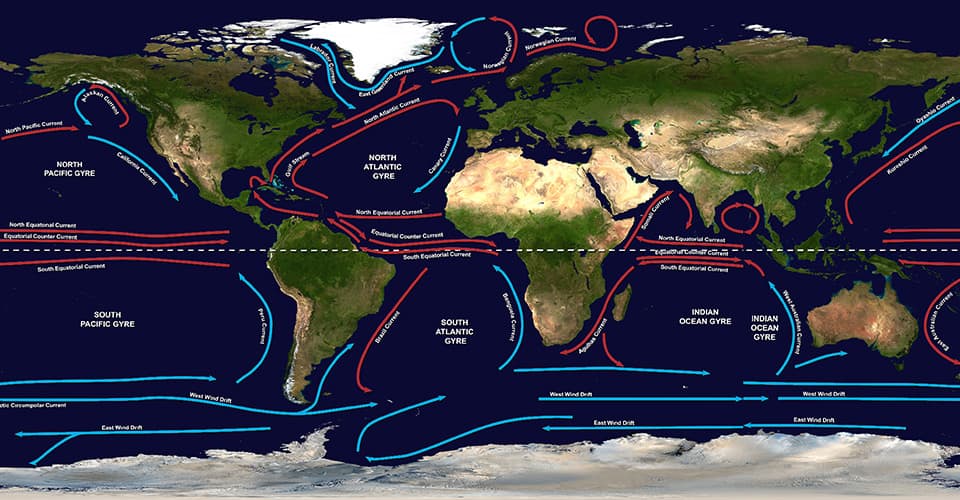
Scientists have long shown that plastic pollution in the oceans does not constitute any sort of island. De Wolff uses, instead, the terminology that the organization Charles Moore founded and with which she has worked with extensively, Algalita, uses for plastic pollution: “plastic soup.” She explains that the “trash island that cannot be found turns out to be exceptionally good at making visible specific kinds of capitalist and colonial relations that constitute plastic’s persistence in the North Pacific Ocean: the relations of synthetic frontiers.” (18)
It is common knowledge among plastics researchers that plastic pollution in the oceans does not form any sort of island, yet this trash island myth has persisted for two decades now in the shared cultural imagination of the United States and beyond via media representation, word of mouth, and the like. Researchers work broadly to collectively disprove this myth with rigorous study in order to raise public knowledge, effect policy change, and more. De Wolff’s book is, for anyone interested, a concise volume debunking the Garbage Patch myth from a feminist science and technology studies perspective, working from its outset with the knowledge that the trash island is “not there” (1). Those versed in science and technology studies will recognize citations throughout the text, including from Stefan Helmreich, Melody Jue, Max Liboiron, and more. Yet one of the great accomplishments of this volume is its ability to speak across readerships and welcome in those who are not necessarily previously familiar with the field or extensively with marine pollution. The text is permeable, presenting both enough of a high-level synthesis to reflect core contemporary concerns in marine plastic pollution research from a perspective prioritizing liberation and many epistemological entry points for a curious reader.
So what, then, is the garbage patch that does not physically exist?
The garbage patch is diligently sorting your recycling even though sources say only roughly five percent of items that are sent to recycling facilities in the U.S. annually end up recycled. The garbage patch is me spending the years of approximately 2013–2022 publishing poems from a hybrid poetry manuscript literally called Myth of the Garbage Patch and only finally finding a publisher for it in our year of garbage 2026. The garbage patch is the endocrine disruptors released in Cancer Alley that harm entire communities. The garbage patch is hormone shifts, such as puberty and menopause, at increasingly young ages. The garbage patch is frog population decline. The garbage patch is cultural erasure under waste colonialism. The garbage patch is the amount of hours I have worked in the middle of the night to cram in a video call across many time zones working on coordinating a transnational plastic pollution treaty. The garbage patch is staring into the radiant blue of the open Atlantic Ocean and the Atlantic Ocean staring back, not a microplastic particle to be spotted. The garbage patch is a failure of sight.
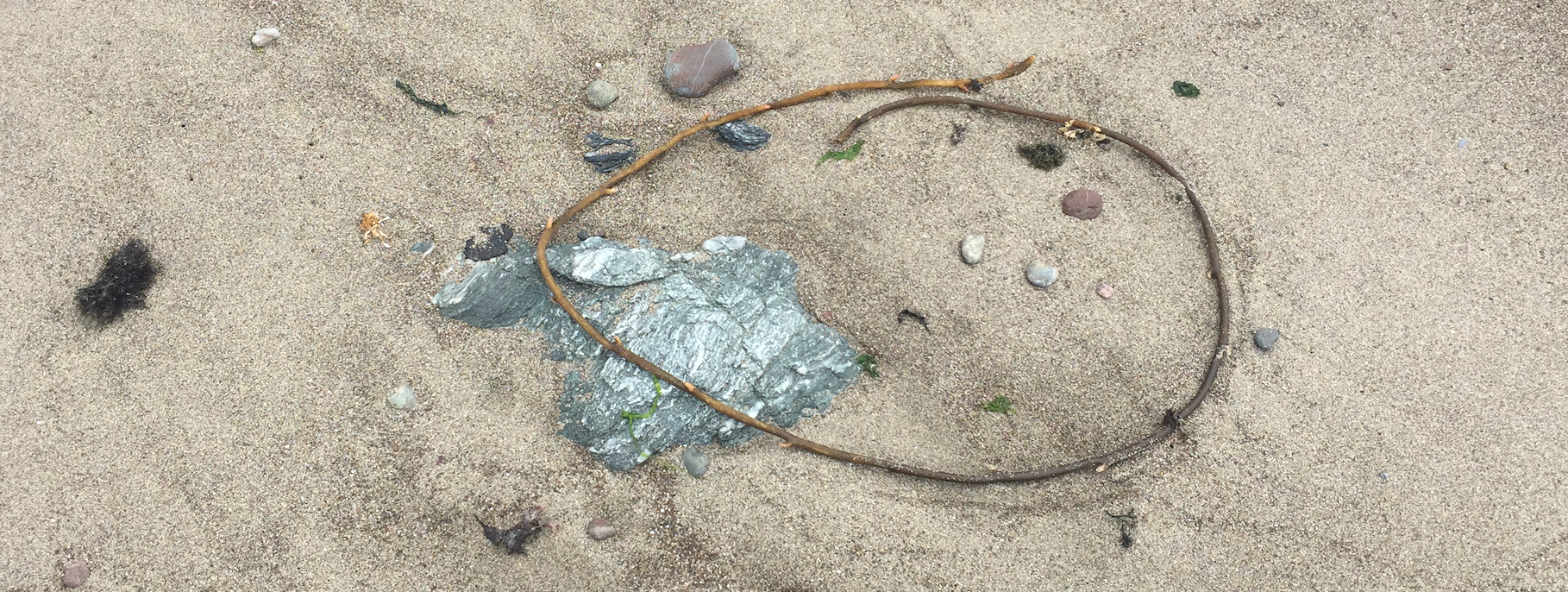
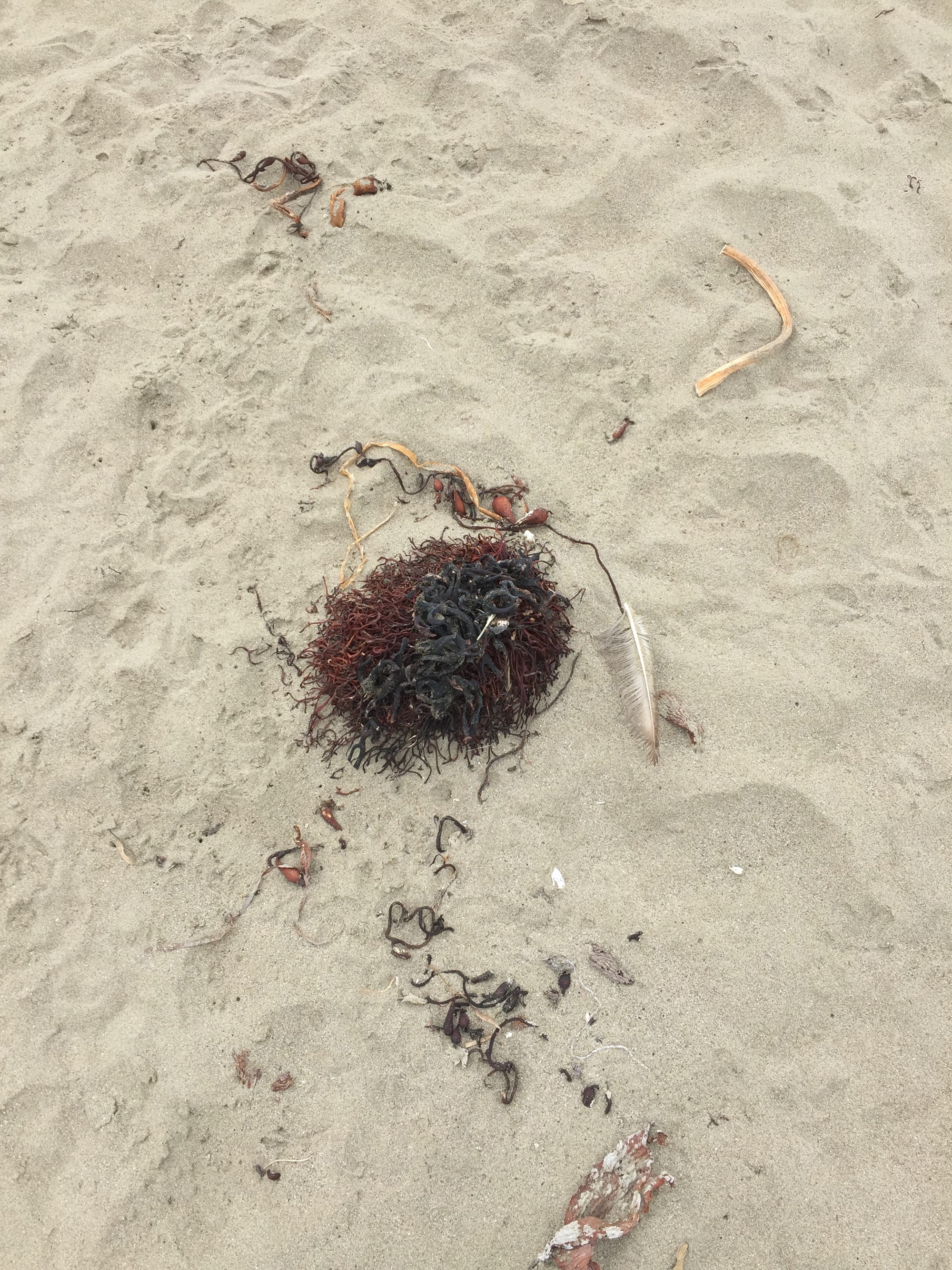
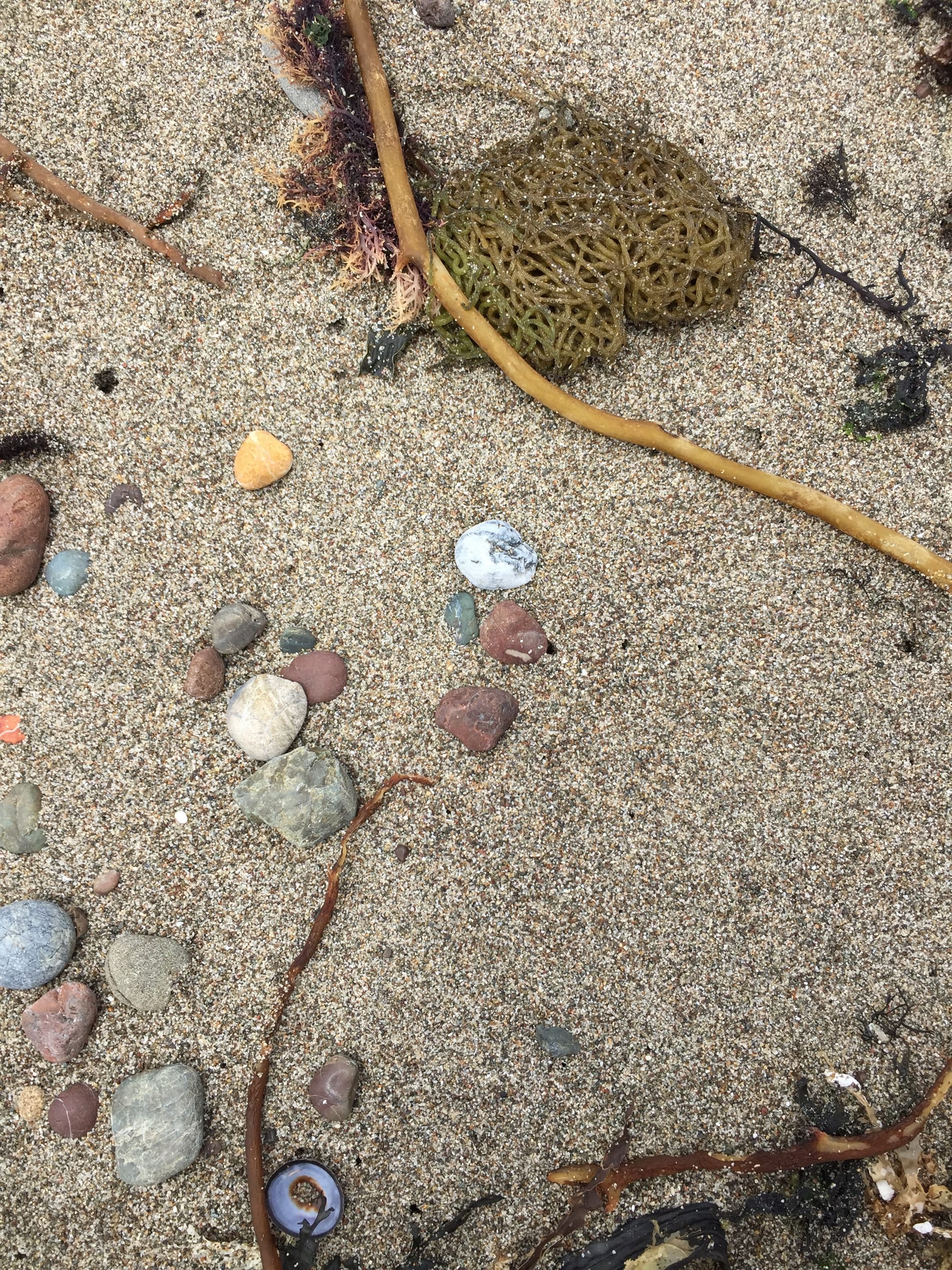
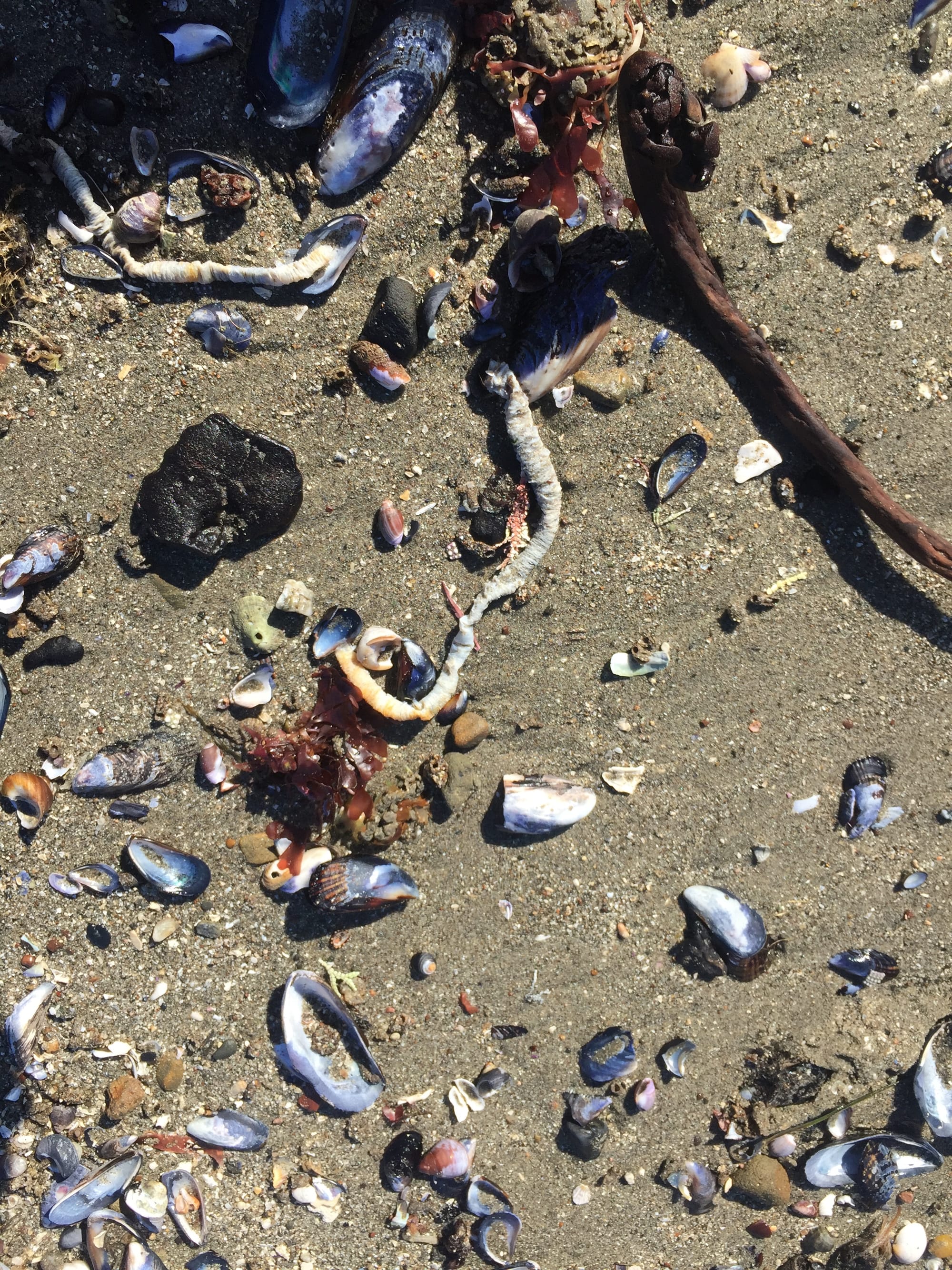
The garbage patch is such a failure of sight, in fact, that in the course of my plastic pollution research I have taken so many hundreds photographs in which microplastics are not visible that I inadvertently started a project on seaweeds.
One of De Wolff’s major strengths in this text is illuminating multiple layers of the origins and implications of the myth of the garbage patch, and, with it, conceptualizations of visible plastics in the oceans that have become so widespread in recent decades. “By the 2010s, the problem of ocean plastic pollution had reached the pages of the Los Angeles and New York Times and beyond,” as she contextualizes the project, early in the text, “so why wasn’t awareness equating to change?”:
Situating the garbage patch as a continuation of the cutting edges of colonial expansion, I argue that the territorial power animating synthetic frontiers is enacted not merely through environmental but also through distinctly Western elemental forms of control. (40)
Controlling the image of plastic pollution in the dominant cultural imagination, Synthetic Frontiers shows, is a way to maintain a grip on what happens at sea. As De Wolff explains, “feminist theories of entanglement help show how infrastructures and practices of observation have a tendency to produce that which they claim to merely measure.” A reader holding producers of cultural narratives to account, then, has the responsibility to ask, when newspapers report on the garbage patch, what they are intending to convey with their selection of visual metaphor of a tangible, controllable, and extractable island.
Of course, all the pollution and plastic waste that those who drive and invest in petrochemical companies ensure is accumulating continuously and increasingly in the service of their bottom line does physically have to go somewhere. If not the Great Pacific Garbage Patch, then where? The answer is: everywhere, all the time. Sanitary landfills, creek beds, composite lumber, greenwashing in the fashion industry. In terms that will be familiar to anyone who’s ever stumbled by a storm drain after a big rain, the pollution by no means goes away.
A core principle in pollution research, and one to which De Wolff attends scrupulously in Synthetic Frontiers, is that there is no such thing as “away.” We live in a bounded system on a finite planet. De Wolff is more eloquent: “Considering entangled responsibilities with plastic begins with the acknowledgment that there is no outside of relationships from which to observe or evaluate environments” (22). While this statement may be understood as true across various and diverse knowledge systems, it’s working against, again, at least in the United States—from where I write—several decades of a mainstream culture that has valued endless growth, expendability, and disposability. At this point, however, the “right to produce ever more waste in perpetuity” has resulted in undeniable harm: pollution all over the world, skyrocketed cancer rates, infertility, and so on and so forth (15). Community advocates, scientists, educators, artists, and many more are collaborating from various locations and value systems to act with the knowledge that there is, in fact, no such thing as away, and to require major polluters to act accordingly. The world is so very small and its various corners are so tightly connected, including by an ocean that knows no borders. The world is so small, in fact, that the vessel De Wolff conducted research for this book on is the same one I sailed from Key West to Bermuda on the summer before I began my doctoral training carrying out research for the photo essay I wrote for Canadian Art linked above.
De Wolff’s work in which she envisions “possibilities for relations with oceans that no longer shore up violent natural/artificial or land/water divides” (29) is part of a transdisciplinary conversation with scholars of critical Indigenous studies such as Haunani-Kay Trask, Max Liboiron, and M. Murphy that takes as its point of departure the interconnectedness of all molecules on Earth—and our various responsibilities as humans to steward our home planet, depending on where our commitments lie. De Wolff integrates Trask’s, Liboiron’s, Murphy’s, and others’ relational, land-committed analyses into a marine context that too often limits its political and intellectual imagination to settler materialist analysis.
The microplastics in the soil I pass where sheep are grazing on the 101 while I’m driving home are not categorically different from the microplastics I collected while researching plastic pollution in the Skaggerak Strait in Sweden. Devotion to lands, which includes water, as Max Liboiron explains in their 2021 book, Pollution Is Colonialism, is such a Bay Area concern: the bay is home to, for instance, precedent-setting organizations focused on land-based liberation such as the Sogorea Te’ Land Trust and the Sustainable Economies Law Center. There’s still a little bit of redwood in my boot from my hike at Sibley with friends the other day and it reminds me of this devotion every time it jars me through my sock.
The myth of the garbage patch is a convenient shorthand for the physical reality of how pollution circulates and accumulates in the ocean worldwide. But convenient for whom? Definitely for the petrochemical industry, especially in a media landscape whose power brokers share many financial commitments with petrochemical corporations. If plastics go away, the industry can keep producing more. But they don’t go away. They’re everywhere, in all strands of the food web, causing endocrine disruption, infertility, and climate change.
The garbage patch, then, is not just a failure of sight. It’s a failure of vision: political, cultural, ecological, creative. To keep living on Earth, a critical mass of the people who are not already doing so needs to start living in relationship with the land. Working with ruminants such as sheep to steward land is one way among many—land back, prescribed fire, collectively owned solar power infrastructure—to support land and planetary health: Sheep produce biodegradable fibers that present a renewable and ecologically responsible alternative to plastic textiles, support plant growth and resultant carbon sequestration, and continue various traditional lifeways that work in responsibility to land. There are so many more ways, too.
[1] “The short article, ‘“Trash Island” discovered in the Pacific Ocean,’ takes its content in turn from an article in German National Geographic equivalent Geo that describes a ‘carpet’ of plastic in the ocean. Exactly how the carpet morphed into an island remains a mystery of English-German-Russian-English translation.” (De Wolff 2025, 71).
Synthetic Frontiers: Ocean Plastics and the Persistence of Trash Islands
Kim De Wolff
MIT Press; 208 pp; November 2025