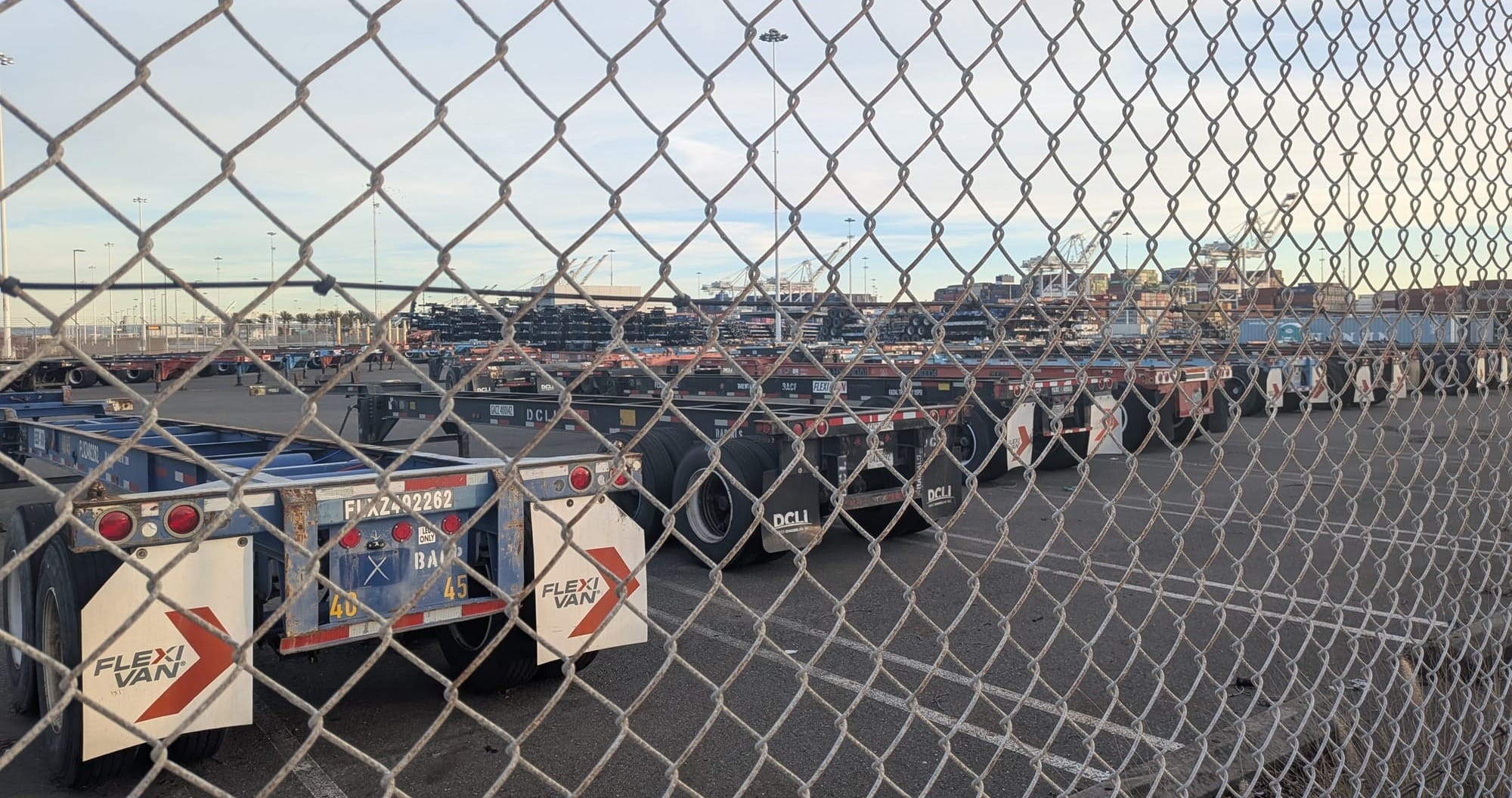
1. Who is a city for?
In late November, the New York Times published a longform article about Oakland—never a good sign. “A Stand Against Coal Could Push Oakland Toward Bankruptcy,” was the headline, followed by “Courts say the city must now pay hundreds of millions of dollars.” Could, the Times said. Must, it said.
Really?
The article begins with a coal terminal, proposed a decade ago and held at bay ever since by activists and Oakland officials, but is primarily concerned with the hundreds of millions of dollars of liability the city now faces for its alleged intransigence, and with the prospect that this might bankrupt the city. For the Times, the news peg was that, a couple days before Halloween, a Kentucky bankruptcy judge had determined that Oakland would have to pay a (bankrupt) sublessor of the terminal the profits that this (bankrupt) coal company would have made, in theory, had the terminal been built. Nothing in the article was newly reported, of course, and a reader of the Oaklandside and the East Bay Times—or of the excellent and detailed blog maintained by the city’s coal opponents themselves—would have known that, by the time it was published, the Times article was already out of date. Three days earlier a district court judge in Kentucky had already nullified the decision to make Oakland pay by ruling that a bankruptcy judge had no business making a final decision on the claims at issue in the first place.
Mainly what the Times article did was add color commentary, including from first-year Oakland Councilmember Ken Houston (“We lost, lost, lost, and we continue to lose,” he says, showing the same civic spirit he did in his recent response to opponents of the city’s Flock camera system), as well as from—of all people—Seneca Scott. The chosen quotes told a story the Times also clearly wanted to tell and which no doubt has been shared with great enthusiasm on Nextdoor: the one about how quixotic Oakland progressives and activists had tilted with windmills, leaving the city’s taxpayers on the hook for their hubris.
Putting aside the requisite snark about how the I-95 corridor covers California, the story’s basic outline was not incorrect, per se. Oakland could still be compelled to pay hundreds of millions of dollars in never-made profits from the operation of that not-built coal export terminal, all owed to a company which only ever existed on paper as a “single-purpose vehicle,” that is, as an entity created for the sole purpose of subleasing the terminal, and which (since the bankruptcy that gave rise to the supposed hundreds of millions of dollars in liability) is now controlled by an L.A.–based hedge fund rather than by the original Louisville-based owner that gave the Kentucky bankruptcy judge jurisdiction in the first place. It really could still happen, and Oakland could be bankrupted by this.
What the Times doesn’t ask, but what even the most cynical and jaded reader might still want to know, is: How the heck can that happen? We are all very used to the ways in which our governments offer incentives to “job creators,” and that even without these incentives the iron law of capitalism insists such “job creators” earn rent from the money they invest in purchasing workers’ labor and physical infrastructure. But these investments were never made in a terminal that was never built, by a “company” which is little more than a paper shell around the development sublease itself; there was never any economic production from which the owners of capital could claim their share.
How, then, can a portion of what Oakland residents will have actually paid in taxes for work they will have actually done—economic production that will have actually occurred—be claimed by the sublessors of an unbuilt terminal, for the fantasy of profits they might one day have accumulated but didn’t? And why is it a judge in Kentucky, bankruptcy or district court, the one who will decide a question of seeming existential import to the budget of a city on the Pacific Coast?
Again, as anti-coal activists have painstakingly explained, the Times’s enthusiasm at Oakland’s comeuppance is premature; we may end up owing nothing at all. As I know from my own experience as an attorney, litigation is unpredictable. And I am familiar with this litigation as a very near outsider, by the way: I was a Sierra Club attorney for half a decade and spent another two years at the outside firm that now represents Oakland and has been involved at various stages in the saga. I never worked directly on any of the relevant cases and am only personally familiar with the publicly available information about the case, but I have, unlike the Times, been in community with those who have made this cause their own and can vouch for their skill and dedication. (Also, as a lawyer, I have some skepticism about the legal merits of the bankruptcy judge’s decision as well as her jurisdiction.) But that unpredictability also applies, too, to whether the terminal will be built, even now that the main legal obstacle has been removed. As the activists maintain, nothing is certain.
But let us take the Times narrative as at least plausible: The coal terminal is never built, but Oakland residents pay hundreds of millions of dollars to ensure its putative developers accrue the profits they anticipated. How did this happen?
If the story that the New York Times told as fait accompli were, eventually, to come true, it would be because a federal judge in Louisville, Kentucky, ended up agreeing with the aforementioned Kentucky bankruptcy judge that Oakland owes hundreds of millions of dollars to the now-insolvent company, Insight Terminal Solutions. If the federal district judge did so, he would be agreeing (at least in part) with a California state judge, who had determined back in 2023 that Oakland was responsible for unlawfully breaking its agreement with the would-be developer of the coal terminal and who, in turn, relied on a decision by a California federal judge in 2018—quoting it in its entirety in the 2023 decision—that Oakland had violated its contractual obligations to one of the coal terminal’s developers. For all that Oakland’s budget’s fate is being determined in Kentucky, the California federal judge who originally ruled against Oakland—by saying that it had signed away its right to prevent the construction of a coal terminal at the former Army Base—is not some coal country stooge ruling in favor of his local industry. He is a former city attorney for San Francisco, a Barack Obama appointee who is generally considered quite liberal.
Here is how this generally-considered-quite-liberal California judge found fault with Oakland, in 2018. His version of the story begins when Oakland first entered into a development agreement with the Oakland Bulk and Oversized Terminal, or OBOT, to build a rail-to-ship terminal on the site of the former Oakland Army Base, in 2012. Because cities have an interest in economic development, a development agreement is, as the decision explains, a “contract between local governments and developers that freeze[s] existing zoning and land use regulations into place, to provide developers with a measure of certainty that new and unexpected government regulations will not stymie their project.” In other words, Oakland’s government committed itself, through a contractual agreement with a for-profit entity, not to change any of the city’s rules in a way that would affect the for-profit entity’s plan for development. Put even more simply, Oakland suspended its own political authority in exchange for “economic development.”
(One wonders what, exactly, the city might be agreeing to now in its efforts to facilitate the construction of a Costco on the other side of the same parcel.)
At the time, the city maintains, shipping coal had specifically not been part of the plan—noting that the project developer had given assurances in 2013 that he had no intentions to ship coal—but nothing in the agreement prohibited it. As Alexis Madrigal documents in his recent book, The Pacific Circuit, the lead developer of the terminal project was a local kid made good, Phil Tagami, who had restored the Fox Theater as an urban jewel and who publicly disparaged coal and embraced renewables, the kind of community-embedded capitalist one might reasonably expect to be committed to both private gain and public good. But Madrigal also points to interest in Howard Terminal for coal exports and the fact that half of bulk exports at the time were coal to suggest that the city was foolhardy (or perhaps deliberately ignorant) in taking Tagami’s word for it.
Oakland did incorporate exceptions to this broad waiver of future regulation into the agreement, however. New regulations would be allowed if Oakland had “substantial evidence” that, without that regulation, the project’s neighbors would face a “substantial danger.” In 2015 a Utah newspaper inadvertently revealed to the internet-reading public that OBOT intended to ship coal from the new terminal (after a Utah government entity voted to help fund the plan). Public outcry and organized opposition in Oakland followed, and in June 2016, after multiple hearings, the Oakland City Council determined that the danger of shipping coal through the city was indeed “substantial,” due to particulate matter from coal dust escaping from trains passing through Oakland. On this basis, Oakland enacted an ordinance forbidding OBOT from handling coal at the still-undeveloped terminal.
Had Oakland’s government broken its promise to the developer (which would be illegitimate) or had it taken responsible action to protect the citizenry of the city it is empowered to govern (the sworn obligation of its lawmakers)? The answer turned on a different question: Does shipping five million tons of coal through Oakland and transferring that load to ships in West Oakland pose a “substantial danger” to the city’s residents?
Rather than take Oakland City Council’s answer (yes), the California federal judge held a trial to decide and ruled that it would not. Lacking “substantial evidence” that dust from the coal would pose a substantial danger, therefore, the ban on coal handling wouldn’t fall into the exception in the contract, such that OBOT was entitled to build its coal terminal. Anything Oakland might do afterward to prevent the construction of that coal terminal would be interference with the agreement under which the city had bargained away its ability to govern, at least as applied to the former Army Base.
When Oakland challenged this decision to the Ninth Circuit Court of Appeals, a panel of three judges addressed a slightly different question: Who gets to decide what kind of danger counts as substantial? Was this a factual dispute between two parties to a contract—which the courts could and should arbitrate, objectively—or should the trial judge have afforded more deference to democratically elected officials engaged in the act of governance, and merely considered whether there was sufficient evidence to support the city’s judgment that coal trains endangered its residents?
By a vote of two to one, the judges agreed: This was simply a contract dispute. Oakland and OBOT were legal equals, entitled to bring their own evidence between a neutral third party, and that arbitrator (the judge) would decide in the first instance whether coal dust was sufficiently dangerous as to trigger the exception to the developer agreement. Oakland could not prohibit OBOT from building a coal terminal without awarding any special deference to the fact that a democratically elected government had decided that, yes, it was sufficiently dangerous. The relevant fact was that it had signed a contract: Lawmakers had bound the city’s hands in 2012, which lawmakers in 2016 (or ever after) had no authority to unbind. (It was not relevant that Phil Tagami had assured concerned citizens that the terminal would not ship coal, since those statements had not found their way into the written agreement itself.)
U.S. judges have been funny about contracts for a long time. In 1897, the New York state legislature limited the number of hours that bakers could work. Flour is dangerous, even substantially so. When inhaled, flour dust causes asthma and other lung diseases, and at sufficient ambient concentrations, it can even explode. But after a Utica bakery owner named Joseph Lochner challenged a fine for working an employee more than the allowable hours, the U.S. Supreme Court determined that New York had no right to interfere with the more fundamental right of individuals to enter into contracts. For the next 32 years of “the Lochner Era”—now a shorthand for judicial overreach—the Supreme Court would strike down a variety of minimum wage and maximum hour laws by ruling that the fundamental right to contract could not be interfered with by the mere exercise of democratic governance.
(This imposition of neoclassical economic theory by unelected individuals—invoking an invented constitutional principle at the expense of their supposed coequal branches in government—would, according to the conventional narrative, come to an end when Franklin Delano Roosevelt threatened to nominate a bunch of new judges to dilute the existing nine judges’ vote, and the court relented.)
Once Oakland had entered into the developer agreement it had ceased, in some meaningful sense, to be a city; it had become something else—a landowner, perhaps.
The decision invalidating Oakland’s anti-coal ordinance has a family resemblance to Lochner: Rather than make the right to contract the fundamental right of citizenship (which government cannot impede), the OBOT decision makes contract the fundamental act of government, and thus its obligation. Once Oakland had entered into the developer agreement it had ceased, in some meaningful sense, to be a city; it had become something else—a landowner, perhaps—and its actions were constrained not by fundamental law or individual rights but by its contractual obligations, which took priority over its obligations to protect and represent its denizens. And in any case, how can those residents expect to benefit from economic development if they insist on deciding for themselves what is and is not good for them, even after they have signed a contract?
From this 2018 decision the rest follows. If Oakland’s ordinance violated its contract with OBOT, its failure to facilitate OBOT’s development of the coal terminal was also a violation of the contract, and that contractual violation, in turn, made it impossible for the sublessor of OBOT to actually export coal, thus leading to that exporter’s bankruptcy and to the decision by the Louisville federal judge overseeing the bankruptcy that Oakland owes $654 million to the coal exporter that has not shipped a single pound of coal out of the former Oakland Army Terminal. A city is not a shared endeavor, the judges essentially ruled. It is a business partner.
2. The coastal insurgency
OK, you say, but now I’m more curious: Why would a generally-considered-quite-liberal California federal trial judge conclude that coal trains would not significantly increase pollution in Oakland on their way to the port? What’s really going on here?
The judge quite clearly saw the particulate matter as a red herring. What activists, and the city, were really concerned about—he seems to have decided—was and is climate change. Reading between the lines a little (but only a little), you can sense his frustration with what he perceived as a certain kind of dishonesty. The activists don’t actually care about the health of West Oakland residents. They care about the carbon dioxide that gets released with the burning of millions of tons of coal in Japan. Just look at the bottom of No Coal in Oakland’s website, which highlights this as the single most important fact about the terminal. It’s climate change, goes this argument, that brought in funding and lawyering from large national organizations like Earthjustice and Sierra Club. One could even make the same argument as a kind of internal critique: The activists may be on the side of righteousness—and the city may be locally engaged in an extremely important global struggle—but No Coal in Oakland is a case of national organizations (dominated by white leadership and donors) parachuting into a predominantly Black community, instrumentalizing (and possibly overstating) claims of environmental racism to serve goals that are largely divorced from the material needs and concrete desires of the individuals who live near the Port of Oakland. (Not to mention the jobs! The city of Oakland, after all, signed that 2012 development agreement for a reason.)
As one of those parachuting white professionals myself, I feel the force of this critique. But this argument suffers from its own racial blind spots. For one thing, the conclusion that the coal dust did not “substantially” increase the amount of particulate matter in the air hinged in significant part of the finding that West Oakland was already heavily polluted. Because the area had been condemned by past racism to suffer the sins of industrial concentration, any additional pollution was weighed against what the community already suffered and found insubstantial. It is a logic of death by a thousand cuts—as long as you refuse to see anything but each individual source, you can cut six years from residents’ lives without a single “significant” source of pollution. If the coal trains alone did not elevate the concentration of particulate matter in the air enough, the judge decided, Oakland could not ban them.
Second, as Alexis Madrigal has documented, the marginalized community of West Oakland itself is concerned with preventing climate change. Local Black leadership also rallied around a cry of “leave it in the ground.” To suggest, as the Times does, that West Oakland (and Oakland more broadly) is the victim of outside ideologues is to embrace the condescending assumption that Black and poor communities organize only around local self-interest and cannot act as local agents in a global battle against climate change (or, for that matter, regard climate change as a matter of local concern).
Had they wanted, the Times could have told a more expansive story that takes seriously the role of local Oakland leaders in a global struggle. Let us tell it, then, and leave Oakland for a moment.
First, let’s take BART 23 minutes north, where the Chevron refinery, Richmond’s largest employer, makes that town a municipal stand-in for post-industrial blight. After 2026, coal will no longer be permitted to pass through Richmond’s port. In 2020, spurred by a public campaign, Richmond’s city council enacted an ordinance that would have banned coal handling after 2023. When a terminal operator sued, the Richmond case proceeded as a challenge to government regulation, not a contract dispute, and when the state judge upheld the ordinance, the coal terminal operator and exporter settled rather than appeal, agreeing to phase out coal exports (by 2026) and to reduce the amount of coal dust in the interim.
Let’s continue north from Richmond (this time by car) for about 12 hours, to Seattle. In 2017, the state environmental agency rejected a coal terminal operator’s permit application, effectively killing the project. Keep driving north, to Cherry Point, where in 2016 the U.S. Army Corps of Engineers rejected a proposed coal export terminal that would have increased coal train traffic through Tacoma and the other industrial and post-industrial port cities of the South Sound (ruling it inconsistent with the federal government’s treaty obligations to the Lummi tribe). Turn back south and head inland along the Columbia River toward Longview, Washington, where in 2017 the state rejected a proposal by Arch Coal and a developer named Millennium to build an export terminal that would have processed 44 million tons of coal per year.
Seven coal terminals in the Pacific Northwest have been proposed and canceled since 2010, according to the Sierra Club, while the Global Energy Monitor Wiki counts nine: Cherry Point, Longview, two more in Washington (Vancouver and Aberdeen), three in Oregon (Morrow, St. Helens, and Coos Bay), Richmond, and—optimistically, perhaps—Oakland. In this context, Oakland is just one place where a campaign of coordinated activism by Big Green, local organizations, and individual citizens has successfully prevented the development of a coal export market on the West Coast.
The New York Times did not see fit to mention any of the other cities where a canceled coal terminal has not spiraled toward a potential civic bankruptcy. But had the Times asked a different set of questions, about why the contract dispute between Oakland and a company controlled by a Los Angeles–based hedge fund is being decided in a Kentucky-based bankruptcy court, the paper might have acknowledged that while Oakland is alone in facing significant civil liability for its role in stopping coal terminals on the Pacific Coast, Insight Terminal Solutions is far from alone among coal companies in confronting bankruptcy.
So let us talk about the already-bankrupt entity that would receive hundreds of millions of dollars from Oakland, were the Kentucky suit to be successful. Insight Terminal Solutions is not the developer that entered into a contract with Oakland (and which won cases against Oakland in 2018 and 2023); that company, OBOT, subleased the land to Insight to construct the coal loading facility, a sublease which is Insight’s only asset and reason for existing. (OBOT is, as the reader will recall, a project of Phil Tagami; Insight Terminal Solutions can claim no similar local connection.)
Insight is a weird company. Despite being a coal terminal developer located in Kentucky, it’s not really associated with Kentucky coal mining; its founder, John Siegel, simply lived in Louisville until his death in 2022. Insight’s story begins in or around 2017. At the time, Siegel’s Bowie Resource Partners was mining 85 percent of the coal in Utah but couldn’t sell it, and so went looking for a lifeline. Bowie’s owners tried to orchestrate the company’s acquisition by Murray Coal, but the deal fell through. Meanwhile, John pursued a plan for an Oakland coal terminal that (presumably) could ship Bowie coal abroad; when his co-owner decided the Bowie wouldn’t no longer fund the terminal project, John created a separate company for the sole purpose of developing the terminal, handed control of it to his wife, and named it Insight Terminal Solutions.
Insight paid $700,000 for the option to sublease a coal terminal from OBOT. And then, when the agreement failed to materialize, it kept paying. Two years and at least $6 million dollars later, Insight finally had the sublease but no revenue, and so the company filed for bankruptcy. (Because the late John Siegel poured millions of dollars from a company owned by his wife and sons as well as two other family-owned businesses into Insight Terminal Solutions, a separate legal dispute has arisen out of the bankruptcy: Insight’s new owners claim that money was an investment that doesn’t need to be repaid, while John’s wife and successors argue it was a loan.)
Siegel’s Bowie Resource Partners was far from the only coal company scrambling to stay afloat in the 2010s. The U.S. electric sector is by far the biggest purchaser of coal, and started buying less in 2008; by 2017, power plants used 30 percent less coal than a decade earlier. As an anti-coal attorney, I’d be only too happy to claim credit (and activists and federal regulations deserve some, to be sure), but much of the decline was driven by the U.S. fracking boom, whose methane gas already produces more energy per pound than coal and is available at world historically cheap prices. If the coal industry expected to keep mining (and profiting) at the same rate, it would have to sell the coal somewhere else. And so, the push to build coal export terminals in Oakland, Richmond, Longview, and Cherry Point in the 2010s solved the problem of coal in a country that was burning less of it. Now the stuff would be shipped abroad to places without a fracked gas boom or burgeoning solar panel industry (or, in the case of Japan, with a newfound aversion to reliance on nuclear following the 2011 Fukushima disaster). The coal industry would get help from the federal government, which in 2017, under Trump, had declared an end to the “war on coal,” opened up new areas for mining, and had begun eliminating regulations that increased the cost of burning coal for electricity (not to mention the benefits coal companies derive from the morass of tax code provisions that incentivize fossil fuel production).
But the industry would also get some very specific help from local and state governments.
In Longview, for example, after Washington State denied the Millennium project a required Clean Water Act permit, the developer filed for bankruptcy. But rather than sue the state for denying it the chance to profit from coal exports, as happened in Oakland, the Longview developer simply abandoned the project, at which point Montana and Wyoming got involved. The two states sued their sibling state, asking the U.S. Supreme Court to find that Washington had discriminated against commerce from other states, which would be unconstitutional. According to Montana and Wyoming, Washington was required to give “fair consideration” to coal-based terminals. The issue was therefore not about the quality of water in the Columbia River; it was about whether Washington State had usurped authority reserved to the federal government, and whether it must—as a condition of its membership in the union—permit Montana and Wyoming to transport coal through its borders and into international waters. The petition asked the Supreme Court to hear the case in the first instance, a relatively rare request reserved for cases where states face off directly, in their respective sovereign capacities, before the sole legal arbiter that sits entirely outside any single state. (The Supreme Court declined to hear the case.)
For its part, Insight Terminal Solutions, the Oakland coal terminal developer, persuaded four counties in Utah to send letters to the bankruptcy court in Kentucky promising $53 million to support the development of a coal terminal in Oakland as part of an effort to keep control of Insight Terminal Solutions in the hands of the former coal executive (and not the L.A. private equity firm). In one of the many ironies of this saga, it was the Utah Community Impact Board’s vote way back in 2015 to allocate this money that prompted the local news coverage in Utah that alerted Oakland residents to Tagami’s plans to build a coal terminal in the first place.
If we must understand the No Coal in Oakland opponents not as straightforwardly protecting their neighborhoods but as strategically leveraging their geographic situation as a means of achieving political goals that are national or even global in scope, it’s worth saying: They did not start the fight. Fossil fuels and their political allies are, quite literally, trapped inland. Because coal needs to pass through those must-disparaged coastal cities on its way to the broader outskirts of empire, Oakland, Longview, Cherry Point, and Seattle are battles in a larger, amorphous war pitting climate-aligned political constituencies against fossil-aligned ones, within the uneasily shared governance structure of U.S. federalism.
Squint and maybe this looks like a counterinsurgency strategy, an outnumbered group using its knowledge of and proximity to particularly important geographic terrain within the regional political economy to defeat a force-from-above that has captured the tools of the state. Mining companies control Capitol Hill, yes, and the Supreme Court, but the climate activists control the political fortunes of the mayors and city councilmembers of coastal cities, who control the ports. Although it is dressed up in ordinances and legal filings, the fight against coal in Oakland is not fundamentally different in strategy or scope than the refusal of ILWU Local 10 to unload goods shipped from apartheid South Africa to the Port of San Francisco in 1984 or the same union’s more recent refusal to unload Israeli-owned ships in the Port of Oakland. Oakland’s residents are fighting for their own right to breathe but also for everyone else’s. Oakland is a node in a global network, our denizens not just victims (of inept electeds, of corporate abuses) but members of this resistance.
3. Who pays?
Let’s go even farther afield, to Cheshire, Ohio, along the Ohio River in the sparsely populated southeastern part of the river’s namesake state, on the border of West Virginia. It’s even more sparsely populated these days, as the New York Times explained back in 2004 (to give credit where it’s due). When the owners of the James M. Gavin Power Plant in Cheshire—currently the seventh-largest coal plant in the United States—faced lawsuits and EPA enforcement actions in 2002 for toxic plumes of sulfur dioxide, they had an inspired solution: remove the people. Buy out the town. If a coal plant contaminates the air and water, but there are no humans to sue, can it be called pollution?
And so, for $20 million, or approximately $150,000 per resident, the people of Cheshire boarded up or simply abandoned their houses and community and moved. The company, AEP, claimed it paid villagers more than the value of their homes, but since the Gavin plant made those homes impossible to live in, let alone sell to a prospective new resident, such a claim is meaningless. Some folks didn’t go far; some, in their 80s, died soon after their exile.
Fifteen years after Cheshire’s residents took what they could and scattered, and at the same time that John Siegel was failing to sell his Utah coal mines to Murray Coal, Gavin’s new owner, AEP, also wanted out of the coal business. Unlike Siegel, however, AEP found a buyer: Blackstone, the world’s largest private equity firm. (Technically, two buyers: Blackstone bought the plant with another private equity firm, Arclight.) Blackstone, in turn, sought investors in the new company it had established to buy Gavin and three other gas plants, two of which turned out to be in California: CalPERS, the retirement fund that holds and manages the pension funds for California’s public state employees, invested more than $400 million in the fund that would purchase the Gavin plant, and CalSTRS, which holds the retirement savings of California’s public school teachers, contributed another $433 million as of 2021.
This means that if you work, or have worked, for the state of California, you own an infinitesimal fraction of the Gavin coal plant, the source of 13 million tons of carbon dioxide emissions this year, responsible for 244 deaths per year. Not only are your retirement accounts filled, in some small part, with the profits made from burning coal to transform it into electricity in Cheshire, Ohio, but CalPERS and CalSTRS, as fiduciaries of California employees and retirees, will say they had and have a duty to maximize this profit. But in the kind of green transition that most of those generally-considered-quite-liberal employees and retirees would endorse, those profits will—must stop. Indeed, the state has enacted laws that would require CalPRS and CalSTRS to jettison coal assets now, in hopes of accelerating this transition. (These laws do not apply to Gavin because it is not a coal company, merely a power plant that burns coal.) Perhaps, as many argue, this is all for the best, economically; coal doesn’t get such great returns anymore, anyhow. But CalPERS and CalSTRS have to sell it to someone, don’t they? Another investor—maybe another public retirement system—will be left holding the hot potato, even if the Gavin profits will still be in your retirement account.
Like the fine dust emanating from train cars rattling through a port, coal has been dispersed across the great fluid flow of capital. Sometimes you can smell it, or see the concentrated toxic plume in the blue haze that settled over Cheshire, Ohio. And sometimes you can’t, and it flows within the dollars of our retirement accounts and municipal bonds, like invisible particulate matter, intermixed in our very means of living.
For many years, many people expected that the flow would come back to them, at the requisite rate of return. If we’re extremely lucky, it won’t; the survival of the species depends on coal and oil and gas investments not earning a return, on wells and power plants and terminals and oil platforms being abandoned, on infrastructure rusting or being recycled, on shale plays remaining unplayed, and on coal staying in the ground.
Economists have a name for a factory, a piece of equipment, a power plant, that is purchased but rendered obsolete before it earns back the cost of its construction or purchase: a stranded asset. Coal plants are already becoming stranded, retired due to economic obsolescence and washing up on the desert shores of technological obsolescence and climate incompatibility. Oil and gas are not there yet. But the rush to export the excess fracked methane as liquefied natural gas—from terminals in the Gulf of Mexico, where a different set of coastal communities will have their chance to be guerrilla legal warriors and/or sacrifice zones—suggests maybe, hopefully, soon.
The thing about stranded assets is that while they have been left behind by the flow, they are still moored to the humans in it. Someone, somewhere, is still paying a stranded asset off, like the car that got totaled when you had a year left of payments and insurance didn’t cover it. It is easy to mock the demand that a bankrupt company be compensated for the profits it never made for a terminal that was never built. (And hopefully the Kentucky federal judge will.) It is easy to call it evil, when we hear executives at Shell say, as Malcolm Harris reported, that they have no intention of losing money on the fossil investments they have already made. But we, too, are adrift in the flow. What happens when, God willing, Gavin retires? When the flow from coal to electricity to equity returns to pension checks stops?
4. Reorganize or die
In the United States, when a corporation declares bankruptcy, it has two options: It may cease to exist or it may reorganize. If the corporation reorganizes, it classifies debts, the claims on its resources, then proposes a plan under which some or all of its debtors are paid some, or all, of what they are owed. There may be (as there were in the bankruptcy case of Insight Terminal Solutions) multiple, competing plans.
Cheshire ceased to exist. Its residents took what they were offered and, without much of a choice, abandoned what had been a community.
Reports of Oakland’s death, in the Times or otherwise, have been greatly exaggerated. There is a certain kind of reporting that is only too eager to attribute to supposedly inept local leadership what is the result of global extraction, and perhaps particularly eager to do so when that leadership actually looks like the people who elected them. And a municipal bankruptcy is not a good thing. But we should also be precise about why it is bad. Bankruptcy would not be, literally, the end of Oakland; Stockton declared bankruptcy in 2013, “exited” bankruptcy in 2015, and still very much exists. Entering into bankruptcy, like entering into a contract, limits a city’s self-governance, requiring it to get approval from a judge before it can choose whom to pay and how much of what they are owed. After the city exits, self-appointed credit rating agencies would almost certainly assign Oakland a lower letter grade as punishment for its profligacy, which would mean that if the city wishes to borrow in the future to build on behalf of its residents, it (and its taxpayers) will pay more.
What could Oakland do if it declared bankruptcy on the coal economy, on its own terms?
For fossil fuel companies, the legal process of bankruptcy is an opportunity. Bankruptcy is a tool for capital, the means by which corporate entities shed their obligations to workers, neighbors, governments, and the environment. And so here is one last story about climate and bankruptcy and 2017: In that year (and the next), California cities brought claims against fossil fuel producers for public nuisance. These cities and counties—San Mateo County; Marin County; Imperial Beach; Santa Cruz; Richmond; San Francisco; and, yes, Oakland—alleged that fossil fuel producers had known about the danger their product posed to coastal cities but nevertheless produced, profited from, and promoted fossil fuels, causing damage to public infrastructure and creating public hazards. The cities are asking courts to order the fossil fuel companies to pay for the cost of mitigating these hazards. The litigation is ongoing—for some of the defendants. But one of them, Peabody Coal, declared bankruptcy in 2016. Under its reorganization plan, anyone who might have had a claim against the company had to file it in bankruptcy court by a certain deadline or risk losing that claim forever. San Mateo, Marin, and Imperial Beach did not file such a claim. As a result, when in 2017 those three cities included Peabody among the fossil fuel companies responsible for addressing the effects of sea level rise and increasingly violent weather on those coastal areas, Peabody ran to a bankruptcy court in Missouri, asking that it tell California’s judges that Peabody could not be sued. And, sure enough, a series of federal judges in Missouri found that Peabody had “discharged” its obligations to those cities through its bankruptcy.
In the paper war of fossil versus coastal states, capital has used bankruptcy to shift the terrain of battle, with some success. It remains to be seen whether Insight Terminal Solutions will succeed in bringing its claim against Oakland under the auspices of its own bankruptcy rather than in California. (Oakland, for its part, has strenuously objected to the Kentucky judge’s authority to decide it.) But national news may have allowed the company to at least score some political points in the attempt.
Peabody’s bankruptcy has not destroyed it, by the way. In 2024 it was the largest coal producer in the U.S., responsible for 18.7 percent of all coal mined that year, and its stock price as of this writing is only a few cents off its five-year high. Some part of this stock price, no doubt, is the fact that Peabody’s debts to the climate, and to the human beings who will live in it—which San Mateo, Marin, and Imperial Beach attempted to collect—remain unpaid.
This contrast, between Peabody’s or Insight’s bankruptcies and the possibility of Oakland’s, says a lot. A corporate bankruptcy can be a business strategy, a means of shedding unwanted obligations, because those obligations are all on paper, and because—ultimately—the corporate form is empty of social meaning. Corporations may be persons under the law but they are not people—there is no there, there. They can die and come back, with nothing really changing other than a rearrangement of numbers in bank statements. Oakland’s debts are richer, more meaningful: Oakland owes money to the people who collect our garbage, manage our libraries, and teach our children, who manage our parks and buses, and who put out fires, and who even—occasionally—regulate capital in defense of workers; to the extent that bankruptcy threatens its ability to pay these debts (and to borrow in order to pay them), it threatens our collective existence as a community.
For Oakland, bankruptcy is a threat delivered by the New York Times, from capital—literally, the owners of capital who fund the bonds that Oakland needs to operate!—to a political entity: Pay up, or we will make it harder for you in the future. An entity like Insight can be bought up by a hedge fund; when cities go bankrupt, people get hurt.
Still, it may be that the idea of “bankruptcy” contains more radical possibilities. Not in its legal form, not in the way it’s currently made available, and managed, in a capitalist system. But what is bankruptcy other than a legalized process of breaking contracts, canceling debts, and reorganizing obligations? If a bankrupt entity is dissolved, its debts are paid in an order set by law (or are not paid, to those at the bottom of that list); if it is reorganized, the debtor and creditors must renegotiate their terms, eventually producing a plan, a means of restoring itself to financial function, which a judge will, or will not, approve. You have to squint a little to see it, but bankruptcy subjugates private agreements to public values, either as expressed in bankruptcy law (the priority of claims) or in the public space of the courtroom. In practice, bankruptcy allows capital to do precisely that which the law, thus far, has not allowed Oakland to do.
And yet, capital needs to punish and discipline insolvent cities precisely because the act of denying certain debts might threaten the underlying sovereignty of contract, might suggest that there are situations in which a city might prioritize its citizens’ needs over what it legally owes to capital. “Bankruptcy” might serve as a political metaphor for our relationship to fossil capital itself, which desperately—existentially—needs to be renegotiated. It might even—if spoken in a different accent—represent a different kind of threat: What if those of us who do not control oil companies—but who merely rely on the physical or financial world in which they are imbricated—learned to deny what we “owe” coal (and gas), by also calling into question what we are owed from the material world?
What could Oakland do if it declared bankruptcy on the coal economy, on its own terms? This would not be a municipal bankruptcy, not a courtroom proceeding in which the city shifts its obligations around, takes the bond rating hit, accepts that it will pay more for the money it needs to build schools and parks in the future, and pivots back to economic development at all costs. The city could reorganize as a place, first and foremost, where people live (and breathe), give up on the compulsion to redevelop the port, again and again, stop feeling the need to make use of its place on the Pacific circuit, and might begin, instead, with what people, here, need. Unlike Peabody, which can use bankruptcy to cut off any possibility of recompense for its past harms, Oakland might instead take the opportunity to recognize what it owes to Black residents of West Oakland for the asthma, the heart attacks, the dust, the noise, all the smells that were absorbed so that the port could run; Oakland might add that to the ledger of what must be paid to break the bonds of obligation to fossil capital.
Because carbon bankruptcy is coming. The terms of our unsustainable ecological debt threaten anything and everything human existence requires. But declaring bankruptcy would only be the beginning. The question will be who within the fossil capital system will get paid and who must accept (as the residents of Cheshire did) pennies on the dollar. In a reorganization bankruptcy, the debtor and creditors propose plans, and one wins. In the great climate bankruptcy, we the people of Oakland are at once victims and beneficiaries of fossil fuel extraction, both climate debtors and capital creditors. But at least if we accept the magnitude of the task, we get a head start; rather than flailing in a search for markets for an obsolete product, we can assert a new basis for economic sustenance. But time is impossibly, heartbreakingly short. In a twist on the activist credo: We, the people of Oakland, of Richmond, of the West Coast, swimming in fossil capital and particulate matter and perhaps the ocean itself by century’s end, are given a choice: Reorganize or die.
Megan Wachspress used to sue coal plants and now writes about suing coal plants.