We just wanted to keep writing
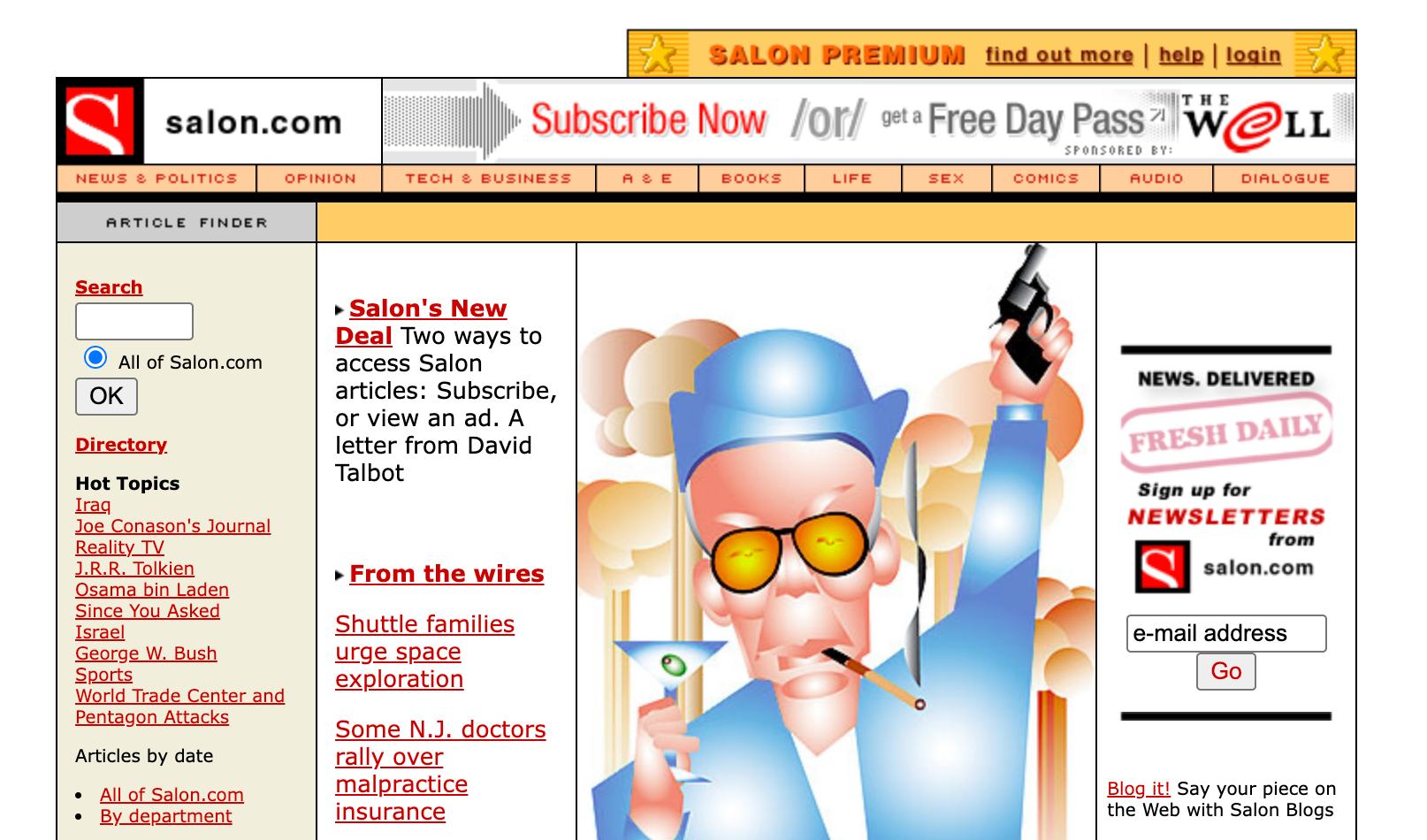
Online publishing has always favored obsessives and cranks—writers who poke into the nooks and crannies of the moment and deliver bits of insight, beauty, horror, and whimsy in a voice no LLM could fabricate.
We know this today. But throw your mind back 30 years, before the internet was where everyone did their writing. Imagine how it would feel to not know this, only to know that you loved this kind of writing, and had always wanted to give it a home. The Web was a new space online that promised to open the media door wider, so maybe there was a chance that, instead of complaining that what you’d always dreamed about didn’t exist, you could just make it?
Hold that picture in your head and you can get a taste of what it felt like to start a “Web magazine” in 1995. That’s what a handful of exiles from the San Francisco Examiner, the city’s venerable evening paper, did; I was one of them. Our long experiment was named Salon, and it came to an abrupt end earlier this month when the latest in a motley string of latter-day site owners—a Malta-based crypto and “performance marketing” outfit called find.co—turned off the lights for good.
Salon’s founding crew signed up a historic roster of oddballs and eccentrics because we all fit the bill ourselves. David Talbot, the Examiner editor who started and led the project, cherished the Bay Area’s ragged tradition of satirists, yarn-spinners, radicals and visionaries, and would cite the San Francisco–native counterculture journals Ramparts and (the early-days) Rolling Stone as his inspirations. Talbot’s first-issue manifesto nodded to Allen Ginsberg, invoked the “cultural ferment” of “Greenwich Village bars, Left Bank cafes and North Beach bookstores,” and promised that the new zine would “free these smoky discussions from time and space.” There was a lot of that going around at the time.
Most of the people Talbot would hire early on were, like me, alums of alternative weeklies—the Boston Phoenix or the San Francisco Bay Guardian or SF Weekly. We were all journalists who’d embraced what our peers tended to view as the marginal Bay Area scene. For us, it offered more room to work outside the boundaries policed by Manhattan media magnates and Beltway pundits. If you can believe it, in the pre-bubble ’90s, before the housing market took off and the tech bros multiplied, the Bay also felt like a less money-driven world than the East Coast power centers.
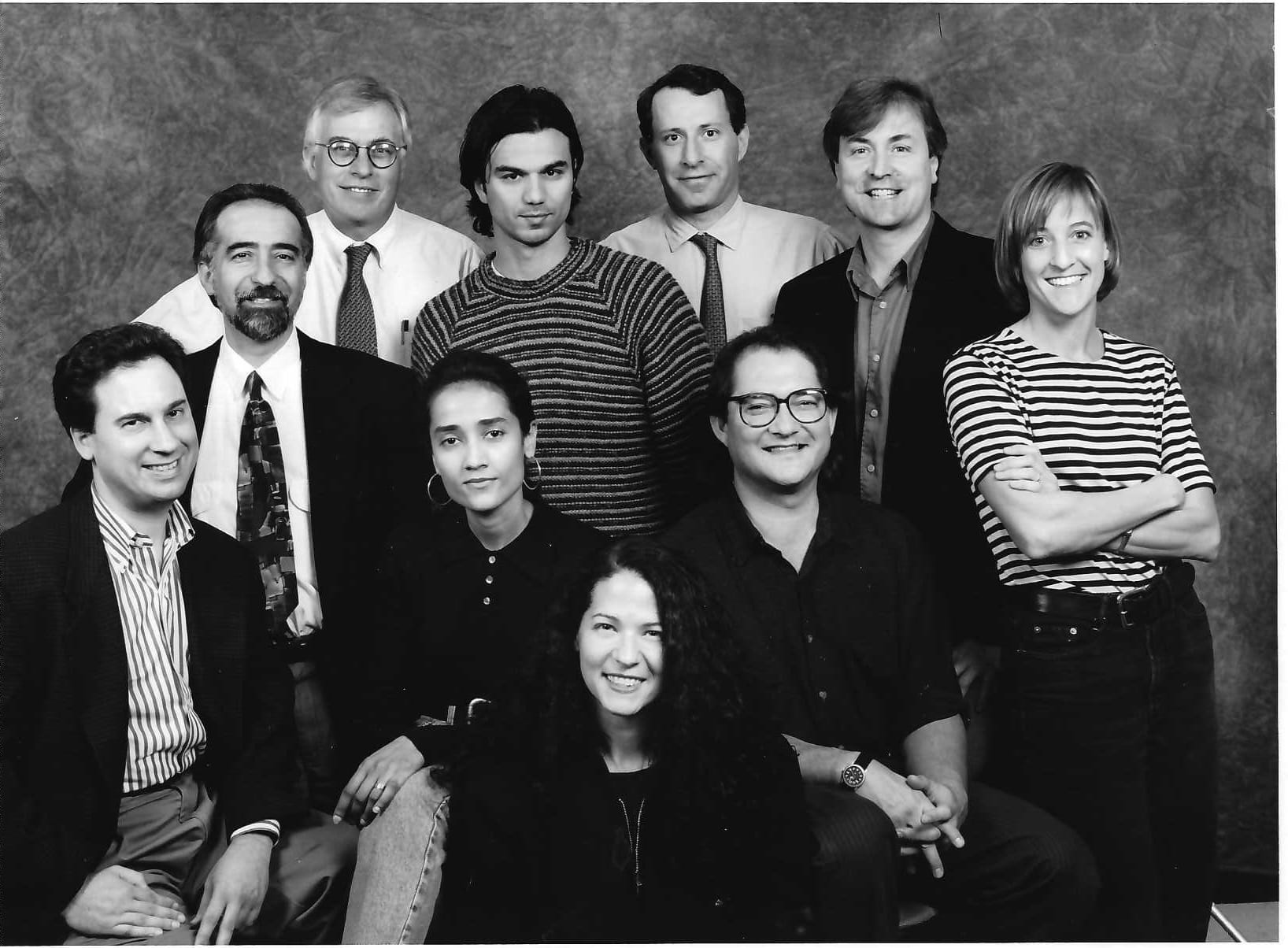
In the months after a brief but bitter newspaper strike in November 1994, Talbot dusted off an old idea for a new magazine. Investors weren’t keen on that, as such, but the Web was taking off: In 1995, Netscape went public, people began buying PCs for their homes, and America Online started mail-bombing the nation with floppy disks so anyone could commence “Web surfing.” When Talbot shifted his pitch to “cyberspace,” he got seed money from an Apple exec and then a real investment from Adobe, and began making job offers to a band of his former colleagues.
I didn’t need a hard sell. During that 1994 walkout, union members at the Examiner and Chronicle had published a “strike paper” named the San Francisco Free Press—in print but also on the Web. I’d only just installed my first browser; now suddenly I had a chance to help edit a news site, a concept that barely existed at the time. (It helped that I’d taught myself barebones HTML three weeks before, from a brief “how-to” doc I’d downloaded.)
I had more fun in those two weeks at the Free Press than I’d had in years at the Examiner. There was something giddily liberating in shedding the physical remnants of the moribund newspaper industry, stepping away from the leviathan presses and massive paper rolls, escaping the tyranny of inch-count column lengths and press-run deadlines, and just zinging our words out on the bitstream to our neighbors and people around the world (or at least the small few who then had Web access). Also: no bosses! Somehow, we managed without them. But also: no paychecks.
After a decade at the Examiner, I turned in my union card and signed on with Talbot without hesitation once he figured out the paycheck part (for a little while at least). I was sure Salon would last only a year or two, but I knew they’d be years I didn’t want to miss.
Talbot was the sort of editor who schmoozed established names and championed new voices with equal vigor; his Rolodex—not a metaphor, an actual rotating contact book on his desk—leaked index cards. We brought in talented friends and admired strangers, assembling an enviable byline roster. And we reveled in our freedom. In August 1996—when, a year after launch, we still had only a trickle of revenue and a vague notion of what shape our business should take—we proudly unveiled a “Death Issue” (we’d already done “Love”). Surely success was right around the corner!
Our newsroom was unusually porous; email had smashed the freelance transom wide open. In my eleven years with Salon I wore many hats, but the one I loved most (until I started hating it) involved monitoring our general editorial inbox. In my first week on the job, as technology editor—a month before we launched—I noted that someone had to answer and read all those emails. “Great, thanks for doing that,” replied our harried publisher.
For the next two years, I got the first cut of our readers’ reactions. The feedback—even from our minuscule early audience—was fast, cheap, and out of control in ways even our big-city daily newspaper experience had not prepared us for. We got praise and great suggestions, of course. But it was the outrage at our perceived missteps that our Web readers most savored. We became acquainted, early, with the preferred salutation of email-to-the-editor writers: “You idiots.”
Then there was the other kind of feedback—the numbers. Every week we’d look at our “hit counts,” the traffic report which we shared with the whole staff. This was alarmingly mesmerizing data. We started noticing that “most-read stories” lacked any correlation with our sense of “best stories,” and, then, even more interestingly, that readership began plummeting around twenty-four hours after publication. This was a news flash: The Web’s metabolism was not going to be what we would one day call chill.
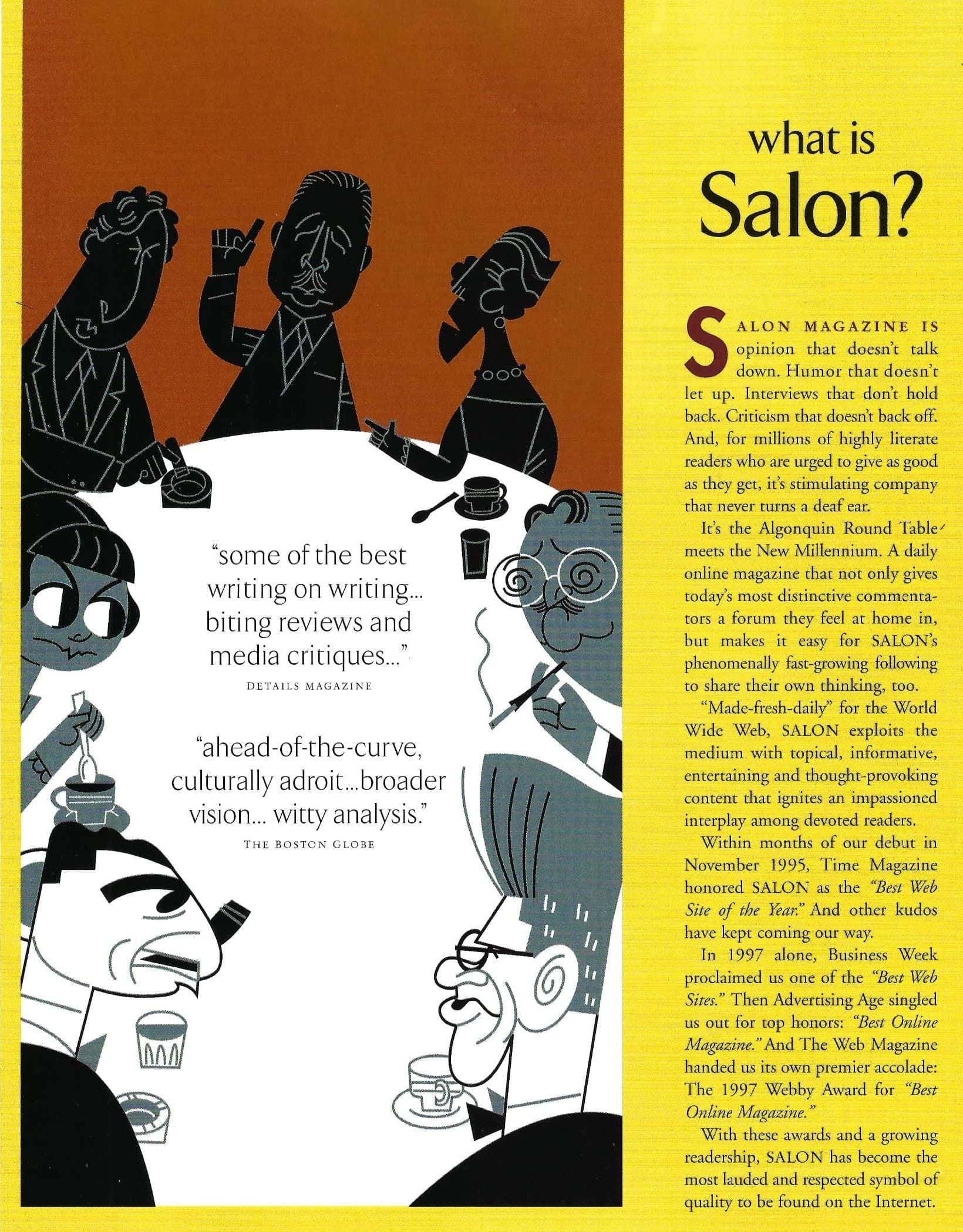
They had already started dubbing us “the New Yorker of the Web” (the actual New Yorker didn’t go online until 2001), perhaps because our clean, hand-illustrated design was more readable than the wild palettes and blink tags favored by “hot sites” of that era. The comparison was flattering, but Talbot preferred to call Salon a “highbrow tabloid.” We were having the time of our lives, but we were already seeing the future of digital media taking form: The deadline was effectively all the time; the half-life of every story was shockingly fleeting; and people would never stop yelling at you.
\O/
Thirty-one years later, the moment that Salon’s final owners killed Salon off had its own close-the-loop logic. It was just a day after Trumpism’s midterm rout—the latest and biggest in a long series of periodic progressive surges in US politics that had, till now, always buoyed Salon’s readership and morale. But it was also the morning of a $2.5 trillion tech-stock collapse that shook AI’s current bubble, reminding those of us who’d been part of Salon’s long tale that the site’s fate had always been tied to the Nasdaq and the fortunes of tech.
We’d taken venture-capitalist money, which of course was a mistake. But in 1995 that seemed the only way to pay a half-dozen journalists a living wage while they figured out whether Web publishing might have a future. Then we kept needing more money because no one—not even the people whose business was business, rather than words—had yet unlocked the secret to online revenue. Our closest competitor, the Microsoft-backed Slate, had launched six months after us with a bold promise of proving a paywall would work. They finally began charging twenty bucks a year in 1998, but less than a year later they gave up.
In my time at Salon, we speed-ran the gamut of Web-publication business models: Banner ads! Sponsored content (which to us meant getting a big-budget advertiser to sponsor stories we wanted to write anyway)! Our own paywall—first “leaky,” then fully gated after 9/11, after ads evaporated. Forums and blogs! Live events! Later, video events! Personal ads! Membership programs and merch! Even an ill-fated Bahamas cruise! We really did try everything, and many of the strategies that failed for us would later succeed for others, once the Web business had matured.
At the center of it all was our June 1999 IPO, which at the peak of the dotcom bubble left us with $24 million in the till. Even the stock offering was offbeat—it invited a wide pool of small investors using an unorthodox “Dutch auction” model championed by our backer Bill Hambrecht. (Google relied in part on a similar mechanism in its, ahem, much more successful 2004 IPO.) I remember driving over the Bay Bridge one morning and seeing our site’s name in lights on the big electronic billboard that the Industry Standard had erected by the freeway.
“That’s crazy,” I thought, because it was. And while I kept saying “this can’t last,” I kept being wrong. The IPO was, like everything else we did that wasn’t actual journalism, all about keeping the boat afloat so we could continue writing. Every moment we were thinking, How can we keep this going? And every time we did something that didn’t quite make sense, you could assume that we did it to keep the thing going.
And so, this is how it went: We needed the VC dollars to get off the ground, and then we needed more investment to keep growing, to keep the VCs happy. That’s how we acquired the WELL, a private online forum influential in the pre-Web era, on whose boards several of us had made some of Salon’s earliest plans. The WELL purchase didn’t quite compute, but it brought us some valuable revenue and roped in a key investor whose participation roped in other investors. They all expected us to go public, so that’s what we did.
Not a single editor or journalist at Salon got rich from stock options, as far as I knew, though several incurred sizable tax bills from owning stock we couldn’t sell. Nine months after we went public, the bubble popped, and very quickly, our “spend to grow” IPO cash stash became an anxiously monitored and dwindling survival hoard. Our hiring sprees turned into agonizing layoff rounds.
The 2000–2001 crash was scarring, and it gave anyone who was there a lifelong sense of the precarity of stock-based gains. In 2000, Sam Altman was 15; a lot of today’s AI developers weren’t even born. But any day now, they may wish they’d learned more about this bygone era. Of course, if any of Salon’s journalists had ever planned an options-funded retirement, they never copped to it. We all just wanted to keep writing, and even as the money started to evaporate, the stories kept getting more urgent. So we kept writing.
We’d already made a national splash in 1998 with a scoop about an adulterous affair in House Judiciary chair Henry Hyde’s distant past. Hyde was about to preside over the impeachment of President Clinton for an adulterous transgression in the White House. That looked like hypocrisy to us, but dozens of bigger media outlets had passed on the story, which they saw as “mud-slinging” and beneath them. (Today some of the same newsrooms have chosen, similarly, to ignore or downplay accusations of rape against Trump.) Our focus and reputation were steadily evolving beyond literature and culture to breaking news and investigative reporting.
We threw everything into covering the doomed Florida recount that winter, as the Supreme Court installed a Republican president; then we plunged through 9/11 and the world it ushered in. The invasions of Afghanistan and Iraq were failures not only of strategic imagination and political competence but also of media practice, and while we weren’t the only news outlet to reject jingoistic herd-think, we were probably the most persistent. We deployed fact-based skepticism motivated by passionate outrage, 3,000 miles from Washington, DC, and I think our work hit a peak in this era.
Long nights of budget-crunching and fingernail-biting made this work possible. Worthwhile though they may have been, a lot of us burned out in this era—certainly I did. Meanwhile, digital journalism’s mutations were reshaping Salon’s relationship with its audience. Talbot had called for “militant centrism” in our very first issue, and though the great preponderance of our content was both politically and culturally liberal-left, he’d always wanted some conservative voices in the mix, to the consternation of much of our readership and some of our staff. I’d always seen Talbot’s stubborn heterodoxy as less about placating advertisers and investors and more a side effect of too much left infighting during his formative years, of course. But this rebellion against a 1970s party line hadn’t aged well, even in the ’90s, and by the Bush era it was wildly out of date. After 9/11, when we turned to our readers to buy subscriptions and later memberships to keep us going, it became very clear that having a coherent point of view was no longer an ethical lapse or a luxury indulgence. It was a precondition for survival. Fox News was ascendant; the public was self-sorting. Choosing sides was mandatory, and by then—and ever since—there was no question which side we were on.
In those days, our every quarterly filing would trigger a new round of dire stories about the imminence of our demise. But Salon actually achieved a relatively stable financial equilibrium by 2005 and held that rough shape for two more decades. Over the years there were dalliances with potential partners or acquirers, everyone from Amazon (in 1997!) to Craigslist to the long-forgotten “user-generated content” specialists at Associated Content. But every time, our wary potential partners or our own benevolent backers would end up calling it off. I think they all must have sensed the futility of trying to pry the Salon team away from our prime directive since 1995: Just let us write.
When the New York Times’s John Markoff covered our launch, Talbot had given him a money quote about how “tribes” of journalists were about to “break away from newspapers and magazines to create vibrant electronic alternatives on the Internet’s World Wide Web.” We in tribe Salon proceeded to make endless wisecracks about this strange, vaguely colonialist formulation that none of us had ever heard David use before.
But the joke was on us: The tribes are all over the place today. And “just let us write” has an actual workable business model, however lean and modest. Subscription-funded group projects like 404 Media, Defector, ORB itself, and many others are now testing this mode. I am cheering them on. They may never be listed on the Nasdaq. They will never be shut down by a “performance marketing” firm, either.
\O/
Scott Rosenberg worked at Salon from 1995 to 2007 as technology editor and then managing editor. He’s the author of Dreaming in Code and Say Everything, and is now working on Our Web, a newsletter/podcast history of the Web.
Here are more great Salon reminiscences from Laura Miller and Andrew Leonard. And Gary Kamiya wrote a brief (and funny) history of Salon on its tenth anniversary in 2005.