Arrived early and staying late
Those who were hip coffee snobs in 2016 will recall that for a moment, coffee from Yemen was the hot new expensive thing. This was largely because the coffee beans themselves were (and are) difficult to import, due to the sheer difficulty of getting the beans out of Yemen during the civil war that broke out in 2014, and which has subsided but certainly not ended. Blue Bottle in particular landed a partnership with Mokhtar Alkhanshali, and a cup of Yemeni Port of Mokha coffee was treated like the luxury it was, and priced accordingly.
But while the coffee itself came with a beautiful story, it was still delivered in sterile, white-walled, sleek packaging associated with the "third wave" of coffee culture. Coffee was squarely in its artisanal era: The real nerds were focused on quality beans, coffee varieties that were best served black—the backlash to the endlessly personalizable, sugary, foamy confections of the nineties and early aughts (that you can still get at any Starbucks).
If you’re a third-wave coffee veteran like me, you have probably noticed that those days are waning. Oakland-founded Blue Bottle was purchased by Nestlé in 2017 (and then sold by Nestlé to a Chinese private equity firm), and other Bay Area third-wave titans have been wearing out their welcome for years through tech cash, sexual assault and harassment scandal, and owners married to infamous local conservative ne’er-do-wells who can’t stop using the n-word (disclaimer: I used to work for Ritual and I think their coffee’s good!). With the bloom off the single-origin, by-the-cup rose, there’s a thirst among customers for a cozier, more down-to-earth experience.
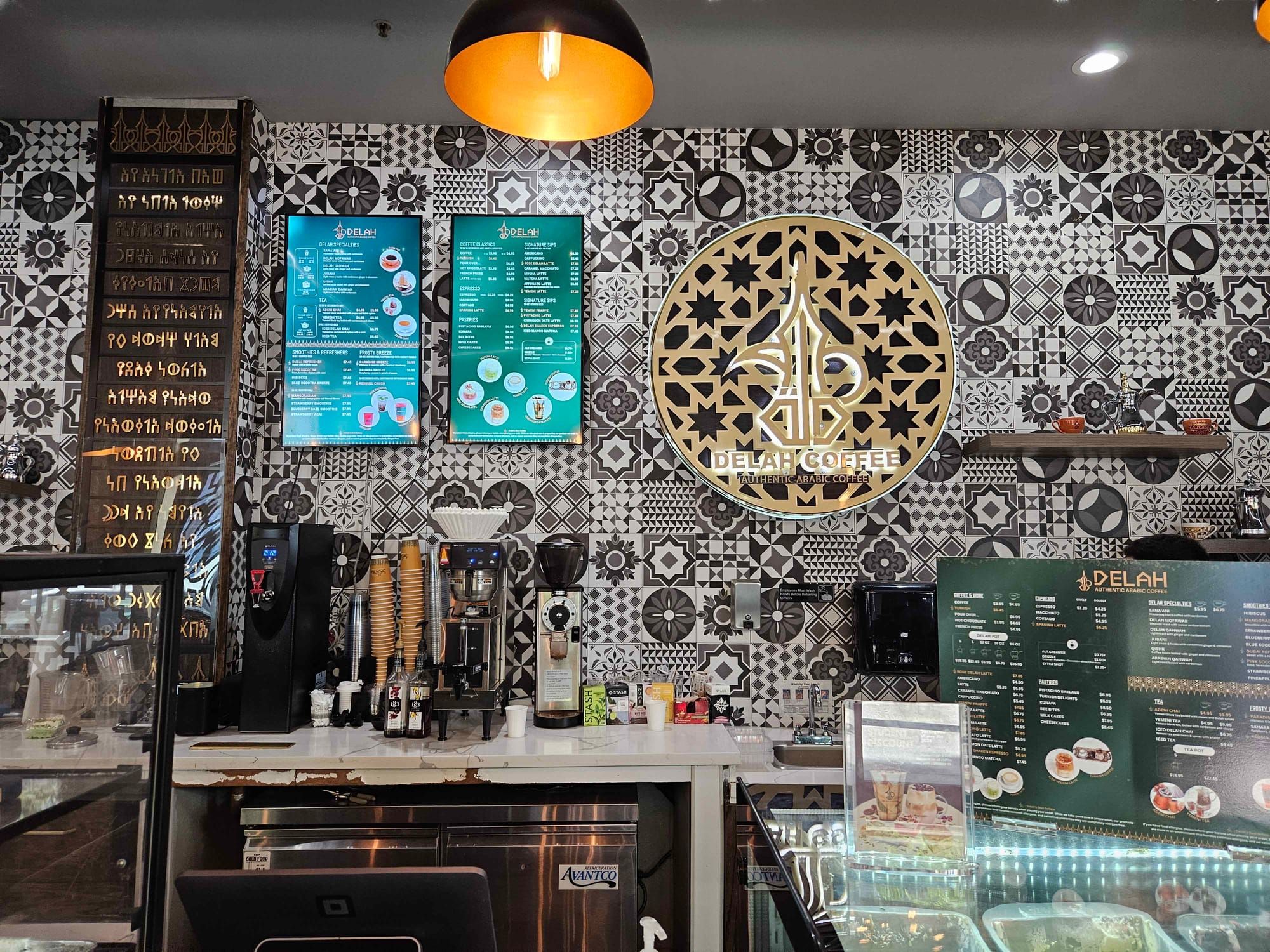
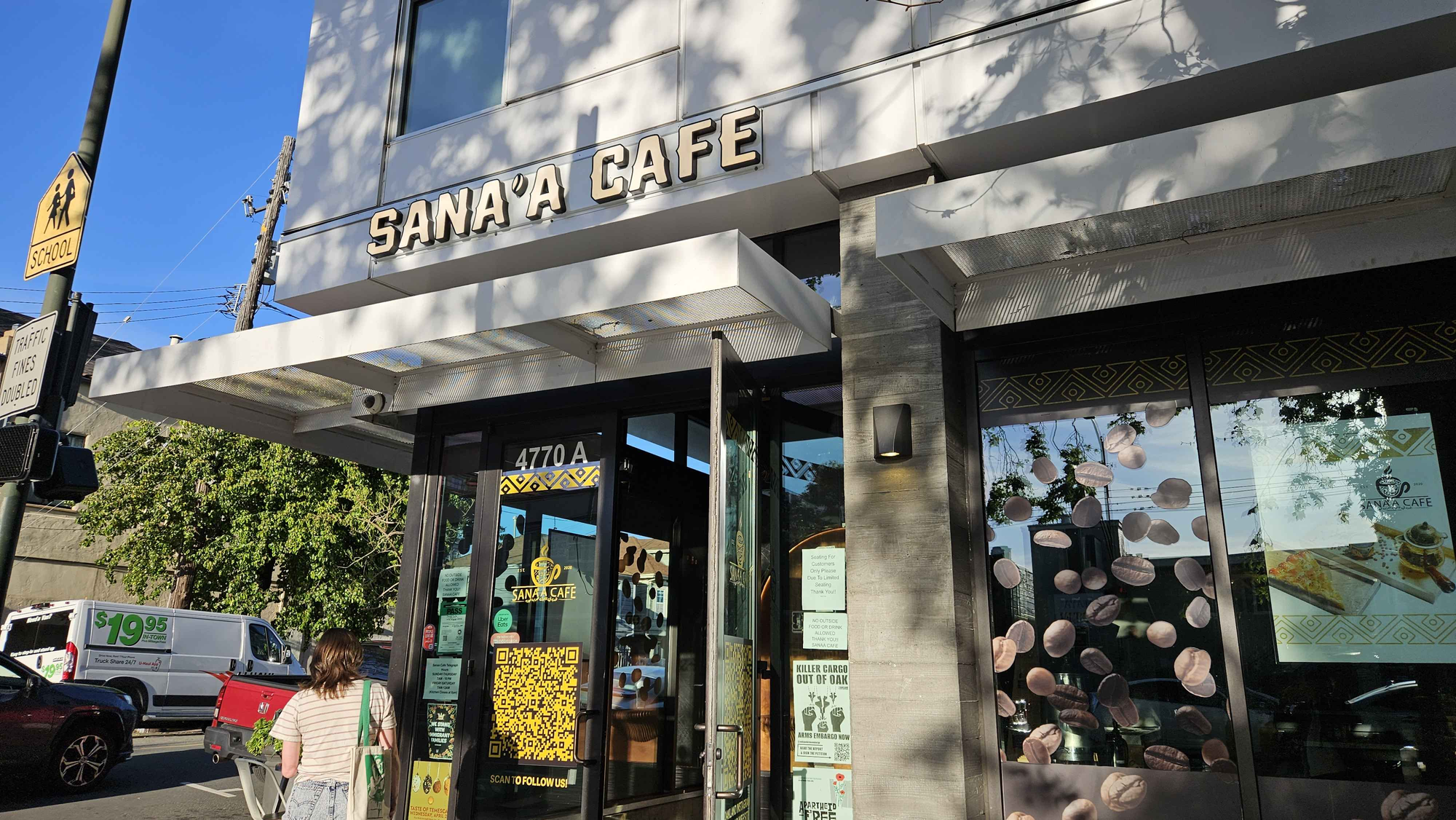
If you take a walk around Oakland these days, you’ll notice quite a few shiny, relatively new Yemeni coffee shops—not selling Yemeni beans, but selling Yemeni coffee culture. Whether you walk into Delah Coffee in Uptown (named for the traditional Yemeni coffee pot), Sana’a Cafe in Downtown (named after the capital of Yemen), Mokha House in the Dimond (named after Yemen’s main coffee port), or the soon-to-arrive Mazar Coffee on Lakeshore—or even venture into deep North Oakland for Milya, Heyma, or Qawah Time—you’ll find the same things: plentiful seating, pistachio lattes, and pastries like baklava and fatayer. And very unlike a third-wave shop, most of these shops are open quite late.
In this sense, they’re similar to the older coffee shops that line the Cal campus that I patronized as a student. But those cafés are often holdovers from the years when a hot latte in a 16-ounce bowl is the price of admission paid for temporary workspace, rather than a culinary experience enjoyed on its own merits (no offense, Caffe Strada).
Yemeni shops offer a unique approach to coffee. Instead of standard drip, you can ask for qawah, which literally means “coffee” in Arabic, but at a Yemeni coffee shop—such as Qahwa Time in North Berkeley—it means you’re specifically ordering coffee infused with cardamom. Or at Delah you could order Sana’ani coffee, which is light-roasted coffee with cardamom and cinnamon. Flavors like cardamom, cinnamon, rose, and pistachio are all over the rest of the menu, too—every menu’s a little different, but they’ve all got a pistachio latte. And instead of the usual viennoiserie, there’s kunafe, baklava, Turkish delight, and other Arab-inflected desserts.
The uptick in Yemeni—or more broadly Arabic—coffee shops is something new, but perhaps it shouldn’t be a surprise. Gus Anan, head of operations at Sana’a Cafe, reminded me that Oakland in particular is a hub for Yemeni Americans—“the second capital of Yemen.” It’s an exaggeration, but only slightly: Roughly one in ten Yemeni Americans nationwide live right here in Oakland, with peripheral hot spots in surrounding Bay Area neighborhoods like the Tenderloin. Yemeni children also represent one of the largest immigrant groups in Oakland’s public schools. But even if a demographic upswing helps explain who is behind Oakland’s Yemeni coffee renaissance, it doesn’t explain the timing. So, why now?
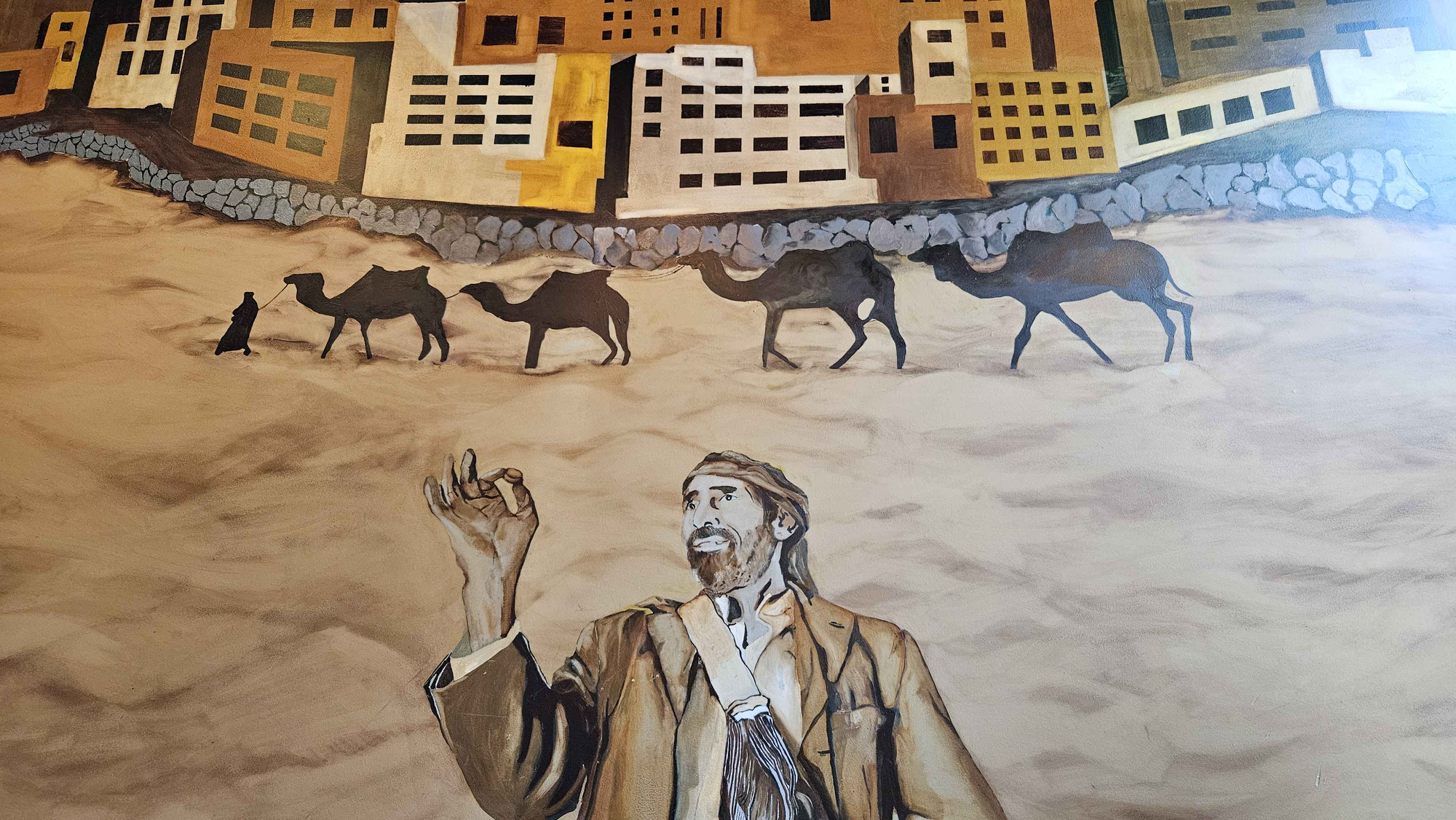
From Sana’a to Oakland
You may be unsurprised to learn that there is some history involved in this story.
While Yemeni migrants have been finding their way to American shores for centuries, the population established a significant foothold only after the United States abolished its longstanding immigration quota system; when the North Yemen civil war ended in 1970, the flow of emigration to the United States had already begun. The new arrivals were overwhelmingly working class. Many found work in steel mills in East Coast cities or auto plants in Detroit; California was experiencing a major unemployment crisis in its coastal cities. But with the end of the Bracero program in 1964, many Yemeni immigrants (who often came from agricultural backgrounds) found seasonal work on farms throughout the San Joaquin Valley, ultimately playing a significant role in the ranks of the United Farm Workers. This migration path became so prominent that TWA established a program for Yemenis to travel to California on credit and work off their debt to the airline by toiling in the grape vineyards and plum orchards.
Despite the periodic successes of the farmworkers movement, agricultural work remained bitterly underpaid and grew increasingly scarce. Some had already begun pooling resources to establish small retail businesses, cultivating a new Yemeni American mercantile class that managed hundreds of supermarkets and convenience stores along Highway 99. Others moved to East Oakland. Like many immigrants, some of these new Oaklanders transitioned into work as janitors (today Yemeni’s represent a third of local janitorial union membership), but others followed in the footsteps of their Valley cousins and started convenience stores that filled in the hole left behind by urban divestment of Oakland’s major grocery retailers.
Today, Yemeni Americans own and operate over two hundred small grocery and liquor stores in Oakland alone. As Yaser Ghalib, co-owner of the Mokha House in the Dimond, said at a recent talk at the West Oakland Branch Library, Yemenis took to the grocery stores, along with gas stations and smoke shops, because it was a line of work available to them, not because they had a real passion for it. Yemenis are predominantly Muslim, after all, and relying so much on haram goods, like alcohol, was a less-than-ideal way to earn a living. Running a corner store can also be dangerous, as demonstrated by the tragic death of bodega proprietor Abdulrahman Qassim Muthana Alhaddad in a botched robbery last week.
But groceries were a lucrative business, and one that could put multiple generations to work. Yemenis built up their savings, developed entrepreneurial skills, and picked up an unrivaled understanding of the local scene—all of which stood to serve them in later business ventures, particularly as a younger generation wanted to try something new and local regulators started coming for smoke shops.
“Now Oakland gets to see part of the culture of the Yemeni people, who have been part of Oakland for a long time,” Gus Anan says of the new cafés. “They [Yemenis] are not strangers to the community of Oakland.”
Ghalib said he and his brother were able to weather the notoriously difficult startup period because of the solid financial base of support offered by his family’s grocery business. “For some people, yes, they have community help” in starting a café, says Ghalib, “and some just have family. In our culture, families are always together, so they always support each other.” While Yemeni cafés seem to be popping up out of nowhere, they are emerging from a rich soil that’s been carefully tended for at least four generations.
No-wave coffee
It’s also not really about the beans, it turns out. As far as I can tell, none of the places I visited even carries Yemeni beans, which remain difficult to import to the United States at any scale. Instead, at Sana’a Cafe—which has eight locations in the Bay Area, as far afield as Petaluma and Sacramento—their beans connect them to their Bay Area roots: They’re partnered with Jeremiah’s Pick Coffee, a San Francisco roaster that’s been around since the nineties. Delah sells beans but doesn’t offer information on their origin on their bags or website.
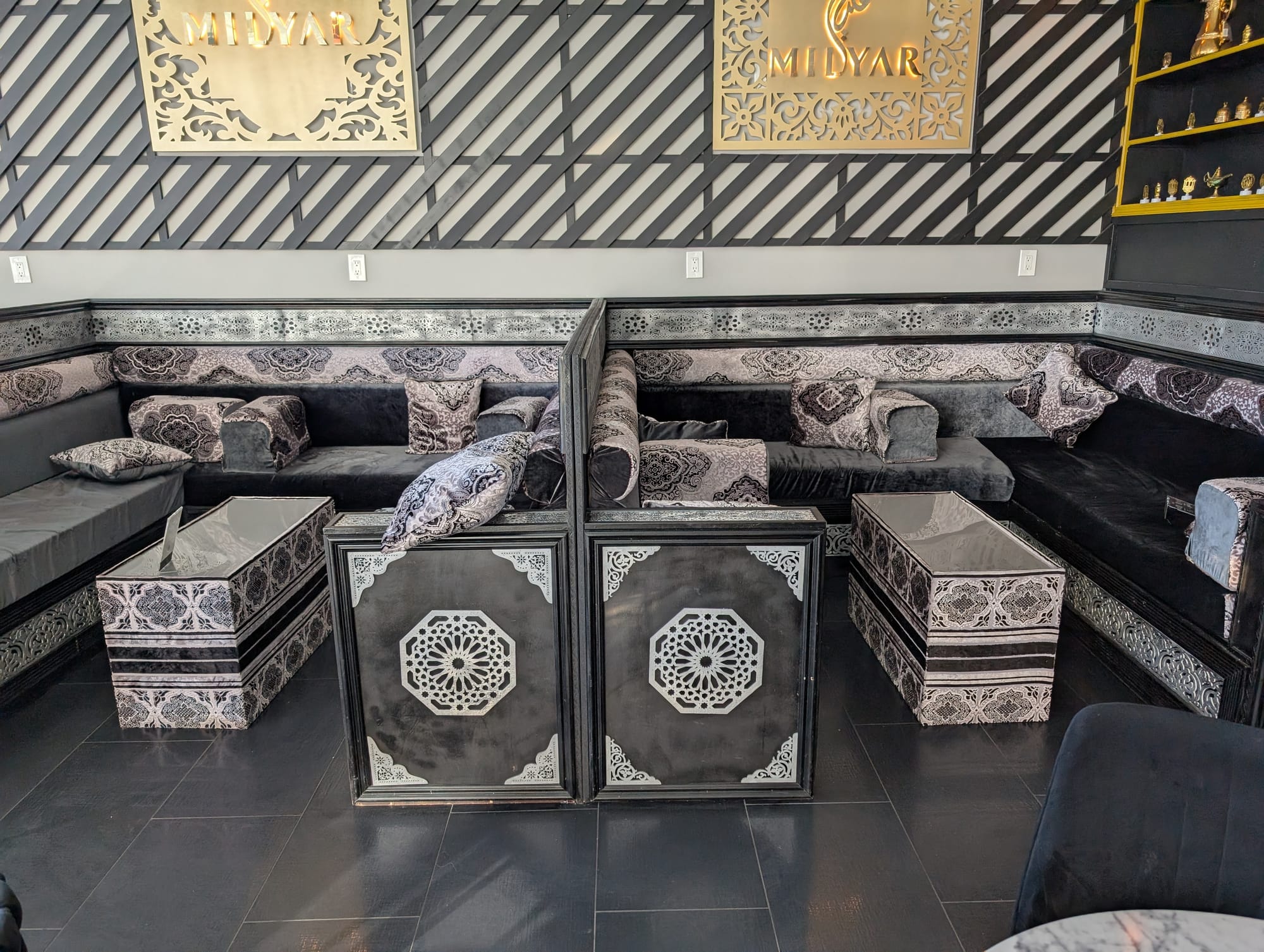
The vibes in the cafés are much improved, in my opinion, from either the shabby chic of second-wave or the sterile third-wave café.
I’ve worked in a fair number of third-wave cafés. They’re built to welcome you to an experience, but also to discourage you from getting too comfortable, politely shepherding you out before too long. But more recently, these spaces aren’t being used this way; instead, they’re where tech workers go to ensure that their Zoom meetings are as disruptive and annoying as possible, or where they seek out new environments in which to “vibe code” for hours on end. This has a similarly chilling effect on the kind of casual person-to-person engagement that makes cafés pleasant venues for enjoying coffee.
Sana’a and Delah seem to attract more regular folks. I kept bracing to overhear a pitch meeting for “a chatbot for couples” or a hundred instances of the word “agentic,” and instead I just heard about someone’s mutual aid group or hospital job or boyfriend. Each visit, the tables were over half full, no matter the time of day. People were working on their laptops, chatting with their friends, having conversations about organizing, or going on dates. I ran into a friend at Sana’a who was reading Capital and coworking with her mom. At Delah, I unwittingly sat down next to someone I went on one date with two or three years ago (he was on another date and did not say hello). Each café felt like somewhere designed to get me to sit down and stay a while, and I spent a lot more time in each than I usually spend in cafés.
This is very intentional. As coffee spread globally, many cultures have developed their own coffee social mores: Italians will make fun of you if you drink a cappuccino after breakfast; Australians refuse to admit that “flat whites” are lattes and that “long black” is not a tasteful name for an Americano; in Cuba you pretend Bustelo tastes good by masking it with sugar until it does. Yemen, along with neighboring Ethiopia, has a credible (though often contested) claim to being the originators of the beverage and the coffeehouse. And while there’s nothing particularly unique about a coffee shop being a place for people to gather over a beverage, there’s an attempt in these Arabic cafés to accentuate and return to the culture from which coffee was born.
“The first time I drank coffee, I was four or five years old,” says Abdulrahim Harara, founder of Jerusalem Coffeehouse. “I drank it because I served it to my aunts, my uncles, my grandfathers, when we would host them. Coffee has always been a glue in our culture, it would bond us together, it would connect us. You could be deep in political conversation, and the coffee is what would make it a little easier. The coffee would help facilitate the conversation, facilitate the love, facilitate the togetherness. That’s a very strong cultural component that doesn’t exist in conventional coffee cultures, especially ones here in America.”
Jerusalem Coffeehouse is not a Yemeni shop, but the conversation about Arabic coffee culture in Oakland would feel incomplete without them. Since opening in October 2023, they’ve quickly become a prime example of what a coffee shop with a strong cultural perspective and political point of view can be, especially in the face of coffee shops who fire employees over Free Palestine shirts or off-the-clock activism (not to mention Jerusalem Coffeehouse’s own experiences with bad-faith actors). “We wanted to create a space in the community that serves as a safe haven for our narrative, and for Muslims, Palestinians, people born and bred in the Bay, and people who identify with our cause,” he says. The ability for people to come, be together, and share these values is paramount.
Jerusalem Coffeehouse’s dedication to their causes (community space and good coffee) extends to their beans: They carry Grand Coffee, a Bay Area roaster owned in part by Nabeel Silmi, who’s Palestinian himself and outspoken about Palestinian liberation through his business. It’s less important, it seems, that the beans are Yemeni or Arabic in origin than that they align with the values of the community they’re in.
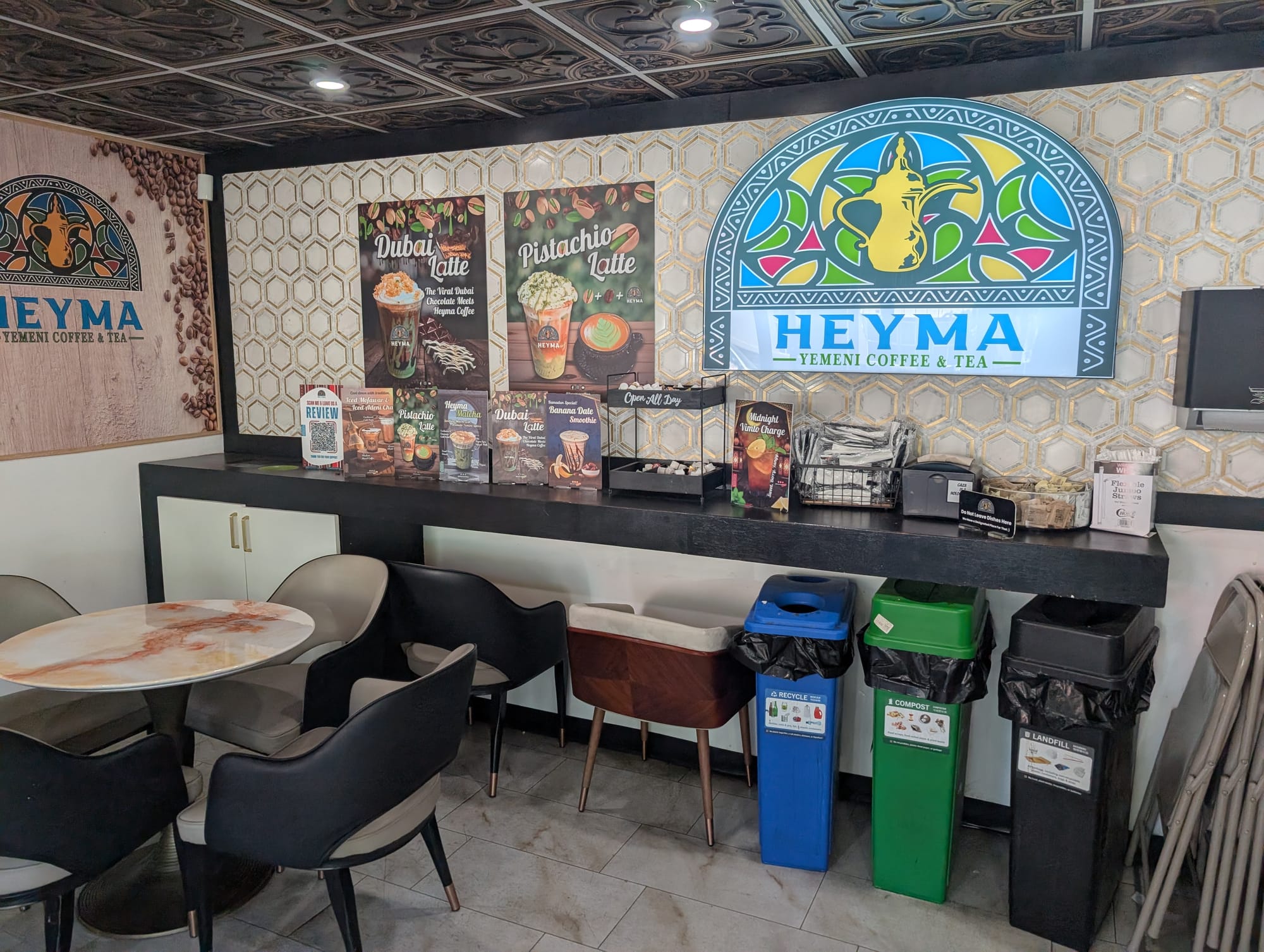
Coffee shops like Delah and Sana’a are more interested in bigger business, but they’re very conscious of how it feels to be in their cafés. Sana’a Cafe retains an in-house design team and incorporates customer feedback into every new store they open. It’s an interesting experience to visit a café that’s optimized for my comfort, and I found myself mistrusting it. Why did they want me to have a comfortable couch to sit on? What’s the play? That may say more about the treatment I’ve come to expect from companies as a customer than anything else. The play is they want me to have a nice time and come back!
“We don’t want to be a cold box, we want to be more welcoming,” says Singh. “We want to be your home away from home. We want people to come and pay for the coffee, but we also want them to bring their families, sit, spend an hour here.”
“There’s a cultural connection here. We offer a meaningful alternative to the home environment,” says Anan. “We offer dedicated space for guests to disconnect from screens and socialize with friends and family.”
Last Thursday I walked by on my way from the weekly Lindy Hop dance at Lake Merritt Dance Center to the afterparty at Double Standard, and Delah was open. It was 10:45pm. Yes, I got a kunafeh. From what I can tell, this is a cultural difference unique to Arabic coffee shops. The Bay Area is an uncommonly sleepy metro region: For any establishment that isn’t a bar to remain open past 9pm is remarkable. These shops want you sitting on their couches, drinking their coffee, and hanging out with your friends well into the night. That’s simply not true of most places in the Bay Area, including public parks.
The actual coffee and pastries are nothing to sneeze at. At each shop I’ve tried something new: a Yemeni latte at Sana’a, a date tahini latte at Jerusalem Coffeehouse (that Grand Coffee espresso had me levitating), and a pistachio latte at Delah. Each one I paired with a pastry: kunafeh, beef fatayer, za’atar scone. I’m an easy sell; I love my good friends cardamom, pistachio, phyllo dough, za’atar, et al., and it is a true pleasure to have them all treated so well at these shops.
Over the years in my line of work, I’ve felt customers’ fatigue for a coffee experience that’s focused on scarcity, unfamiliarity, and luxury. Customers who fancy themselves discerning are often willing to sit through some discomfort for the mythical “authentic experience,” but third-wave coffee isn’t really trying to offer that anymore. And while Arabic coffee shops offer an aspect of the unfamiliar to the uninitiated, flavors from syrups or infusions are much more approachable to the typical customer than a single-origin honey-processed co-ferment pour-over ever will be.
Approachable doesn’t mean lowbrow, nor does it mean low quality. On the contrary, the balance these shops manage to strike is pretty impressive: providing coffee and food that distinguish them from the mainstream industry while making everyone who walks in feel at ease. It’s a testament to the amount of thought put into the whole experience. Whether it’s Sana’a’s dialed-in, immaculately designed cafés shaped by customer feedback or Jerusalem Coffeehouse’s unwavering commitment to Palestinian liberation, what runs through all of it is a belief in coffee’s power to connect people. I don’t believe there’s much reality in “authentic” dining experiences—restaurants and cafés are businesses that need to make money—but I do think the obvious intention and care behind these shops set them apart. There’s no ironic detachment here, and it makes sense that people are drawn to that sincerity, Now More Than Ever(™).
“Coffee is what brings us together, but people stay for something much more valuable,” says Harara. “Coffee can move through a community. Coffee is the door, and what’s behind that door is spiritual fortitude, political astuteness, creative expression, the care for your community...coffee is what taught us that, coffee helps facilitate all of that.”
Alex Park and Xander Lenc contributed to this story.