They made a desert, and said “this speaks for me”
Oakland Mayor: It is not about you.
You hardly see any signs for the Oakland mayoral race in front of people’s houses, this election. Last year, you could drive through different neighborhoods and tell yourself you were getting a rough sense of their political leanings by counting the ratio of Lee-to-Taylor signs; you could confirm the hills vs flats divide, or the multi-family zoned-for-renters vs single-family homeowners divide if that’s your jam, or whatever you thought about whatever particular neighborhood it was.
There may have been something to it, but maybe not. It’s hard to say whether the fraction of people who decide to put a sign in front of their home—whether their manicured lawn or their rented apartment window—is somehow an index of how the general mass will vote. It can feel like a mark of electoral legitimacy when someone decides to fly the flag that way, of course, and that they’re willing to tell all their neighbors who they’re not only voting for but publicly advocating for. Certainly it does mean something that those people risk whatever potential awkwardness it might entail at the next Halloween block party, or PTA meeting, or whatever. It’s a mark of particular enthusiasm, or investment. But does it represent the neighborhood? Is it a leading indicator of how the election will go?
 Oakland Review of Books
That there are virtually no Barbara Lee signs in front of people’s houses does not mean she won’t win, for example. You only put up signs when there’s a real contest, when there’s something at stake in an election that wasn’t decided before you got your ballot. All those houses with no “for mayor” signs may or may not have voted for her last time—and might have voted for Loren Taylor again, were to have run—but they sure aren’t voting for anyone but her this time. That’s because, last time around, people like Isaac Abid funded recalls and Loren Taylor and declared that “a Lee coronation would deprive voters of a needed debate over the beleaguered city’s future”; last time, the whole point of getting rid of Sheng Thao was to get Empower Oakland installed. But if we are deprived of a “needed debate over our beleaguered city’s future” this time around—as the diehards at Oakland Report lamented—it might be because they didn’t get the memo that their founder-funder, Isaac Abid, has come around on Lee, or vice versa. This time around, Barbara Lee has been working hand in glove with the Abids and other representatives of the real estate state. This time, apparently, no change in governance was needed.
\O/
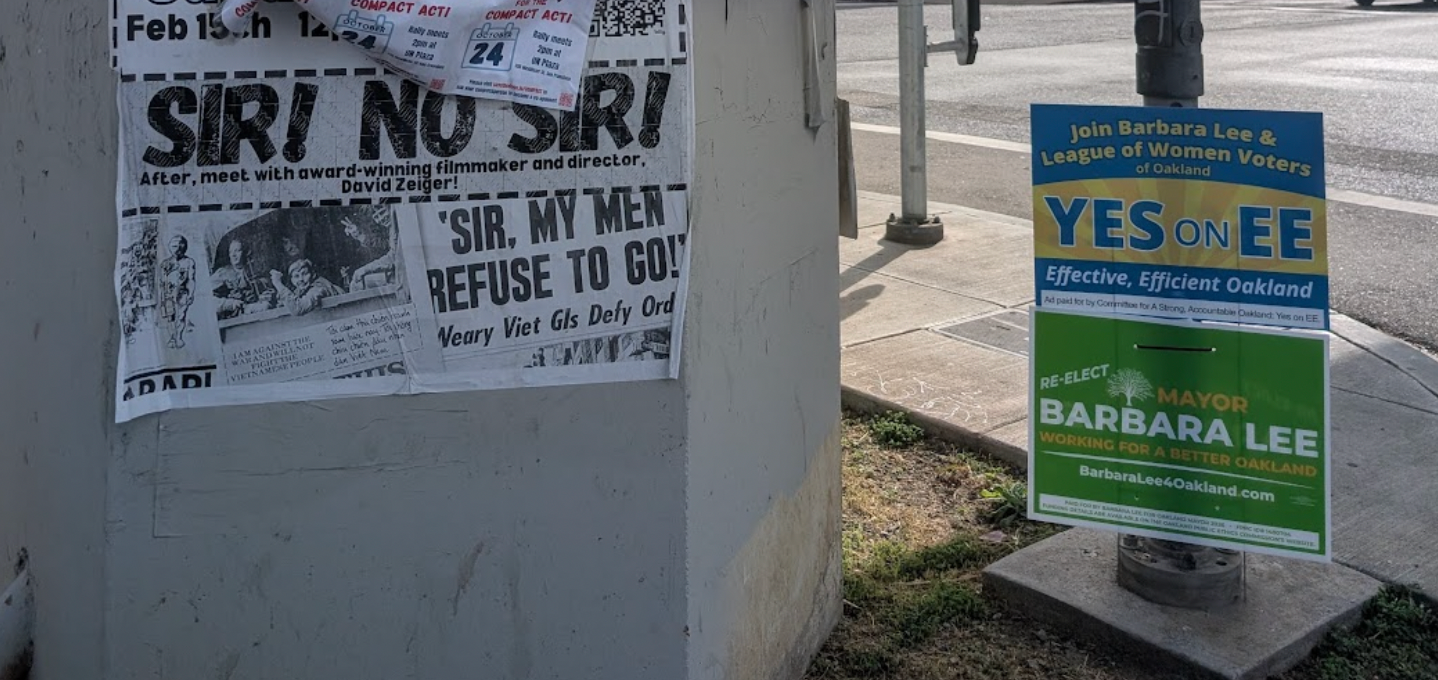
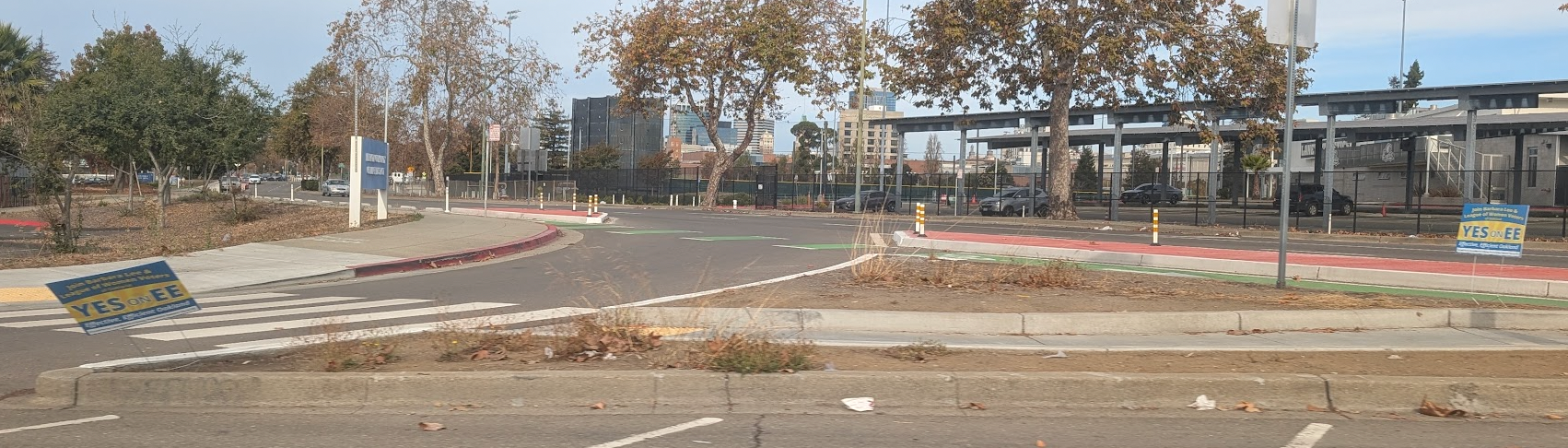
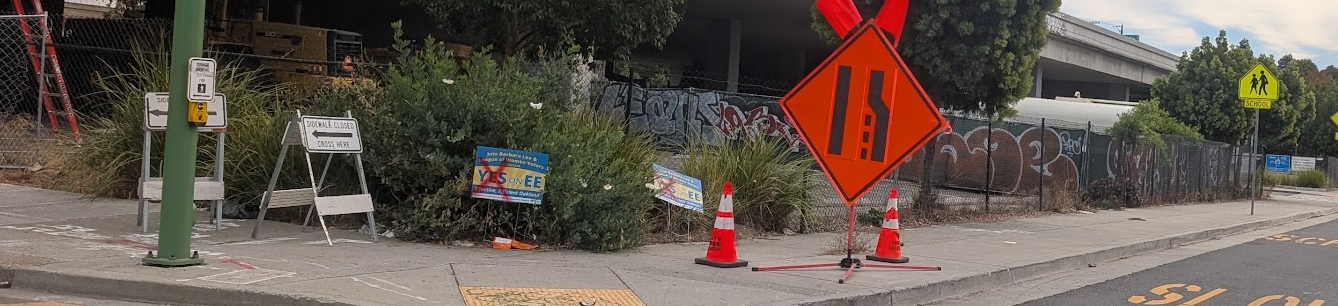
Where you will see campaign signs this time around, interestingly, is in the median strips and other “public” places where they are legally prohibited from being.
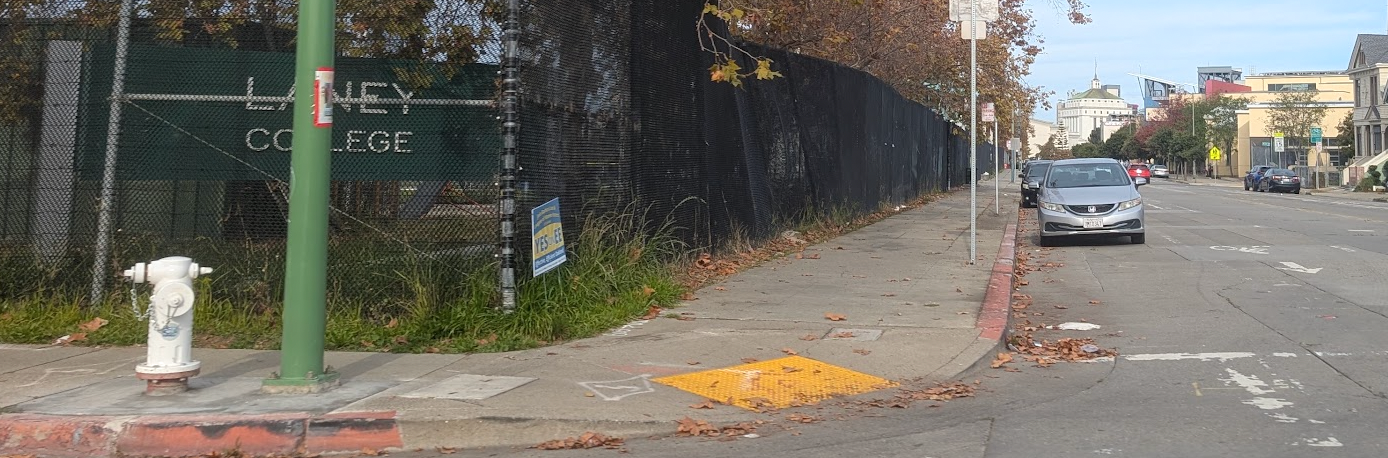
This always interests us, and not just because seeing campaigns for public office flout the law that way tells you something important and un-paraphrasable about what our political system is. But if signs in front of houses and homes indicates a certain kind of real investment in a candidacy, a certain organic enthusiasm, then seeing a lot of signs in “sidewalks, curbs, streets, paths, medians, and City of Oakland owned property,” means something too. Seeing so few signs in front of homes, and so many more signs in places where city resources will be used to remove them—in “public trees, litter containers, street light poles, electrical cabinets, utility poles, parking meters, and fire hydrants”—tells you something about how money is leading the way.
After all, these places are only “public” in the tragic commons sense. They are the very opposite of the front yard interface between private home and public thoroughfares. A front yard is a place you take care of in normative ways (or are made to feel shame and judgement if you don’t). But these dead spaces you can see from your car—anywhere that seems sufficiently abandoned and neglected that no one will bother to take the technically illegal signs down—are a kind of sanctioned emptiness, zoned null space, sovereignty without care.
So what does it mean that it’s there that you’ll see the mayoral race happening, to the extent that it even is?
After all, these are the same kinds of “public” spaces that might, for this precise reason, tend to attract an unhoused person looking for shelter and a respite from being displaced, spaces that because they belong to no one in particular, can be grabbed and occupied. There is at least a certain irony that these are the spaces where—in the absence of normal people giving a shit about their fake campaigns—you’ll see law-and-order candidates Brenda Grisham, Mindy Pechenuk, and Julius Robinson conducting their self-published vanity projects.
If the populi doesn't cry out for their leadership, they propose, perhaps the terra nullius does?
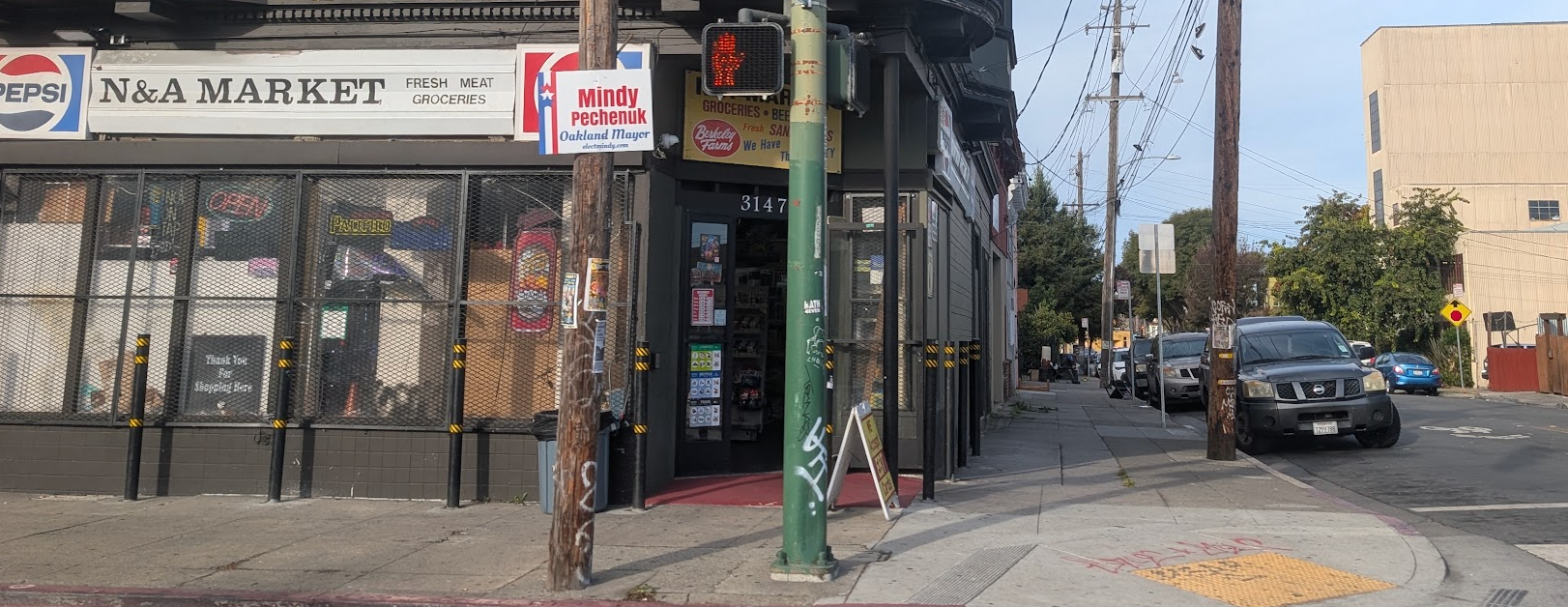
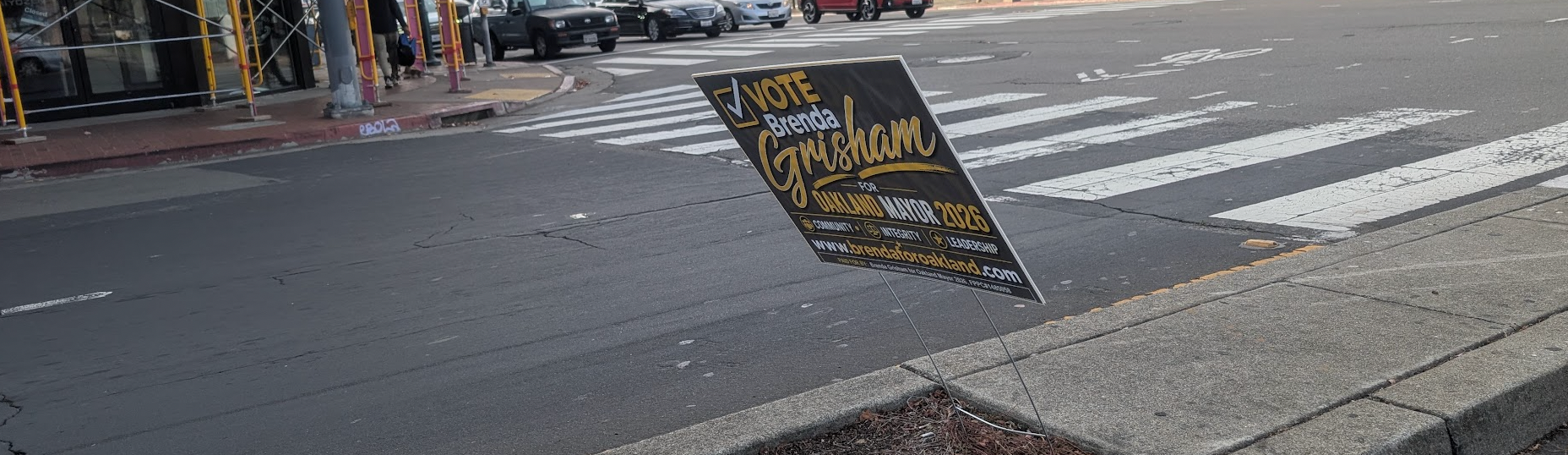
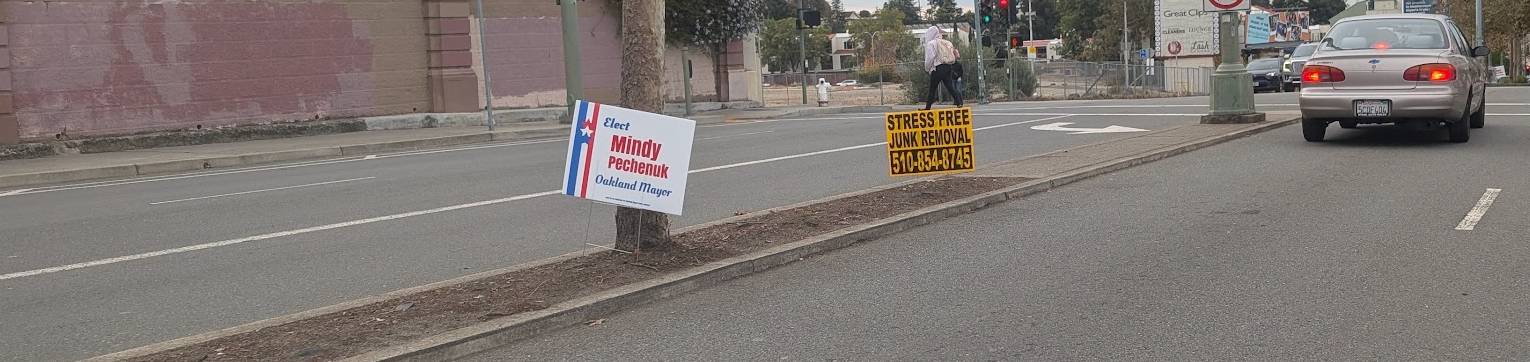
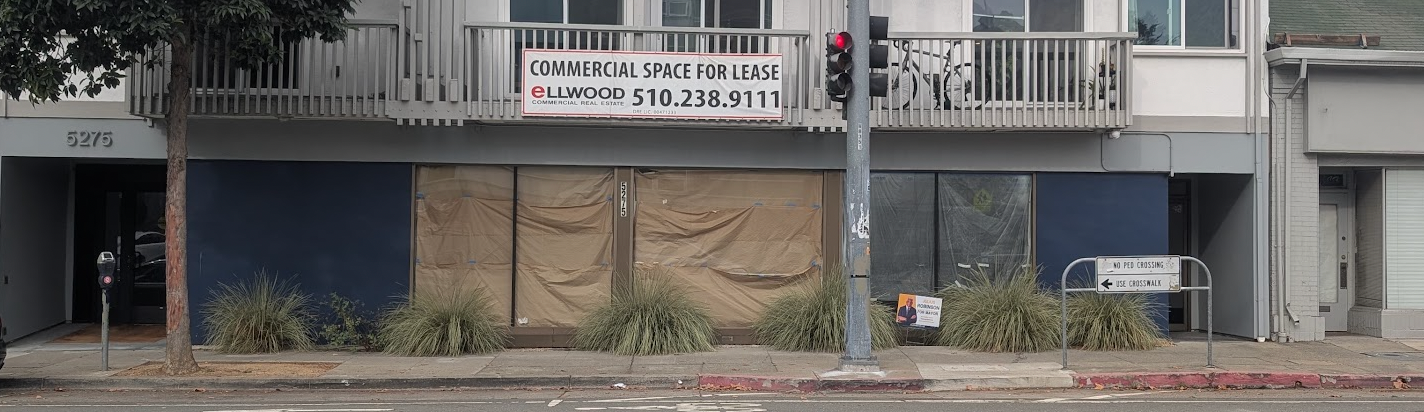
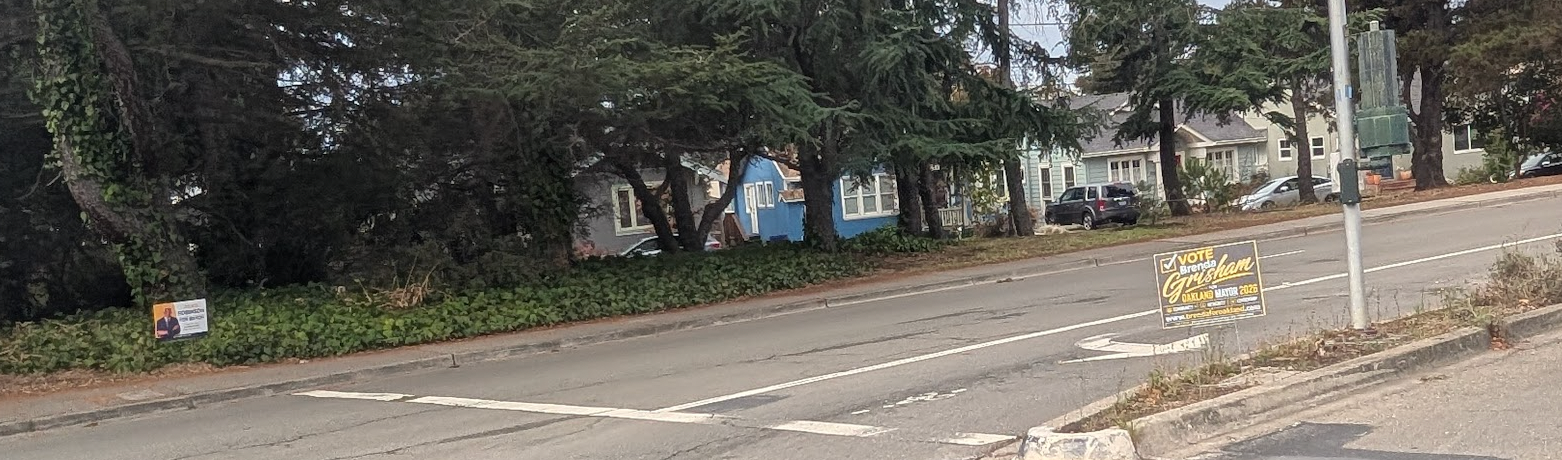
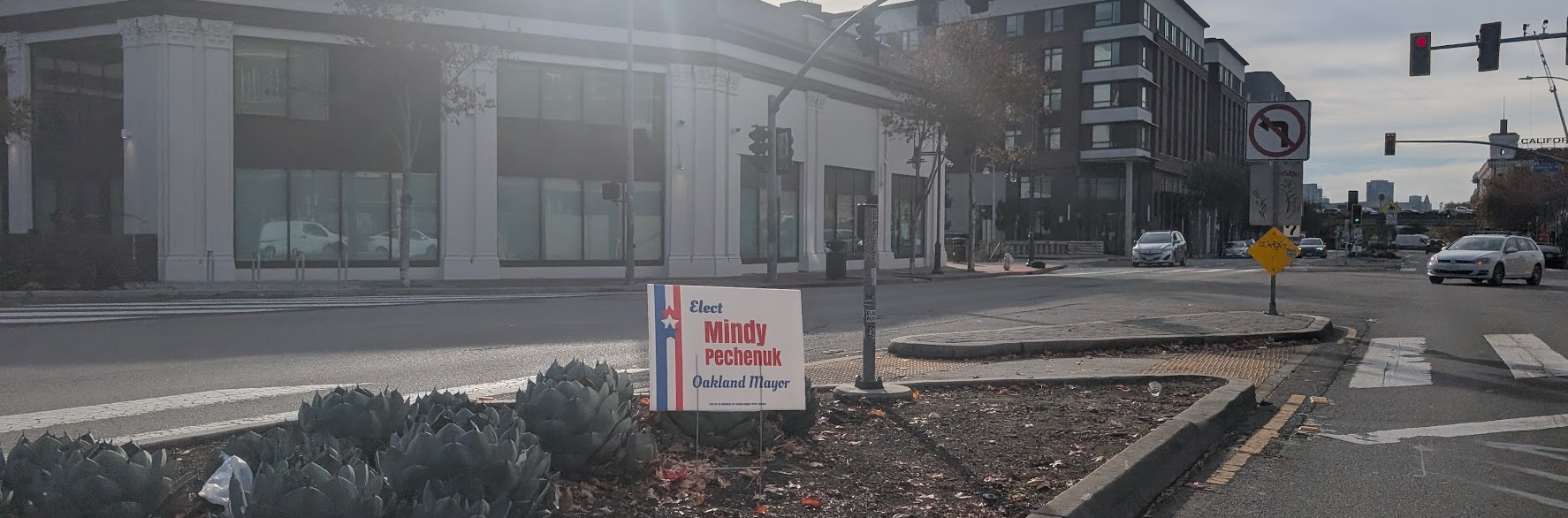
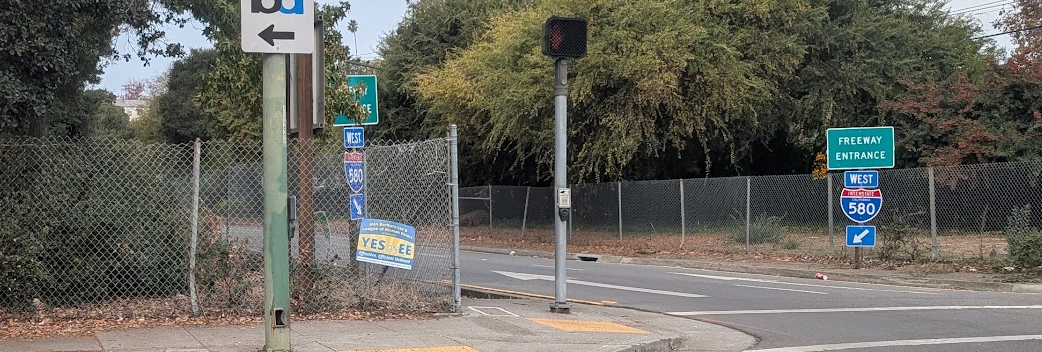
If we can generalize wildly and incompletely from driving around town yesterday—trying to take a very haphazard survey, and mostly convincing myself that the effort was futile—there are a lot of Grisham, Pechenuk, and Robinson signs in North Oakland medians, almost nothing to be seen in West Oakland at all, and then, suddenly, east of the Lake, you suddenly start to see a few of Barbara Lee signs left to die on chain-links and dead grass.
A few of the crank candidate signs that I'd gone out to find, after having seen them over the weekend, were already taken down, whether by sanctioned and official city workers, or by volunteers. I wonder if the places where the Barbara Lee signs predominated was simply a function of no one wanting to fuck with the mayor. That has, after all, been a theme of the election.
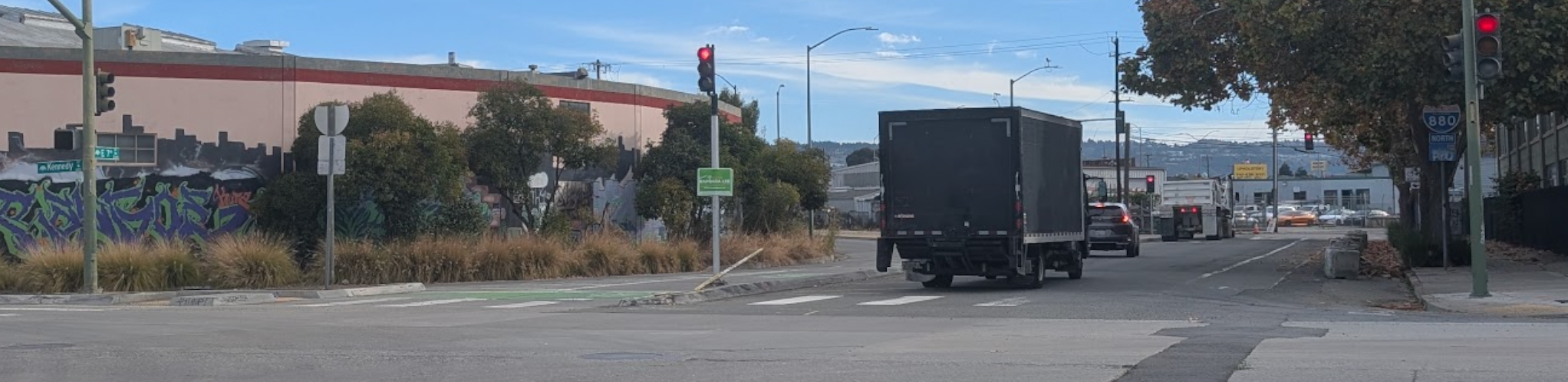
All of these signs are “technically” illegal, I guess, but who cares? That word only means the normalized flouting of the law by those who are allowed to do so. Murder is also “technically” illegal, as are all crimes, but you’d never say it that way. Things only become “technically illegal” when that technicality is being asserted as illegitimate, like when someone gets out of jail “on a technicality.” But that’s why candidates with a lot to say about how unhoused Oaklanders are ruining the town and need to be evicted—on whatever technical infraction can be induced to serve as justification—will still litter our public spaces with their vanity campaigns. I’m sure they see no contradiction at all. The assumption is always going to be that public space is there for you to take, if you’re the kind of person who’s allowed to take it. That is what “law and order” means, that the law serves the people in the order of their importance.
\O/
Is it interesting that the main place you’ll see Barbara Lee’s name, a lot, is on all the “Yes on EE” signs you’ll also see in the medians and dead grass commons, alongside the cranks? There are a lot of those, all over the city.
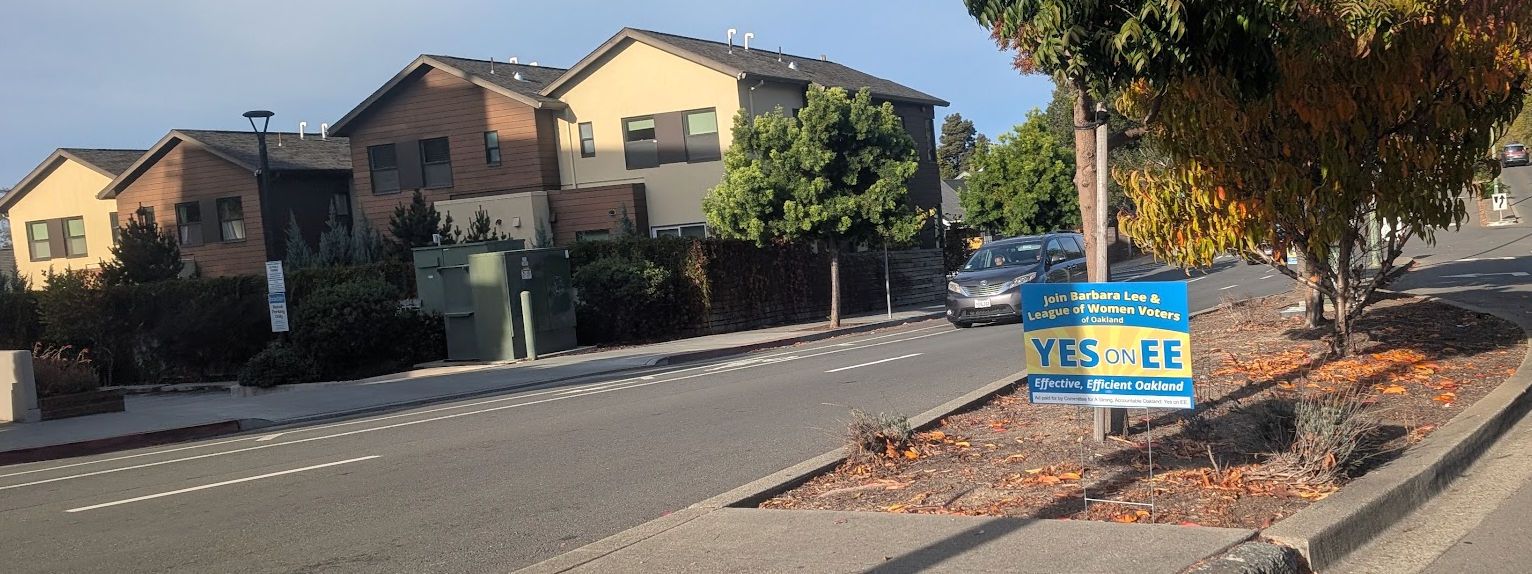
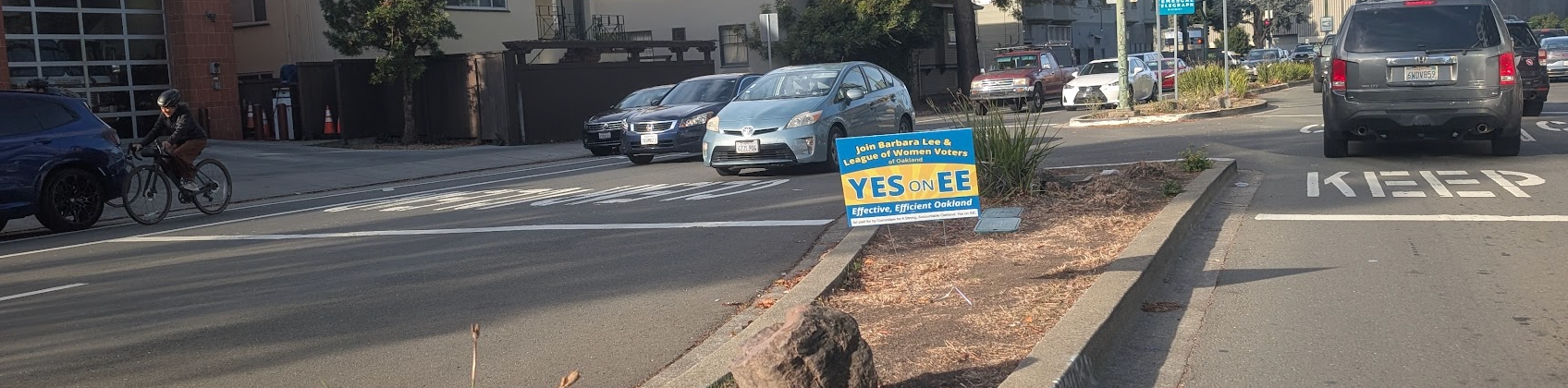
You’ll even see the same sign—there’s only one—at Oaklandside’s Proposition EE explainer article, which is slightly ironic given how scrupulous Oaklandside otherwise is to only inform and not explicitly advocate for or against particular electoral options:
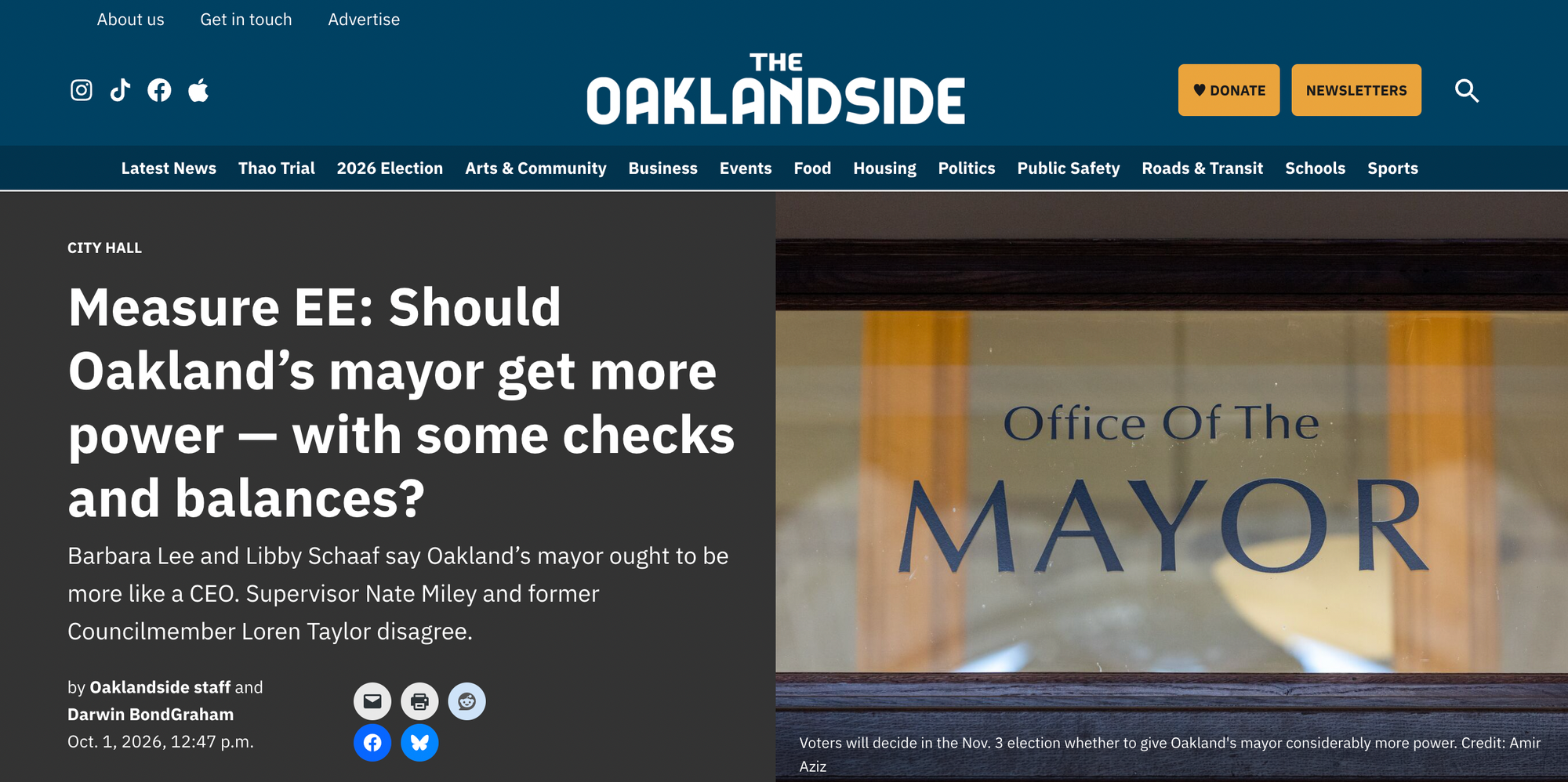
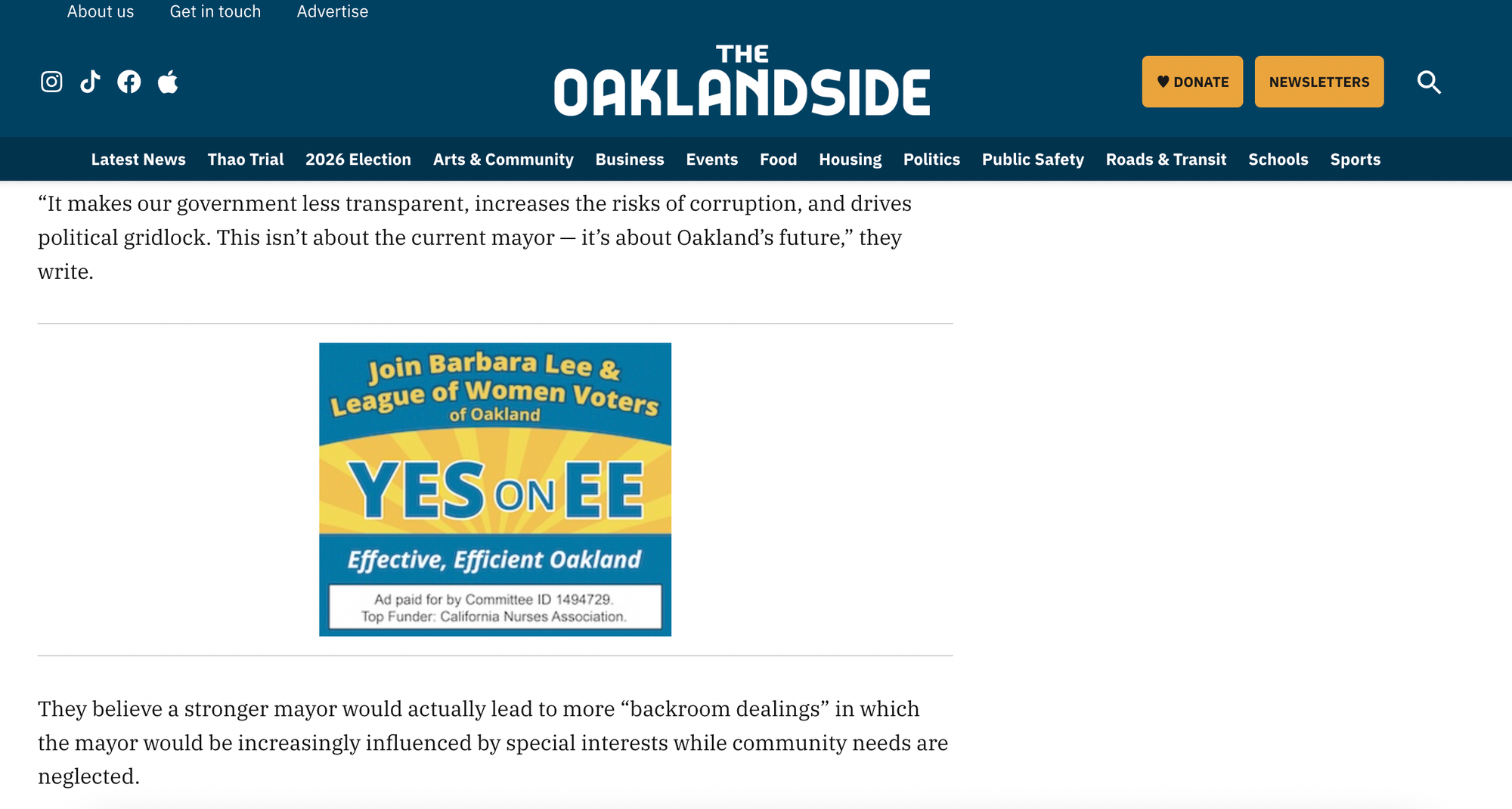
Technically, I suppose, it doesn’t break their rule, since it’s set off from the main text, distinguishing its implied speaker from the institutional journalistic voice. It might even be a third-party advertisement, that they have no direct control over, which is why you only see that “Yes on EE” alongside ads for Zero Waste Berkeley, Jack Longon SQ, and USF MFA, and Bay Street Sunset Market (in my case, at least, ymmv). Those digital ads live in just as “no one owns this” a digital liminality as any roadside median.
\O/
So what, right? Is any of this interesting?
EE isn’t a crank, vanity publication—it has a publisher, SPUR—and none of this is an argument for why you should vote against it (although ORB’s position is that you should indeed vote no on EE). But it’s an indication of how ordained from on high the EE charter reform is, how linked to Barbara Lee’s personal mayoralty it is, and how little pushback there’s been to it (or how confused the ideological arrangement it’s produced is).
And maybe it's not interesting. Maybe none of it means anything at all. Maybe we look for signs and portents in empty spaces when all the official channels run dry. Maybe, when there’s nothing for us in all the real places, that matter, we start wandering and searching for meaning in emptiness. Maybe it felt weird to say nothign at all about the Mayoral election in our fair town, and so ORB went looking.
But if you look, it turns out, you will find. And so, while there are no “Yes on EE” signs in people’s yards as far as we saw, we did see one privately manufactured “No on EE” sign, one that even adopted the ORB house style. And so, we say to you, go forth, vote, and flourish.
Find more of our voting guide here.